

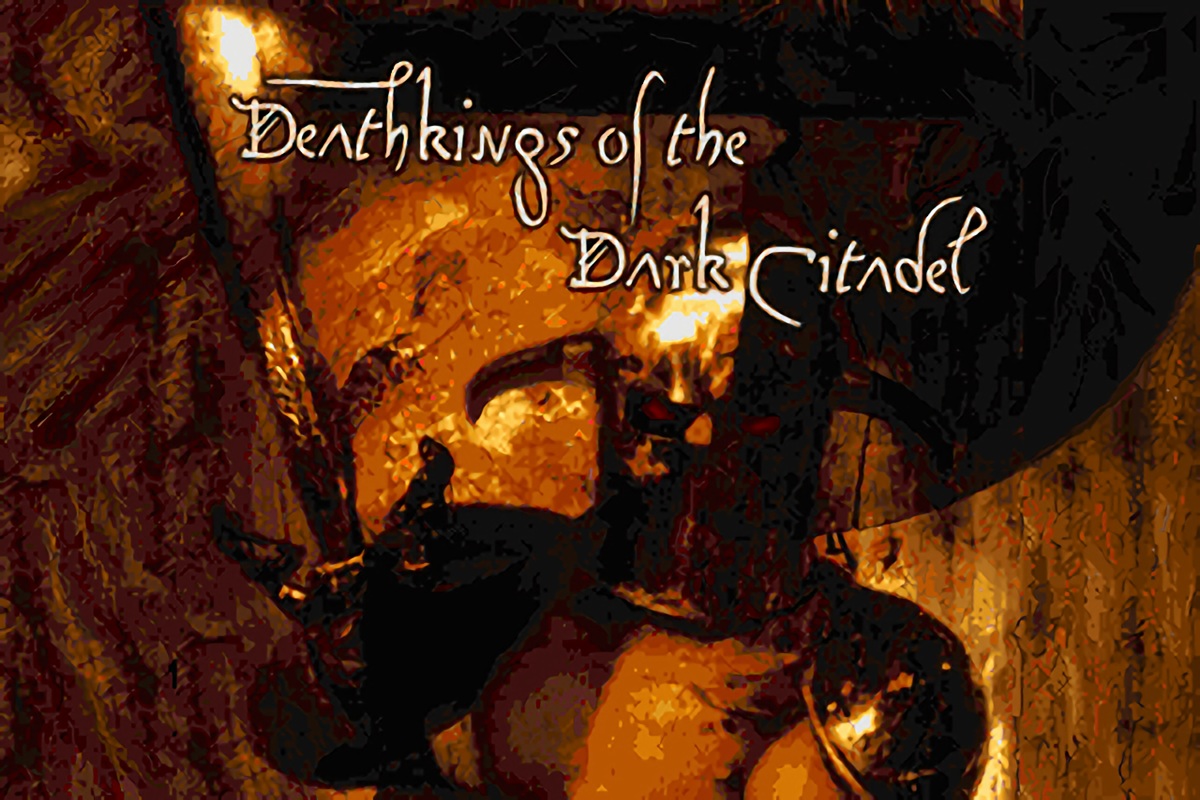
Hexen: Deathkings of the Dark Citadel is the official expansion to Hexen: Beyond Heretic, continuing its dark fantasy first-person adventure with new hubs, more dangerous encounters, environmental puzzles, hidden switches, secret areas, and increasingly demanding exploration. Rather than reinventing the original game, Deathkings takes the same Fighter, Cleric, and Mage class system and places those heroes inside a fresh collection of interconnected locations designed for players who already understand how Hexen works. Combat is tougher, navigation can be more complicated, and resources often need to be managed carefully because the expansion expects familiarity with mana, artifacts, class-specific weapons, and hub-based progression. The result is a challenging continuation that feels immediately recognizable while pushing the original formula considerably harder.
Hexen: Deathkings of the Dark Citadel – A Dark Fantasy Expansion Built Around Brutal Combat, Interconnected Hubs, Magical Weapons, Puzzles, and the Return of the Three Heroes
Hexen: Deathkings of the Dark Citadel is the official expansion to Hexen: Beyond Heretic, continuing its dark fantasy first-person adventure with new hubs, more dangerous encounters, environmental puzzles, hidden switches, secret areas, and increasingly demanding exploration. Rather than reinventing the original game, Deathkings takes the same Fighter, Cleric, and Mage class system and places those heroes inside a fresh collection of interconnected locations designed for players who already understand how Hexen works. Combat is tougher, navigation can be more complicated, and resources often need to be managed carefully because the expansion expects familiarity with mana, artifacts, class-specific weapons, and hub-based progression. The result is a challenging continuation that feels immediately recognizable while pushing the original formula considerably harder.
Deathkings retains one of Hexen's greatest strengths: the three playable classes offer dramatically different ways to approach exactly the same environments. The Fighter relies heavily on physical power and close-range aggression, the Cleric combines melee strength with magical versatility, and the Mage specializes in ranged spellcasting and careful positioning. Because each hero uses a completely different arsenal, enemy encounters can feel surprisingly different depending on the selected class. Replaying the expansion therefore becomes more than simply repeating the same maps because the way each character solves combat problems changes substantially.
Now playable online through Lemon Web Games, Hexen: Deathkings of the Dark Citadel can be experienced directly in your web browser as part of a growing collection of classic, retro, dark fantasy, action, adventure, first-person shooter, and browser-playable games. Its interconnected hubs, portals, keys, hidden mechanisms, mana-based weapons, inventory artifacts, and puzzle-heavy progression provide a deeper experience than a conventional linear shooter. For players who enjoyed exploring Cronos in the original Hexen and want another campaign built around its distinctive mixture of combat and environmental problem solving, Deathkings provides a demanding return to that style of adventure.
A True Expansion Rather Than a Simple Map Pack
Deathkings feels like an extension of Hexen rather than an unrelated collection of replacement levels. The core mechanics remain intact, but the new areas are built around the assumption that players already know how to navigate hubs, manage mana, use inventory artifacts, and understand the strengths of their selected class. This allows the expansion to introduce more complicated layouts and stronger enemy combinations without spending much time explaining basic systems. Experienced Hexen players can immediately begin applying everything they learned in the original campaign.
The expansion also maintains the dark and oppressive atmosphere that made Hexen distinctive. Castles, ruined structures, underground chambers, corrupted temples, and supernatural environments create a world that feels hostile even when no enemies are immediately visible. Quiet exploration can suddenly turn into intense combat after a switch is activated or a portal opens into another dangerous area. That constant uncertainty makes even familiar mechanics feel threatening.
The Fighter Returns With Raw Strength
The Fighter remains the most physically powerful of the three classes and is ideal for players who enjoy aggressive close-range combat. His arsenal encourages direct confrontation, making movement and positioning extremely important because many enemies need to be approached before maximum damage can be delivered. Strong durability gives the Fighter more room for error than the Mage, but reckless charging can still become dangerous when several ranged monsters control the room. The expansion frequently creates encounters where understanding when to advance and when to retreat becomes essential.
Playing Deathkings as the Fighter emphasizes the physical side of Hexen's combat. Narrow corridors can work in his favor because enemies have fewer opportunities to surround him, while large open rooms may require more careful movement before reaching distant targets. Strong melee attacks conserve mana and can make weaker enemies much easier to manage. However, dangerous ranged threats still need to be prioritized before they gain too much control over the battlefield.
The Cleric Remains the Most Flexible Hero
The Cleric continues to occupy the middle ground between Fighter and Mage, combining reasonable durability with a mixture of physical and magical weapons. This flexibility makes the class useful when entering unfamiliar areas because the Cleric can adapt to both close-range and distant threats without committing entirely to one style. His weapon set offers several unusual effects that feel distinctly different from the Fighter's brute force or the Mage's pure spellcasting. This makes him especially enjoyable for players who prefer versatility.
Deathkings provides many encounters where that balance becomes valuable. A close group of melee enemies may require immediate aggression, while distant magical threats can demand safer ranged attacks moments later. The Cleric can transition between those situations more naturally than the other classes. His adaptability makes exploration slightly more forgiving when the player does not know what is waiting beyond the next portal.
The Mage Rewards Distance and Precision
The Mage remains the most fragile class but compensates with excellent ranged capabilities. Even early attacks allow the player to damage enemies from a safe distance, making careful positioning an essential part of the class. Large rooms can become advantageous because the Mage has space to retreat while continuing to attack, while narrow corridors can be much more dangerous if enemies manage to close the distance. Successful Mage play therefore depends heavily on movement and situational awareness.
The expansion's more demanding encounters make these strengths and weaknesses even more noticeable. Strong enemies that a Fighter might confront directly often need to be controlled from range when playing as the Mage. Mana conservation also becomes extremely important because relying too heavily on powerful spells can leave the character vulnerable later. Players who manage distance well can turn the Mage into an extremely effective and satisfying class.
Three Classes Create Three Different Campaign Experiences
One of the best reasons to replay Deathkings is that each class changes the combat experience so significantly. The physical layout remains the same, but the weapons available, preferred fighting distance, and resource priorities are completely different. A room filled with melee enemies might be simple for the Fighter but much more dangerous for the Mage, while distant monsters can create the opposite situation. This gives the campaign much stronger replay value than a shooter where every character uses the same arsenal.
Class differences also encourage experimentation with artifacts and mana. An item that feels unnecessary during one playthrough may become extremely useful with another hero because their vulnerabilities are different. Players gradually discover which resources are most valuable for each class. That understanding makes repeat runs feel more strategic rather than simply familiar.
Blue and Green Mana Still Drive the Arsenal
Most advanced weapons depend on blue mana, green mana, or a combination of both. This creates a resource-management system where the player constantly needs to think about which weapon is worth using in a particular encounter. Spending powerful mana unnecessarily can create serious problems later, especially when Deathkings introduces a tougher sequence of enemies without immediately replenishing supplies. Efficient use of weaker weapons therefore remains important even after stronger options have been found.
Dual-mana weapons are particularly powerful but can empty both resource pools quickly. Players need to recognize which battles truly justify that level of firepower. Saving mana for a boss or especially dangerous chamber can make the difference between smooth progress and repeated failure. The expansion rewards discipline rather than constant maximum damage.
Hub-Based Exploration Remains Central
Deathkings continues the interconnected hub system that separated Hexen from more conventional first-person shooters. Instead of completing one map and permanently leaving it behind, players travel between several areas through portals and frequently return to locations they visited much earlier. A switch activated in one map may alter another, while a newly discovered key can unlock a route far away from where it was found. This structure turns exploration into a major part of the challenge.
The hub system makes the world feel interconnected rather than divided into unrelated stages. Players gradually understand how different areas fit together and where major objectives are located. What initially seems confusing eventually becomes familiar as portals, doors, and landmarks begin forming a mental map. That process of understanding the environment is one of the most rewarding parts of Hexen-style exploration.
Switches Can Change Distant Areas
One of the most important habits in Deathkings is paying attention whenever a switch is activated. The result may not be visible in the current room because Hexen frequently uses mechanisms that change something elsewhere in the hub. A message may indicate that a door has opened or machinery has activated, leaving the player to remember where that change could have occurred. This creates a puzzle structure built around observation and memory.
The mechanic can be challenging because the game rarely gives modern-style objective markers pointing toward the next destination. Players need to recall previously locked paths, suspicious structures, or areas that appeared incomplete. When the correct location is finally rediscovered, the progression feels satisfying because the solution came from understanding the environment. Deathkings retains this demanding but rewarding design philosophy.
Environmental Puzzles Are Part of the Journey
Deathkings contains more than simple key-and-door progression. Players may need to manipulate several mechanisms, revisit earlier locations, activate sequences of switches, or understand how architecture changes after certain actions. These puzzles create natural pauses between combat encounters and give exploration a stronger purpose. The game constantly alternates between fighting and thinking.
This also means rushing through every room is rarely the best approach. A seemingly decorative area may contain an important mechanism, while a pathway that appeared useless earlier may become critical later. Players who examine their surroundings carefully generally progress more smoothly. The expansion rewards patience without abandoning its fast combat.
Keys Still Play an Important Role
Traditional keys remain part of the progression system and often connect multiple parts of a hub. Finding one can open doors discovered much earlier, encouraging players to remember locations that initially seemed inaccessible. This gives important pickups more value because they can completely change what areas are available. The resulting backtracking feels purposeful when players understand how the hub is structured.
Keys also frequently lead into dangerous encounters. A door that has remained closed for a long time may reveal an entire new section filled with enemies, traps, and additional puzzles. Progress rarely means simply walking through an empty corridor. Every newly opened route can introduce another major challenge.
Inventory Artifacts Provide Tactical Options
Deathkings retains the inventory system that allows useful magical artifacts to be collected and saved until the player decides to activate them. Healing items, defensive tools, teleportation devices, and other magical objects can dramatically change dangerous situations. Because they are not automatically consumed when collected, players can prepare for difficult encounters instead of wasting valuable resources accidentally. This gives the combat additional strategic depth.
The challenge is knowing when to stop saving everything and actually use the inventory. Players sometimes hold powerful artifacts for so long that they never benefit from them. Deathkings contains enough difficult situations that using items proactively can often be much smarter than waiting until health is almost gone. Good inventory management becomes an important survival skill.
Quartz Flasks Provide Portable Healing
Portable healing is especially valuable in an expansion built around long exploratory hubs. Quartz Flasks can be stored and activated whenever additional health is needed, allowing players to recover even when the surrounding area contains no immediate pickups. This can save a difficult run after an unexpected ambush or extended battle. Carrying several healing items into an unknown area creates much greater confidence.
Efficient use still matters because activating one too early can waste some of its value. Players need to judge how much damage they are likely to take and whether another healing source might be nearby. The inventory system therefore adds small but meaningful decisions throughout the adventure. Health becomes something the player manages rather than simply collects.
The Disc of Repulsion Can Control Crowds
The Disc of Repulsion is useful because it manipulates enemy positioning rather than simply dealing damage. Activating it can push nearby creatures away and create breathing room when the player has become surrounded. In environments with ledges or environmental hazards, that movement can become even more valuable. A dangerous melee enemy may be removed from the immediate fight without spending mana.
This kind of utility demonstrates why Hexen's artifacts are more interesting than ordinary temporary power-ups. Players can use them creatively depending on the environment and enemy placement. Deathkings frequently creates cramped encounters where suddenly gaining additional space can completely change the outcome. Remembering that the artifact exists is often just as important as knowing how it works.
The Flechette Changes Depending on Your Class
The Flechette remains one of Hexen's more unusual shared artifacts because each class uses it differently. This reinforces the distinction between Fighter, Cleric, and Mage even outside their normal weapon sets. The same pickup can therefore support different tactics depending on who is being controlled. Learning these class-specific effects adds another layer of mastery.
During repeated playthroughs, players often discover that an artifact they rarely used with one hero becomes extremely valuable with another. This encourages experimentation and prevents shared inventory items from feeling identical across all classes. Deathkings benefits greatly from these small differences because they make each run more personal. The class system influences nearly every aspect of combat.
Enemies Become More Dangerous in Groups
Many individual Hexen enemies are manageable when encountered alone, but Deathkings frequently combines them in ways that create much greater pressure. Melee creatures can restrict movement while ranged monsters attack from behind, and flying enemies can approach from directions that ground-based threats cannot use. The player therefore needs to prioritize targets rather than simply attacking whichever monster appears first. Positioning becomes a constant concern.
These combinations also interact differently with each class. The Fighter may need to close distance quickly before ranged attackers overwhelm him, while the Mage may focus on maintaining open space and eliminating fast melee creatures first. The Cleric can adapt between both approaches. The encounter design therefore reinforces the strengths and weaknesses of the class system.
Ettins Remain Common Frontline Enemies
Ettins continue to serve as straightforward melee opponents that can become dangerous when they appear in large numbers or narrow environments. Their role is simple: move toward the player and force a response. This makes them effective when combined with ranged enemies that become more dangerous while the player is distracted. Individually they may not seem threatening, but groups can quickly restrict movement.
The Fighter can usually handle them efficiently through direct physical combat, while the Mage benefits from eliminating them before they get too close. This difference makes even basic enemy encounters feel class-dependent. Deathkings often uses common monsters as pressure tools supporting much stronger enemies. Their placement matters as much as their individual abilities.
Centaurs Require Patience
Centaurs remain among the more defensive enemies in the Hexen roster, capable of slowing combat through their protective behavior. Simply attacking continuously is not always efficient because their defense can interrupt the player's rhythm. They become especially troublesome when another enemy is attacking simultaneously. Players need to choose timing carefully rather than wasting mana against protection.
Multiple Centaurs can make a corridor feel frustratingly crowded because they are durable enough to block movement. Stronger weapons can reduce the time required to eliminate them, but spending too much mana may create problems later. The expansion often forces players to balance speed against resource conservation. This type of decision gives ordinary encounters more depth.
Afrits Add Flying Pressure
Afrits can move freely through open spaces and attack from positions that ground enemies cannot reach. Their mobility makes them particularly effective in large rooms or outdoor areas where they can spread around the player. Several flying enemies can become distracting while stronger threats approach from the floor. This forces players to divide their attention constantly.
Ranged classes naturally have an easier time dealing with airborne threats, while the Fighter may need to wait for safer opportunities. This again highlights how the same encounter feels different depending on the selected hero. Deathkings makes good use of enemies that expose class weaknesses. Preparation and positioning become essential.
Stalkers Make Water Dangerous
Stalkers use watery environments as hiding places and can emerge unexpectedly when the player approaches. This makes pools and flooded areas feel threatening instead of purely decorative. Players who rush into water without checking their surroundings can suddenly find themselves surrounded. The enemy turns the environment itself into part of the encounter.
These moments reinforce the expansion's atmosphere because danger can appear from places that initially seem quiet. Listening for enemy sounds and watching movement becomes especially useful around water. Hexen's world feels more interactive when creatures behave according to terrain. Deathkings continues using these environmental threats effectively.
Dark Bishops Bring Magical Pressure
Dark Bishops are dangerous ranged enemies capable of applying constant magical pressure while moving unpredictably. Their ability to attack from a distance can make open rooms particularly dangerous, especially when other creatures are preventing easy movement. They often become priority targets because leaving several active can quickly fill the battlefield with projectiles. Strong ranged attacks or aggressive repositioning are usually necessary.
The Mage can engage them from safer distances, while the Fighter may need to close the gap under fire. The Cleric again occupies the middle ground with multiple possible solutions. These encounters make the class system feel relevant throughout the entire campaign. Enemy composition constantly influences how each hero should approach the room.
Mana Conservation Becomes Increasingly Important
Deathkings can punish players who rely too heavily on their strongest weapons. Powerful attacks often consume blue and green mana quickly, leaving fewer options during later encounters. Weaker enemies can frequently be handled with cheaper attacks or class-specific starting weapons. Saving resources becomes especially important when exploring unfamiliar hubs because the next major fight may be much closer than expected.
Experienced players gradually develop a natural sense of which weapon is appropriate for each enemy. That knowledge turns mana management into something almost automatic. Instead of simply selecting the most powerful attack, they consider efficiency and likely future threats. The expansion rewards this discipline throughout its more difficult sections.
Powerful Weapons Feel Earned
Each class gradually gains access to more powerful weapons, making exploration and progression feel increasingly rewarding. Discovering another component of the arsenal can completely change how the player approaches difficult enemies. The strongest weapons often consume significant amounts of mana but provide enough power to justify that cost in major encounters. This gives progression a satisfying sense of escalation.
Because the classes use different arsenals, these discoveries are another reason to replay the campaign. A powerful Fighter weapon may behave nothing like the Mage's equivalent. Players therefore experience different moments of progression depending on character choice. Deathkings preserves one of Hexen's strongest replayability systems.
Secret Areas Reward Curiosity
Secrets remain scattered throughout the expansion and can contain health, mana, artifacts, weapons, or other useful resources. Some are hidden behind suspicious architecture, while others require switches or careful environmental observation. Because Deathkings can be demanding, discovering extra supplies can have a noticeable effect on survival. Players who explore thoroughly are frequently rewarded.
Secret hunting also encourages repeat play. Completing a hub once does not necessarily mean understanding everything hidden inside it. Returning with better knowledge can reveal areas that were missed completely during the first attempt. This makes map familiarity valuable beyond simple navigation.
The Automap Is Almost Essential
Large interconnected areas can become confusing, making the automap one of the most useful tools available. It allows players to see which corridors have already been explored, identify unfinished branches, and understand how different sections connect. Checking it regularly can reduce unnecessary wandering significantly. The map is especially useful after activating mechanisms that may have opened a route somewhere else.
Players can also use the automap to identify suspicious gaps that might contain hidden rooms or secret passages. This adds another layer to exploration and encourages close examination of level geometry. The tool never completely solves the puzzle, but it provides valuable information. Learning to use it effectively makes Deathkings much easier to navigate.
Backtracking Is Part of the Design
Returning through previously explored areas is a normal part of Deathkings because the hub structure constantly changes what routes are accessible. Backtracking is not simply repetition; it often reveals new doors, platforms, enemies, or mechanisms that were unavailable earlier. Players need to remember how the environment looked before in order to recognize what has changed. This creates a strong sense of progression within the same physical spaces.
The design may feel unusual to players accustomed to completely linear shooters. However, once the hub system becomes familiar, backtracking begins to feel more like exploring an adventure game. Previously meaningless corridors gain new importance after another objective has been completed. The world gradually unfolds instead of being discarded after each map.
Environmental Hazards Add Another Threat
Lava, crushing mechanisms, dangerous drops, and other environmental hazards can become just as dangerous as monsters. Combat around these features requires additional awareness because dodging an enemy attack can accidentally send the player into something worse. The Fighter's durability helps somewhat, while the Mage's fragility makes environmental mistakes particularly costly. Understanding the terrain becomes part of surviving each encounter.
Artifacts can sometimes provide creative solutions to these situations. Enemy displacement, emergency teleportation, or careful movement can transform a dangerous section into something manageable. Deathkings rewards players who use the entire toolset rather than relying only on weapons. The environment frequently becomes part of the tactical puzzle.
The Dark Citadel Feels Hostile and Oppressive
Deathkings maintains Hexen's grim atmosphere through heavy stone architecture, corrupted structures, underground chambers, ominous portals, and supernatural environments. Many locations feel ancient and dangerous rather than designed simply as shooting galleries. Exploration often carries a sense that something hostile may be waiting beyond the next doorway. This atmosphere becomes especially effective during quieter sections between major battles.
The soundscape reinforces that feeling through enemy noises, environmental effects, and dark music. Hearing a monster before seeing it can create immediate tension, particularly when the player is already unsure which route leads forward. The combination of architecture and audio gives the expansion a strong sense of place. The Dark Citadel feels like a world worth exploring rather than merely a backdrop.
Combat and Exploration Constantly Alternate
One of Deathkings' strongest qualities is the way it shifts between intense fighting and slower investigation. A player may spend several minutes figuring out which portal or switch should be used next, only to immediately enter a room filled with enemies. This contrast keeps both sides of the experience from becoming repetitive. Combat feels more intense after quiet exploration, while puzzle solving provides relief after prolonged fighting.
The balance also gives players time to think about resources and inventory. Rather than moving from one firefight directly into another indefinitely, quieter sections allow preparation. Players can check mana, select artifacts, and consider what they may need next. This rhythm makes the expansion feel much more like an adventure than a conventional shooter.
The Expansion Assumes You Understand Hexen
Deathkings is not really designed as the ideal starting point for someone unfamiliar with Hexen. The hub structure, class differences, mana system, inventory items, and puzzle design are presented with relatively little explanation because the expansion assumes previous experience. Players who already understand these mechanics can immediately appreciate the increased difficulty and complexity. Newcomers may find the progression considerably more confusing.
This makes Deathkings especially rewarding as a continuation. Skills developed in Beyond Heretic remain directly useful, including remembering portal connections, using the automap, conserving mana, and experimenting with environmental mechanisms. The expansion essentially asks whether the player truly learned how Hexen works. Those who did will find a challenging but familiar adventure waiting for them.
Replay Value Comes From More Than Difficulty
The three classes alone provide a strong reason to complete Deathkings multiple times. Combat changes substantially between Fighter, Cleric, and Mage, while class-specific weapons and artifact behavior create different tactical possibilities. Players who already know every puzzle can therefore concentrate on mastering another style of combat. This keeps repeat playthroughs from feeling identical.
Higher difficulty levels can then add another layer of replay value by making familiar encounters significantly more dangerous. Additional threats force better mana management, stronger movement, and more careful use of artifacts. Map knowledge becomes increasingly important as difficulty rises. The same campaign can therefore provide several different experiences.
Why Deathkings of the Dark Citadel Still Feels Different
Deathkings remains unusual because very few classic FPS expansions were built around such a strong combination of character classes, persistent hubs, inventory artifacts, environmental puzzles, mana management, and dark fantasy combat. The game is not content to simply place enemies inside corridors and lead players toward an exit. Progress depends on understanding how multiple areas connect and how actions in one location affect another. This gives the expansion much more structural depth than a typical shooter map pack.
The three classes make that structure even more interesting because exploration remains consistent while combat changes dramatically. Players can use knowledge from a previous run without making the entire experience predictable. A familiar chamber may require completely different tactics with another hero. This combination of environmental mastery and combat variety gives Deathkings its lasting appeal.
Why Deathkings of the Dark Citadel Still Feels Fun
Deathkings remains enjoyable because it builds directly upon systems that already made Hexen distinctive. Fast first-person combat provides immediate action, while hub exploration, puzzles, artifacts, and class-specific weapons create longer-term strategy. Players are constantly doing more than simply searching for the next enemy because every switch, portal, key, and suspicious corridor may contribute to a larger objective. The expansion rewards both reflexes and patience.
It also provides a strong sense of mastery over time. Areas that initially seem confusing become easy to navigate once the player understands the hub, while enemies that seemed overwhelming become manageable after learning better class tactics. That progression belongs primarily to the player rather than a numerical character level. Understanding the world is the real upgrade.
Playing Hexen: Deathkings of the Dark Citadel Online Today
Through Lemon Web Games, Hexen: Deathkings of the Dark Citadel can now be played directly in your web browser with no downloads or setup required. Features of the web-based version include:
• Browser-based play for quick access
• No installation required
• Three playable classes including Fighter, Cleric, and Mage
• Class-specific weapons supported by blue and green mana systems
• Interconnected hubs filled with portals, keys, switches, hidden mechanisms, and environmental puzzles
• Inventory artifacts, secret areas, dark fantasy enemies, and challenging combat
• Accessible play through Lemon Web Games
The browser format makes it easy to return to Hexen's unusual mixture of FPS action and adventure-style exploration without recreating an original 1990s PC setup. Individual areas can be explored during shorter sessions, while completing an entire hub provides a much more substantial challenge. Players who already understand Beyond Heretic should immediately feel familiar with the systems while noticing that Deathkings expects more careful combat and navigation.
Who Should Play Hexen: Deathkings of the Dark Citadel
• Players who enjoyed Hexen: Beyond Heretic and want a more challenging continuation
• Fans of dark fantasy first-person shooters with deeper exploration
• Players who enjoy choosing between Fighter, Cleric, and Mage classes
• Fans of interconnected hubs, portals, environmental puzzles, switches, keys, and secret hunting
• Players who enjoy magical weapons, mana management, inventory artifacts, and class-specific tactics
• Anyone looking for a browser-playable classic FPS expansion that combines combat with adventure-style progression
Deathkings is particularly suitable for players who enjoy learning complicated environments and gradually understanding how every area connects. Its puzzles and backtracking can require patience, while the tougher encounters demand familiarity with each class and its available resources. Players who prefer entirely linear shooters may find the structure unusual, but those who enjoy exploration should appreciate the deeper progression. It is especially rewarding after completing the original Hexen campaign first.
Play Hexen: Deathkings of the Dark Citadel Online Now
Hexen: Deathkings of the Dark Citadel is now available to play online through Lemon Web Games, giving players an easy way to continue the dark fantasy adventure directly in the browser. The expansion preserves everything that makes Hexen distinctive, including Fighter, Cleric, and Mage classes, mana-powered weapons, inventory artifacts, portals, interconnected hubs, hidden switches, and environmental puzzles. It then builds a harder campaign around those systems, creating an experience intended for players who are already comfortable navigating the world of Hexen.
For players exploring the Lemon Web Games library, Deathkings offers a deeper alternative to straightforward retro shooters. Every portal may lead to another part of a larger puzzle, every mechanism can affect somewhere else in the hub, and every class changes how combat needs to be approached. Whether you rely on the Fighter's strength, the Cleric's versatility, or the Mage's long-range magical power, the Dark Citadel provides another substantial journey built around exploration and survival.
Final Thoughts
Hexen: Deathkings of the Dark Citadel succeeds because it understands that the original game's greatest strength was not simply its fantasy setting but the way combat, exploration, classes, inventory, and puzzles worked together. The expansion keeps those systems intact and creates a new series of hubs that expect players to use them more effectively. Stronger enemies, complicated routes, distant switches, hidden mechanisms, and limited mana turn familiar mechanics into a much more demanding adventure. It feels like a natural continuation rather than a disconnected bonus campaign.
Its greatest strength remains the combination of class variety and interconnected level design. Fighter, Cleric, and Mage players can explore the same locations yet experience completely different combat rhythms, while the hub system continually rewards memory and environmental awareness. Returning to an earlier location after activating a distant mechanism creates a sense that the world is changing around the player's actions. That makes progress feel more meaningful than simply reaching another exit.
Through Lemon Web Games, Hexen: Deathkings of the Dark Citadel can be enjoyed directly in the browser as one of the more distinctive expansions from the classic PC FPS era. It remains a strong choice for players who enjoy dark fantasy, class-based combat, magical weapons, puzzle solving, and interconnected worlds that require genuine exploration. For anyone who survived Beyond Heretic and still wants more, Deathkings offers another difficult journey through portals, dungeons, ruined strongholds, and monster-filled chambers where understanding the Dark Citadel is just as important as surviving it.











Comments 0