

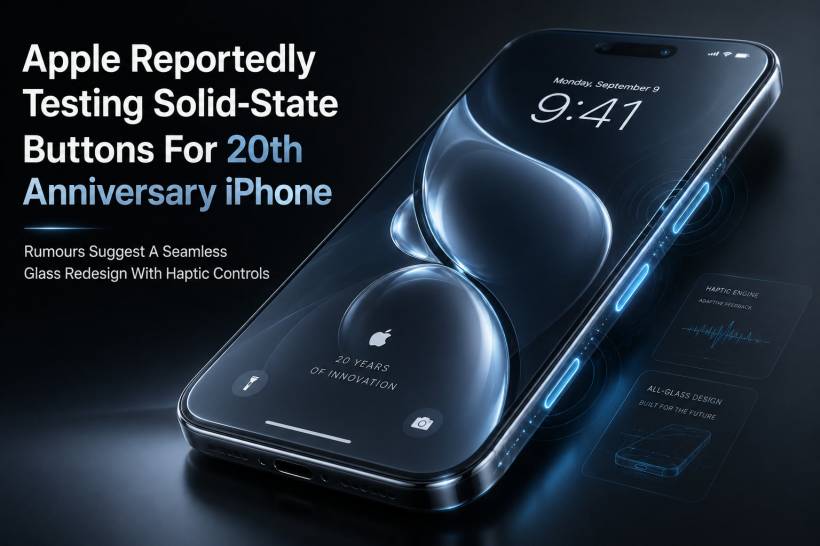
Apple's 20th anniversary iPhone is already starting to sound like one of the company's most ambitious redesigns in years, at least based on the rumours currently making their way around the tech world. The latest claim suggests that Apple is testing solid-state buttons for the device, which could mark another step away from traditional moving parts on the iPhone.
According to Chinese tipster Instant Digital, Apple has been experimenting with solid-state buttons for what many are informally calling the anniversary iPhone. The device is expected to arrive next year and is widely rumoured to feature a major design overhaul to celebrate two decades of the iPhone.
Of course, as with most early Apple rumours, it is best to treat this carefully for now. Apple tests many ideas internally, and not everything makes it into the final product. Still, the details being shared are interesting because they line up with Apple's long-running direction of simplifying hardware, reducing mechanical components, and making the iPhone feel more seamless.
What Are Solid-State Buttons?
Traditional phone buttons physically move when pressed. You feel the click because there is a real mechanical switch underneath. Solid-state buttons work differently. Instead of physically depressing like a normal button, they detect pressure or touch and then use haptic feedback to simulate the feeling of a click.
Apple already has experience with this idea. The Home button on the iPhone 7, iPhone 8, and iPhone SE models was not a real clickable button in the traditional sense. It used the Taptic Engine to create the sensation of a press. Apple also used a similar approach on MacBook trackpads, where the trackpad feels like it clicks even though the mechanism is not moving in the same way as older designs.
So the idea itself is not new to Apple. What would be new is applying it more broadly to the iPhone's side buttons, especially if Apple replaces the volume and power buttons with solid-state alternatives.
Testing For Real-World Use
One of the more interesting parts of the rumour is that Apple has reportedly tested these buttons under practical daily conditions. This includes situations involving gloves, wet hands, and extreme temperatures.
That part matters because solid-state buttons can sound futuristic, but they also need to work reliably in normal life. A phone button cannot only work perfectly in a clean lab environment. It has to work when someone is walking in the rain, using the phone with slightly damp fingers, wearing gloves, or dealing with hot and cold outdoor conditions.
The report also claims that the buttons may use a dedicated low-power chip. This chip would allow the phone to detect button presses and provide haptic feedback even when the device is switched off. That would be important because users still expect certain physical controls to work in power-related situations, such as turning the phone on or triggering basic functions.
If Apple really does go down this route, reliability will be one of the biggest areas to watch.
A New Design Built Around Glass
The solid-state buttons are reportedly part of a much bigger design shift. The anniversary iPhone is said to feature an all-glass design with a quad-curved display. In simple terms, the screen may curve into all four sides of the device, creating a more continuous surface with fewer visible breaks between the front and the edges.
This would be a very different look compared to the current flat-sided iPhone design. Apple has been using a sharper, more squared-off body style for several generations now, so a curved all-glass approach would feel like a major change.
The rumoured design may also use a new generation of Ceramic Shield across both the display and the sides of the phone. If true, that could help improve scratch resistance and durability, which would be especially important for a device with more exposed glass surfaces.
A phone with glass flowing around its sides would certainly look futuristic. The bigger question is whether it would remain practical in daily use.
Under-Display Technology Could Make The Front Cleaner
The anniversary iPhone is also rumoured to push Apple closer to a truly uninterrupted front display.
Reports suggest that Apple may include under-display Face ID, which would allow the facial recognition hardware to sit beneath the screen rather than requiring a visible cutout. The selfie camera may also be placed under the display using a dual-layer or tandem OLED panel.
If Apple manages to combine these technologies properly, it could reduce or even remove the need for the Dynamic Island. That would be a major visual change because Apple has been slowly shrinking and rethinking the front display cutout since the iPhone X first introduced the notch.
There is also talk of "under-display sound" technology. This would remove the need for a traditional earpiece speaker cutout by allowing sound to pass through the display area instead. Combined with under-display Face ID and camera hardware, this would help Apple create a much cleaner front surface.
The direction is clear: fewer holes, fewer interruptions, and more screen.
A Larger Battery And Reverse Wireless Charging?
Another rumoured feature is a 6,000mAh battery. If accurate, that would be a significant jump for the iPhone lineup.
Battery life has become one of the most important buying factors for smartphone users. As displays get brighter, cameras become more advanced, and AI features become more common, battery demands continue to increase. A larger battery would make sense, especially if Apple plans to introduce a more advanced display and additional always-on or haptic-related hardware.
Reverse wireless charging is also being mentioned. This feature would allow the iPhone to charge other devices wirelessly, such as AirPods or possibly an Apple Watch, by placing them on the back of the phone. Android brands have offered this for years, but Apple has never fully introduced it as a mainstream iPhone feature.
If it finally arrives on the anniversary model, it would be a welcome addition for users already invested in the Apple ecosystem.
The "Glasswing" Codename
Mark Gurman has reportedly shared that Apple internally refers to this anniversary iPhone as "Glasswing." The name is said to be inspired by the glasswing butterfly, which has transparent wings.
That codename fits the kind of design being described. A phone with curved glass edges, a seamless display, and fewer visible hardware interruptions would naturally lean into a more transparent, fluid design language.
It also suggests that Apple may be thinking about this device as more than just another yearly iPhone refresh. The company could be trying to create a symbolic model, similar to how the iPhone X represented the 10th anniversary of the iPhone with a major redesign, Face ID, and the removal of the Home button.
If the rumours are accurate, the 20th anniversary model may be positioned as another milestone device.
Liquid Glass As A Software Extension
The "Glasswing" idea may not only apply to hardware. Apple's Liquid Glass interface is also reportedly expected to evolve in a way that better matches the physical design of the phone.
The idea here is that the software would visually feel connected to the curved glass hardware. Instead of the interface simply appearing on top of the screen, Apple may want animations, transparency, depth effects, and UI elements to feel like they belong to the shape of the device itself.
This is very Apple in concept. The company has always cared about the relationship between hardware and software. But with a more glass-focused iPhone design, that connection could become even more obvious.
Done well, it could make the device feel more cohesive and futuristic. Done poorly, it could become more visual flair than practical improvement.
The Practical Concerns Are Real
As exciting as the rumoured design sounds, it also raises some fair concerns.
A phone with curved glass on all sides may look beautiful, but it could also be more vulnerable to damage. More glass usually means more areas that can scratch, crack, or absorb impact during a drop. Even with stronger Ceramic Shield protection, physics still matters.
Grip may also become an issue. Flat sides give users something more defined to hold. A device with flowing curved edges may feel smoother, but it could also feel more slippery depending on the material and shape.
Accidental touches are another possible problem. Curved displays on Android phones have gone through this issue before, especially when the screen extends too far into the sides. Apple would need very good palm rejection and software tuning to avoid making the phone frustrating to use.
The solid-state buttons may also divide users. Some people may love the clean design and haptic feedback. Others may still prefer the confidence of a real physical button, especially for important controls like power and volume.
Apple Will Need To Balance Beauty With Usability
Apple is usually careful when introducing major hardware changes. The company often waits until a technology is mature enough before bringing it to a mainstream product. That does not mean Apple always gets everything right, but it rarely launches radical changes without thinking deeply about the user experience.
That balance will be very important here. A 20th anniversary iPhone cannot just look impressive in product photos. It has to survive pockets, drops, heat, rain, cases, chargers, long daily use, and millions of users pressing its buttons every day.
The design can be bold, but it still needs to be practical.
Final Thoughts
The rumoured 20th anniversary iPhone sounds like Apple may be preparing its most dramatic redesign since the iPhone X. Solid-state buttons, an all-glass quad-curved display, under-display Face ID, under-display audio, a larger battery, and reverse wireless charging would all represent meaningful changes if they make it into the final product.
At the same time, this is still rumour territory. Apple may be testing these features now, but testing does not always mean shipping. Some ideas may be delayed, changed, or dropped entirely before launch.
Still, the direction is interesting. Apple appears to be exploring an iPhone that feels cleaner, more seamless, and more closely connected between hardware and software. If the company can make that design durable and comfortable enough for everyday use, the so-called iPhone 20 could become a true milestone device rather than just another yearly upgrade.











Comments 0