

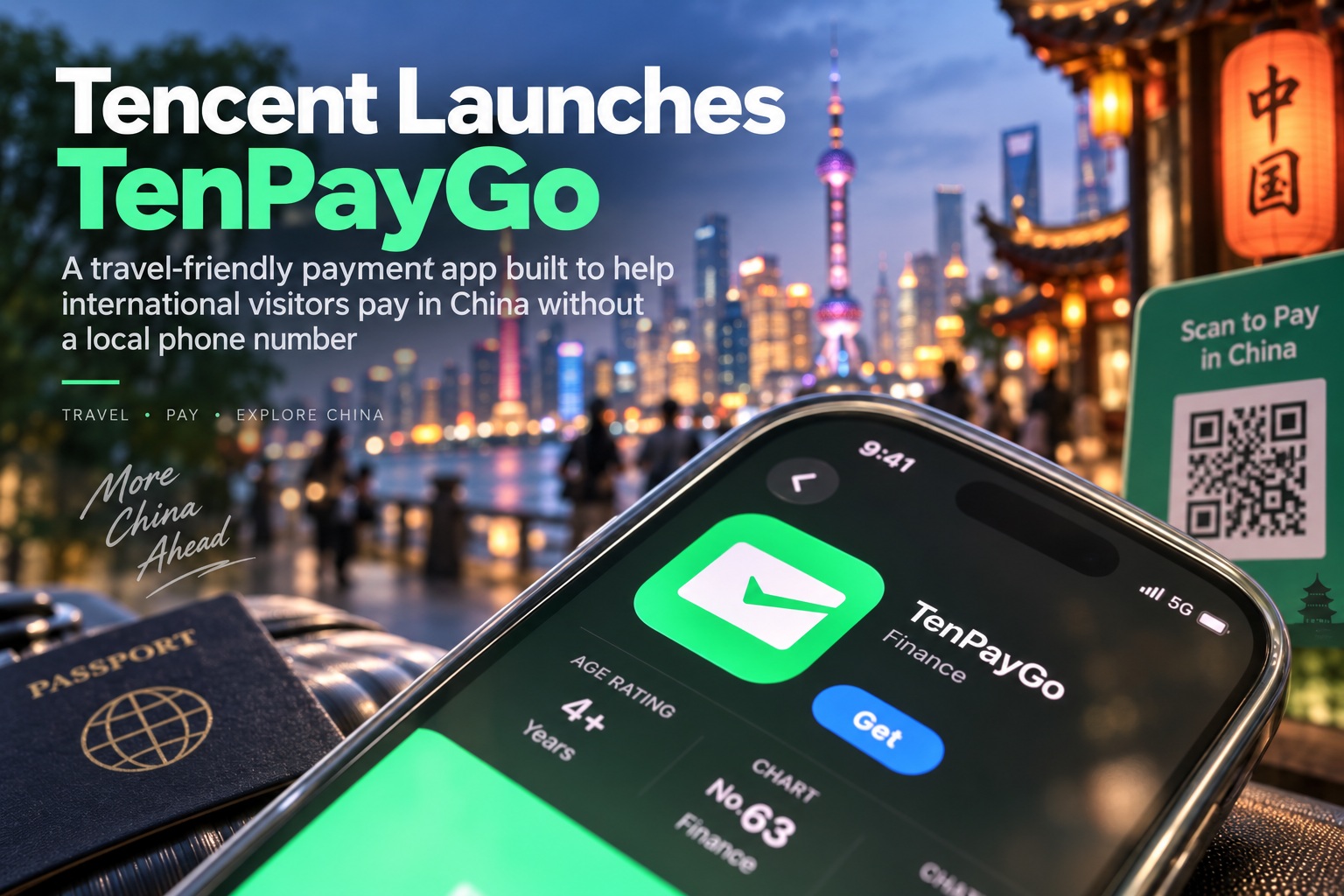
Tencent has introduced TenPayGo, a new mobile payment app created specifically for international travellers visiting China. Developed by the team behind WeChat Pay, the app is designed to remove some of the friction foreign visitors can face when trying to use China's heavily digital payment ecosystem. Instead of requiring a Chinese mobile number or local payment account, TenPayGo allows travellers to register using an email address and connect payment methods they already use overseas.
Tencent Launches TenPayGo to Make Payments Easier for Travellers Visiting China
Tencent has introduced TenPayGo, a new mobile payment app created specifically for international travellers visiting China. Developed by the team behind WeChat Pay, the app is designed to remove some of the friction foreign visitors can face when trying to use China's heavily digital payment ecosystem. Instead of requiring a Chinese mobile number or local payment account, TenPayGo allows travellers to register using an email address and connect payment methods they already use overseas.
The launch comes as China continues to see stronger inbound tourism and prepares for major international events, including the upcoming APEC summit in Shenzhen. Tencent unveiled the app during an international payment services event in Shenzhen, positioning TenPayGo as a more travel-friendly extension of its existing WeChat Pay infrastructure.
A Payment App Built Specifically for International Visitors
Tencent already operates one of China's largest digital payment networks through Weixin Pay, known internationally as WeChat Pay. That service is deeply integrated into the WeChat ecosystem and is used across mainland China for everything from restaurants and retail stores to transport and attractions.
TenPayGo takes a more focused approach. Instead of expecting overseas visitors to adapt themselves to the local payment setup, the app is designed around the needs of short-term travellers. Users can create an account using an email address, removing the need to obtain a Chinese phone number simply to begin making payments.
This makes the onboarding process more straightforward for visitors who may only be staying in China for a few days or weeks.
No Chinese Phone Number Is Required
One of TenPayGo's biggest advantages is that registration does not require a local Chinese mobile number. That alone removes a common obstacle for travellers who may be relying on roaming, international SIMs or travel eSIMs rather than purchasing a local line.
Once registered, users can connect bank cards issued outside China from seven major international card networks, including Visa and Mastercard. This allows travellers to continue using their existing cards while paying through the familiar QR-based system used throughout China.
The app is available through both the Apple App Store and Google Play, following an earlier period of limited testing before the full launch.
Support Extends Beyond Bank Cards
TenPayGo also supports approximately 60 international digital wallets, expanding its usefulness beyond conventional debit and credit cards. Supported services include platforms such as Hipay, Starryblu and Octopus, among others.
The coverage is not universal, however. While there are integrations aimed at users from markets such as Singapore and Thailand, the current selection does not include some popular Malaysian services. ShopeePay Malaysia, Touch 'n Go eWallet and Boost, for example, are not listed among the supported options.
Malaysian travellers can still use compatible international bank cards where supported, but direct integration with the country's major e-wallets would make the experience considerably more convenient.
Payments Work Across the WeChat Pay Network
Once a bank card or supported digital wallet has been linked, travellers can use TenPayGo to scan and pay at tens of millions of merchants connected to Tencent's WeChat Pay network.
That includes shops, restaurants, tourist attractions and other businesses that already rely on QR payments. For visitors, this means TenPayGo does not need to build an entirely separate merchant network; it can take advantage of Tencent's existing payment infrastructure across China.
This is particularly important because mobile payments are deeply embedded in everyday life in many Chinese cities. A visitor who depends entirely on cash or foreign credit cards may still encounter places where QR-based payments are far more convenient.
It Provides an Alternative to Setting Up a Local Account
Before services like TenPayGo, overseas visitors sometimes needed to go through additional steps to access local payment systems. Registration requirements, phone numbers and identity checks could make the process feel unnecessarily complicated for someone simply trying to pay for lunch or buy a metro ticket.
TenPayGo is effectively trying to sit between the traveller and that complexity. Users retain their overseas financial account while Tencent handles the connection to its local payment network.
That makes the app particularly suitable for tourism. The traveller does not need to completely enter China's domestic financial ecosystem just to participate in the country's cashless economy.
Public Transport Is Integrated, Starting With Shenzhen
Tencent is also extending TenPayGo beyond ordinary retail payments. The app includes support for public transport, although the feature is currently limited to Shenzhen.
Visitors can activate a ride code inside the app and use it across the city's buses and metro network. There is no need for a local phone number or separate physical transport card, which could make short visits considerably easier.
This type of integration is useful because transportation is one of the first challenges visitors face after arriving in an unfamiliar city. If payment and transport access can both be handled inside the same application, TenPayGo starts becoming more of a travel companion than simply a payment wallet.
Translation Tools Aim to Make Daily Travel Easier
TenPayGo also includes features intended to help visitors navigate language barriers. One of these is instant menu translation, which can assist travellers ordering food in restaurants where English translations are unavailable.
Another tool allows users to scan what is on their screen and circle an object to identify it. This can help with unfamiliar products, signs or other items encountered during a trip.
These tools suggest Tencent is trying to build TenPayGo around the wider travel experience rather than limiting it strictly to financial transactions. Payment may be the central feature, but translation and navigation functions could make the app more useful throughout the day.
Tax Refund Support Is Also Planned
Tencent says it is working with Chinese banks to add a tax-refund feature to TenPayGo. The company has not yet announced when the functionality will become available, but it could eventually simplify another process commonly encountered by international shoppers.
If implemented properly, travellers may be able to manage part of the tax-refund process from within the same app they already use for payments. This would reduce the need to switch between separate services or manually handle paperwork at different stages of the trip.
The feature is still under development, so details about eligibility, participating retailers and supported regions remain unclear.
TenPayGo Could Be Particularly Useful for First-Time Visitors
For regular visitors to China, existing payment setups may already be familiar. First-time travellers, however, can find the country's highly digital payment environment quite different from places where physical credit cards remain dominant.
TenPayGo addresses that learning curve by giving visitors a more familiar entry point. Email registration, overseas cards and international wallets make the service feel closer to the payment systems travellers already understand.
The app also reduces the pressure to prepare everything before arrival. Instead of organising a local phone number, transport card and separate translation tools, users can potentially handle several of those needs through one platform.
Malaysia Support Could Still Improve
For Malaysian travellers, the missing support for local e-wallets is one area where TenPayGo still has room to grow. Touch 'n Go eWallet, Boost and ShopeePay are widely used locally, and direct integration would make the transition into China's payment ecosystem much smoother.
Even without those services, compatible Visa and Mastercard cards still provide a practical route for many travellers. But broader wallet integration would reduce dependence on cards and make the app feel more inclusive across Southeast Asia.
As TenPayGo expands, it would not be surprising to see Tencent add more regional partners, especially if adoption among international visitors grows.
Final Thoughts
Tencent's TenPayGo is a practical response to one of the biggest friction points for international visitors to China: paying for everyday things in a country where mobile QR payments dominate.
By allowing users to register with an email address, link overseas bank cards and supported digital wallets, and pay across the existing WeChat Pay merchant network, the app removes much of the complexity associated with setting up local payment access.
The added Shenzhen transport support, menu translation, object identification and planned tax-refund tools also give TenPayGo a broader purpose beyond transactions.
For Malaysian travellers, the absence of major local e-wallets such as Touch 'n Go eWallet and Boost is still a limitation. Even so, the ability to use existing international cards without needing a Chinese phone number makes TenPayGo a potentially useful tool for anyone planning a trip to China.
The bigger idea is simple: visitors should not need to rebuild their entire payment setup just because they crossed a border. TenPayGo is Tencent's attempt to make China's digital payment ecosystem feel much more accessible from the moment travellers arrive.











Comments 0