

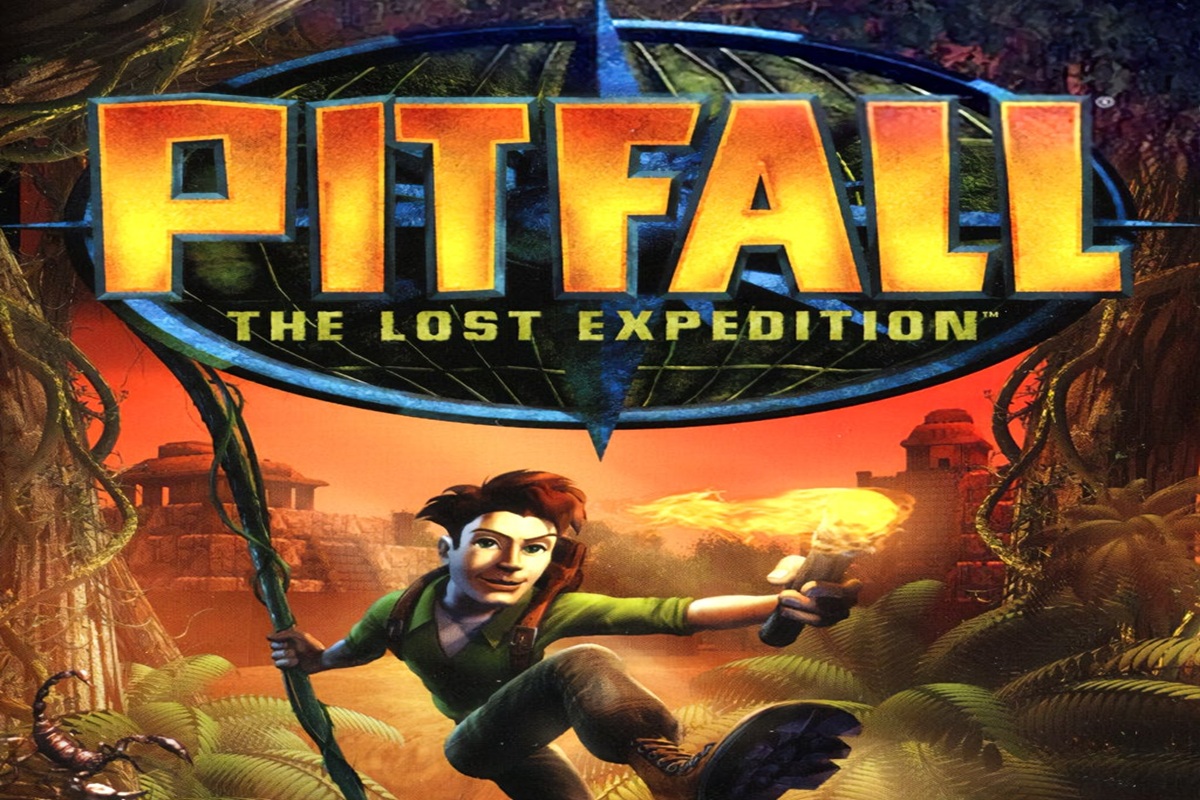
Pitfall: The Lost Expedition brings one of gaming's earliest adventure heroes back into action with a larger, more varied journey built around platforming, exploration, dangerous wildlife, hidden treasure, and classic jungle hazards. Pitfall Harry once again finds himself surrounded by crocodiles, collapsing platforms, swinging vines, hostile creatures, ancient ruins, and plenty of opportunities to fall somewhere he definitely does not want to be. The Game Boy Advance version takes inspiration from the wider Lost Expedition adventure while building its own handheld-focused structure around side-scrolling stages, top-down exploration, mini-games, and boss encounters. It feels both nostalgic and distinctly early-2000s, combining ideas from the original Pitfall games with the broader design of a portable action-platformer.
The adventure begins after an expedition goes badly wrong, leaving Harry separated from the other survivors and forcing him to head into dangerous unexplored territory. What starts as a rescue mission gradually becomes a much larger journey through jungles, swamps, caverns, mountains, ancient structures, and other hostile environments. Harry must track down missing explorers, navigate environmental hazards, recover useful items, and deal with enemies standing between him and his objective. The story provides a lighthearted adventure framework, but the real focus remains on movement, timing, exploration, and surviving the increasingly elaborate obstacles placed in Harry's path.
Now playable online through Lemon Web Games, Pitfall: The Lost Expedition brings this classic handheld adventure directly into modern web browsers without requiring the original console. Players can swing from vines, jump across dangerous gaps, explore overhead environments, fire Harry's slingshot, collect treasure, and tackle the varied mini-game challenges that separate the major platforming sections. The browser-based version provides an easy way to revisit a game that attempted to modernize one of Activision's oldest franchises while still respecting the hazards and adventurous personality of the original Pitfall. Whether you remember Pitfall Harry from the Atari era or discovered him through later games, The Lost Expedition offers an entertaining look at how the series evolved for a new generation.
The Return of One of Gaming's Earliest Adventure Heroes
Pitfall Harry was already a gaming icon long before many of the mascot characters that later defined the platforming genre appeared. The original Pitfall! placed players in a dangerous jungle filled with pits, rolling logs, scorpions, crocodiles, vines, and treasure, establishing many ideas that would become familiar in later action-platformers. Its simple controls hid a demanding game built around timing and route planning. The character became closely associated with adventurous jungle exploration and environmental danger.
The Lost Expedition revisits that identity while giving Harry considerably more ways to interact with his surroundings. He can jump, double-jump, swing from vines, climb ledges, crawl through narrow passages, attack enemies, and use a variety of tools and special moves. These expanded abilities allow the level design to become much more elaborate than the comparatively simple screens of the Atari original. At the same time, recognizable hazards such as crocodiles and dangerous jungle creatures maintain a connection to the franchise's roots.
The Game Boy Advance version does not attempt to recreate the original game exactly or simply shrink the home-console edition. Instead, it interprets the Pitfall concept through a mixture of traditional platforming and portable-friendly gameplay modes. This gives the adventure its own personality while keeping Harry's central role unchanged. He is still an explorer surviving situations that frequently look one mistimed jump away from disaster.
A Handheld Adventure Rather Than a Direct Console Port
An important distinction is that the Game Boy Advance edition of Pitfall: The Lost Expedition is its own game rather than a direct conversion of the PlayStation 2, GameCube, Xbox, and PC versions. It shares characters, themes, and the general adventure concept, but its stages and gameplay structure were redesigned specifically for the handheld. Instead of presenting a continuously connected 3D world, the GBA version divides Harry's journey into individual challenges and several different styles of play. This makes it a substantially different experience even for players familiar with the console release.
Traditional side-scrolling platforming forms the largest part of the adventure. These stages closely reflect the classic Pitfall formula, requiring Harry to cross gaps, swing from vines, avoid environmental traps, defeat enemies, and search for routes through increasingly complicated environments. The stages are joined by overhead exploration sequences and specialized mini-games that change both the perspective and the objectives. Boss encounters then provide larger challenges at important points in the journey.
This variety suits the portable hardware surprisingly well. Instead of attempting to imitate a large 3D adventure beyond the system's strengths, the developers built several gameplay styles around the controls and screen size of the Game Boy Advance. The result occasionally feels like several different adventure-game ideas combined into one package, but that is also part of its appeal. Players are rarely performing exactly the same activity for too long.
Traditional Side-Scrolling Pitfall Action
The side-scrolling stages provide the strongest connection to Harry's original adventures. Players move through layered jungle environments, caves, ruins, snowy areas, and other dangerous locations while carefully judging jumps and reacting to rapidly moving hazards. Vines provide opportunities to swing across gaps, while ledges and elevated platforms demand accurate positioning. The familiar idea of moving through a hostile environment remains at the heart of these sections.
Harry's greater mobility makes these stages more elaborate than the original Pitfall. He can perform a double jump to reach distant platforms or correct a difficult leap after leaving the ground. He can also grab ledges, allowing certain near-misses to become recoverable rather than immediately resulting in failure. Crawling and somersaulting through tight spaces introduce another form of movement when ordinary running and jumping are not enough.
Hazards are frequently arranged in sequences rather than appearing as isolated obstacles. Players may need to avoid a rolling object, immediately jump toward a vine, swing across a dangerous gap, and land near another enemy with little time to stop. These sections reward observation and rhythm as much as raw reflexes. Successful movement can feel particularly satisfying when several hazards are cleared in one continuous sequence.
Vine Swinging Keeps the Classic Pitfall Spirit Alive
Swinging from vines is one of the mechanics most closely associated with Pitfall Harry, and The Lost Expedition naturally brings it back. Vines are frequently positioned above water, pits, hostile creatures, or other hazards that cannot safely be crossed on foot. Harry must jump toward the vine, catch it, build the correct movement, and release at the right moment to reach the opposite side. A poor release can result in Harry falling directly into whatever danger the vine was supposed to help him avoid.
The mechanic becomes more demanding when multiple vines or moving hazards are involved. Players may need to transfer from one vine to another or time their release so that Harry lands on a relatively small platform. The surrounding environment can also make the destination difficult to judge at first glance. Learning how Harry carries momentum through a swing becomes increasingly useful.
These moments are among the clearest reminders of the series' heritage. The graphics, controls, and level structure are far more advanced than the original Atari game, but the basic thrill of swinging over something dangerous remains unchanged. It is a simple mechanic that has been associated with Pitfall for decades. The Lost Expedition wisely treats it as a central part of Harry's movement rather than a nostalgic reference used only once.
Double Jumps, Ledge Grabs, and More Flexible Movement
Harry's expanded movement gives players considerably more control than the early Pitfall games provided. The double jump is especially useful because it allows additional height and distance after Harry is already airborne. This can save a badly judged jump or make otherwise unreachable platforms accessible. It also allows the developers to create more complicated vertical layouts.
Ledge grabbing provides another important safety mechanic. If Harry reaches the edge of a platform without landing cleanly, he can often catch himself and climb up rather than falling. This makes the game somewhat more forgiving while still requiring the player to judge jumps carefully. Later sequences frequently assume that players understand how to combine jumping, ledge grabbing, and other movement abilities.
Harry can also move through confined spaces by rolling or performing other specialized movement actions. These routes often lead underneath obstacles that cannot be crossed normally or into areas containing additional rewards. The variety of movement gives levels more opportunities to hide alternate paths. It also makes Harry feel like a much more capable adventurer than his earliest incarnation.
The Slingshot Gives Harry a Reliable Ranged Attack
Pitfall Harry does not need to avoid every enemy he encounters. The Lost Expedition equips him with a slingshot that allows players to attack creatures and other threats from a distance. This becomes particularly useful when an enemy is positioned near a dangerous platform or guarding a route Harry needs to cross. Eliminating the threat before jumping is often much safer than attempting to land beside it.
The slingshot also plays a role during several boss encounters. Rather than defeating every major enemy through direct physical attacks, players may need to wait for a vulnerable moment and then fire from the correct position. This places greater emphasis on recognizing attack patterns. Simply firing continuously is rarely enough against stronger opponents.
Additional offensive abilities become available as the adventure progresses. Harry can eventually gain access to options such as bombs and throwable beehives, giving him more ways to deal with enemies. Special moves can also expand his combat possibilities. These additions keep the relatively simple combat system from remaining completely unchanged throughout the adventure.
Top-Down Exploration Changes the Pace
Not every level is viewed from the side. The game regularly switches to overhead exploration stages that present Harry and his surroundings from a completely different perspective. These sections are slower and more navigation-focused, providing a break from precise jumping and vine swinging. Instead of crossing bottomless pits, Harry explores larger spaces while searching for objectives and avoiding enemies.
A common goal involves locating stranded expedition members scattered throughout the area. Harry must navigate the environment, find the missing explorers, and rescue enough of them to open the way forward. This creates a more deliberate style of play where understanding the layout is more important than making precise jumps. The overhead perspective also gives environments a different sense of scale.
Harry's movement options are reduced during these sequences because ordinary platforming mechanics are no longer the focus. The change can initially feel unusual after several side-scrolling stages, but it helps diversify the adventure. Players who enjoy exploration may appreciate the opportunity to search through environments without constantly worrying about perfectly timed jumps. These stages give the game a small action-adventure flavor alongside its platforming foundation.
Mini-Games Introduce Completely Different Challenges
The Lost Expedition regularly uses mini-games to connect larger parts of Harry's journey. These sequences often involve specialized equipment or vehicles and operate differently from the ordinary platforming stages. Rather than using exactly the same controls throughout the entire adventure, players must quickly adapt to whatever challenge the next expedition segment introduces. This makes the overall campaign surprisingly varied.
Hang-gliding sequences send Harry through the air while avoiding obstacles and dealing with threats along the route. Other challenges involve equipment such as a pogo stick, changing the way Harry moves and forcing players to concentrate on timing rather than ordinary running. Water-based sequences and other obstacle-course ideas further expand the variety. These mini-games are generally shorter than the main platforming stages but provide memorable transitions.
Their quality can vary because each introduces its own control style, but they prevent the game from becoming a repetitive sequence of nearly identical jungle levels. One moment may involve carefully swinging between vines, while the next asks the player to navigate an aerial obstacle course. This willingness to experiment reflects the era in which many handheld games attempted to provide several different gameplay types within a single cartridge. For The Lost Expedition, it helps reinforce the idea that Harry's journey is constantly moving through new situations.
Treasure Hunting and Collectible Rewards
Treasure naturally plays an important role in an adventure starring Pitfall Harry. Coins and other collectible rewards are scattered throughout the stages, often positioned in places that encourage players to leave the safest route. Some are relatively easy to collect, while others require additional platforming, exploration, or careful timing. Players interested in discovering everything therefore have reasons to investigate beyond the immediate objective.
Collectibles are more than simple score bonuses because they can contribute toward improving Harry's capabilities. Accumulated treasure can be used to gain or strengthen useful moves, giving exploration a practical reward. This creates a light progression system without turning the game into a full RPG. Harry gradually becomes more capable while the player becomes more comfortable with the controls.
The system also gives completed levels some replay value. A player who initially focused on simply reaching the exit may later return to search for missed treasure. Improved abilities can make certain sections easier or encourage a more aggressive approach. The progression is relatively straightforward, but it complements the treasure-hunting theme well.
Unlocking New Moves and Combat Options
Harry's abilities do not remain completely static throughout the adventure. Progression gradually introduces additional moves that expand how he can deal with enemies and environmental challenges. These include stronger attacks and specialized actions that make Harry more capable than he was during the opening stages. Collecting enough rewards becomes one way of improving his overall effectiveness.
Moves such as the Tornado Spin provide Harry with a broader offensive range when enemies approach from close distances. Other abilities improve how he attacks or interacts with specific threats. Bombs and beehives can offer additional ways of clearing dangerous situations without relying exclusively on the slingshot. These mechanics are simple compared with modern skill trees, but they give the game a useful sense of growth.
The additional moves also encourage experimentation. A threat that initially required careful avoidance may become easier once Harry acquires a stronger offensive option. Players can choose whether to spend time collecting enough treasure for improvements or continue relying primarily on their platforming skills. This flexibility helps keep the adventure accessible to different play styles.
Jungle Wildlife Provides Constant Danger
A Pitfall game would not feel right without wildlife attempting to turn Harry's expedition into a disaster. Crocodiles remain one of the franchise's most recognizable hazards, particularly when Harry needs to cross waterways or narrow areas where their jaws create dangerous timing challenges. Piranhas, mosquitoes, and other hostile creatures add further problems throughout the journey. Even seemingly harmless terrain can become dangerous when wildlife is positioned around a difficult jump.
Some enemies can be eliminated using Harry's slingshot or other attacks, while others are better treated as environmental hazards. The safest strategy is not always to fight everything immediately. Observing movement patterns can reveal a better opportunity to pass without taking damage. This makes certain encounters feel closer to platforming puzzles than conventional combat.
The variety of creatures also helps establish the expedition atmosphere. Harry is not exploring controlled environments built specifically for him; he is moving through places where almost everything appears capable of attacking, biting, stinging, or swallowing him. The exaggerated danger is part of the franchise's humor. Even when the game becomes challenging, there is usually something playful about the ridiculous situations Harry finds himself facing.
Crocodiles and Other Classic Pitfall Hazards
Crocodiles deserve special mention because they are so closely tied to Pitfall's history. The sight of open jaws waiting beneath a platform immediately recalls the original games, where mistiming a jump could bring an expedition to an abrupt end. The Lost Expedition uses the same basic idea within much more elaborate environments. Players must still treat crocodiles with respect regardless of how many new abilities Harry has acquired.
Rolling objects, falling hazards, spikes, moving platforms, and other environmental traps add to the challenge. Some obstacles follow predictable patterns that can be studied before moving, while others require a quicker reaction. The best approach is often to stop briefly and understand what the environment is doing before committing to a jump. Rushing blindly usually creates unnecessary problems.
These traps are an important reason the game retains its Pitfall identity. Harry may now have a health meter, multiple attacks, and more forgiving movement, but the environment itself remains one of his greatest enemies. Successful play involves learning how each danger behaves and finding a safe route through it. That philosophy has been part of Pitfall since the beginning.
Swimming and Water-Based Challenges
Water introduces another style of environmental navigation. Certain sections allow Harry to swim rather than immediately treating every body of water as a fatal obstacle. Players need to navigate around aquatic threats, search for safe routes, and occasionally explore areas that would be inaccessible from dry ground. These sections change the movement rhythm and force players to pay attention to hazards from additional directions.
Piranhas and other dangerous creatures make swimming considerably less relaxing than it might sound. Entering the water can therefore become a calculated risk rather than a simple shortcut. Players need to understand where they are heading before committing themselves. The limited space available in some sections can make avoidance more difficult than on land.
Water also contributes to the sense that the expedition is crossing genuinely varied terrain. Harry is not simply running through endless jungle paths; he is moving through swamps, pools, caverns, rivers, and other environments that demand different approaches. These changes help the adventure maintain variety. They also provide natural places to reintroduce classic Pitfall dangers.
From Dense Jungle to Snowy Mountains
The environments change substantially as Harry travels deeper into the expedition. Lush jungle dominates some areas, with vines, dense vegetation, and wildlife creating the classic Pitfall atmosphere. Other regions move underground into caverns and ruins where visibility, narrow passages, and environmental traps become more important. The adventure eventually reaches colder mountain environments that provide a dramatic visual contrast.
Snowy areas introduce a very different atmosphere from the humid jungle. Ice, elevated terrain, and dangerous gaps make the landscape feel more exposed and unforgiving. Harry's movement abilities remain familiar, but the surrounding hazards force players to apply them differently. The transition also gives the adventure a stronger feeling of travelling across a large region.
Ancient structures provide another change of scenery, bringing the treasure-hunting theme to the foreground. Ruins, stone platforms, and mysterious architecture make these stages feel more like the destination of an archaeological expedition than ordinary wilderness. These visual shifts help each major section stand apart. For a handheld platformer, the variety of environments is one of the game's more enjoyable qualities.
Ancient Ruins and the Search for Treasure
Ancient ruins are a natural setting for Pitfall Harry because they combine platforming hazards with the promise of hidden discoveries. Stone structures create opportunities for vertical movement, collapsing sections, hidden rooms, and environmental puzzles. Players frequently need to examine their surroundings rather than assuming the obvious route is the only option. Treasure placed away from the main path further rewards curiosity.
The atmosphere also reinforces the larger expedition story. Harry is not merely crossing wilderness to reach another jungle; he is following clues toward places that explorers have been searching for. Ancient architecture suggests that something valuable or historically significant lies deeper within the region. This gives the later stages a stronger sense of destination.
Ruins also provide an ideal setting for boss encounters and larger traps. Narrow corridors, statues, platforms, and open chambers allow the game to create more deliberately constructed challenges than the natural environments. The progression from jungle survival toward ancient discoveries fits the classic pulp-adventure tone particularly well. It feels like the type of journey Pitfall Harry was created to experience.
Boss Battles Test Timing Rather Than Button Mashing
Each major part of the adventure eventually leads to a boss encounter. These battles generally require players to understand an enemy's attack pattern and wait for a brief opportunity to retaliate. Harry's slingshot is particularly important during several encounters because attacking from a distance is safer than standing directly beside a large enemy. Jumping and careful movement are equally necessary for avoiding incoming attacks.
Bosses frequently expose a vulnerable state only after completing a particular attack. Players who fire continuously without paying attention may waste opportunities or put Harry in unnecessary danger. The correct strategy usually involves surviving long enough to recognize the pattern. Once the opening becomes clear, the battle becomes a test of execution.
These encounters provide useful punctuation between the larger sets of platforming levels. After spending time rescuing explorers and navigating hazards, confronting a larger enemy gives each world a clear climax. The fights are mechanically straightforward, but they provide a welcome change of pace. They also reinforce the idea that Harry is progressing deeper into increasingly dangerous territory.
A More Forgiving Health System Than Classic Pitfall
The Lost Expedition is challenging, but it is far more forgiving than the earliest Pitfall games. Harry has a health meter that allows him to survive several mistakes rather than immediately losing a life after every collision. This gives players more room to learn enemy patterns and platforming sequences. A mistimed jump or enemy attack is therefore frustrating without always ending the attempt instantly.
Running out of health generally sends Harry back to the beginning of the current stage rather than ending the entire expedition. This reduces the punishment for failure while preserving the need to complete difficult sections successfully. Players can repeatedly practice an obstacle sequence until they understand the required timing. The structure is much more welcoming to younger or less experienced players than the unforgiving arcade-style design of earlier decades.
The game can still become demanding, especially when several hazards appear in quick succession. Longer platforming sequences may require repeated attempts before the rhythm becomes familiar. However, the continue-friendly design prevents failure from becoming unnecessarily destructive to overall progress. The challenge comes from mastering the stage rather than preserving a tiny number of lives for the entire adventure.
Animation Gives Harry Plenty of Personality
One of the more charming aspects of the handheld game is Harry's animation. His movements are deliberately exaggerated, giving jumps, falls, attacks, and reactions a playful quality. This suits a character who constantly finds himself surrounded by absurd dangers. Even failure can be entertaining when Harry reacts dramatically to whatever has just happened.
The animation also helps communicate movement clearly. Players can see when Harry is grabbing a ledge, entering a roll, firing the slingshot, or beginning another action. This is particularly important during stages where several mechanics need to be used in quick succession. Clear visual feedback makes the controls easier to understand.
The overall presentation avoids taking the expedition too seriously. Ancient ruins and dangerous wildlife may sound dramatic, but the game maintains a cartoon-adventure tone rather than becoming grim. Harry's personality plays an important role in that balance. He feels like a capable adventurer who is also frequently one mistake away from an embarrassing disaster.
Why the Game's Mixed Structure Works
Combining side-scrolling platforming, overhead exploration, mini-games, and boss battles could easily make the experience feel disconnected. In practice, the changing structure gives The Lost Expedition a rhythm that suits a long adventure. Precision-heavy stages are followed by slower exploration sections, while specialized mini-games introduce completely different controls before the game returns to traditional platforming. The variation prevents one mechanic from dominating the entire journey.
Not every gameplay type is equally deep. The overhead rescue stages are simpler than the side-scrolling sections, and some mini-games can feel more like temporary diversions than fully developed systems. However, their presence helps create the sensation of an expedition involving many different situations. Harry is constantly adapting rather than simply running from left to right.
For a portable game, this structure also works well with shorter play sessions. A player can complete a platforming stage, tackle a mini-game, or explore an overhead area without committing to a lengthy continuous chapter. The adventure remains connected through its story and progression even though the gameplay frequently changes. That makes it well suited to the handheld design philosophy of its era.
How The Lost Expedition Connects Old and New Pitfall
The most interesting thing about Pitfall: The Lost Expedition is how it attempts to modernize a franchise whose defining game was already more than two decades old when this adventure appeared. The developers could not simply reproduce the Atari design and expect it to feel like a contemporary platformer. Harry needed additional movement, combat options, progression, story scenes, and larger environments. At the same time, changing too much would risk losing what made Pitfall recognizable.
The handheld game finds its strongest moments when these two approaches overlap. Swinging from a vine over crocodiles feels completely faithful to the old series, while performing a double jump and firing a slingshot clearly belongs to a newer style of platformer. Treasure remains important, but now it contributes to upgrades rather than merely increasing a score. Dangerous wildlife remains everywhere, but Harry is better equipped to fight back.
This balance makes the game interesting even beyond simple nostalgia. It represents an attempt to answer a question many classic franchises faced during the early 2000s: how do you keep the identity of an old arcade-style game while adapting it to modern expectations? The Lost Expedition's answer is to preserve the environmental danger and adventurous tone while dramatically expanding Harry's abilities. The result is imperfect but unmistakably Pitfall.
Playing Pitfall: The Lost Expedition Online Today
Through Lemon Web Games, Pitfall: The Lost Expedition can now be played directly in your web browser with no downloads or setup required. Features of the web-based version include:
Playing The Lost Expedition through a browser provides a convenient way to revisit a handheld adventure built around the traditions of one of gaming's oldest platforming franchises. The side-scrolling sections remain easy to understand, while the combination of double jumping, vine swinging, ledge grabbing, and slingshot combat gives Harry enough flexibility to handle more elaborate stage designs. Frequent changes in perspective and gameplay prevent the journey from becoming entirely predictable. The result is especially enjoyable for players who appreciate platformers built around environmental hazards rather than complicated combat systems.
For returning players, the browser-based version offers an opportunity to rediscover the Game Boy Advance adaptation without confusing it with the substantially different home-console game carrying the same title. Newcomers can also see how developers attempted to translate classic Pitfall ideas into a more modern handheld adventure. Its graphics and mechanics naturally reflect the early 2000s, but the central platforming remains easy to understand. Swinging over crocodiles and narrowly escaping another dangerous obstacle still captures the simple appeal that has always defined Pitfall.
Who Should Play Pitfall: The Lost Expedition
The Lost Expedition is particularly suitable for players who enjoy platforming games where the environment itself provides most of the challenge. Crocodiles, pits, moving obstacles, hostile wildlife, narrow platforms, and timed hazards constantly force Harry to react to his surroundings. His expanded abilities make these challenges more flexible than those in the earliest Pitfall games, but success still depends on timing and observation. Players who enjoy learning the rhythm of a difficult section should find plenty to appreciate.
It is also worth playing for anyone interested in how older video game franchises were reinvented for newer hardware. Pitfall existed long before the Game Boy Advance, yet this version attempts to preserve recognizable elements while adding mechanics expected from a more modern platformer. The mixture of familiar jungle hazards and early-2000s adventure design gives it a distinctive identity. Even players unfamiliar with the original Atari game can enjoy it as a straightforward action-platforming adventure.
Play Pitfall: The Lost Expedition Online Now
Pitfall: The Lost Expedition delivers a varied adventure built around the skills that have always defined Pitfall Harry: running, jumping, swinging, exploring, and surviving environments where danger seems to exist in every direction. The Game Boy Advance version expands that foundation through double jumps, ledge grabs, slingshot combat, collectible treasure, special moves, overhead exploration, mini-games, and boss battles. These mechanics give players more control while maintaining the environmental challenges that made the franchise famous. From jungle wildlife to ancient ruins and snowy terrain, the journey continually introduces new situations for Harry to overcome.
Through Lemon Web Games, players can experience this handheld interpretation directly in a modern web browser without relying on the original cartridge or console. Returning fans can revisit its unusual mixture of gameplay styles, while new players can discover an adventure that connects one of gaming's oldest platforming characters with the design trends of the early 2000s. The controls are straightforward, but later obstacles still demand careful timing and persistence. For anyone looking for a classic jungle adventure filled with vines, treasure, hazards, and a constantly endangered explorer, The Lost Expedition remains an entertaining journey.
Final Thoughts
Pitfall: The Lost Expedition succeeds most clearly when it remembers what made Pitfall interesting in the first place. Swinging across a dangerous gap, avoiding crocodiles, timing a jump between moving hazards, and searching for treasure all connect directly to the adventurous spirit of the original games. The Game Boy Advance adaptation builds on those ideas with additional movement, ranged combat, upgrades, overhead exploration, mini-games, and boss encounters. Although some of these systems are simpler than others, their variety makes Harry's journey feel much larger than a straightforward sequence of platforming stages.
The handheld version is also worth appreciating on its own rather than treating it as a reduced copy of the console adventure. Its combination of side-scrolling stages, top-down rescue missions, and specialized mini-games creates a structure designed specifically around portable play. Harry's double jump, slingshot, ledge grabbing, and unlockable moves give players more ways to respond to danger while still preserving the importance of timing and environmental awareness. The changing locations further reinforce the feeling of a genuine expedition rather than an endless run through the same jungle.
More than two decades after its release, Pitfall: The Lost Expedition remains an interesting bridge between two very different eras of platform gaming. It carries the legacy of an Atari-era classic into a period dominated by more elaborate mascot adventures, expanding Pitfall Harry without completely abandoning the vines, crocodiles, treasure, and traps that made him famous. Through Lemon Web Games, players can once again follow Harry into dangerous territory, rescue stranded explorers, tackle unusual mini-games, and survive another expedition directly in their browser. For retro platforming fans and anyone curious about the evolution of one of gaming's earliest adventure franchises, it remains a journey worth taking.











Comments 0