

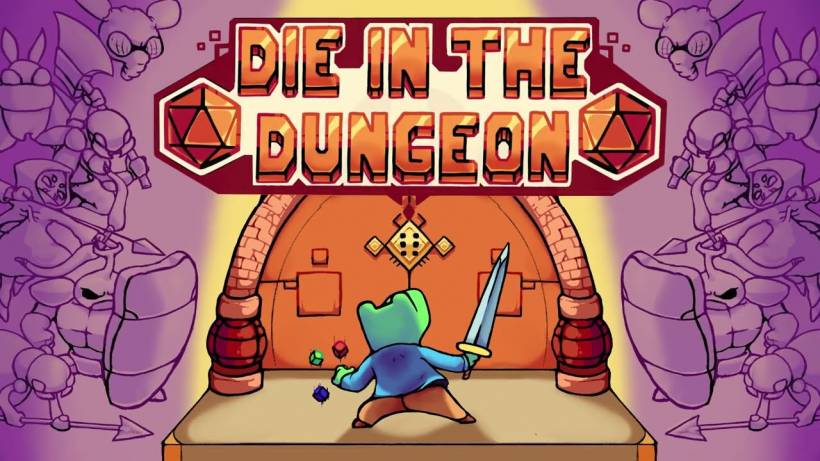
Die in the Dungeon is a tactical roguelike that finds a fresh angle on a familiar idea by replacing cards with dice. Instead of building a deck of spells or attacks, you build a set of dice that represent your options, and every turn becomes a puzzle about how to use what you rolled. It's a simple twist, but it changes the feel of decision-making in a way that's instantly engaging, because probability is always present, but strategy still matters more than luck.
What makes the game especially addictive is how quickly it gets you thinking. You're not just hoping for good rolls, you're learning how to structure your build so that even average rolls can lead to good outcomes. The best runs happen when you understand your tools well enough to adapt, and that adaptability is what turns each attempt into a satisfying little story of risk, planning, and recovery.
Now playable online through Lemon Web Games, Die in the Dungeon becomes an easy browser game to fall into, perfect for quick runs that often turn into longer sessions once you start chasing a stronger dice setup and a cleaner tactical flow.
A Dice System That Turns Randomness Into Strategy
Dice naturally suggest randomness, but Die in the Dungeon uses dice as a way to create constraints you must solve rather than chaos you must endure. Each roll gives you a set of possibilities, and the challenge is choosing the best path through them. That creates a feeling of agency even when the outcome isn't fully under your control, because your decisions shape how valuable each roll becomes.
This is what makes the design so satisfying. You start thinking about probability in a practical way, not as a math problem, but as a tactical reality. You learn which dice are reliable, which ones are high-risk, and how to combine them so your build has both power and consistency. Over time, the game stops feeling like a gamble and starts feeling like a puzzle you're getting better at solving.
It matters because it creates replay value without needing constant novelty. The same systems can produce different runs because your dice set changes and your decisions change. The variety comes from how you build and how you adapt, which is exactly what a good roguelike aims for.
Tactical Combat That Rewards Planning and Timing
Combat in Die in the Dungeon feels tactical because each turn asks you to think about sequencing. You're not just playing your strongest option immediately, you're considering whether it's better to set up, defend, or hold something back for a more dangerous moment. That kind of timing is what makes tactical games engaging, because the best decisions often involve restraint.
The game also encourages you to think in terms of momentum. A strong turn can create an opening, while a weak turn can be survivable if you planned for it. This is where the dice system shines, because it forces you to make the most of what you have, rather than relying on an ideal draw every turn.
It matters because this makes success feel earned. When you win a tough fight, it usually feels like you did something right, you managed risk, made smart choices, and stayed calm under imperfect conditions. That kind of victory is more satisfying than a win driven purely by lucky rolls.
Build Crafting and the Pleasure of Synergy
The longer you play, the more you realize Die in the Dungeon is really about building a machine. Your dice set becomes your toolkit, and the game invites you to shape that toolkit into something that suits your style. Some builds feel consistent and defensive, others feel explosive and risky, and the most satisfying runs are the ones where your dice begin working together in ways that feel intentional.
This is where the game's progression becomes exciting. Each upgrade or change to your dice set can shift how you approach combat. You start thinking about synergy, how one die supports another, how you cover weaknesses, and how you turn ordinary turns into strong ones through smart combinations.
It matters because build crafting is what makes roguelikes endlessly replayable. You're not just replaying the same content, you're exploring different identities. Each run becomes a chance to experiment with a new dice setup, and the game rewards that experimentation by making synergy feel powerful when you get it right.
Playing Die in the Dungeon Online Today
Through Lemon Web Games, Die in the Dungeon can now be played directly in your web browser with no downloads or setup required. Features of the web-based version include:
• Browser-friendly sessions ideal for short attempts and repeated runs
• Tactical turn-based gameplay focused on sequencing and smart risk management
• Dice-based build crafting that encourages experimentation and synergy
• No installation or setup friction, making it simple to return often
• A convenient way to enjoy a clever roguelike directly in your browser
Who Should Play Die in the Dungeon
• Anyone who likes deckbuilder-style strategy but wants a fresh twist
• Fans of dice mechanics where probability becomes part of planning
• People who enjoy build crafting and chasing synergy across repeated runs
• Casual players looking for a browser game with depth and strong replay value
• Anyone who likes games that reward adaptability more than perfect luck
Play Die in the Dungeon Online Now
Die in the Dungeon fits perfectly into browser play because it's built around runs that feel complete in a short time, but tempting enough to repeat immediately. You can jump in for a quick attempt, learn something, and stop, or you can keep going because the next run might produce a better build. That loop is exactly what makes roguelikes feel so addictive.
Playing it online also supports the experimentation mindset. Because starting is easy, you're more willing to try a different approach, test a new dice setup, and see what happens. Over time, that experimentation becomes its own reward, because you start discovering strategies that feel uniquely yours.
Final Thoughts
Die in the Dungeon succeeds because it makes randomness feel like a tool rather than a barrier. The dice system adds uncertainty, but it also creates a satisfying tactical puzzle each turn, pushing you to make smart choices under constraints. Combined with build crafting and synergy, it becomes a roguelike that feels fresh, thoughtful, and replayable.
What stays with you is the feeling of adaptation. You remember the turns where you salvaged a bad roll, the moments where a synergy finally clicked, and the runs where your dice set felt like a well-built machine. That sense of learning and improvement is exactly what makes the game addictive, and with Die in the Dungeon now playable online through Lemon Web Games, it's easy to jump back in anytime and see what kind of dice strategy you can build next.











Comments 0