

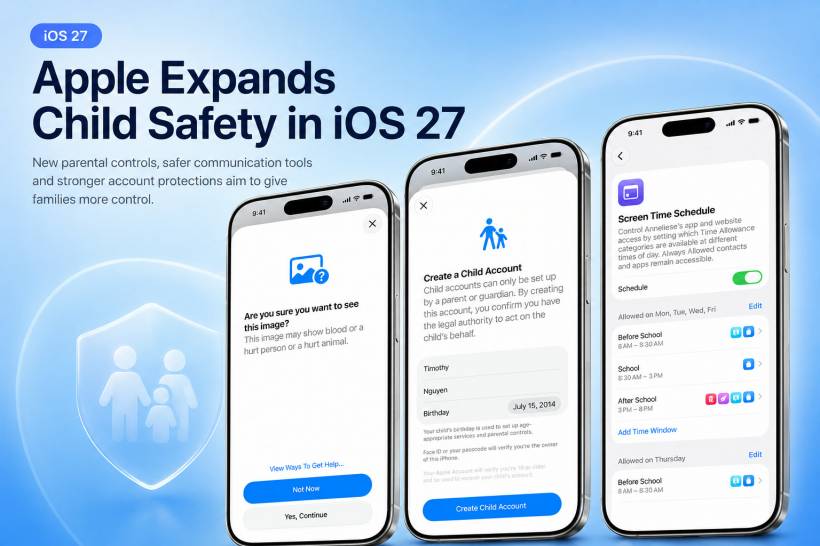
Apple is preparing a significant expansion of its child safety and parental control tools with iOS 27, iPadOS 27 and macOS 27. The changes are designed to help parents decide what children can access, who they can communicate with and when they can use particular apps.
The update includes a redesigned Screen Time experience, simpler child account setup, website approval requests, controls for new contacts and broader protection from sensitive visual content. Apple says the features will arrive through a Screen Time update alongside its operating system releases later this year.
While these tools may make family device management easier, their arrival also reflects growing pressure on Apple to take a more visible role in protecting children across its products and services.
Apple Is Finally Treating Child Safety as a Platform-Wide Issue
For years, Apple's public messaging around safety focused heavily on privacy, device security and protecting personal information. Those remain important priorities, but critics have argued that the company has not always acknowledged how deeply its devices, cloud services and App Store are woven into children's online lives.
That is why Apple's decision to dedicate a noticeable portion of its 2026 Worldwide Developers Conference presentation to child safety attracted attention.
Outside Apple Park, child safety advocate Sarah Gardner and the Heat Initiative were once again protesting what they described as gaps in Apple's protections. Gardner has repeatedly challenged the company to take stronger action against harmful apps, abusive material and services that can be misused against children.
Although she does not consider the new features revolutionary, Gardner described Apple's willingness to address the subject publicly as meaningful progress. In her view, the announcement suggests that Apple can no longer treat child safety as an issue belonging only to social media platforms or online content providers.
Pressure on Apple Has Been Building
The timing of Apple's announcement is important. The company is facing increasing scrutiny from campaigners, security specialists and legal authorities over how its platforms handle abusive content.
In February 2026, West Virginia filed a lawsuit accusing Apple of allowing iCloud to be used for storing and distributing child sexual abuse material. The state argues that Apple failed to implement sufficient detection measures, while Apple denies the allegations and maintains that protecting both children and user privacy remains central to its approach.
The dispute highlights a difficult question that technology companies have struggled with for years: How can a platform detect severe abuse without creating a surveillance system that could eventually be misused?
Apple previously attempted to answer that question with a system called NeuralHash. Announced in 2021, it was intended to identify known abusive images before they were uploaded to iCloud.
However, privacy advocates and security researchers warned that the same type of system might eventually be expanded beyond its original purpose. Critics worried that governments could pressure Apple to search for other types of material, potentially turning a child protection mechanism into a broader surveillance tool.
Apple delayed the system and eventually abandoned it, saying that it could not implement the technology without placing user security and privacy at risk.
The App Store Faces Its Own Safety Questions
Apple's App Store is another major part of the debate.
Advocacy groups have raised concerns about AI-powered applications capable of manipulating ordinary photographs to create fake intimate images. These tools are commonly known as "nudify" applications and can be misused to target real people without their knowledge or consent.
A review by the Tech Transparency Project reportedly identified 47 such applications on Apple's App Store in January 2026. Apple says these applications violate its policies and that it has rejected or removed many of them, including apps reported through the App Store's safety tools.
Critics nevertheless argue that enforcement appears inconsistent. Some problematic applications are removed after receiving public attention, while other platforms accused of enabling harmful AI-generated content remain available.
Apple's App Store guidelines prohibit pornographic material, abusive user-generated content and services primarily used to objectify or exploit real people. The bigger challenge is ensuring that those policies are applied consistently rather than only after an application becomes the subject of media coverage.
A Simpler Start for Child Accounts
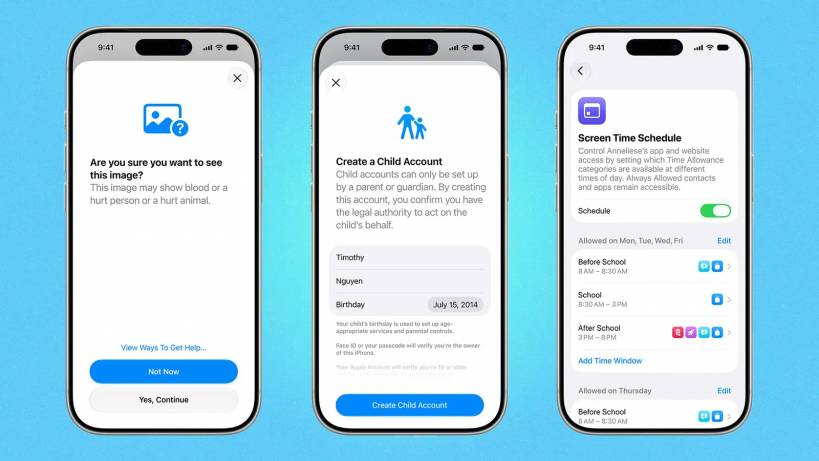
One of the most practical changes in iOS 27 is a redesigned setup process for child accounts.
When preparing a new device for a child, parents will be guided through age-appropriate protections covering websites, media and App Store restrictions. Apple says the process is intended to establish basic safeguards from the moment the child begins using the device.
Parents can choose from a small collection of essential apps, use Apple's recommended selection or manually decide which apps should initially be available. Additional apps can then be approved gradually as the child grows or their needs change.
This is a useful improvement because parental controls are often ignored when they are too complicated to configure. By moving the decisions into the initial setup process, Apple is making protection part of activating the device rather than something parents must search for later.
Ask to Browse Adds Permission Requests to Safari
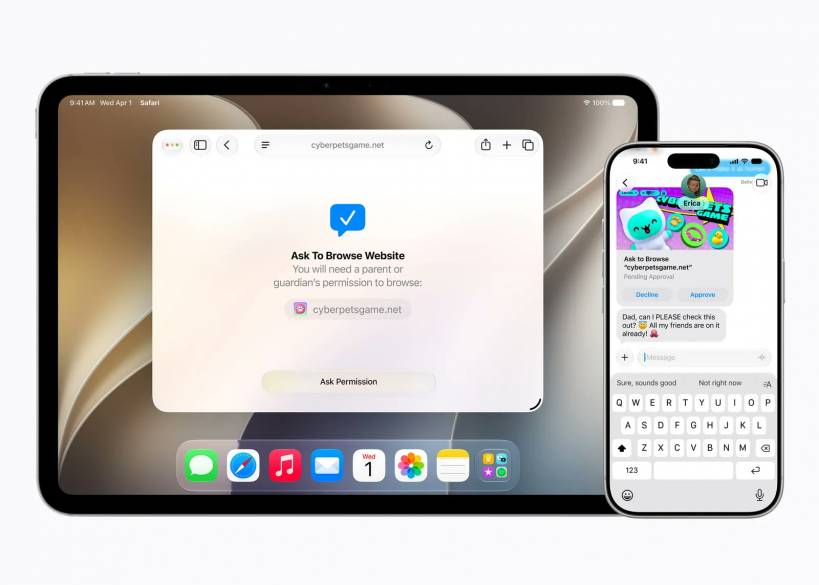
The new Ask to Browse feature extends parental approval to websites.
When the feature is enabled, children must request permission before opening a website that has not already been approved. The request appears in Messages on the parent's device, allowing the parent to review the website before accepting or rejecting it.
The system works similarly to Ask to Buy, which already requires children to request approval before downloading apps or making purchases.
This gives families a middle ground between completely open web access and blocking Safari altogether. A child can still research new topics or access unfamiliar websites, but a parent remains involved when the destination falls outside previously approved boundaries.
Of course, the feature will only be effective when parents respond thoughtfully. Automatically approving every request would defeat its purpose, while blocking everything could prevent children from accessing useful educational material.
Parents Can Approve New Contacts
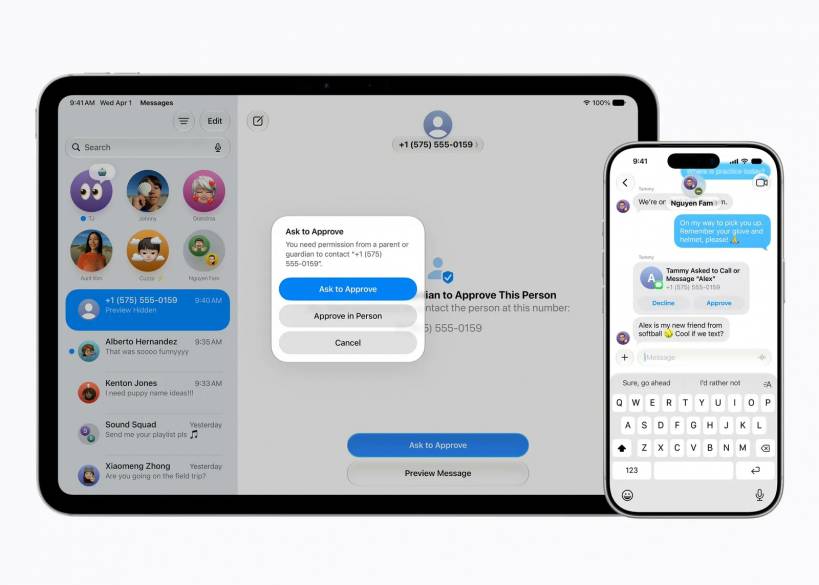
Apple is also strengthening controls around who children can communicate with.
Parents can require approval before a child connects with a new person through Messages, FaceTime or the Phone app. When a child attempts to communicate with someone new, the parent receives a request that can be approved or declined directly from their device.
This may be especially helpful for younger children receiving their first phone. It gives them a controlled way to communicate with relatives, classmates and trusted adults while reducing the likelihood of unexpected contact from strangers.
However, the feature should not replace regular conversations about suspicious messages, impersonation and online grooming. Technical controls can reduce exposure, but children still need to understand when and why they should seek help.
Communication Safety Expands Beyond Nudity
Apple's existing Communication Safety feature detects sensitive images and places a warning or visual blur over them before they are viewed or shared.
In iOS 27, the protection expands beyond nudity to include images and videos containing graphic violence or gore. Apple says the feature works across areas including Messages and FaceTime, with additional protections extending to shared images and other system experiences.
Communication Safety is enabled automatically for users under 18, although the exact behaviour may differ depending on the child's age, country and family settings.
This approach differs from scanning an entire cloud library for illegal material. Communication Safety focuses on warning children when potentially harmful content appears in the communication flow, while attempting to keep the analysis privacy-preserving.
It is a narrower solution than the abandoned iCloud scanning proposal, but one that Apple appears more comfortable deploying across its devices.
Time Allowances Go Beyond Basic App Limits
Screen Time has allowed parents to set limits for individual applications for years, but the experience has not always been easy to manage.
With iOS 27, Apple is introducing Time Allowances, which let parents manage usage by broader categories such as Entertainment, Games and Social Media.
The system provides age-based suggestions informed by health and child-development guidance. Parents remain free to adjust those recommendations according to their family's routines, the child's maturity and how the device is being used.
This category-based approach is more practical than limiting every application separately. A parent could provide a shared daily allowance for games, for example, regardless of how many different gaming apps are installed.
Schedules Make Screen Time More Flexible
Parents will also be able to create schedules that determine which types of apps are available at different times.
Gaming and entertainment apps could be unavailable during school hours but restored after homework is completed. Communication and educational apps could remain available throughout the day, while most device access could be paused during meals or family activities.
Apple is also redesigning the Screen Time dashboard to show a child's average device usage and most frequently used apps at a glance. Parents can temporarily pause access or grant additional time without navigating through several layers of settings.
This is an important distinction. Effective parental controls are not simply about reducing screen time. They should help families decide when technology is useful, when it becomes distracting and when it should be set aside.
Smaller Improvements Could Still Be Useful
Several less prominent features are also being introduced.
Parents can receive a notification when the Screen Time passcode is entered on a child's device, making it easier to notice attempts to change restrictions.
Apple is also rolling out simpler tools for reporting abusive or inappropriate content. Initial availability is expected in Australia, Brazil, the United States and the United Kingdom, with other regions planned later.
The company has additionally launched a dedicated Child Safety website explaining its controls, privacy approach and available family resources.
Technology Cannot Replace Active Parenting
Apple's new controls could make children's devices easier to manage, especially for parents who previously found Screen Time confusing or too limited.
But these tools are not automatic solutions.
A website approval system cannot determine whether every page contains misleading information. Contact controls cannot prevent every attempt at manipulation. Time limits cannot teach children how to recognise harmful behaviour, protect their privacy or respond when something online makes them uncomfortable.
The strongest approach combines technical safeguards with age-appropriate discussions, clear family expectations and an environment where children feel safe reporting problems without immediately fearing punishment.
Final Thoughts
Apple's expanded child safety features represent a noticeable change in direction. The company is moving beyond basic content restrictions and giving parents more direct control over websites, contacts, app access and daily device schedules.
For many families, Ask to Browse, contact approvals, improved Communication Safety and category-based Time Allowances could make a genuine difference.
At the same time, Apple still faces unresolved questions about App Store enforcement, harmful AI applications and the broader detection of abusive content across its services.
Protecting children while preserving privacy will never be a simple engineering problem. Push too far in one direction and legitimate privacy may be weakened. Move too cautiously in the other and serious abuse may go undetected.
iOS 27 does not settle that debate, but it shows that Apple is finally treating child safety as a central part of the experience rather than a collection of optional settings hidden inside a device.











Comments 0