

Employee engagement is often discussed in terms of leadership, communication, career development and workplace culture. Those areas remain essential, but engagement is also shaped by smaller, everyday signals that show employees whether they are genuinely valued by the organisation.
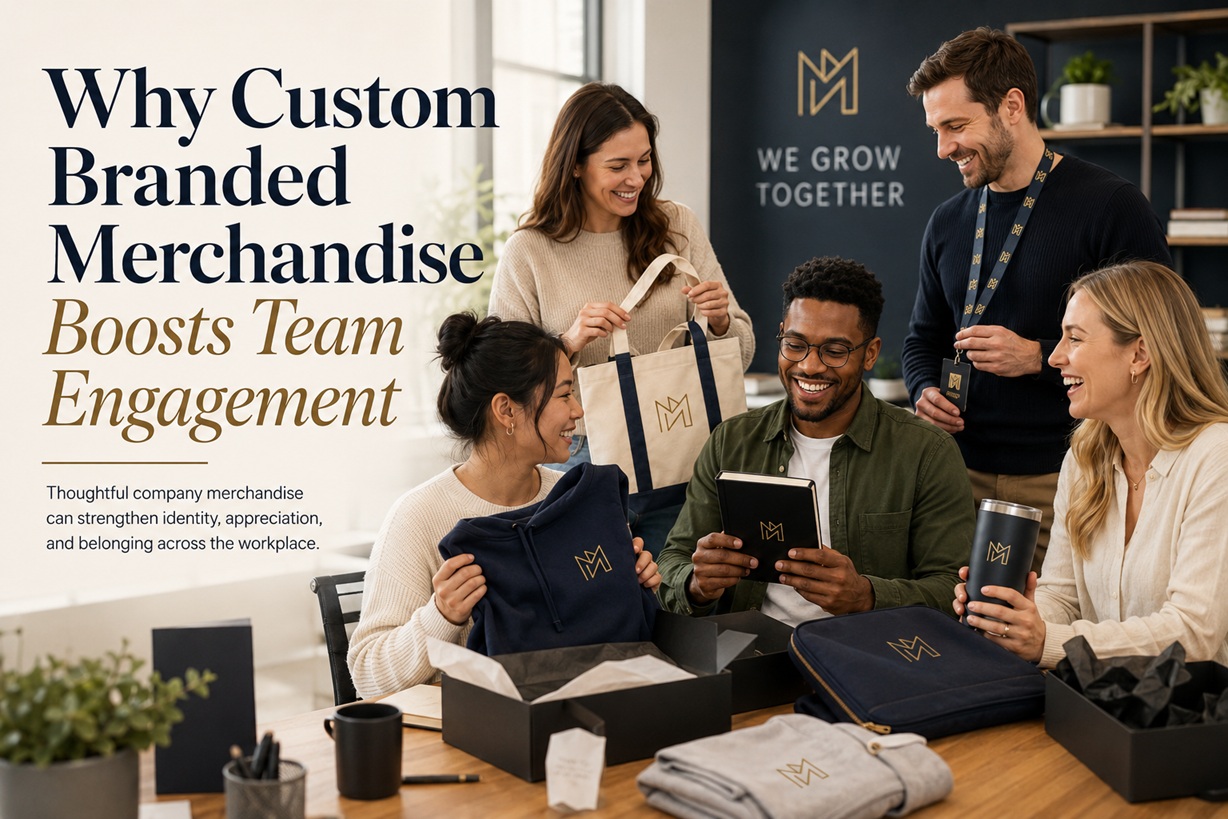
Custom branded merchandise can play a surprisingly useful role in this process. When selected carefully, a company jacket, welcome kit, notebook, travel mug or piece of practical equipment becomes more than an item carrying a logo. It can represent appreciation, shared identity and connection to the wider team.
The key is to treat branded merchandise as part of the employee experience rather than as a collection of promotional giveaways.
Merchandise Creates a Tangible Form of Recognition
Employees want to know that their work is noticed and that their contribution matters.
Recognition is often delivered verbally through praise, performance feedback or announcements. Those moments are important, but a thoughtfully chosen item can give the appreciation a physical and lasting form.
For example, a high-quality welcome kit for a new employee can make their first day feel organised and intentional. A personalised item presented after a major project can recognise the effort behind the achievement. A special edition jacket or bag for a service milestone can acknowledge loyalty in a way that feels more personal than a generic email.
The value does not come from the logo alone. It comes from the message behind the item:
When employees consistently receive sincere recognition, they are more likely to feel respected, motivated and connected to the organisation.
Shared Items Help Build a Stronger Team Identity
In larger organisations, employees can easily become separated by department, job title, location or seniority.
Custom branded merchandise can create a visible sense of shared membership. When people across different functions use the same thoughtfully designed company items, it reinforces the idea that they belong to one organisation rather than a collection of disconnected teams.
This can be particularly valuable during:
A shared team identity does not mean removing individuality. Instead, it gives employees a common symbol that represents their connection to the organisation and its purpose.
This becomes especially useful in hybrid or multi-location workplaces, where employees may not meet one another regularly. A consistent internal brand experience can help remote and branch-based employees feel included in the same company community.
It Can Reinforce Company Culture in Everyday Life
Company culture is not created by mission statements alone. It develops through repeated experiences, workplace behaviour and the decisions employees see the organisation making.
Branded merchandise can support that culture when the item reflects the values the company wants to promote.
A business focused on sustainability might provide durable reusable bottles, lunch containers or responsibly sourced apparel. A technology company could issue useful charging accessories or well-designed device organisers. A healthcare organisation might select practical wellness items that support employees during demanding shifts.
The connection should be natural. When the merchandise reflects how the organisation operates, it becomes a small but regular reminder of the company's priorities.
Poorly chosen merchandise can have the opposite effect. An organisation that publicly promotes sustainability but distributes low-quality disposable items may create scepticism instead of engagement.
The item therefore needs to support the culture rather than simply display the company logo.
Useful Merchandise Is More Meaningful Than Generic Giveaways
Employees are more likely to appreciate merchandise that is practical, well-designed and relevant to their daily lives.
Low-quality items often end up unused in a drawer or discarded shortly after an event. In that situation, the organisation has spent money without creating much emotional or practical value.
More effective choices may include:
The goal is not necessarily to purchase the most expensive product. It is to select something that feels intentional rather than disposable.
A smaller number of useful, well-made items will usually create a stronger impression than a large collection of inexpensive promotional products.
Personalisation Can Make Recognition Feel More Genuine
Adding a company logo creates consistency, but adding a personal element can create emotional value.
Personalisation might include the employee's name, department, project, achievement or service milestone. This transforms the item from general company merchandise into something connected to the individual's own experience.
For example, a jacket issued to every employee may support team identity. The same jacket embroidered with a service-year milestone may also communicate recognition.
However, personalisation should remain tasteful. Some employees may not want their full name, job title or department displayed on items they use outside the workplace. Giving employees options can make the programme feel more respectful and inclusive.
Branded Items Can Strengthen Pride and Belonging
Employees who feel proud of their organisation are more likely to speak positively about it, recommend it to others and remain committed during difficult periods.
Using company-branded items can reinforce that pride, particularly when the design is attractive and the employee already feels positive about the workplace.
A well-designed shirt, backpack or laptop sleeve can become a visible sign of belonging. Employees may use it during company events, business travel or community activities, representing the organisation beyond the office.
This should develop naturally rather than being forced. Employees should not be pressured to wear branded merchandise as proof of loyalty.
The strongest form of brand advocacy happens when people choose to use the items because they like them and feel comfortable being associated with the organisation.
Merchandise Can Improve the Onboarding Experience
The first few days of employment can significantly influence how a new team member views the organisation.
A structured onboarding kit can help the employee feel expected and prepared rather than treated as an administrative afterthought.
A useful kit might include essential workplace materials, practical branded items, a welcome message and clear information about the company. The presentation matters because it shows that the organisation has invested thought into the arrival of the new employee.
For remote staff, sending the kit before their first day can create an important early connection to the company. It helps make the organisation feel more real, particularly when the employee has not yet visited an office or met colleagues in person.
The merchandise should support onboarding rather than replace it. A welcome box cannot compensate for unclear responsibilities, missing equipment or poor manager communication.
Milestone Merchandise Can Make Achievements More Memorable
Custom merchandise can also support employee recognition programmes.
Instead of providing the same item at every occasion, organisations can create merchandise linked to specific achievements. This may include completing a major implementation, reaching a service anniversary, achieving a safety milestone or contributing to an important organisational change.
Limited or milestone-specific designs can make the item more meaningful because it represents a shared experience.
Employees who participated in the project may continue using the item long after the work is completed, creating a reminder of what the team achieved together.
This can strengthen both personal pride and collective memory within the organisation.
It Supports Internal Communication and Brand Alignment
Branded merchandise can quietly reinforce an organisation's internal identity.
Colours, slogans and design language help employees become more familiar with how the organisation presents itself. This can be especially useful during a rebranding exercise, merger, expansion or cultural transformation.
However, alignment should not be confused with control.
Giving employees branded items will not automatically make them understand the company strategy or believe in its values. The merchandise should support clear communication from leaders, not substitute for it.
When the organisation's words, behaviour and employee experience are consistent, the branded item becomes a visible reminder of that alignment. When they are inconsistent, the same item may be seen as superficial.
Employees Should Have Some Choice
Not every employee wants the same type of product.
One person may prefer a hoodie, while another would rather receive a bag, bottle or technology accessory. Clothing sizes, dietary needs, religious considerations, accessibility requirements and personal preferences should also be taken into account.
Offering a small selection can improve participation and reduce waste.
Employees may be allowed to choose from several items within the same budget, select their preferred size and colour, or opt out of receiving physical merchandise entirely.
This approach communicates that the organisation is interested in what employees will genuinely use, not simply in distributing the same object to everyone.
Quality and Ethics Affect How the Programme Is Perceived
Employees increasingly pay attention to how products are made.
Merchandise linked to poor labour practices, excessive packaging or environmentally harmful materials can conflict with the organisation's stated values.
Companies should consider:
Ethical sourcing can strengthen the message behind the gift. It shows that the organisation has thought beyond appearance and considered the wider impact of the programme.
Merchandise Cannot Repair a Poor Workplace Culture
Custom branded products can support engagement, but they cannot create it by themselves.
An employee who is underpaid, ignored by management or working in an unhealthy environment will not become engaged because they received a branded mug.
Merchandise is most effective when it forms part of a wider employee-engagement strategy that includes:
Without those foundations, merchandise can feel performative. Employees may see it as money spent on appearances instead of addressing real workplace concerns.
The organisation should therefore view custom items as a supporting tool, not a solution to deeper problems.
Measuring Whether the Programme Actually Works
Companies should evaluate whether their merchandise programme is producing value.
This does not need to become a complicated exercise. Organisations can gather feedback on whether employees liked the items, used them regularly and felt that they were relevant to the occasion.
Useful measures may include participation rates, item-selection preferences, employee comments, onboarding feedback and the amount of unused stock remaining after a campaign.
The feedback can guide future purchasing decisions and prevent the company from repeating items that employees do not value.
A successful programme should create positive reactions and practical use, not simply generate photographs for internal newsletters.
Final Thoughts
Custom branded merchandise can improve employee engagement when it is thoughtful, useful and connected to a genuine workplace experience.
It can recognise contributions, strengthen team identity, support onboarding and turn important achievements into something employees can remember. It may also reinforce company values and help employees feel part of a wider community.
The strongest results come when the merchandise reflects the organisation's culture rather than attempting to manufacture one.
A carefully selected item can communicate appreciation, but its meaning depends on what employees experience every day. When respectful leadership, recognition and employee support already exist, branded merchandise can become a powerful symbol of belonging rather than just another promotional giveaway.











Comments 0