

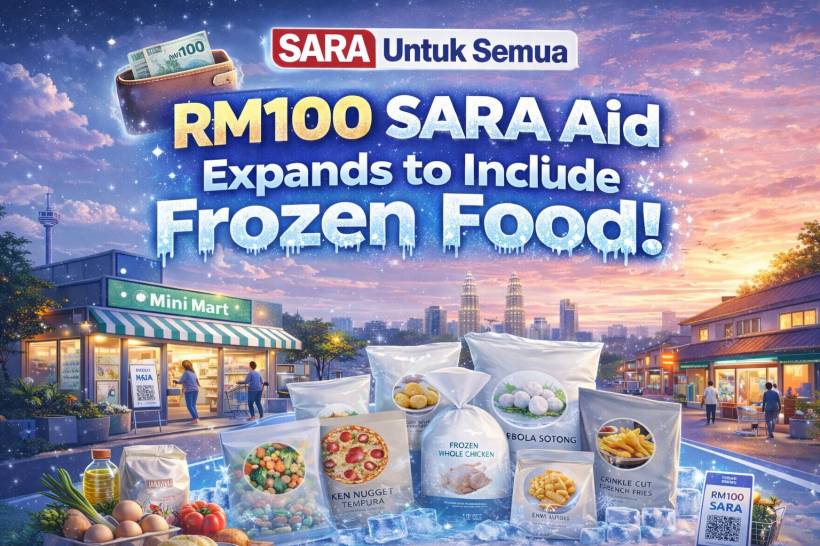
If you're one of the Malaysians eligible for the RM100 SARA cashless aid, yesterday was the day it starts landing and becoming usable. Like the previous round, the assistance is aimed at helping with everyday essentials, and the funds remain usable right through to the end of the year. In other words, it's not a "use it this week or lose it" situation, but something you can stretch out when you actually need it.
What's new this time is a small but very practical update: frozen food is now officially included among the items you can buy with the SARA allocation.
A quick refresher: what SARA is trying to solve
SARA is built around a simple idea. When prices are tight, what hurts most is the basics: food at home, household necessities, and the kind of school-related spending that always shows up at the worst time. So instead of handing out cash that might get swallowed by other commitments, this aid is directed toward specific categories of essential goods through participating merchants.
For many families and individuals, that structure matters, because it turns the RM100 into "this covers groceries" or "this covers school stuff," rather than letting it disappear into the general monthly pile.
Why frozen food being added is a bigger deal than it sounds
On paper, "frozen food" might look like a minor tweak. In real life, it's one of those changes that makes the program fit actual daily routines.
Frozen food is often the affordable backup plan for households that juggle time, budget, and convenience. It's what people lean on when they can't cook from scratch every day, when fresh items run out mid-week, or when they need something that lasts longer without waste. It also helps people who shop less frequently, especially if they're trying to manage transport costs or busy schedules.
According to the report, Prime Minister Anwar Ibrahim said the inclusion of frozen food came after public requests, which makes sense. If the goal is to help with practical essentials, then the list needs to reflect how people really buy food.
More participating small shops, and why distance matters
Another key point is the push to expand participation among small grocery shops. The target mentioned is 10,000 participating small retailers nationwide by the end of the year.
This is not just about boosting numbers for the sake of a press release. It's about access. If the nearest participating store is too far, the aid becomes less useful, especially for people without easy transport. The stated aim is to reduce the typical distance to a participating shop from around 10km to 7km. That difference can mean fewer rides, less fuel, and less "I'll skip it because it's too troublesome."
It's also a quiet win for local neighbourhood shops. When smaller retailers are included, the program doesn't only benefit large chains. It keeps spending closer to communities and spreads participation more evenly.
What you should do today
If you want to confirm where you stand, the most practical next step is to check the SARA portal for two things:
And because more stores are expected to be added over time, it's worth checking the participating-merchant list again occasionally, especially if the current options near you aren't convenient yet.
Final thoughts
The RM100 SARA aid is clearly trying to stay grounded in real-life needs, and adding frozen food is one of those changes that sounds small but improves usefulness immediately. If the expansion to more small shops actually happens at the scale promised, that may end up being just as important as the item list itself, because aid that's hard to access often feels like aid that doesn't exist.











Comments 0