

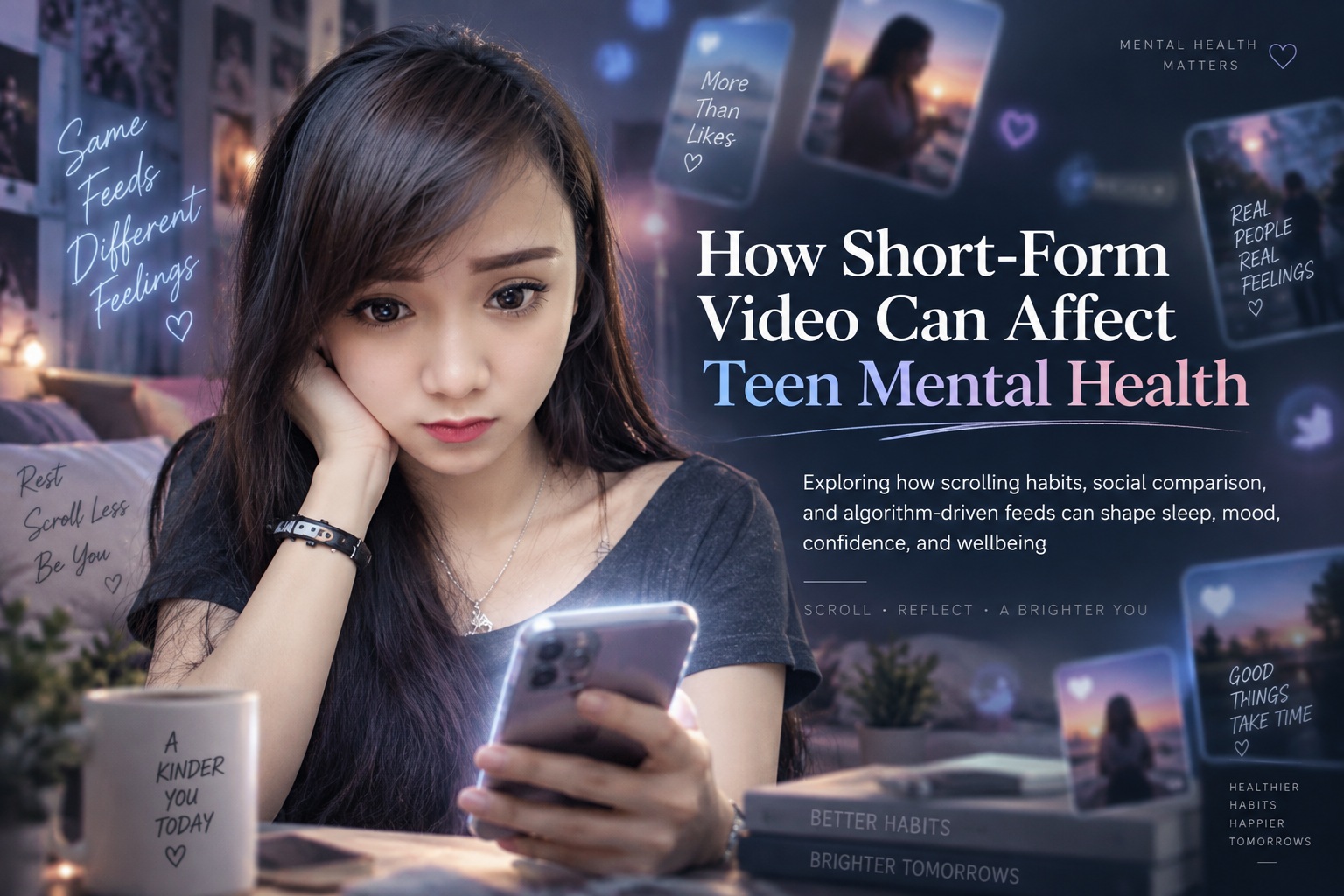
Short-form video has become a major part of how teenagers communicate, entertain themselves, discover new interests, and express their identity. Platforms built around endless streams of short clips can provide humour, creativity, friendship, and useful information, but the same design can also make it surprisingly easy to spend far more time scrolling than intended.
For parents and caregivers, the important question is not whether short-form video is automatically harmful. Its effects vary significantly from one teenager to another. Age, personality, family support, the type of content being consumed, existing mental health concerns, and the amount of time spent online can all influence the experience. The more useful approach is understanding which platform features may encourage unhealthy habits and watching for meaningful changes in a teenager's behaviour.
Why Short-Form Video Can Be Difficult to Put Down
One reason short-form video is so engaging is that it removes many of the natural stopping points found in older forms of media. A television episode ends, a book reaches the end of a chapter, and even a traditional web page eventually runs out of content. Infinite feeds do not have that boundary.
Autoplay immediately presents the next clip, while recommendation systems continuously select content based on previous viewing behaviour. A teenager who intended to spend five minutes checking a platform can therefore remain there considerably longer without consciously deciding to extend the session.
This does not necessarily mean the teenager lacks self-control. The interface itself is designed to reduce the number of moments where users have to decide whether they want to continue. Over time, checking the feed can become almost automatic, particularly during boredom, stress, or emotional discomfort.
Long Viewing Sessions Can Displace Other Activities
The most obvious concern is simply time. An hour spent scrolling is an hour that cannot simultaneously be used for homework, exercise, face-to-face conversation, hobbies, or sleep.
The issue becomes more noticeable when short-form video fills every small period of inactivity. Waiting for food, travelling somewhere, taking a study break, or preparing for bed can all become opportunities to check the phone.
These short sessions can accumulate into substantial daily screen time. For some teenagers, the problem is therefore less about one particular piece of content and more about what constant platform engagement gradually replaces.
Sleep Is Often One of the First Things Affected
Late-night scrolling can be particularly disruptive. A teenager may intend to watch a few clips before sleeping but remain online much longer because there is always another video waiting.
Rapidly changing visuals, emotionally stimulating content, notifications, and the general act of continuing to interact with the phone can also make it more difficult to wind down. When bedtime moves later but school still begins at the same time, sleep duration gradually decreases.
Insufficient sleep can affect concentration, memory, patience, motivation, and emotional regulation. Tired teenagers may then gravitate toward passive forms of entertainment because demanding activities require more effort, potentially creating a cycle where fatigue leads to more scrolling and more scrolling contributes to further sleep loss.
Recommendation Systems Can Reinforce Particular Themes
Short-form platforms learn from what users watch, search for, replay, pause on, and interact with. That can make the experience feel highly personalised, but it can also cause certain topics to appear repeatedly.
If a teenager engages with upsetting material involving rejection, self-harm, violence, hopelessness, substance use, or extreme dieting, recommendation systems may continue providing similar content because previous behaviour indicated interest.
Repeated exposure does not automatically cause harmful behaviour. However, for someone already struggling emotionally, seeing the same disturbing themes again and again can make them appear more common or unavoidable than they really are.
This is why the context of a teenager's existing wellbeing matters as much as the platform itself.
Social Comparison Can Affect Confidence and Body Image
Teenagers are also exposed to an enormous number of highly curated representations of other people's lives. Filters, editing tools, carefully selected camera angles, and repeated retakes can produce appearances that are difficult or impossible to maintain in everyday life.
The viewer, however, may compare that polished content against their own ordinary reflection, insecurities, and private experiences.
Over time, this imbalance can influence how some young people think about their appearance or social status. Visible follower counts, likes, comments, and shares add another layer by turning social approval into something measurable.
For vulnerable teenagers, repeated comparison may contribute to body dissatisfaction, pressure around food or exercise, reluctance to appear in photographs, or a growing belief that personal value depends on public approval.
Public Feedback Can Feel More Intense During Adolescence
Posting content can be a positive form of creativity and self-expression, particularly when teenagers receive encouragement from friends. However, public feedback also introduces the possibility of criticism, ridicule, or harassment.
An unpleasant interaction that once might have occurred between a handful of classmates can now spread through comments, screenshots, reposts, and group conversations. That can make the emotional impact last much longer.
Some teenagers begin monitoring reactions repeatedly after posting, checking whether likes are increasing or worrying about negative comments. Others may change what they post, how they dress, or how they behave because they are trying to satisfy an audience they do not personally know.
The pressure is not always visible to parents because much of it happens privately on the screen.
Mood and Behaviour Changes Are Worth Watching
Heavy use of short-form video does not mean a teenager will develop a mental health problem. Still, parents and caregivers may want to pay attention when platform use appears alongside persistent changes in everyday behaviour.
Warning signs can include worsening sleep, unusual irritability, withdrawal from friends or family, reduced motivation, difficulty concentrating, loss of interest in previous activities, significant changes in eating habits, or an increasing reluctance to participate in offline life.
One isolated change does not necessarily indicate that social media is responsible. Adolescence itself involves substantial emotional and behavioural changes.
What matters more is the pattern. If several changes appear together and continue over time, it may be useful to discuss what the teenager is experiencing online as part of a broader conversation about wellbeing.
Short-Form Video Also Has Genuine Benefits
It is important not to frame these platforms as entirely negative. Short videos can help teenagers discover hobbies, learn skills, maintain friendships, explore identity, and find communities that make them feel less isolated.
Educational creators can explain difficult concepts in accessible ways, while creative platforms give young people opportunities to practise video production, music, comedy, storytelling, art, and communication.
For teenagers who feel different from the people around them, online communities may also provide valuable reassurance that they are not alone.
The objective should therefore not automatically be removing the technology. A healthier goal is helping young users benefit from the positive aspects without allowing the platform to dominate their time, confidence, or emotional state.
Families Can Focus on Habits Rather Than Punishment
Parents often learn more through calm conversations than through immediate restrictions. Asking what a teenager enjoys watching, which creators they follow, and how particular content makes them feel can provide far more insight than simply checking total screen time.
Practical household boundaries can still help. Device-free meals, limiting notifications, charging phones outside bedrooms, and creating breaks from social media can introduce stopping points that the platforms themselves often remove.
Privacy settings are also worth reviewing, especially controls governing direct messages, public comments, and who can interact with uploaded content.
The goal is not necessarily constant surveillance. Teenagers are more likely to discuss uncomfortable online experiences when they believe the conversation will not automatically result in punishment or complete loss of device access.
When Professional Support May Be Needed
Some situations go beyond normal concerns about screen habits. Persistent sadness, severe sleep disruption, dramatic withdrawal, disordered eating behaviours, significant anxiety, or thoughts of self-harm deserve professional attention regardless of whether social media appears to be involved.
A qualified mental health professional can help determine what is actually contributing to the teenager's distress and recommend appropriate support.
Digital habits may be one part of the picture rather than the entire explanation. Treating the platform as the sole cause can sometimes overlook problems occurring at school, within relationships, at home, or elsewhere in the teenager's life.
Platform Design Is Also Receiving Legal Scrutiny
Concerns about youth safety have increasingly reached regulators and courts, including allegations that certain engagement features may encourage compulsive use or expose minors to harmful material.
Legal claims involving platforms such as TikTok have raised questions about recommendation systems, addictive design, age protections, and the responsibilities companies have toward younger users. These proceedings do not establish that every teenager experiences the same harm, but they have placed platform design decisions under much greater public scrutiny.
The wider debate reflects an important shift: responsibility for healthy digital behaviour is no longer being discussed entirely as a matter of individual self-control. Attention is also being placed on how products are intentionally designed to influence behaviour.
Final Thoughts
Short-form video can be entertaining, educational, creative, and socially valuable. At the same time, features such as autoplay, infinite scrolling, personalised recommendations, public engagement metrics, and constant notifications can make it difficult for some teenagers to regulate how long they remain online and how strongly digital feedback affects them.
The most useful response is balance rather than panic. Parents and caregivers can pay attention to changes in sleep, mood, concentration, self-image, and offline relationships while maintaining open conversations about what teenagers actually experience on these platforms.
Technology does not affect every young person in exactly the same way. But when online habits begin interfering with sleep, confidence, relationships, or everyday functioning, that is a meaningful signal worth taking seriously.
Healthy digital use is ultimately less about counting every minute on a screen and more about making sure the rest of a teenager's life still has enough room to grow.











Comments 0