

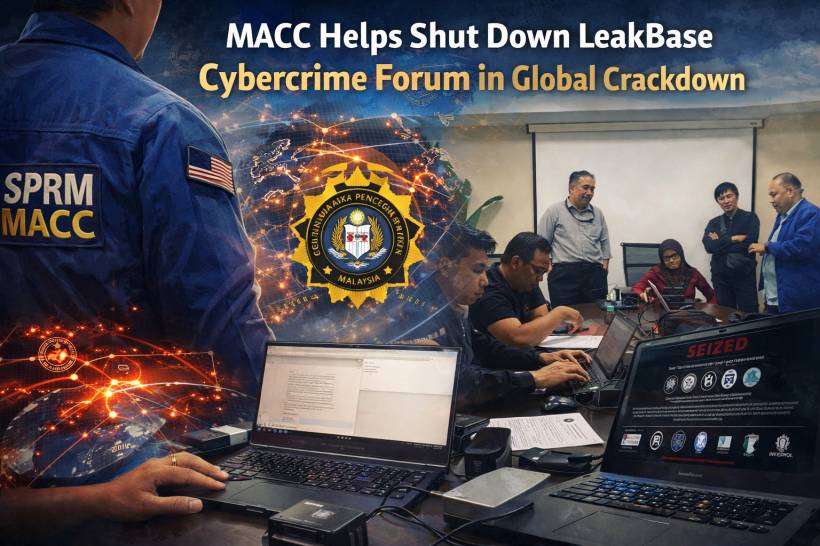
Malaysia has been pulled into a major international cybercrime enforcement effort after the Malaysian Anti-Corruption Commission, better known as MACC or SPRM, confirmed that it helped disrupt infrastructure linked to the LeakBase cybercrime forum. The case highlights how cybercrime operations today are rarely confined to one country. Even when a platform serves users across the world, the technical infrastructure behind it can still be spread across multiple jurisdictions, which is exactly why international cooperation has become so important.
According to the details shared, LeakBase had been operating as a cybercrime marketplace since 2021. It allegedly functioned as a hub for stolen data, compromised credentials, and tools often associated with hacking-related activity. By taking action against servers connected to the forum in Kuala Lumpur, Malaysian authorities became part of a wider global push to dismantle the network supporting the platform.
What LeakBase Was Allegedly Used For
LeakBase was reportedly much more than just a discussion board. It is described as a forum where users could access and trade data stolen from past cyber breaches. That kind of activity can have serious downstream consequences, because stolen credentials and personal information are often reused for account takeovers, fraud, phishing campaigns, and other forms of cyber abuse.
Authorities said the platform contained large volumes of compromised login details, including email and password combinations. In the wrong hands, that kind of information becomes extremely dangerous. A single reused password, for example, can open the door to email accounts, social media platforms, online banking services, or work systems if users have poor password hygiene across multiple sites.
The forum was also said to host a large archive of hacked databases connected to major breaches. On top of that, users reportedly traded financial and personal information such as credit card and debit card numbers, banking data, usernames, passwords, and other sensitive records linked to individuals or organisations. When a platform accumulates this kind of material over time, it can become a one-stop marketplace for cybercriminals looking to buy, sell, verify, or exploit stolen data.
Malaysia's Involvement in the Operation
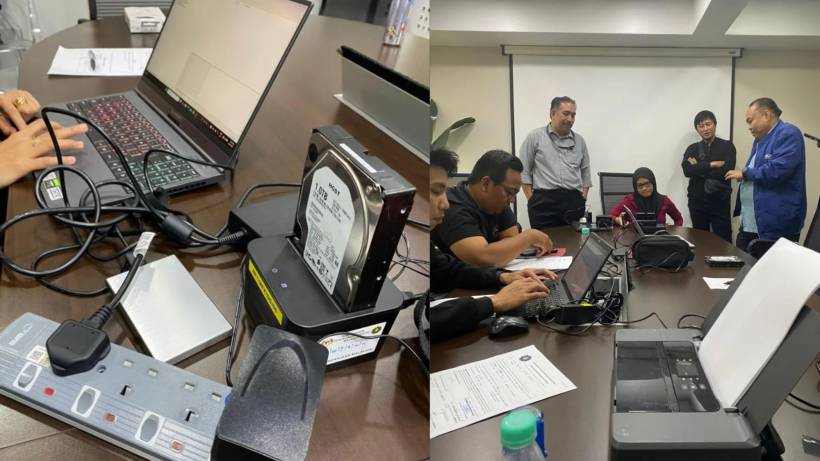
MACC said its Special Operations division carried out a search warrant at a web-hosting solutions company in Kuala Lumpur, where servers linked to LeakBase were believed to be located. From there, cyber forensic examinations reportedly confirmed that the forum had been operating through servers hosted at that facility.
That finding led to the seizure of the servers and the shutdown of the related domain in Malaysia. This is an important detail because cybercrime enforcement is not always about physically arresting people at the same location as the crime platform's users. In many cases, investigators target the servers, hosting arrangements, payment channels, or domain infrastructure that keep an illicit operation alive.
Malaysia's role in this case shows that local enforcement agencies are increasingly involved in cyber investigations that have global implications. Even if the forum itself served an international user base, action taken against infrastructure inside Malaysia could still play a major role in disrupting the broader operation.
A Forum With a Large Reported Footprint
The scale of LeakBase, based on the reported figures, suggests it was not a fringe operation. Authorities said the forum had more than 142,000 registered members and over 215,000 messages. That points to a platform with a substantial community, a steady level of activity, and a long enough lifespan to build up a large archive of content and data.
Numbers like these matter because they show how cybercrime forums can evolve into organised ecosystems rather than isolated criminal websites. They often become places where different actors gather for different purposes. Some may be selling stolen data, others may be buying credentials, and some may simply be sharing knowledge, tools, or methods. Over time, that can create a highly active underground marketplace that becomes harder to ignore.
Part of a Wider Global Crackdown
This was not a standalone Malaysian action. The operation was part of a coordinated international enforcement effort carried out on 3 and 4 March and led by Europol from its headquarters in The Hague. A broad list of agencies reportedly took part, including the FBI, the United States Department of Justice, the National Crime Agency, and enforcement authorities from Germany, Spain, Belgium, Poland, Portugal, Australia, Kosovo, and Scotland.
That level of coordination reflects the reality of modern cybercrime investigations. A single platform can involve domain registrations in one country, hosting in another, users spread across dozens of locations, and victims worldwide. No one agency can effectively dismantle such an operation alone. Joint action allows authorities to move on multiple fronts at the same time, which reduces the chances of suspects or administrators simply shifting infrastructure and continuing elsewhere.
The broader operation reportedly included arrests, house searches, and what are known as knock-and-talk interventions across several jurisdictions. Those actions are often used when authorities want to identify suspects, gather intelligence, warn individuals, or apply pressure without necessarily moving directly to immediate prosecution in every case.
Domain Seizures and a Clear Message to Users
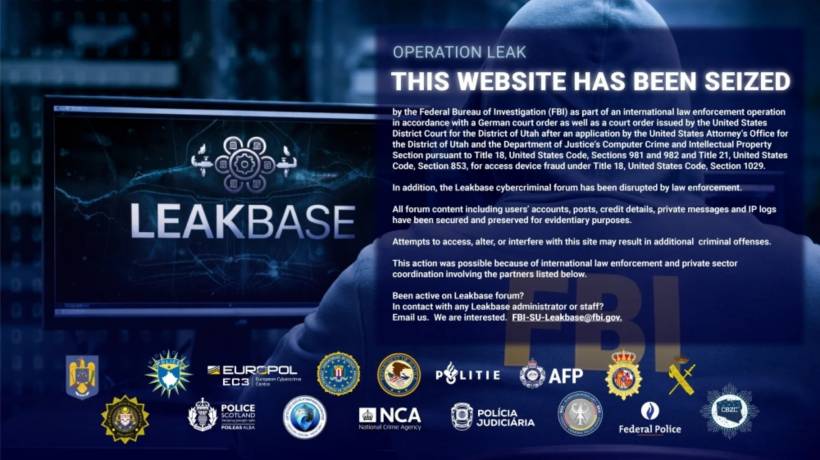
US authorities also reportedly seized two domains associated with LeakBase, including one linked to the infrastructure hosted in Kuala Lumpur. The sites were then replaced with warning notices aimed at forum users. That step is often symbolic as well as practical. On the practical side, it takes the platform offline and disrupts access. On the symbolic side, it sends a direct message that law enforcement has visibility into these spaces and is willing to act across borders.
This type of domain seizure can also have a chilling effect on other cybercrime communities. When users see a familiar forum suddenly replaced by a law enforcement banner, it becomes a reminder that even supposedly hidden or hardened platforms are not beyond reach.
Why This Matters Beyond One Forum
The shutdown of infrastructure linked to LeakBase is significant not just because of the forum itself, but because it reflects a broader shift in how cybercrime is being tackled. Enforcement agencies are no longer focusing only on individual hackers or isolated breaches. Increasingly, the target is the wider ecosystem that supports cybercrime, including hosting providers, domain operations, marketplaces, data archives, and the channels through which stolen information is exchanged.
For Malaysia, the case also reinforces the country's relevance in international digital enforcement efforts. Hosting infrastructure located in one city can end up serving a criminal operation with global reach, which means domestic action can have international consequences.
At the same time, the story is also a reminder for ordinary users and businesses that stolen credentials remain one of the most common building blocks of cybercrime. Once account details are leaked or reused, they can circulate for years across underground platforms and continue to fuel fraud, impersonation, and unauthorised access.
Final Thoughts
The action against LeakBase shows how cybercrime forums are increasingly being treated as serious organised digital threats rather than just hidden corners of the internet. With MACC helping to seize servers and shut down infrastructure in Kuala Lumpur, Malaysia played a meaningful role in a broader global enforcement push.
It is also a sign that cybercrime investigations are becoming more coordinated, more technical, and more international. For the public, the case is another reminder that stolen credentials and exposed personal data do not simply disappear after a breach. They often continue circulating in underground markets, which is why strong passwords, updated credentials, and better cybersecurity habits still matter more than ever.











Comments 0