

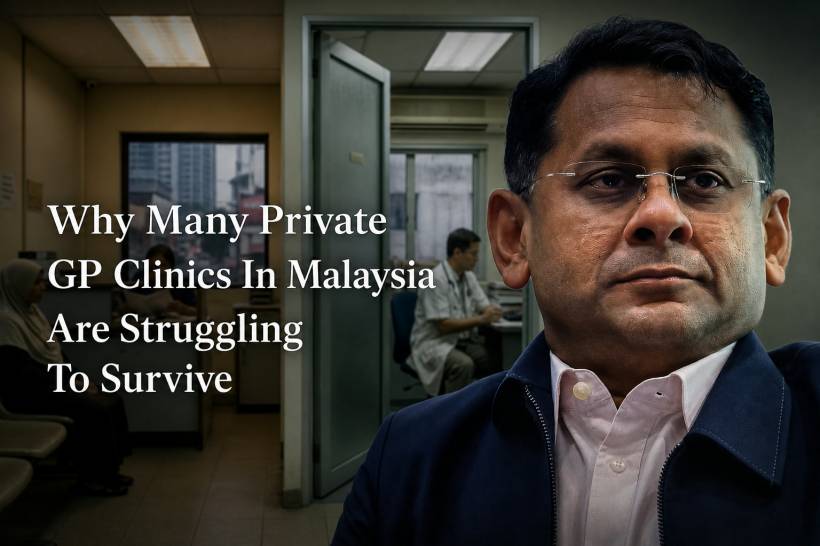
Private GP clinics are often seen as one of the most accessible parts of Malaysia's healthcare system. For many families, they are the first place to go for fever, flu, minor injuries, medical certificates, follow-up medication, basic screening, vaccinations and simple outpatient care. They are convenient, close to residential areas, and usually faster than visiting a hospital or crowded government clinic.
But behind that convenience, many private general practitioner clinics are facing a very different reality. According to findings highlighted by the Malaysian Medical Association, a large number of private GP clinics are now struggling with lower patient numbers, rising operating costs, increasing competition and long-standing policy issues that have not been properly addressed for years.
The concern is serious because private GP clinics do not only serve individual patients. They also play an important role in supporting Malaysia's wider primary healthcare system. If more of them begin to close, the pressure may eventually shift back to government clinics and hospitals, making an already busy public healthcare system even more congested.
More Than 70 Percent Of GP Clinics Are Earning Below RM60,000 A Month
Based on a Malaysian Medical Association study involving nearly 2,000 clinics nationwide, more than 70 percent of private GP clinics reportedly earn below RM60,000 per month. On paper, that figure may still sound reasonable to some people. But clinic income is not the same as personal income.
A private clinic has many expenses to cover. Rental, staff salaries, utilities, medical supplies, equipment, medicine stock, professional indemnity, licensing, maintenance, software systems, compliance requirements and other operational costs all come out from the clinic's monthly revenue. By the time everything is paid, the amount left for the doctor may be much smaller than what the headline figure suggests.
The MMA's breakdown paints a more worrying picture. Around 21.1 percent of clinics reportedly earn less than RM20,000 a month, while 32.4 percent earn between RM20,000 and RM39,999. Another 18.4 percent fall into the RM40,000 to RM59,999 range. These are the clinics that may find it especially difficult to remain sustainable if costs continue rising while patient visits continue falling.
Only about 17.8 percent of clinics are said to have a more comfortable monthly income above RM80,000. That means the majority are operating in a more fragile position than many members of the public may realise.
Rising Costs Are Making Clinic Operations More Difficult
Running a private clinic today is not cheap. Costs have increased across almost every part of the business. Rent is higher in many commercial areas. Staff salaries have to remain competitive. Medical consumables, equipment, utilities and digital systems all add to the monthly burden.
At the same time, clinics have to deal with regulatory and administrative requirements. Some of these rules are important for patient safety and service quality, but the MMA argues that private clinics are often heavily regulated on physical and administrative matters while not being sufficiently empowered as part of the national healthcare ecosystem.
This creates a difficult situation. GP clinics are expected to maintain professional standards, comply with facility requirements and carry the cost of medical practice, yet many still feel they are not properly integrated into broader healthcare planning.
For smaller neighbourhood clinics, even a modest drop in patient volume can make a big difference. A few quiet months can affect cash flow, medicine stock planning, staffing decisions and the ability to invest in better systems.
Too Many Clinics, Fewer Patients Per Clinic
Another issue raised is the increase in the number of private clinics after the Covid-19 pandemic. Malaysia now has more than 10,000 private clinics nationwide, and the MMA believes that the growth in clinic numbers has contributed to a drop in patient volume for many operators.
Part of this trend may be linked to the experience of younger doctors in the public sector. Some doctors who faced uncertainty under the contract doctor system, limited career progression, heavy workloads and a sense of being undervalued chose to leave public service and open their own clinics.
From their perspective, becoming a GP may have looked like a practical way to build an independent medical career. But once more doctors entered the private clinic space, competition became more intense. More clinics in the same catchment area naturally means fewer patients per clinic, especially when the total population demand does not grow at the same pace.
This is where the problem becomes more complex. The issue is not simply that doctors opened too many clinics. It reflects a deeper workforce planning challenge within the healthcare system. When young doctors feel there is no clear path in public service, many will look elsewhere. But if too many move into private primary care without proper planning, the private sector itself becomes overcrowded.
Government Clinics Remain Overcrowded While GP Clinics Are Underused
One of the MMA's suggestions is for the Health Ministry to consider referring suitable basic health cases from government clinics to private GP clinics. This could help reduce congestion at public facilities while also making better use of existing private clinic capacity.
This idea is worth discussing seriously. Government clinics are often crowded because they serve a large number of patients at subsidised rates. Many cases involve common outpatient conditions that private GPs are already capable of managing, such as mild infections, minor illnesses, follow-up checks and basic chronic disease monitoring.
If structured properly, a public-private partnership model could benefit both sides. Patients may get faster access to care. Government clinics may have more room to focus on heavier caseloads. Private GP clinics may receive more stable patient flow. However, this would require clear policy design, fair reimbursement, proper clinical governance and a system that protects patient safety.
It cannot simply be done casually. The model needs proper planning so that patients, doctors and taxpayers are all treated fairly.
Consultation Fee Revision May Help, But It Is Not A Complete Fix
The recent amendment to the Seventh Schedule under the Private Healthcare Facilities and Services Regulations 2006 is seen as a positive step because consultation fees had not been revised since 2006. For many GPs, this was a long overdue issue.
Healthcare costs have changed significantly over nearly two decades. Clinic rental, staff wages, medical supplies and compliance costs have all increased. Keeping consultation fees unchanged for so long created pressure on clinics, especially when patients often expect affordable prices while operators face rising costs.
The revised consultation fee structure may help improve sustainability for some clinics. However, it is unlikely to solve every problem on its own. Clinics still face competition, patient volume issues, TPA limitations, online healthcare services, and regulatory burdens.
In other words, fee revision is helpful, but the private GP sector may need a broader policy reset.
The Long-Standing TPA And Insurance Issue
Another major concern raised by MMA is the role of Third-Party Administrators and insurance companies. Many clinics have long complained that TPAs can restrict treatment options, influence pricing, delay payments or impose conditions that make it difficult for doctors to provide care the way they believe is clinically appropriate.
For patients, TPA panels may look convenient because they allow access to clinics under corporate or insurance coverage. But for doctors, the arrangement can sometimes feel one-sided. If payment rates are too low or treatment approvals are too restrictive, clinics may end up carrying more administrative work while earning less from each case.
This issue has reportedly persisted for many years without a strong enough regulatory framework specifically protecting GP interests. The MMA's point is that private clinics should not only be regulated as business premises. They should also be properly supported as healthcare providers delivering primary care to the public.
Online Services And Uneven Regulation
The growth of tele-clinics, online medical services and pharmacy-led healthcare offerings has added another layer of pressure. Digital healthcare can be useful, especially for convenience and access. However, the MMA argues that traditional GP clinics may be facing stricter physical and administrative requirements compared with some newer healthcare models.
This creates a feeling of uneven competition. Physical clinics must comply with rules involving room size, facilities, toilets, doors and other operational details. Meanwhile, some online or pharmacy-linked services may not face the same level of scrutiny, depending on how the service is structured.
The issue is not whether digital healthcare should exist. It should. The real question is whether all healthcare providers are being regulated fairly and whether patient safety remains consistent across different service channels.
Why GP Clinics Still Matter
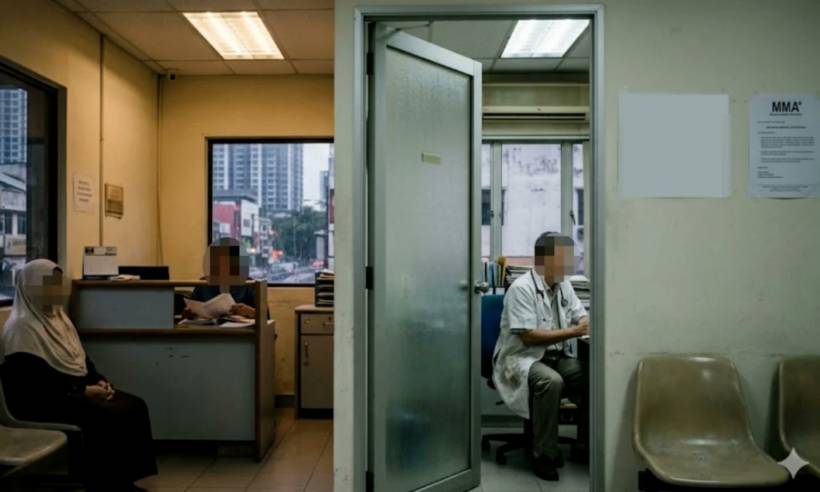
It would be a mistake to underestimate the role of private GP clinics. They are not just small businesses. They are part of the country's frontline healthcare network.
A strong GP sector can reduce unnecessary hospital visits, support early detection of illness, help manage chronic diseases, provide vaccinations, treat common conditions and guide patients to specialists when needed. In many communities, the family doctor is also someone patients trust because they have been visiting the same clinic for years.
If private GP clinics weaken, the impact may not be obvious immediately. But over time, patients may have fewer nearby options, government clinics may become more crowded, and primary care access may become less convenient.
This is why the issue should not be viewed only as a financial complaint from doctors. It is also a healthcare access issue.
A Need For Clearer Policy On Private Primary Care
The bigger message from MMA is that Malaysia needs a more specific and forward-looking policy for private GP clinics. For too long, private clinics have been treated mainly as regulated healthcare premises rather than as strategic partners in primary care delivery.
A stronger policy framework could include better integration with public healthcare, fairer TPA regulation, clearer career development pathways for GPs, more balanced rules for physical and digital healthcare providers, and practical support for clinics serving communities.
Private GPs should also be included more meaningfully in national healthcare planning. If the country wants to strengthen primary care, it cannot rely only on government clinics. Private clinics already exist in large numbers and are spread across many communities. The question is how to use that network more effectively.
Final Thoughts
The struggle faced by private GP clinics is a warning sign for Malaysia's healthcare system. When more than 70 percent of clinics are earning below RM60,000 a month, it suggests that many operators are working under real financial pressure.
Rising costs, lower patient numbers, intense competition, TPA restrictions, uneven regulation and long-standing policy gaps have all contributed to the problem. While the revision of consultation fees is a positive step, it should only be the beginning of a wider reform conversation.
Private GP clinics remain an important part of healthcare access in Malaysia. If they are supported properly, they can help ease pressure on government clinics and provide faster, community-based care for patients. But if their challenges continue to be ignored, more clinics may close, and the burden will eventually return to the public healthcare system.
For now, the message is simple: keeping private GP clinics alive is not just about protecting doctors' income. It is about preserving a practical and accessible layer of healthcare that many Malaysians still depend on.











Comments 0