

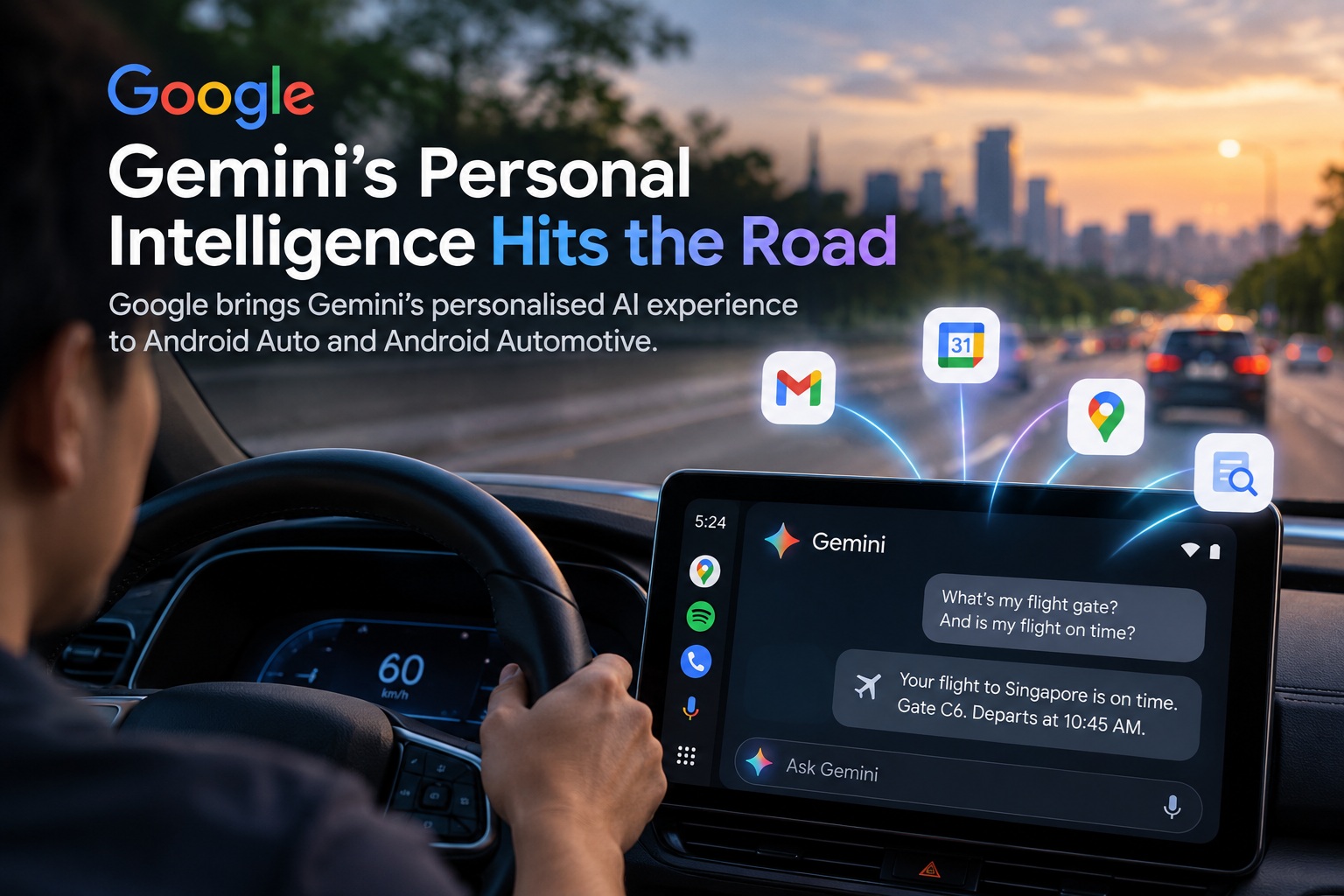
Google is expanding Gemini deeper into the car with the rollout of Personal Intelligence for Android Auto and vehicles using Android Automotive with Google built-in. The feature essentially brings the more personalised side of Gemini from smartphones into the driving experience, allowing the assistant to draw information from services such as Gmail, Google Calendar, Google Maps and Search when answering questions.
The idea is to make Gemini considerably more useful while driving because users should no longer have to explain every piece of context before asking for information. If permission is granted, Gemini can understand information already available within the user's Google account and combine it when responding. That means fewer complicated voice commands and less need to manually search through emails, appointments or navigation information while behind the wheel.
Gemini Becomes More Personal Inside The Car
Voice assistants have existed in cars for years, but most have traditionally been relatively limited.
You can ask for directions, play music, make a phone call or send a message, but anything requiring information from several different sources usually becomes much more complicated.
Personal Intelligence attempts to change that.
Instead of treating every command as an isolated request, Gemini can use information already available through connected Google services to understand what the driver is talking about.
This means the assistant can potentially respond based on personal emails, calendar entries, places and previous information without requiring the user to manually provide all of that context again.
Users Must Explicitly Grant Permission
Google is making Personal Intelligence an opt-in feature.
Gemini will not automatically begin accessing personal information simply because Android Auto is connected.
Users must first give permission for the assistant to access relevant Google services.
That is an important distinction because the feature potentially involves some of the most sensitive information inside a Google account, including email content, travel reservations and calendar information.
Once enabled, Personal Intelligence can securely connect information across supported Google applications to generate responses that are more directly relevant to the individual user.
The Main Benefit Is More Natural Voice Commands
The biggest advantage becomes obvious when you consider how people actually communicate while driving.
Nobody wants to construct a perfectly formatted AI prompt while concentrating on traffic.
The ideal interaction should sound more like ordinary conversation.
Instead of saying exactly which email contains the flight confirmation, which airport you are travelling from and what time the flight leaves, you should simply be able to ask a question.
Gemini then works out the rest from the information it has permission to access.
That reduces the amount of mental effort required from the driver.
You Could Simply Ask About Your Flight
Google provides a good example involving air travel.
Imagine you are driving towards the airport and ask:
"What's my flight gate? And is my flight on time?"
With Personal Intelligence enabled, Gemini could retrieve the booking information from the relevant confirmation email and then check current flight information.
It can then answer both questions without forcing the driver to search Gmail, remember the flight number and separately look up its status.
That is exactly the kind of scenario where personalised AI becomes much more useful than a conventional voice assistant.
Gemini Does The Context Hunting For You
The important part is not simply that Gemini can read an email.
The real improvement is its ability to connect information across different services.
For example, one question could theoretically involve:
• A booking confirmation from Gmail
• An appointment from Google Calendar
• A destination in Google Maps
• Information retrieved through Search
Instead of users manually jumping between those applications, Gemini can potentially combine the relevant information into one answer.
This is particularly useful inside a vehicle because interacting with multiple screens should be kept to an absolute minimum.
Less Screen Interaction Is A Good Thing While Driving
The safest car interface is generally one that requires the driver to look away from the road as little as possible.
Touchscreens have added enormous functionality to modern vehicles, but they can also create distractions when drivers need to navigate menus for relatively simple tasks.
A capable voice assistant can reduce that problem.
If Gemini understands context well enough, more tasks can potentially be completed through short conversational requests rather than multiple taps.
That does not eliminate distraction entirely, but it can make certain interactions significantly simpler.
Android Auto Gets Personal Intelligence First
Google is beginning the rollout through Android Auto.
This means users connecting compatible Android smartphones to supported vehicles will begin seeing Personal Intelligence become available.
As with many Google feature rollouts, availability may not necessarily appear for every user immediately.
Features can be deployed gradually according to region, account, device and software version.
Still, Android Auto users are the first group scheduled to gain access.
Android Automotive Users Will Have To Wait Longer
Vehicles running Android Automotive with Google built-in will receive Personal Intelligence later.
Google says the feature is expected to arrive within the next few months rather than immediately.
Android Automotive differs from Android Auto because the operating system runs directly on the vehicle rather than being projected from a smartphone.
Cars using Google built-in can therefore run Maps, Assistant or Gemini and other supported apps directly through the vehicle's own infotainment hardware.
That creates slightly different privacy and identity considerations for personalised information.
A Connected Smartphone Is Required For Personalised Responses
For Android Automotive, Google says Personal Intelligence will only provide personalised responses when the user's smartphone is connected to the vehicle.
That is an important privacy safeguard.
A vehicle can have several drivers. Family members may share the same car, and rented or company vehicles can be used by many different people.
Requiring the phone to be connected helps establish which individual is currently using the vehicle.
It also reduces the possibility that someone else gets into the car and begins requesting personal information associated with the previous driver.
The Car Still Works Without Personal Intelligence
Personal Intelligence is not required to use Gemini or the vehicle's standard features.
Users who decide not to enable it can still use normal functionality such as:
• Navigation
• Music playback
• Phone calls
• General questions
• Standard voice commands
The difference is simply that Gemini's responses will not be personalised using information from the user's Google account.
This is probably the right approach.
Personalised AI should remain optional rather than becoming a requirement for basic vehicle functionality.
You Can Turn The Feature Off Whenever You Want
Users who enable Personal Intelligence and later change their minds can disable it through Gemini's settings.
That gives people more control over how much personal information the assistant can use.
This matters because users will naturally have different comfort levels.
Some people may be perfectly happy allowing Gemini to use Gmail and Calendar information if it saves them time.
Others may prefer keeping their vehicle interactions completely separate from private emails and appointments.
Both choices remain available.
This Is Where Personal AI Starts Making More Sense
Personal Intelligence is an interesting direction because AI assistants become much more useful when they understand context.
A generic chatbot might know everything about airports but nothing about your flight.
A personalised assistant potentially knows:
• Which flight you booked
• When it departs
• Where you need to go
• What appointments you have afterwards
• Which destination you saved
• What information is relevant right now
That moves Gemini away from being something you ask general questions and towards becoming an assistant that actually understands the user's situation.
Inside a car, that difference can be particularly useful.
Travel Is An Obvious Use Case
Driving naturally involves information scattered across multiple applications.
You might have a hotel reservation in Gmail, a dinner appointment in Calendar and the destination stored somewhere else.
With Personal Intelligence, the interaction could potentially become much simpler.
Instead of saying, "Navigate to the address contained in the restaurant booking email I received yesterday," users may eventually be able to ask something conversational such as, "Take me to the restaurant for tonight."
The system already has the information required to determine what "the restaurant" means.
That is where AI starts reducing friction rather than merely adding another feature.
Calendar Integration Could Be Particularly Useful
Calendar integration also makes sense in the car.
If you are travelling towards an appointment, Gemini could potentially understand which event is next and provide relevant information without requiring you to remember the exact address.
You might ask:
"Where's my next meeting?"
Or:
"How long will it take me to get there?"
With access to Calendar and Maps, Gemini can potentially combine the appointment details with current traffic information.
That is far more useful than separately opening Calendar, finding the event, copying the location and then launching Maps.
Email Could Become Much Easier To Use Safely
Email is another area where voice AI could significantly reduce distraction.
Searching through Gmail while driving is obviously something users should avoid.
But important information often lives inside email.
Flight details, hotel reservations, meeting locations, delivery confirmations and event tickets may all arrive there.
Gemini can potentially retrieve the relevant detail without requiring users to visually search their inboxes.
The driver asks for the information and the assistant does the searching.
That is a much more appropriate interaction model for the road.
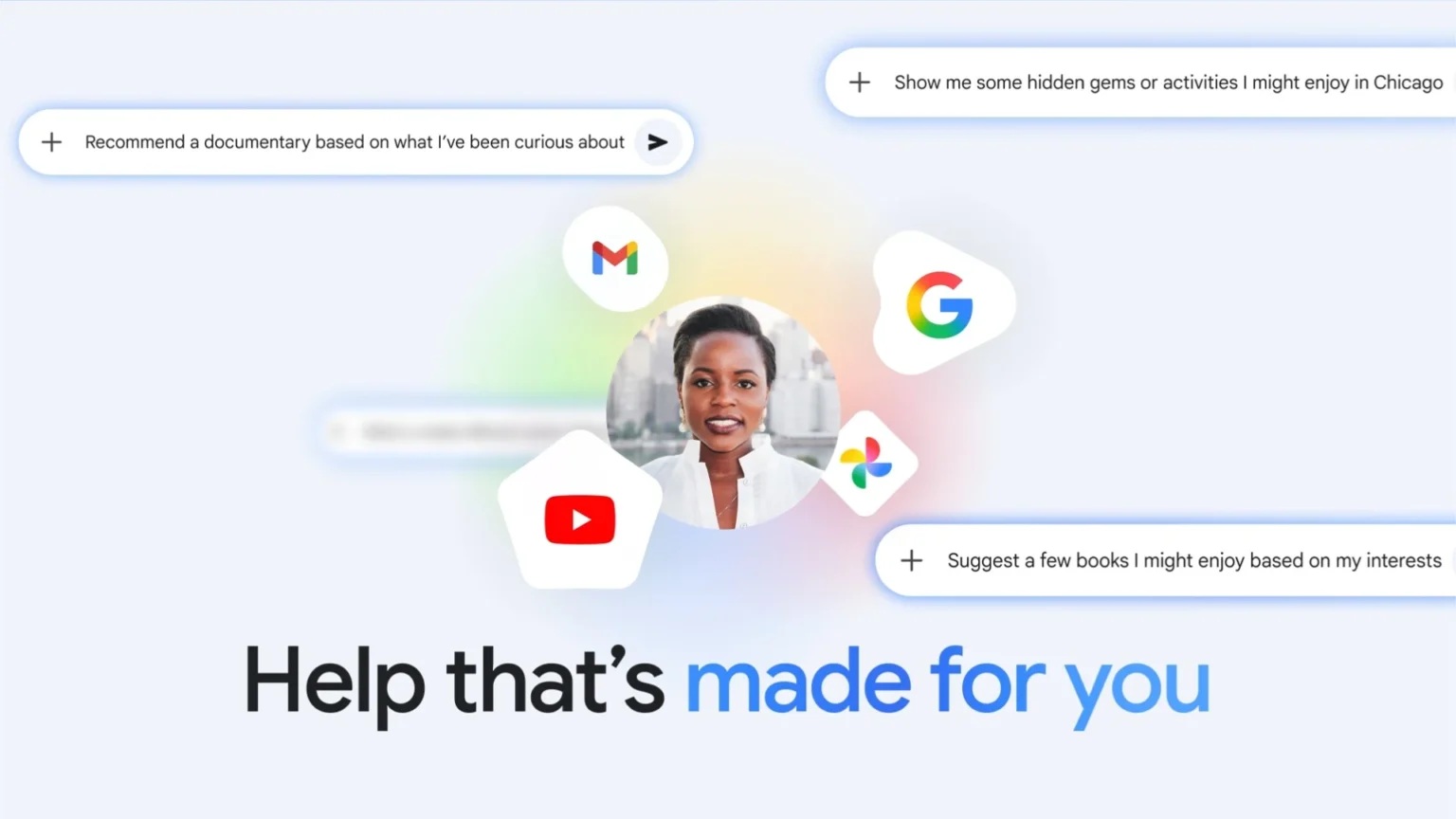
Maps Becomes More Powerful With Personal Context
Google Maps already knows how to navigate and provide traffic information.
Personal Intelligence gives Gemini another layer on top of that.
Instead of users always specifying a destination, context from email or calendar information could potentially help the assistant determine where they need to go.
This could make navigation feel much more natural.
The destination becomes connected to the activity rather than treated purely as an address.
That sounds like a small difference, but it fundamentally changes how users communicate with the system.
The Assistant Can Potentially Handle Follow-Up Questions
Gemini's conversational nature also means users should be able to ask follow-up questions without repeating the entire context.
For example:
"What time is my meeting?"
Then:
"How long will it take to get there?"
Then:
"Find somewhere for coffee nearby."
A traditional voice assistant may treat those as three unrelated commands.
A contextual AI system can potentially understand that they are all connected to the same situation.
This makes voice interactions feel much closer to talking naturally with another person.
Privacy Will Be The Biggest Question
The convenience is obvious.
The privacy trade-off deserves just as much attention.
Giving Gemini access to emails, calendar events and location information creates a much richer picture of someone's life.
That is precisely what makes the feature useful.
It is also why users need clear control over what information is connected.
Google's opt-in model is important here, but users should still review the relevant Gemini settings and understand which services they are granting access to.
Personal Intelligence Depends On Trust
Personalised AI only works if people trust the system with personal information.
Without Gmail access, Gemini cannot retrieve the flight confirmation.
Without Calendar access, it cannot understand upcoming appointments.
Without Maps context, it may not know where those appointments are located.
That means Google has to demonstrate that Personal Intelligence handles information securely and predictably.
If users become uncomfortable with how their information is processed, they will simply disable the feature.
Trust therefore becomes fundamental to adoption.
Shared Vehicles Need Extra Attention
Cars create an interesting privacy situation because they are often shared.
A smartphone is usually personal.
A family vehicle may be driven by several people.
This makes Google's requirement for a connected phone on Android Automotive particularly important.
Personalised information should follow the person rather than remain permanently associated with the car itself.
Ideally, when the smartphone disconnects, the personalised context goes with it.
That will be critical for households sharing one vehicle.
Work Vehicles Create Another Privacy Scenario
Company vehicles introduce another situation where separation matters.
An employee may connect their personal phone while driving a shared company car.
Gemini needs to provide personal information only during that individual's session.
Another employee using the vehicle later should not have access to their predecessor's appointments, emails or travel information.
The architecture therefore needs to treat the smartphone and authenticated Google account as the identity source rather than the vehicle.
Rental Cars Could Benefit From The Same Approach
The same logic applies to rental vehicles.
Android Automotive is appearing in a growing number of cars.
Travellers may eventually rent a vehicle, connect their smartphone and temporarily gain their personalised Gemini experience.
When the phone is disconnected, the personal session should effectively disappear.
This would provide the convenience of personalised navigation without permanently storing the traveller's personal context inside a rental car.
That could become a particularly useful travel feature.
Gemini Is Gradually Replacing Traditional Car Assistants
Google's broader direction is clear.
Gemini is becoming increasingly integrated across the Android ecosystem, including smartphones, tablets, wearables and vehicles.
Android Auto is a particularly logical destination because voice interaction is already central to the experience.
Instead of designing a separate AI assistant specifically for cars, Google can bring the same Gemini intelligence across devices.
The advantage is continuity.
A user can interact with essentially the same assistant whether they are holding their phone or sitting behind the wheel.
The Smartphone And Car Are Becoming One Connected Experience
For years, Android Auto mostly acted as an extension of the smartphone.
Gemini makes that relationship more intelligent.
Personal information already available on the phone becomes usable from the vehicle without requiring the driver to manually move it between devices.
This creates a more seamless ecosystem.
The car no longer needs to independently know everything about the user.
It can rely on the connected phone and Google account to provide relevant context when permitted.
This Could Eventually Extend Beyond Information Retrieval
The current examples mainly focus on retrieving personal information.
But the broader potential is much larger.
A sufficiently integrated assistant could eventually coordinate actions across several services.
For example, a driver running late might ask Gemini to navigate to the meeting and notify participants about the expected arrival time.
Or the assistant could identify a flight delay and adjust the route or suggest somewhere nearby to wait.
The more connected Gemini becomes, the more these multi-step interactions become possible.
AI Agents Could Eventually Handle Routine Driving Tasks
This also points towards a more agentic future.
Today, the user asks the question and Gemini provides the information.
Tomorrow, the assistant may increasingly act on that information.
Instead of simply telling you that the flight is delayed, it could potentially adjust related plans after receiving permission.
Instead of telling you that traffic will make you late, it could draft a message to your meeting attendees.
That evolution will require careful permission controls because taking actions carries more risk than simply answering questions.
Natural Language Is The Real Advantage
Google's emphasis on natural conversation may ultimately matter more than any individual integration.
Traditional car interfaces often require users to learn specific commands.
AI changes that.
People can speak normally.
The system attempts to understand intent and retrieve the appropriate information.
That reduces the need to memorise phrases such as "navigate to calendar destination" or dig through menus.
Good AI should adapt to the user rather than making the user adapt to the interface.
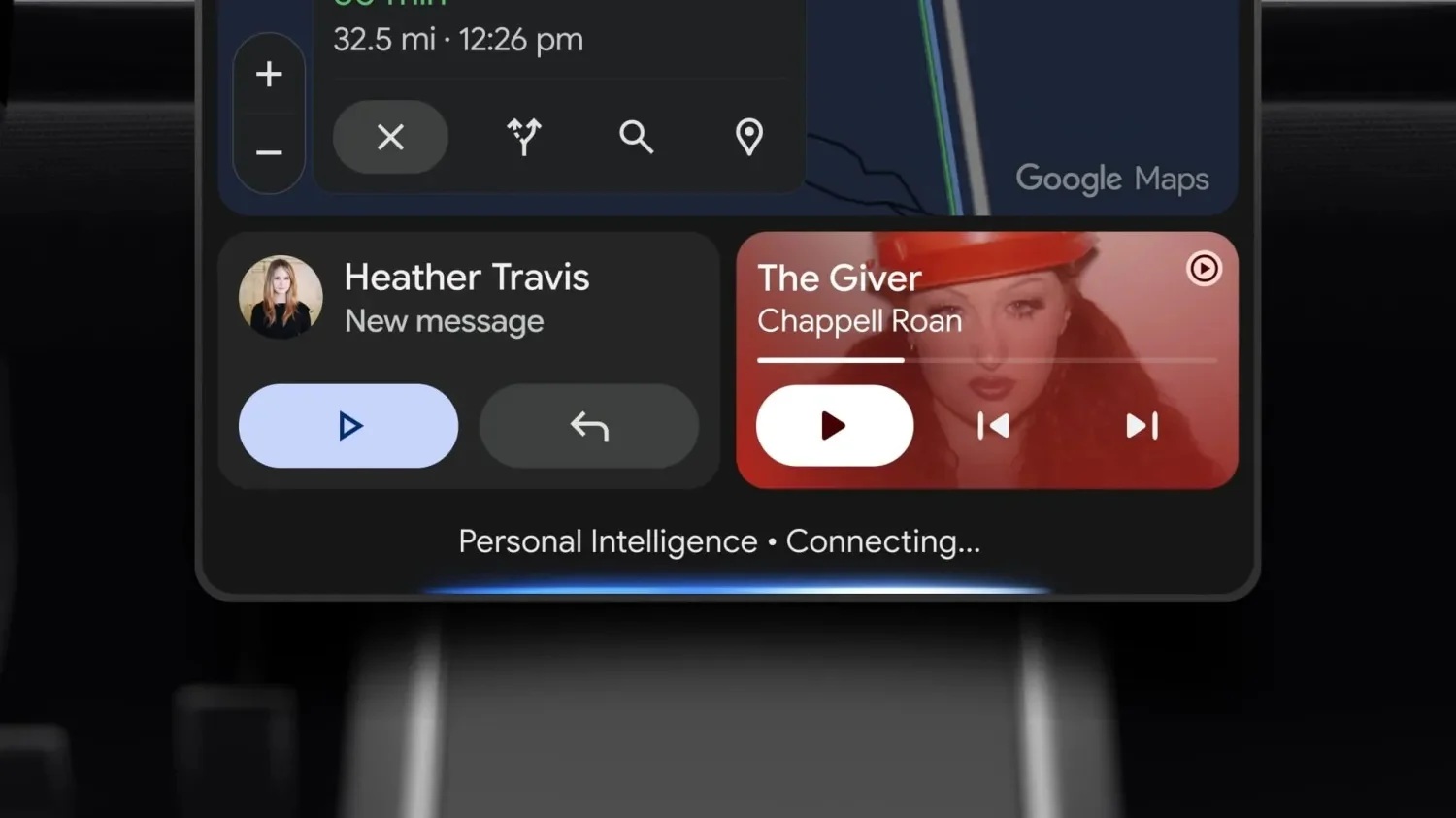
Drivers Still Need To Remain Focused
Even with improved voice interaction, AI should not become another distraction.
Long conversations with an assistant can still occupy attention.
Drivers need to remain focused on the road regardless of how capable Gemini becomes.
The most useful implementations will probably be short interactions where AI quickly handles information that would otherwise require touching the screen.
A two-sentence answer about a flight gate is useful.
A five-minute AI discussion while navigating heavy traffic may not be.
This Could Make Android Auto Much More Competitive
Android Auto already offers strong navigation, media and communication features.
Personal Intelligence could significantly strengthen Google's advantage because the company already operates so many services people use every day.
Gmail, Calendar, Maps and Search contain enormous amounts of personal context.
Few competitors can combine that breadth of information within one assistant.
If Google can make the integration secure and genuinely useful, Gemini could become one of Android Auto's strongest features.
Android Automotive Could Benefit Even More
Android Automotive may ultimately be where Personal Intelligence becomes most interesting.
Because the operating system runs directly on the car, Gemini can potentially become deeply integrated with the vehicle environment rather than simply appearing through a projected smartphone interface.
Future implementations could potentially combine personal information with vehicle information.
That might include battery levels, charging stops, driving range or vehicle settings, depending on manufacturer integration.
The possibilities become considerably broader once AI understands both the driver and the car.
Google Built-In Vehicles Could Become More Personal
Cars using Google built-in already integrate services such as Maps directly into their infotainment systems.
Personal Intelligence adds another layer.
Instead of the car simply having Google services, those services become connected to the individual currently driving.
Two people using the same vehicle could therefore have different experiences depending on which smartphone is connected and which Google account is active.
That creates something closer to a personalised digital profile that follows the user between devices.
Final Thoughts
Google's rollout of Gemini Personal Intelligence for Android Auto and Android Automotive could make voice interaction inside cars significantly more useful.
Instead of requiring users to explain every piece of context, Gemini can — with permission — draw information from services such as Gmail, Calendar, Google Maps and Search to understand what the driver actually means.
Asking for your flight gate and whether the flight is delayed becomes one simple conversation rather than a series of searches across different apps.
The privacy controls are equally important. Personal Intelligence is opt-in, can be disabled whenever users want and requires a connected smartphone for personalised responses on Android Automotive.
Android Auto users are beginning to receive the feature now, while vehicles running Android Automotive with Google built-in will follow over the coming months.
This is probably where Gemini makes the most sense in a car: not as another chatbot waiting for complicated prompts, but as an assistant that quietly understands enough context that drivers can simply ask what they need and keep their attention where it belongs — on the road.











Comments 0