

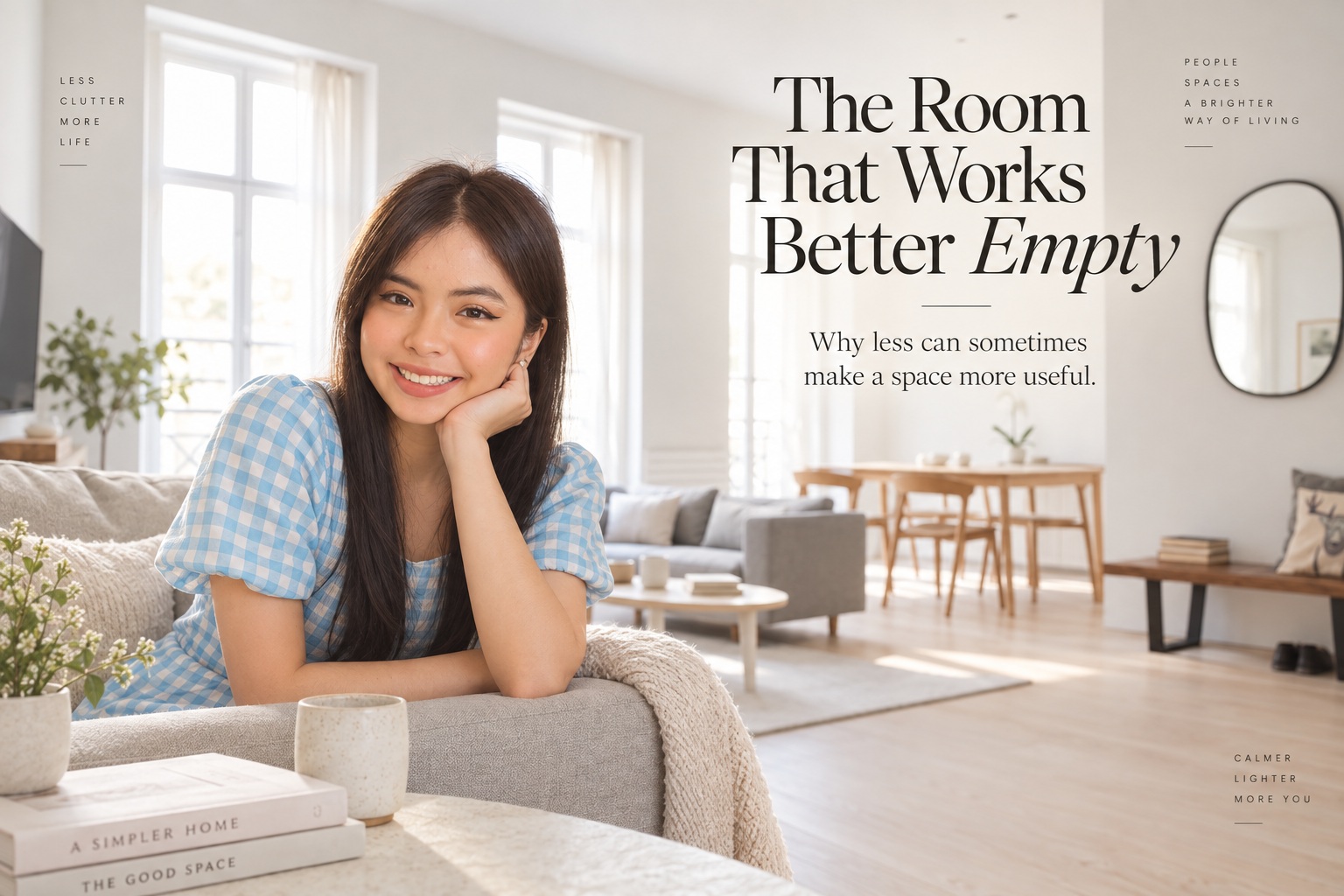
We are usually taught that a room becomes complete when we fill it. Furniture gives it purpose, decorations give it character, and personal objects supposedly make it feel lived in. Yet there are spaces where the opposite is true. Remove enough from the room and something unexpected happens: instead of feeling unfinished, the space begins to feel clearer, calmer, and sometimes even more functional.
This is not necessarily about minimalism as an aesthetic trend. An intentionally empty room does not have to feature white walls, Scandinavian furniture, or carefully curated neutral colours. The idea is much simpler: sometimes objects interfere with what a room is actually meant to provide. When that happens, subtraction becomes part of the design.
Every Object Adds Visual Noise
Everything we place inside a room communicates something. A chair establishes where to sit, a shelf displays what matters, artwork attracts the eye, and decorative objects compete for smaller moments of attention. When these elements have a relationship with one another, the result can feel layered and expressive.
The problem begins when objects accumulate without intention. A table gets added because there is an empty corner, another shelf appears because the wall looks bare, and decorations slowly fill every available surface. Individually, nothing seems excessive, but together they can create visual noise that makes the room feel smaller and more mentally demanding.
Removing some of those objects changes the experience immediately. Suddenly, the architecture becomes visible again. Light, proportion, materials, and movement through the room begin to matter more because they are no longer competing against everything placed inside it.
An Empty Room Is Not Really Empty
Calling an unfurnished space "empty" can make it sound as though something is missing. In reality, the room still contains volume, light, shadow, sound, texture, temperature, and movement. Those qualities were always there; furniture simply made them less obvious.
An open floor changes how people move. A bare wall makes sunlight more noticeable throughout the day. An unobstructed ceiling can make the proportions of a room feel completely different. Even silence becomes part of the environment when televisions, decorative objects, and everyday clutter are removed.
The space itself begins functioning as the primary design element.
Space Creates Possibility
Furniture defines behaviour. Place a sofa against one wall and the room immediately suggests sitting in a particular direction. Add a dining table and a large section of the floor becomes committed to one activity. Introduce enough fixed objects and the room gradually becomes a collection of predetermined functions.
An open room behaves differently because its purpose can change without physically changing the environment. The same floor can become a place to exercise in the morning, think quietly in the afternoon, allow children to play later, or accommodate several people when needed.
That flexibility can be more valuable than permanently optimising every square metre for one particular use.
Instead of asking, "What furniture belongs here?" it can occasionally be more useful to ask, "What becomes possible if nothing is placed here?"
Empty Space Changes How We Experience Architecture
One of the most interesting effects of removing objects is how much more noticeable the actual architecture becomes. Walls stop being backgrounds for shelves and artwork and become surfaces with their own proportions and textures. Windows become stronger visual elements because furniture is no longer interrupting the light around them.
The relationship between the floor, ceiling, and walls also becomes easier to perceive. Details that might otherwise disappear behind possessions—an unusual corner, beautiful flooring, natural shadows, or the shape of a doorway—can become important parts of the experience.
This is why some architectural photography looks so powerful before a building is furnished. The photographs reveal the space itself rather than the lifestyle objects placed inside it.
A Quiet Room Can Change Your Attention
Physical clutter and mental attention are closely connected. Every visible object gives the eye another place to land, and every piece of information creates another small decision about whether it matters. Remove enough of those signals and the environment begins to demand less from you.
An intentionally sparse room can therefore become useful simply because it provides fewer things to process. You may become more aware of the light entering the room, your own movement, the sounds outside, or whatever task you brought into the space.
This makes empty rooms surprisingly useful for activities such as thinking, reading, stretching, meditating, brainstorming, or simply doing nothing for a while.
The absence of stimulation becomes part of the function.
The Difference Between Empty and Unfinished
There is an important difference between deliberately empty space and a room that simply has not been completed. Intent is what separates the two.
An unfinished room often feels accidental because the remaining elements do not establish a clear relationship. An intentionally sparse room still considers proportion, lighting, circulation, materials, and where the few necessary objects belong.
You may have only one chair, but its position matters. There may be only one piece of artwork, making its scale and placement more important than if it were surrounded by ten others. Fewer objects actually increase the responsibility placed on the things that remain.
This is why subtraction can require just as much design judgement as addition.
Removing Things Can Reveal What Actually Matters
One useful experiment is to temporarily remove objects from a room rather than immediately buying something new. Clear a shelf. Take away the side table. Remove some wall decorations. Move unnecessary furniture elsewhere for a few days.
Then observe what happens.
Does the room become easier to walk through? Does natural light reach areas it previously did not? Does the space feel larger? Do you actually miss the object that was removed?
Sometimes the answer will be yes, and the item deserves to return. Other times, you may realise that it occupied space simply because it had always been there.
Subtraction reveals which objects are genuinely contributing to the room.
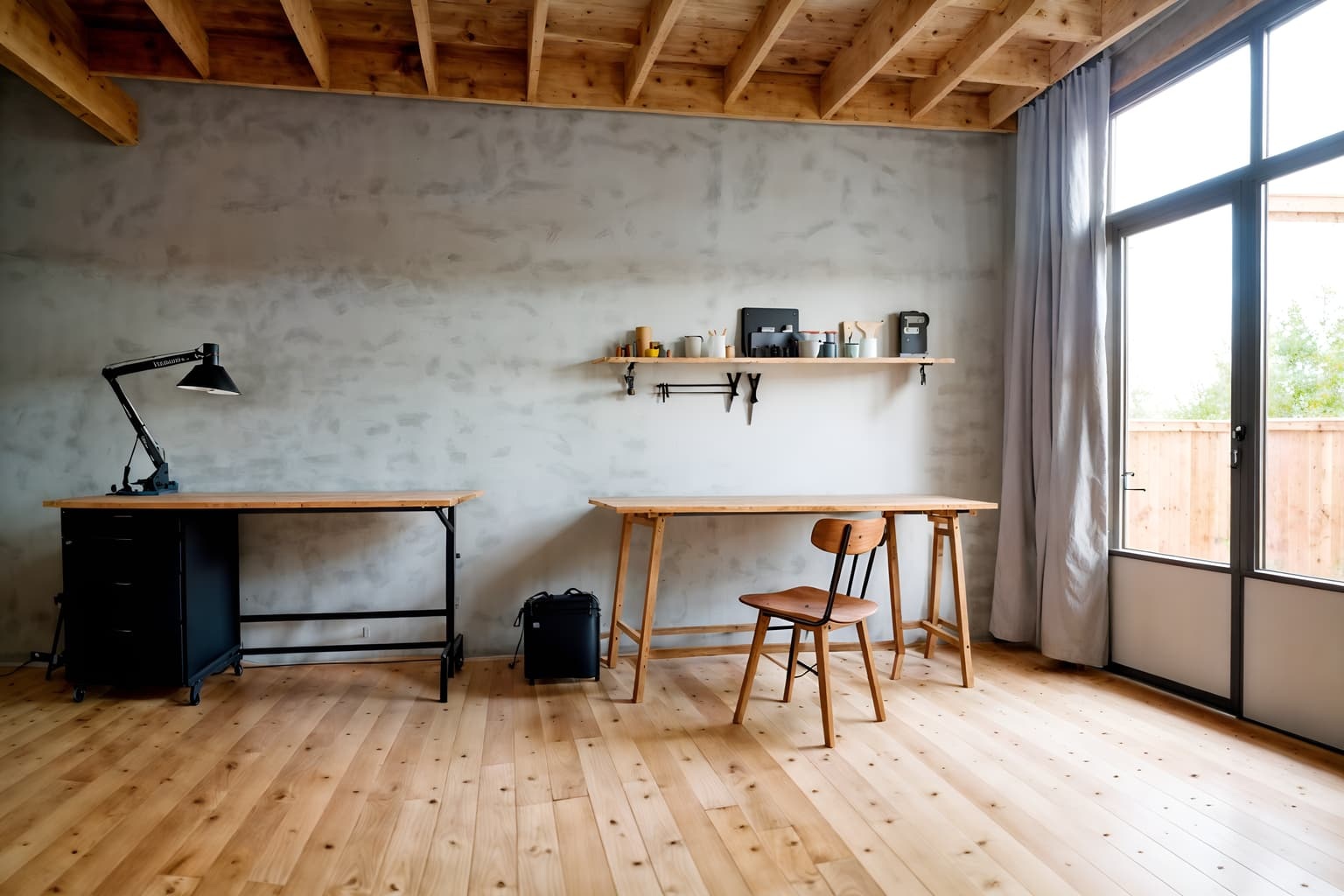
Empty Space Is Not Wasted Space
One of the strongest pressures in interior design is the idea that every area should perform an obvious function. An empty corner therefore becomes something to "solve." A blank wall needs artwork. An unused section of floor needs furniture.
But usefulness does not always mean occupancy.
Open space improves circulation, creates visual separation, allows a room to adapt, and gives important objects more presence. Just as white space in graphic design helps typography and images communicate more clearly, open physical space helps architecture and furniture establish stronger relationships.
The square metre containing nothing may be contributing just as much as the square metre containing an expensive chair.
Not Every Room Should Be Sparse
None of this means every room should be stripped of personality. A library filled with books can feel wonderful. A kitchen needs tools. A family living room may benefit from photographs, toys, cushions, and objects collected over many years.
Richness can be beautiful when it reflects real life rather than uncontrolled accumulation.
The useful distinction is between objects that add something to the experience and objects that simply occupy available space. The goal is not emptiness for its own sake. It is enough space for the room to perform its purpose without unnecessary interference.
Sometimes that means many objects. Sometimes it means almost none.
Designing Through Subtraction
Designers naturally spend a lot of time asking what should be added. What furniture should go here? Which artwork belongs on this wall? What colour, texture, or accessory will make the room more interesting?
Subtraction asks a different question: what could disappear without reducing the experience?
That question can be uncomfortable because adding something feels productive while removing something can feel like undoing work. Yet experienced designers know that editing is part of creation. A composition often becomes stronger when unnecessary elements disappear.
The same principle applies to architecture, interfaces, writing, advertising, and almost every other design discipline.
Knowing When to Stop
Perhaps the hardest part of designing any space is deciding that it already has enough. Empty surfaces can trigger the instinct to decorate, while open areas create the feeling that something should occupy them.
But completeness does not require fullness.
Sometimes a room already contains everything it needs: good light, comfortable proportions, useful circulation, and one or two objects that serve a genuine purpose. Adding another layer may not improve anything.
The confidence to leave that space alone can be one of the most important design decisions.
Final Thoughts
A room that works better empty challenges the assumption that spaces become more useful as we put more things inside them. Objects certainly give rooms function and personality, but they also introduce visual noise, restrict movement, and define how space must be used.
Removing them can reveal something equally valuable: architecture, light, flexibility, calm, and possibility.
The goal is not to create sterile rooms or reject everything we own. It is to recognise that empty space is itself a functional element, not merely the area waiting for another piece of furniture.
Some spaces are improved by what we add.
Others become better only when we finally stop adding anything at all.











Comments 0