


Cloudflare is getting closer to a major milestone for EmDash, its modern content management system positioned as a potential alternative to traditional platforms such as WordPress. The company has confirmed that EmDash Version 1.0 is coming soon, following a successful migration of the Cloudflare Blog onto the new platform.
That migration is particularly significant because EmDash began life as an early developer preview rather than production-ready software. Running Cloudflare's own high-traffic blog on it provides a much more convincing demonstration that the CMS is maturing into something organisations may realistically consider for live websites.
Why Version 1.0 Matters
Software version numbers do not always follow identical rules, but a 1.0 release generally represents an important transition.
It usually signals that the core architecture has stabilised enough for broader real-world use and that the project is moving beyond its earliest experimental phase.
EmDash originally launched as Version 0.1.0 Preview, with Cloudflare describing it as an early developer beta.
That made the original release interesting for developers, but it was not something most website owners would have wanted to immediately use for an important production site.
The upcoming 1.0 milestone suggests that situation is changing.
Perhaps the strongest evidence is that Cloudflare itself has now trusted EmDash with one of its own major public websites.
Cloudflare Calls EmDash a Spiritual Successor to WordPress
When Cloudflare introduced EmDash in April, it made an ambitious claim: the company described the project as a "spiritual successor to WordPress."
That description naturally attracted attention.
WordPress powers an enormous portion of the web and has spent decades building an ecosystem of plugins, themes, hosting providers, developers and publishing tools.
EmDash is nowhere near that level of maturity or ecosystem size.
What Cloudflare is really challenging is the underlying architecture.
WordPress was created during an era when websites were commonly hosted on conventional web servers running PHP and databases.
Modern hosting can instead use serverless computing, globally distributed edge networks and frameworks specifically designed around static and content-heavy websites.
Cloudflare believes a modern CMS should be designed around those technologies from the beginning.
EmDash Is Built Very Differently From WordPress
EmDash is written entirely in TypeScript and uses Astro underneath for content-driven websites.
Cloudflare has designed it around serverless infrastructure, although the company says users are not locked into Cloudflare itself.
The CMS can theoretically run on other platforms or self-hosted hardware.
One of the more interesting architectural differences involves plugins.
WordPress plugins execute within the same broader application environment and have historically represented one of the platform's largest security challenges.
A vulnerable plugin can potentially compromise the entire website.
EmDash attempts to approach this differently by running plugins inside isolated environments using Dynamic Workers.
The intention is to prevent one poorly written or compromised extension from gaining unrestricted access to the rest of the CMS.
If that architecture works as intended, it could address one of the biggest frustrations associated with maintaining large WordPress installations.
Cloudflare Has Now Moved Its Own Blog to EmDash
The biggest recent development is Cloudflare's decision to migrate its own blog.
The migration happened gradually before reaching a complete rollout on 12 August.
Using its own platform internally is effectively Cloudflare acting as "Customer Zero."
Instead of demonstrating EmDash through a small sample website, the company exposed it to the traffic patterns experienced by the actual Cloudflare Blog.
That provides a much more demanding test.
Cloudflare says ordinary traffic sits around 75 requests per second, but large spikes can exceed 5,000 RPS.
Some of those spikes occur when popular articles are published and rapidly shared.
Others appear unexpectedly throughout the day.
A content platform used by Cloudflare therefore needs to handle everything from quiet periods to sudden bursts of enormous traffic.
EmDash Survived a 28,000 RPS DDoS Attack
One of the more impressive tests happened during Cloudflare's Agents Week in early August.
The EmDash-powered blog handled normal publishing traffic reaching around 450 requests per second.
More dramatically, it also remained operational during a 28,000 RPS distributed denial-of-service attack.
That does not necessarily mean every EmDash installation can automatically absorb the same attack.
Cloudflare's enormous global network naturally provides much of that resilience.
Still, the event demonstrated that the CMS itself did not become the bottleneck when placed behind Cloudflare's infrastructure.
For a company whose reputation is built around web performance and DDoS protection, that was an important test.
Performance Was a Major Requirement
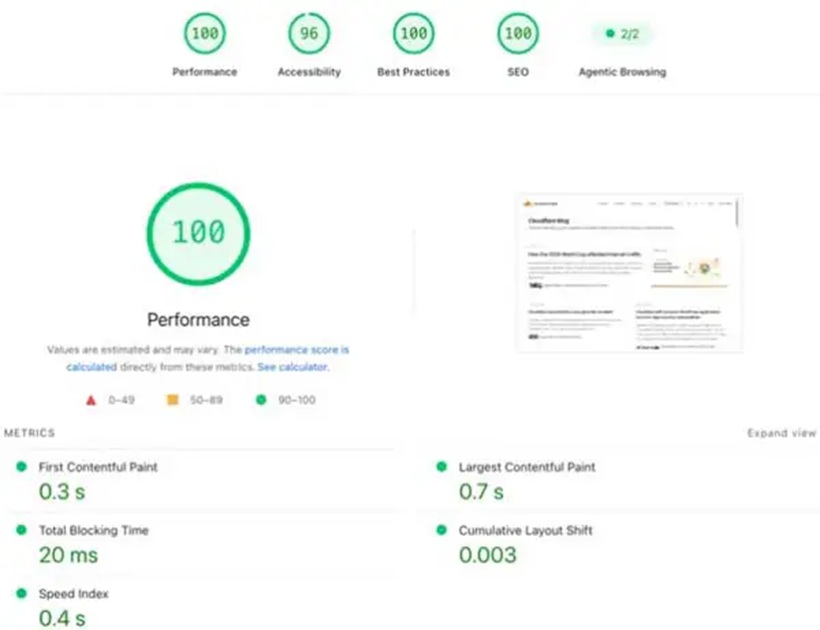
Cloudflare also placed considerable emphasis on page-loading performance.
That makes sense.
A company specialising in internet performance would hardly want its own publishing platform to produce a slow website.
EmDash's use of Astro and modern web architecture is intended to minimise unnecessary client-side processing and deliver content efficiently.
Cloudflare also required zero downtime during migration.
If anything had gone wrong during the rollout, the team needed a reliable fallback mechanism capable of returning the blog to its previous system.
That type of migration planning becomes essential when moving an established website rather than launching something completely new.
The Editing Experience Still Needs Work
The successful production migration does not mean EmDash is completely finished.
Cloudflare acknowledged that the authoring and editing side still has areas requiring improvement.
One of the most significant issues involves scheduled publishing.
For professional publishing teams, scheduling is a basic CMS feature rather than an optional luxury.
Newsrooms, corporate communications teams and marketing departments regularly prepare posts ahead of time and expect them to publish automatically at a specific date and time.
Cloudflare says the remaining scheduling problems are expected to be resolved soon.
This is exactly the kind of refinement expected as software moves toward a 1.0 release.
The underlying platform may already be technically capable, while workflow features still need polishing.
Could EmDash 1.0 Arrive During Cloudflare Birthday Week?
Cloudflare has not publicly provided an exact release date for EmDash 1.0.
However, there is an obvious possibility.
Every year, Cloudflare holds Birthday Week toward the end of September and traditionally uses the event to announce major technologies and product launches.
Previous Birthday Week announcements have included technologies such as:
With EmDash now approaching its 1.0 milestone, a Birthday Week launch would certainly fit Cloudflare's usual pattern.
That remains speculation for now, but the timing would make sense.
Why Cloudflare Is Challenging WordPress
WordPress remains extraordinarily successful because it makes publishing accessible.
It also has an enormous ecosystem that EmDash will not replicate overnight.
But WordPress carries architectural baggage accumulated over more than two decades.
Security vulnerabilities frequently come through plugins and themes.
Performance can vary dramatically depending on hosting, caching and extension choices.
Large installations may require considerable optimisation and maintenance.
Cloudflare's argument is essentially that if someone were designing WordPress today, knowing everything we now know about edge computing, serverless infrastructure and modern web frameworks, the resulting system would probably look very different.
EmDash is its attempt to build that alternative.
Security Could Become One of EmDash's Biggest Selling Points
Plugin isolation could prove particularly important.
WordPress itself is generally maintained aggressively, but its vast plugin ecosystem creates a huge attack surface.
One vulnerable extension installed across thousands of websites can quickly become a major security incident.
Running extensions inside isolated environments could limit what a compromised plugin is capable of doing.
Instead of trusting every plugin with broad access to the application and underlying server, permissions can theoretically be constrained much more tightly.
That is increasingly how modern platforms are designed.
Browsers isolate websites.
Cloud platforms isolate workloads.
Mobile operating systems sandbox applications.
Applying similar thinking to CMS plugins makes sense.
WordPress Still Has an Enormous Advantage
It would nevertheless be premature to describe EmDash as an actual WordPress replacement today.
WordPress has millions of users and tens of thousands of themes and plugins covering practically every imaginable website requirement.
SEO tools, e-commerce, memberships, forums, page builders, multilingual publishing and countless other capabilities already exist.
EmDash still needs to prove that developers want to build an ecosystem around it.
A technically superior architecture alone does not guarantee success.
Users generally care about whether the CMS actually helps them build the website they need.
Cloudflare therefore needs developers, plugins, documentation, templates and migration tooling alongside the core technology.
Version 1.0 is the beginning of that process rather than the end.
Cloudflare Using EmDash Itself Builds Confidence
Perhaps the most convincing development is simply that Cloudflare is willing to run its own blog on the platform.
Companies frequently launch experimental products with impressive demonstrations that never receive serious internal use.
Moving an important public website to EmDash changes the conversation.
Cloudflare now has a direct incentive to improve the CMS because its own publishing team depends on it.
Every bug, performance issue and workflow limitation becomes something Cloudflare experiences itself.
That can dramatically accelerate development.
It also means prospective users can examine the Cloudflare Blog as a real-world example of an EmDash deployment rather than relying only on benchmark claims.
Final Thoughts
EmDash is approaching the point where Cloudflare's ambitious description of it as a spiritual successor to WordPress can begin receiving a more serious test.
The platform has moved well beyond its original 0.1 developer preview and is now powering Cloudflare's own high-traffic blog.
It has already handled substantial traffic spikes and even remained operational through a 28,000 RPS DDoS attack, while Cloudflare continues polishing publishing workflows ahead of Version 1.0.
That does not mean WordPress suddenly has an immediate replacement.
WordPress's ecosystem and enormous installed base remain advantages that will take years for any competitor to challenge.
But EmDash is interesting because it asks a very reasonable question:
If we were designing a major open publishing platform from scratch in 2026, would we really build it the same way WordPress was built more than two decades ago?
Cloudflare clearly believes the answer is no.
With EmDash 1.0 now officially approaching, we may soon find out whether developers and publishers agree.











Comments 0