

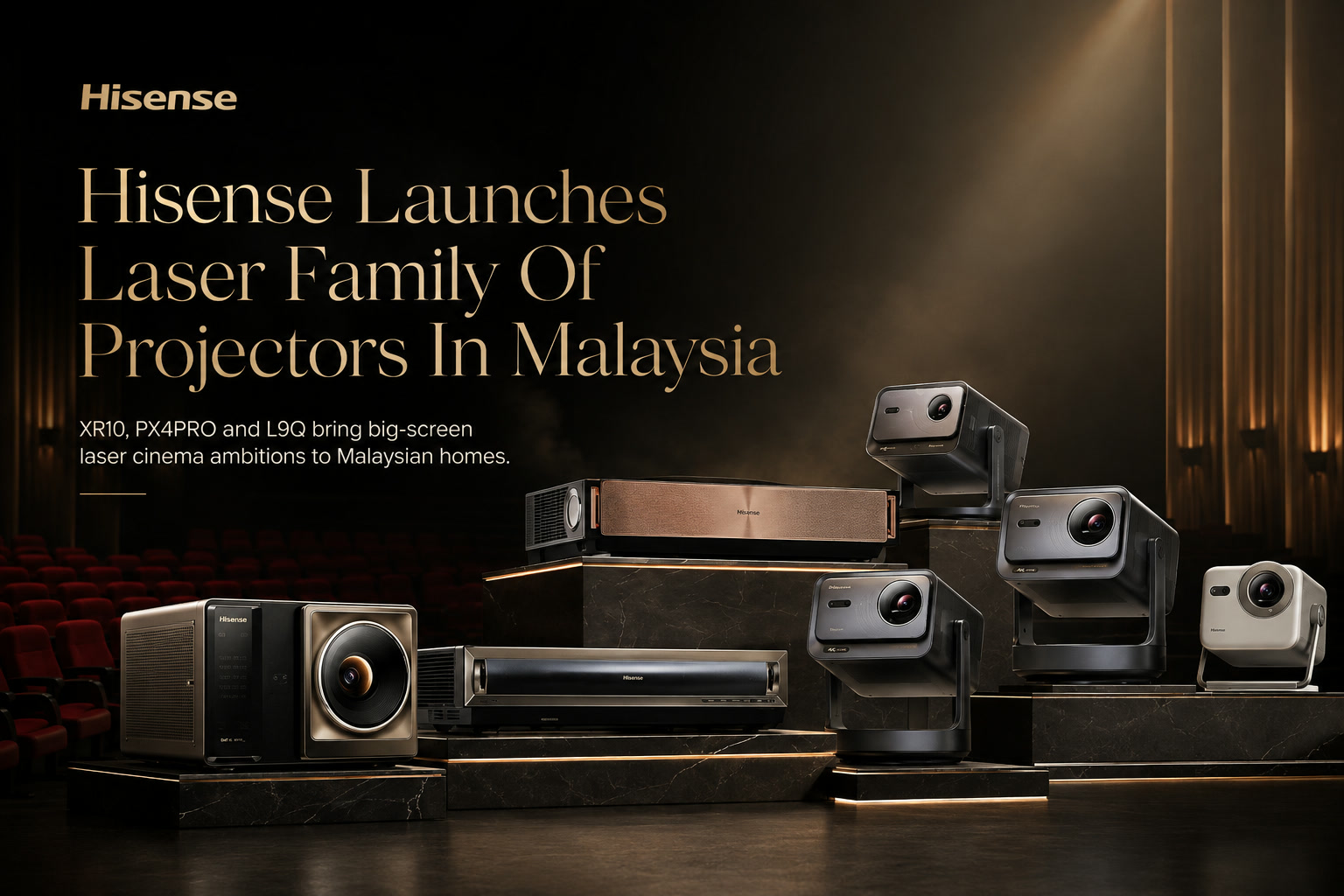
Hisense is expanding its home-entertainment range in Malaysia with the arrival of its latest Laser Family of projectors. Rather than introducing a single model, the company is bringing in three products aimed at different types of large-screen users: the flagship XR10 RGB Triple Colour Laser Projector, the more flexible PX4PRO RGB Laser Cinema, and the L9Q RGB Smart Laser TV.
The lineup reflects how home projectors are gradually moving beyond the traditional dark-room setup. Hisense is positioning these products as alternatives to extremely large televisions, offering 4K images that can stretch far beyond the sizes normally available from conventional TV panels.
Three Projectors for Different Home-Cinema Setups
Although all three models sit under the same Laser Family branding, they are designed for slightly different environments.
The XR10 is the range-topping model, built for buyers who want the largest possible image and have enough room for a dedicated projection setup. The PX4PRO takes a more practical short-throw approach, making it easier to create a large screen without placing the projector far behind the seating area.
The L9Q, meanwhile, completes the lineup as an RGB Smart Laser TV. Full Malaysian specifications and pricing for that model were not included in the information provided, but its inclusion suggests that Hisense wants to cover both traditional projection enthusiasts and buyers looking for a more integrated living-room cinema solution.
Hisense XR10 Sits at the Top of the Range
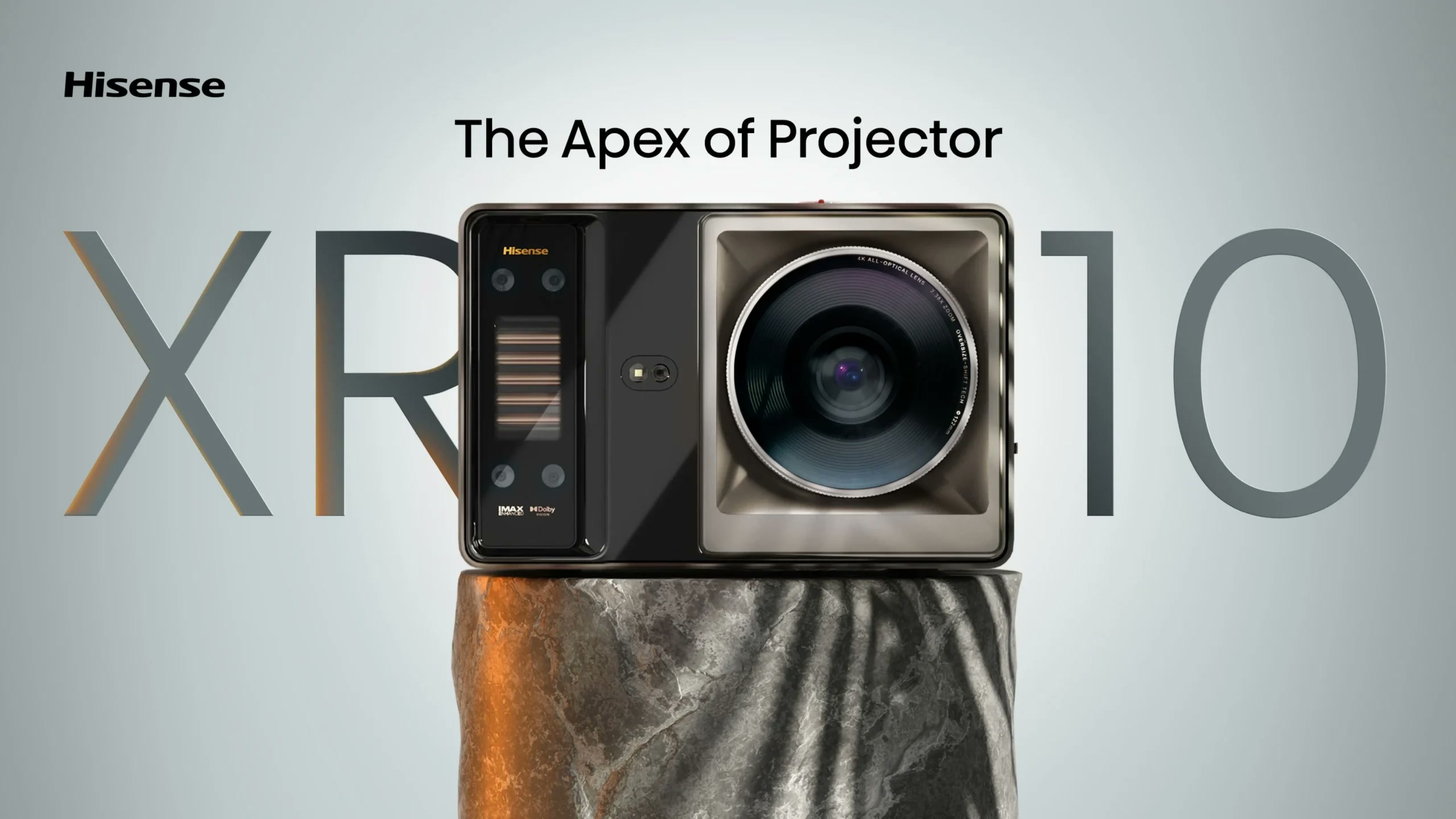
Hisense describes the XR10 as the "Apex of Projector," and its specifications clearly position it as the flagship of the Malaysian lineup.
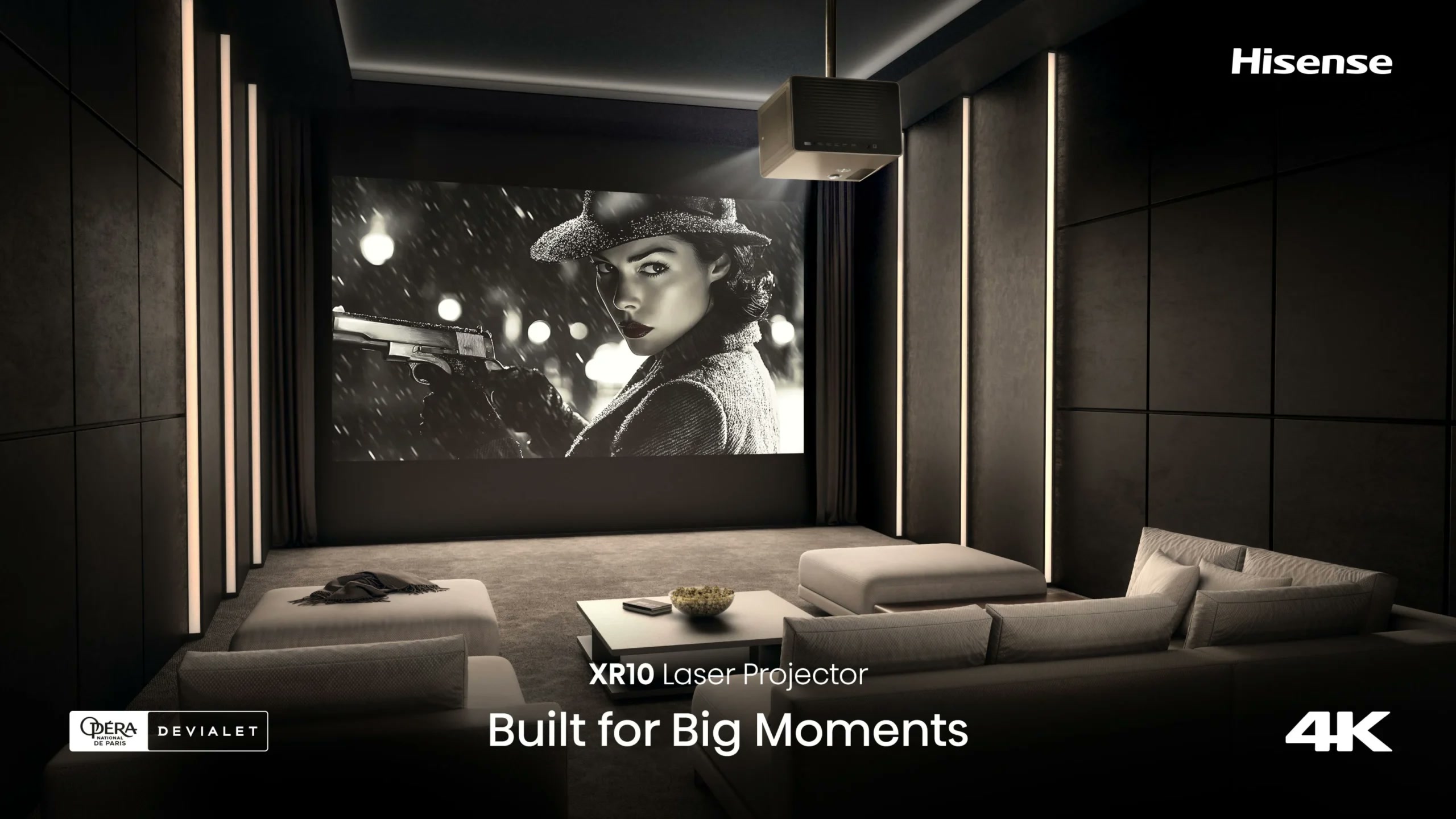
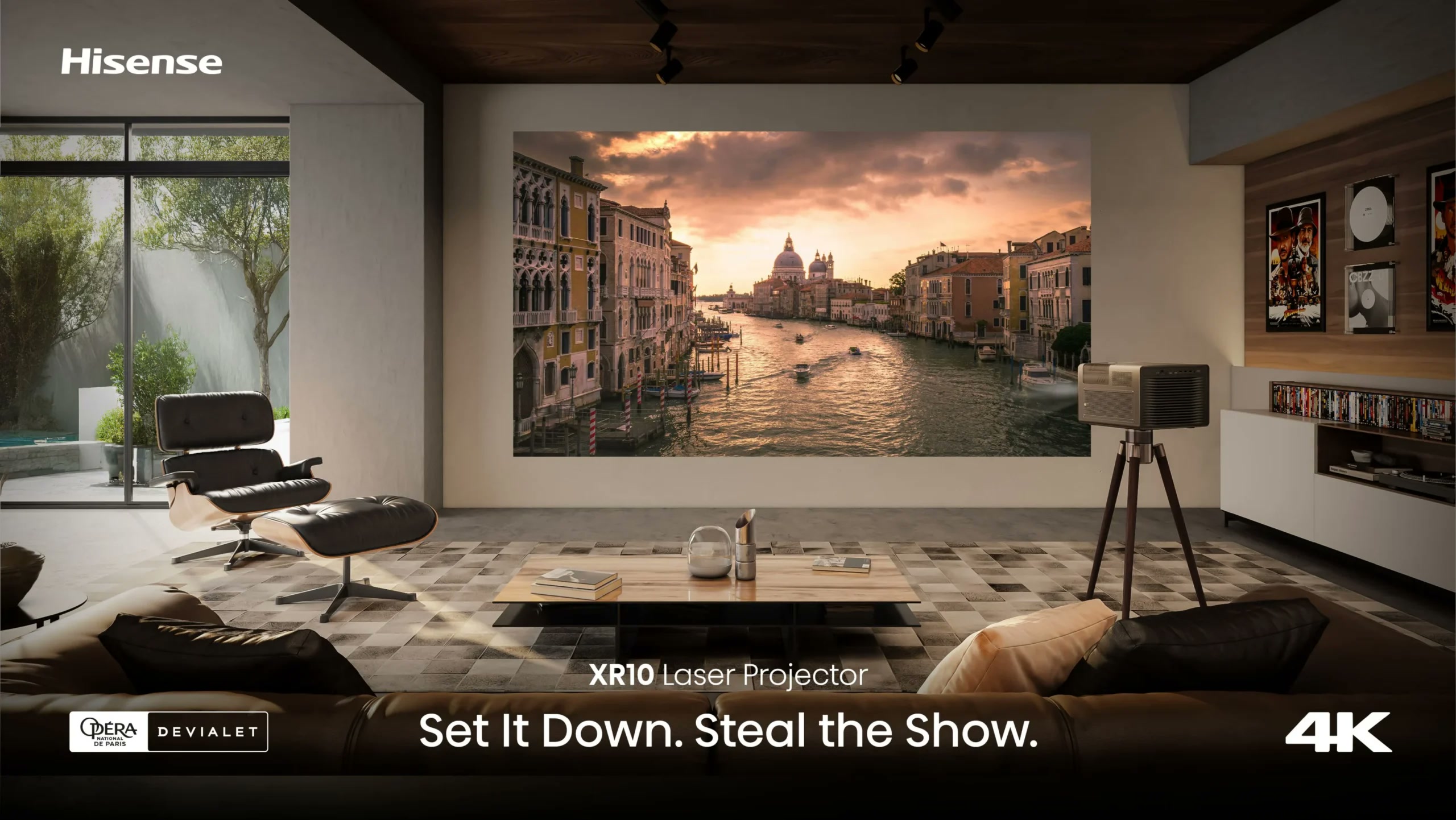
The projector uses an RGB triple-colour laser system and can produce a 4K image measuring up to an enormous 300 inches. That is far beyond the screen size offered by even the largest mainstream televisions.
A 300-inch picture would naturally require a very large wall, projection screen and viewing distance, so most homes are unlikely to use the XR10 at its absolute maximum size. Nevertheless, the capability gives owners plenty of flexibility when designing a dedicated cinema room or entertainment space.
Even at more practical sizes, such as 120, 150 or 200 inches, the XR10 could deliver the kind of scale that would be extremely expensive and difficult to achieve with a conventional television.
High Brightness for a More Versatile Picture
The XR10 is rated at 6,000 ANSI lumens, making brightness one of its most important features.
Projector images are heavily affected by ambient light. A low-brightness projector may look excellent in a completely dark room but become washed out when curtains are open or ceiling lights are switched on.
The XR10's higher output should make it more usable across a wider range of lighting conditions. It could also help maintain a stronger image when projecting at very large sizes, where the available light must be spread across a much bigger surface.
However, brightness alone does not guarantee perfect daytime performance. The quality and colour of the wall, the type of projection screen, the position of nearby windows and the direction of room lighting can all influence the final image.
Anyone spending RM23,999 on a flagship projector should consider pairing it with a suitable screen rather than projecting onto an ordinary painted wall. A proper screen can improve perceived contrast, brightness uniformity and colour consistency.
Dynamic Iris and Stronger Contrast
The XR10 includes a dynamic iris lens and a stated native contrast ratio of 6,000:1.
Contrast is particularly important for cinematic content. It determines how effectively the projector can display bright highlights alongside darker areas of the same scene.
A dynamic iris adjusts the amount of light passing through the optical system according to what is happening on screen. It can reduce light output during darker scenes and open up during brighter content.
This approach may help improve perceived black levels and add depth to films, although the effectiveness of any dynamic iris depends on how smoothly and accurately it responds. If the adjustment is too aggressive or slow, viewers may notice changes in overall brightness while watching.
Projectors generally cannot produce the same perfect blacks as an OLED television because some light continues reaching the screen. The XR10 instead appears focused on combining strong brightness with improved contrast for large-scale viewing.
Several HDR Cinema Modes Are Included
Hisense has equipped the XR10 with three dedicated HDR cinema modes:
These modes are intended to optimise the projector for different types of cinematic content and viewing environments.
Filmmaker Mode usually aims to present films with fewer artificial enhancements, preserving the intended frame rate, colour and motion characteristics. IMAX-oriented processing may emphasise the larger-scale cinematic presentation associated with IMAX Enhanced content.
Dolby Vision Dark is designed for controlled, darker rooms where the projector can prioritise contrast and image detail without needing to compensate heavily for ambient light.
The actual difference between the modes will depend on Hisense's calibration and processing. Enthusiasts may still want to adjust settings manually, but casual viewers should benefit from having clearly labelled presets instead of navigating complicated picture controls.
Liquid Cooling Could Improve Long-Term Reliability
Another unusual feature of the XR10 is its advanced liquid-cooling system.
Hisense claims this cooling solution could help the projector last up to three times longer than competing projector designs. That is a significant claim, particularly because heat management plays a major role in the reliability of high-brightness laser projection systems.
A projector producing 6,000 ANSI lumens will generate substantial heat. Effective cooling can help protect the laser light source, image-processing hardware and internal optical components.
Liquid cooling may also allow the system to maintain performance more consistently during long viewing sessions. However, the real-world benefits will depend on factors such as fan noise, maintenance requirements and the overall design of the cooling loop.
Long-term testing will be needed before the claimed lifespan advantage can be properly assessed.
The XR10 Comes with a Premium Price
The Hisense XR10 is priced at RM23,999 in Malaysia.
That places it firmly in premium home-cinema territory. It is considerably more expensive than a mainstream television or entry-level 4K projector, but it is also trying to provide an image size that ordinary televisions cannot approach.
The value will depend heavily on the buyer's intended setup.
For someone with a dedicated cinema room who wants a 150-inch or larger image, the XR10 could be more practical than attempting to purchase an enormous television. For an ordinary living room where a 75-inch or 85-inch screen is sufficient, a premium television may still offer better black levels, easier installation and stronger everyday performance.
PX4PRO Offers a More Living-Room-Friendly Approach
The second model in the lineup is the Hisense PX4PRO Laser Cinema.
Unlike the XR10, the PX4PRO uses a short-throw design. This allows it to create a large image while being positioned much closer to the wall or screen than a conventional long-throw projector.
That can make installation considerably easier in a normal living room. There is less risk of someone walking through the projected image, and the projector does not need to be mounted on the ceiling or placed behind the seating area.
Short-throw projectors can also simplify cable management because the device remains near the entertainment cabinet, sound system and power outlets.
Triple-Laser Technology and Higher Claimed Brightness
The PX4PRO uses Hisense's LPU Digital Laser Engine 3.0 together with an RGB triple-laser light source.
Hisense claims the system delivers 25% more brightness, reaching an output of 3,500 ANSI lumens.
That is lower than the flagship XR10's 6,000 ANSI-lumen rating, but it should still provide substantial brightness for a short-throw home-cinema projector.
The RGB triple-laser system generates red, green and blue light directly instead of relying on a single light source combined with a colour wheel or filtering system. This can potentially provide a wider colour range and stronger colour brightness.
It may also reduce some of the colour-wheel artefacts associated with certain single-chip projector designs, although viewers who are sensitive to the rainbow effect will need to assess the PX4PRO in person.
A Dedicated DLP Chip Handles the Image
The PX4PRO uses a 0.47-inch DLP 8445 DMD chip.
The Digital Micromirror Device is responsible for creating the projected image by rapidly controlling a large number of microscopic mirrors. Hisense says the system helps preserve clarity and fine detail.
The projector is marketed as a 4K model, although—as with many compact DLP projectors—the exact method used to produce the final 4K image is an important technical detail for enthusiasts.
What will matter most to ordinary viewers is whether text, subtitles, faces and fine textures appear sharp at larger screen sizes. Proper focus across the entire image is especially important with short-throw projection because small alignment errors can affect one side or corner more noticeably.
The PX4PRO Covers 80 to 200 Inches
Hisense says the PX4PRO can create a 4K image ranging from 80 inches to 200 inches.
That range makes it more adaptable than a fixed-size television.
At 80 to 100 inches, it could serve as a premium TV replacement in a normal living room. At 120 to 150 inches, it becomes a proper home-cinema experience. The maximum 200-inch option would require considerably more wall space and careful control of lighting.
Buyers should remember that increasing the image size spreads the projector's available brightness across a larger area. A 200-inch image will appear less intense than an 80-inch image under the same conditions.
Room layout, viewing distance and screen quality therefore remain just as important as the projector's maximum advertised size.
An Iris Lens Helps Control Glare and Colour
The PX4PRO also includes an iris lens designed to maintain colour accuracy while reducing glare.
Short-throw projectors can be particularly sensitive to screen quality and room reflections because light reaches the projection surface at a steep angle.
A suitable short-throw-compatible screen may help prevent light from spreading across the room while improving perceived contrast. Ordinary projector screens are not always ideal for this type of installation.
The iris system could help the PX4PRO balance brightness and contrast, but buyers should still pay attention to the environment in which it will be used. Even a strong projector can look disappointing if placed opposite large uncovered windows or under bright ceiling lights.
Its RM23,999 price means it is unlikely to be an impulse purchase. It is a specialised product for users who already understand what they want from a projection system.
Who Should Consider the PX4PRO?
The PX4PRO may appeal to a wider group of buyers.
Its short-throw design makes it more realistic for living rooms, condominiums and spaces where ceiling mounting is not practical. The 80-to-200-inch range also allows users to adapt the image size to the available wall.
The combination of 4K projection, 3,500 ANSI lumens, Dolby Vision, IMAX Enhanced support and Devialet audio makes it look like a more complete entertainment solution.
Its final value will depend on Malaysian pricing, real-world image quality and how well the integrated audio performs.
Final Thoughts
Hisense's Laser Family launch gives Malaysian home-cinema buyers three new large-screen options, led by the flagship XR10 and the short-throw PX4PRO.
The XR10 is the most ambitious model, delivering up to a 300-inch 4K image, 6,000 ANSI lumens, a dynamic iris, several HDR cinema modes and an advanced liquid-cooling system. At RM23,999, it is clearly aimed at serious enthusiasts and dedicated cinema installations.
The PX4PRO takes a more practical approach. Its short-throw design, 80-to-200-inch projection range, 3,500 ANSI-lumen output, Dolby Vision and IMAX Enhanced certification make it better suited to everyday living spaces. The integrated Devialet audio could also make it easier to build a cleaner entertainment setup without immediately purchasing separate speakers.
The L9Q completes the family, although more local information is needed before its position and value can be properly assessed.
These projectors are not inexpensive replacements for ordinary televisions. Their main attraction is scale. For viewers who want a genuine cinema-sized image at home, Hisense's new Malaysian lineup provides several increasingly compelling ways to move beyond the limitations of a conventional TV.











Comments 0