

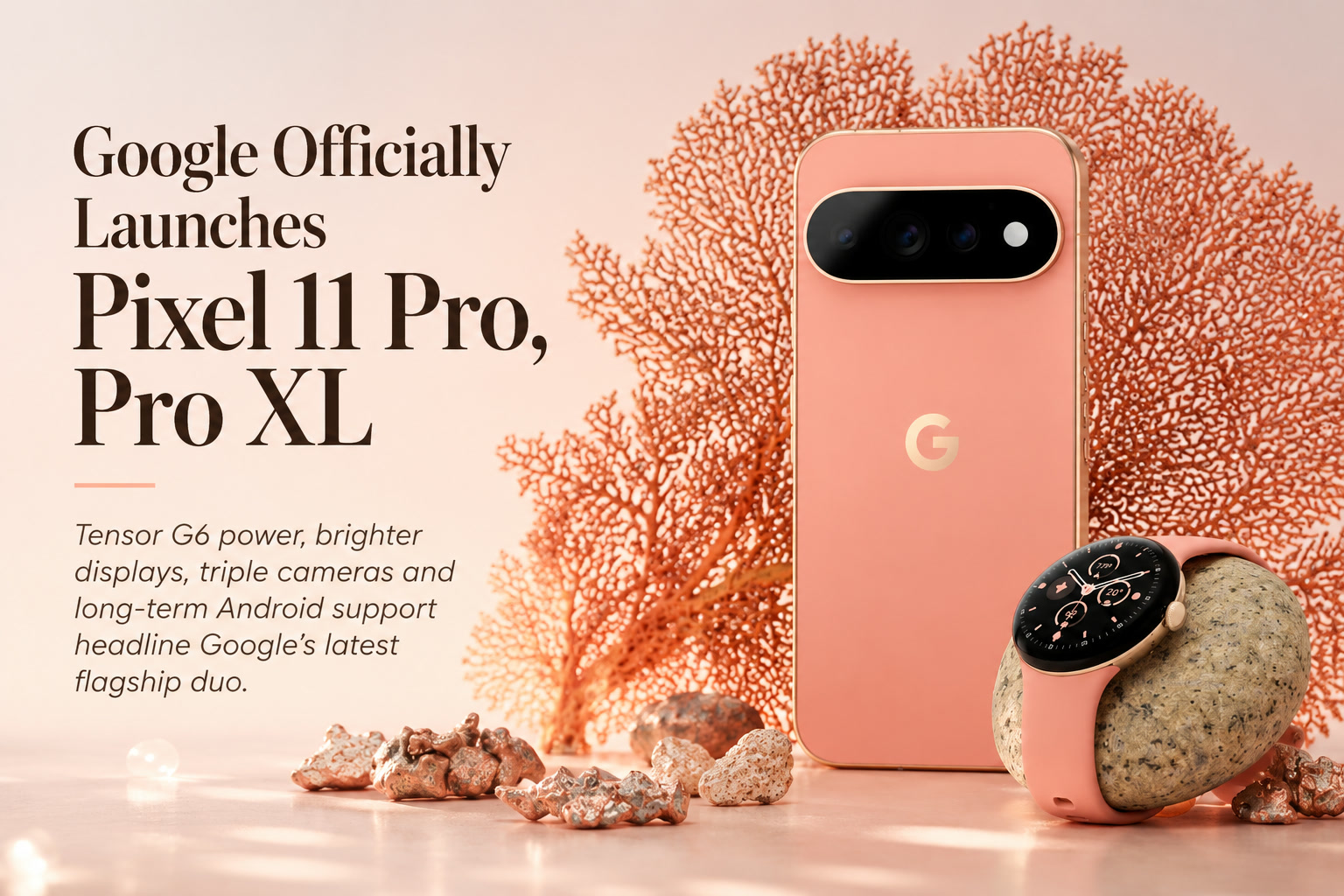
Google has officially taken the wraps off the Pixel 11 Pro and Pixel 11 Pro XL, bringing another round of hardware upgrades, camera improvements and AI-powered features to the company's flagship smartphone lineup.
While Google's Made by Google event traditionally serves as the big reveal for its latest Pixel hardware, the company has already shared an unusually large amount of information surrounding this generation. As a result, there isn't much mystery left around what its two premium Pixel 11 models bring to the table.
The Pixel 11 Pro and Pro XL follow Google's familiar strategy: offer essentially the same flagship experience in two different sizes, with the larger model gaining a bigger display, battery and faster wired charging.
Two Sizes, but Essentially the Same Flagship Experience
The biggest physical difference between the two phones is their display size.
The Pixel 11 Pro features a 6.3-inch Super Actua display, making it the more compact option for users who still want flagship hardware without carrying an enormous phone.
The Pixel 11 Pro XL stretches that to 6.8 inches, giving users significantly more screen space for media, gaming, productivity and photography.
Resolution also scales accordingly.
The Pixel 11 Pro runs at 1,280 x 2,856 pixels, while the larger Pro XL increases this to 1,344 x 2,992 pixels.
Beyond size and resolution, however, Google has kept the two displays remarkably similar.
Both support a 20:9 aspect ratio, adaptive refresh rates reaching 120Hz and peak brightness of up to 3,600 nits.
That brightness figure is particularly useful outdoors, where flagship displays increasingly have to remain visible under direct sunlight.
HDR content benefits from a claimed 2,000,000:1 contrast ratio, while 24-bit colour support allows the displays to reproduce more than 16 million colours.
Google has also protected both screens with Corning Gorilla Glass Victus.
Tensor G6 Powers Both Pixel 11 Pro Models
Inside, both phones are powered by Google's new Tensor G6 chipset.
As with previous Tensor generations, Google's approach isn't simply about chasing benchmark numbers. The processor is designed closely around the company's software, imaging pipeline and increasingly important AI features.
Buyers can configure either model with 12GB or 16GB of RAM, depending on the variant.
Storage options include:
That makes the Pixel 11 Pro series considerably more suitable for users who shoot large amounts of high-resolution video, keep applications locally or simply want to avoid relying heavily on cloud storage.
The 1TB option in particular places Google's flagship squarely against similarly configured premium phones from other manufacturers.
Battery Capacity Separates the Pro From the Pro XL
The larger physical dimensions of the Pro XL naturally allow Google to fit a slightly bigger battery.
The Pixel 11 Pro carries a 4,850mAh battery, while the Pixel 11 Pro XL gets a 5,115mAh unit.
Despite the difference, Google claims both devices can provide more than 30 hours of typical usage.
Actual endurance will naturally depend on factors such as screen brightness, cellular connectivity, camera usage, gaming and how aggressively Google's AI features operate in the background.
Charging speeds also differ between the two.
The Pixel 11 Pro supports wired charging at up to 30W, while the Pro XL increases that to 45W.
Wireless charging is the same across both models, with Qi 2.2 support at up to 25W.
The addition of newer Qi support also continues the broader industry's move toward more convenient magnetic and precisely aligned wireless charging accessories.
Google Keeps the Triple-Camera Formula but Pushes Zoom Further
Photography remains one of the defining parts of the Pixel identity, and Google isn't changing that formula with the Pixel 11 Pro series.
Both phones share the same triple-camera system.
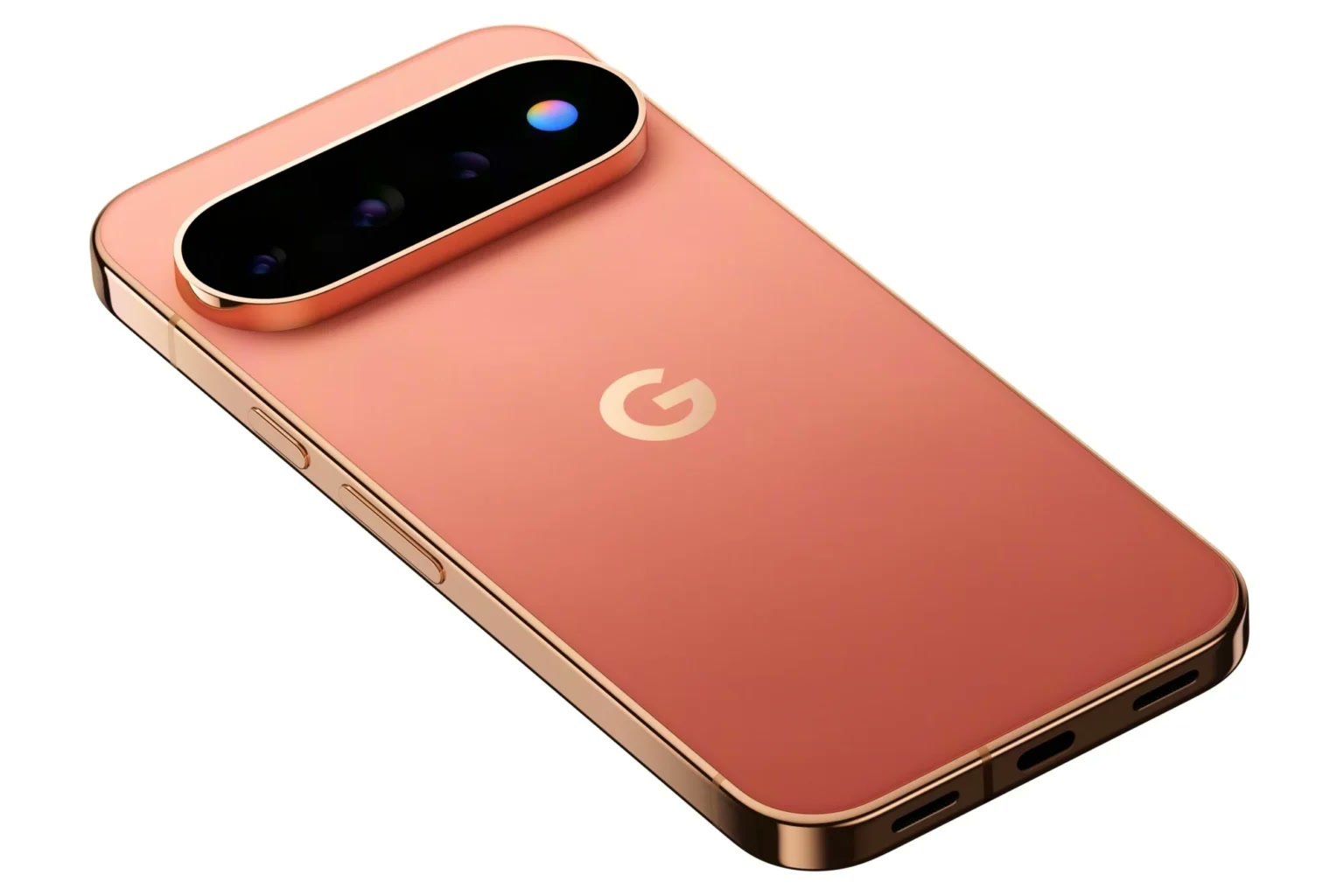
The primary camera uses a 50MP sensor, accompanied by a 48MP ultra-wide camera with Macro Focus and another 48MP telephoto camera offering 5x optical zoom.
Both the primary and telephoto cameras benefit from a combination of optical image stabilisation and electronic stabilisation.
This should help reduce camera shake when shooting still images as well as provide smoother video footage.
On the front, both models use a 42MP selfie camera.
So unlike some competing flagship ranges, choosing the smaller Pixel 11 Pro doesn't mean sacrificing the more advanced camera system.
That is arguably one of the biggest advantages of Google's two-size strategy.
Pro Zoom Now Goes All the Way to 120x
Google is also pushing computational photography even further with the return of Pro Zoom.
This time, the maximum zoom level has been increased to an enormous 120x.
Obviously, that doesn't mean the phone suddenly has a native 120x optical lens.
Instead, the feature combines information from the telephoto camera with Google's image-processing algorithms to reconstruct and enhance extremely distant subjects.
Digital zoom at these extreme levels will always involve compromises, but computational photography has made the results considerably more usable than simply cropping into an image.
Google has spent years refining techniques such as Super Res Zoom, and the new 120x mode appears to be another extension of that strategy.
It could be particularly useful for subjects such as distant buildings, landmarks, signs and even the moon, although real-world image quality will ultimately determine how practical that maximum setting actually is.
AI Continues to Sit at the Centre of Pixel Photography
Hardware may capture the image, but Google continues to rely heavily on software to determine what users ultimately see.
The Pixel 11 Pro and Pro XL bring back familiar AI-assisted photography tools such as Photo Unblur, Portrait Blur and Magic Eraser.
Photo Unblur attempts to rescue images affected by motion or focus problems.
Magic Eraser can remove unwanted objects or distractions from a photograph.
Portrait-related processing allows users to adjust depth effects after an image has already been captured.
These features have become increasingly normal on modern smartphones, but Google was one of the companies that helped push computational photography into the mainstream.
With Tensor G6 providing more processing capability, AI is likely to become even more deeply integrated into the Pixel camera experience.
Pixel Glow Adds a Notification Light to the Camera Bar
One of the more unusual additions can be found directly on the rear camera area.
Google calls the feature HiLight, although it may also be referred to as Pixel Glow.
Essentially, it functions as an LED notification system integrated into the camera island.
Notification LEDs were once common on Android smartphones but gradually disappeared as manufacturers moved toward edge-to-edge OLED displays and always-on screens.
Bringing a notification light back through the rear camera design is an interesting solution.
It could provide a more noticeable visual indicator for incoming notifications, charging activity or other alerts when the phone is placed face-down.
It also gives Google another recognisable visual element that helps differentiate Pixel hardware from increasingly similar-looking smartphones.
Android 17 Comes Installed From Day One
Naturally, both Pixel 11 Pro models ship with Android 17.
Pixel devices remain Google's reference hardware for Android, meaning they typically receive new operating system features and updates before most competing devices.
More importantly, Google is promising seven years of operating system and security updates.
That considerably changes the value proposition of a modern flagship phone.
A device costing several thousand ringgit becomes easier to justify when software support extends well beyond the typical two- or three-year ownership cycle.
Longer support also helps keep older devices secure and potentially increases their resale value.
Connectivity Is Thoroughly Flagship-Level
Connectivity includes Wi-Fi 7 and Bluetooth 6, giving the phones support for the latest generations of mainstream wireless technology.
Wi-Fi 7 can provide considerably higher throughput and lower latency when paired with compatible networking equipment, while newer Bluetooth standards continue improving reliability, efficiency and peripheral capabilities.
Both phones also carry an IP68 dust and water resistance rating.
That has become expected at this price point, but it remains important for devices designed to survive several years of daily use.
Pixel 11 Pro Starts at RM4,999 in Malaysia
For Malaysian buyers, Google has priced the Pixel 11 Pro from RM4,999.
The larger Pixel 11 Pro XL starts at RM5,999.
That RM1,000 difference makes the choice between the two fairly significant.
Users choosing the Pro XL are primarily paying for the larger 6.8-inch display, bigger battery and faster 45W wired charging.
Importantly, they aren't paying extra to unlock a better camera system or faster processor.
For people who prefer smaller phones, that makes the standard Pixel 11 Pro particularly attractive because it retains virtually all of the flagship features of its larger sibling.
Pre-Orders Are Already Open
Both phones are available for pre-order, with wider Malaysian availability beginning on 20 August.
Google is working with major local telecommunications providers including Maxis, CelcomDigi and U Mobile.
Those who prefer purchasing through conventional retailers will also be able to find the devices through Urban Republic, Thundermatch and Shopee.
That gives the Pixel 11 series a considerably broader Malaysian retail presence than Google's smartphones had during the company's earlier years.
Canyon, Fog and Obsidian Lead the Colour Choices
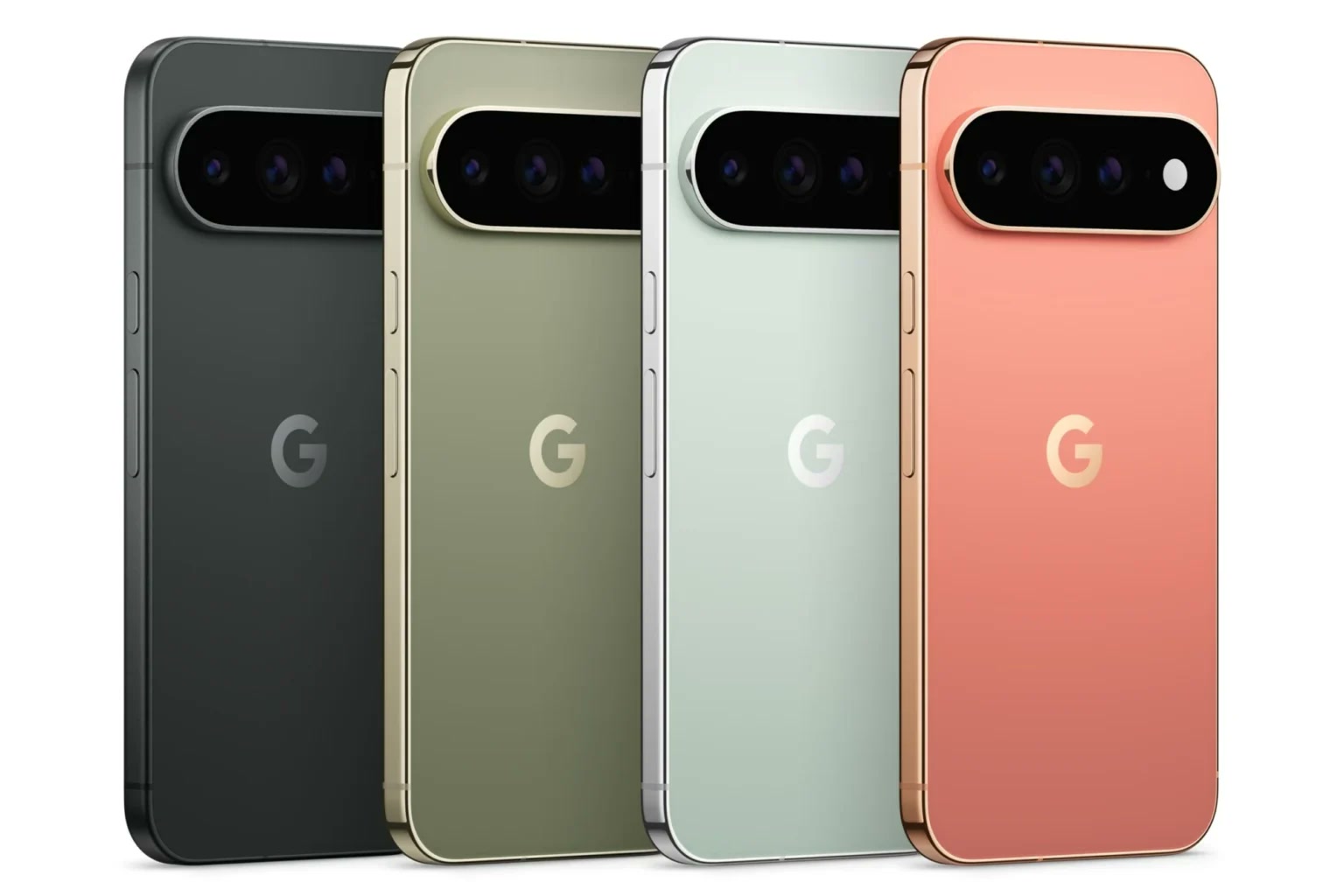
Both the Pixel 11 Pro and Pro XL are available in the same primary colour options.
These include Canyon, Fog and matte Obsidian.
Google is also offering an Olive finish, although this particular colour is reportedly exclusive to the Google Store.
The colours continue Google's tendency to mix understated neutral options with one or two slightly more distinctive finishes.
Obsidian remains the safe choice for users who prefer a more conventional flagship appearance, while Canyon and Olive should appeal to those looking for something less generic.
The Smaller Pro Model Could Be the More Interesting One
Flagship Android phones have become increasingly large over the years.
That makes the 6.3-inch Pixel 11 Pro somewhat refreshing.
Users who want Google's best cameras and newest Tensor processor no longer have to automatically choose the largest device.
The smaller model still provides the same triple-camera system, the same 120x Pro Zoom capability, the same Tensor G6 platform and the same seven-year software commitment.
The compromises are primarily battery size and charging speed.
For plenty of users, that could be a worthwhile trade.
Google Is Increasingly Treating Pixel as a Complete Premium Ecosystem
The Pixel 11 Pro series also makes more sense when viewed alongside Google's wider hardware strategy.
Google is no longer simply releasing a smartphone once a year.
Pixel phones increasingly sit at the centre of an ecosystem that includes watches, earbuds, smart-home products and now other accessories.
That makes features such as Tensor-powered AI, Android integration and device-to-device connectivity increasingly important.
Hardware specifications still matter, but Google is clearly attempting to compete based on how well its devices and software work together.
It is essentially the same ecosystem strategy that has helped Apple build enormous loyalty around the iPhone, while Samsung has pursued a similar approach within Android.
Final Thoughts
The Pixel 11 Pro and Pixel 11 Pro XL don't appear designed to completely reinvent Google's flagship smartphone.
Instead, they refine the formula.
Tensor G6 provides the foundation, while brighter 120Hz displays, large batteries, Qi 2.2 charging, Wi-Fi 7 and extended software support ensure the fundamentals remain competitive.
As usual, though, the cameras and software are where Google is placing the most emphasis.
A 50MP + 48MP + 48MP triple-camera system, 5x telephoto lens, 120x Pro Zoom and Google's growing catalogue of AI photography tools make it clear that computational imaging remains central to the Pixel identity.
The RM4,999 starting price also means the Pixel 11 Pro is firmly positioned as a premium flagship rather than a value-oriented alternative.
For buyers already comfortable with Google's ecosystem, the biggest decision may ultimately be surprisingly simple: 6.3 inches or 6.8 inches?
Because unlike many flagship families, choosing the smaller Pixel 11 Pro doesn't mean giving up most of the features that make the Pro XL desirable in the first place.











Comments 0