


NVIDIA's next-generation DLSS technology may still be waiting for its proper rollout, but modders have already started experimenting with it. Members of the RenoDX modding community have reportedly managed to take a leaked DLSS 5 DLL and integrate it into Control, providing an unofficial early look at how NVIDIA's new Neural Rendering technology could affect existing games.
The results are still experimental and far from production-ready, but they offer a much clearer demonstration of what DLSS 5 may eventually bring to game rendering.
DLSS 5 Applied to Control
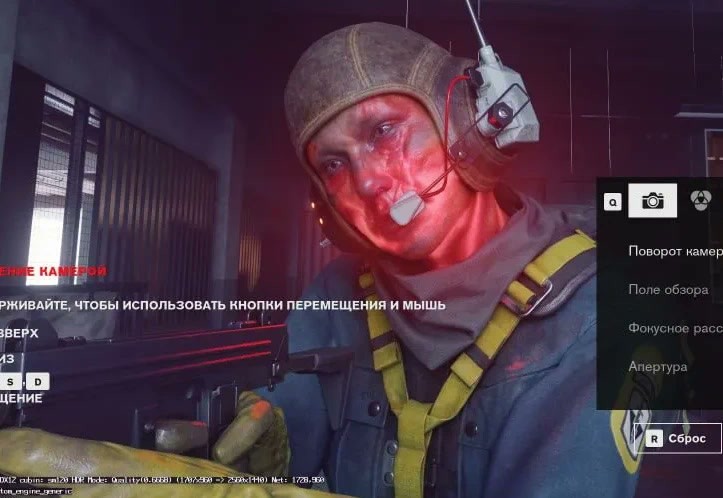
The unofficial implementation reportedly uses the DLSS 5 upscaler inside Remedy Entertainment's Control.
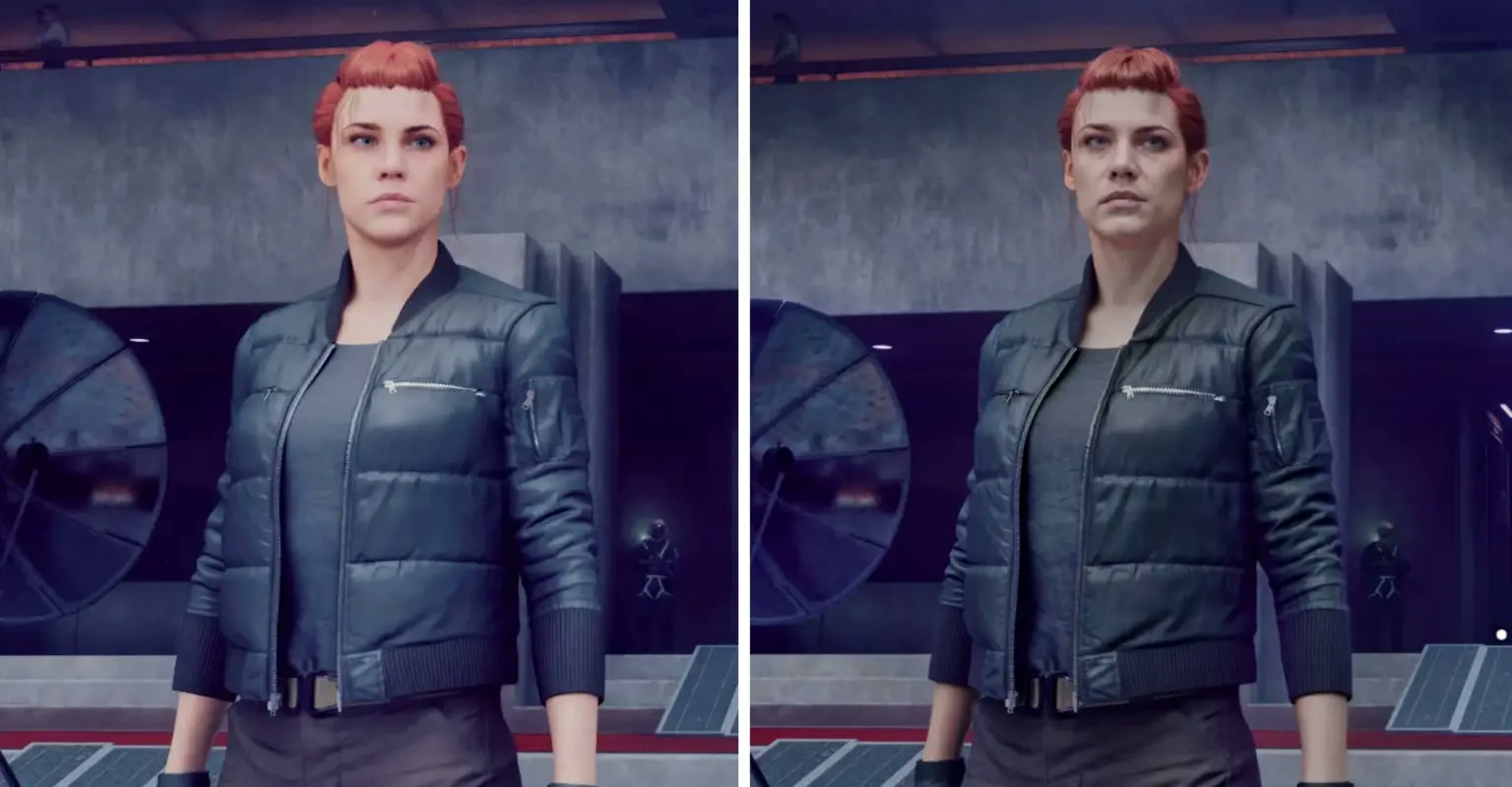
One of the easiest places to see the difference is on protagonist Jesse Faden's character model.
With Neural Rendering enabled, additional facial detail becomes visible, including finer contours, wrinkles, skin indentations and other subtle features that make the character appear more lifelike.
These changes go beyond conventional sharpening.
Instead of simply increasing edge contrast, the technology appears to reconstruct additional surface information and lighting detail using AI.
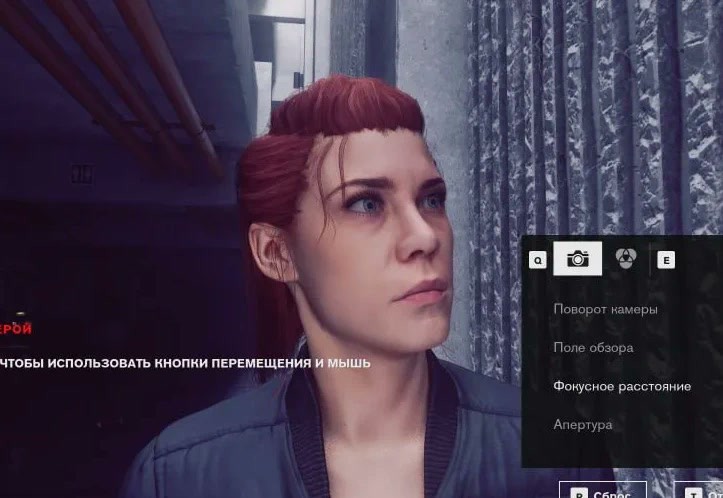
The RenoDX implementation also allows users to adjust the strength of the Neural Rendering effect, giving some control over how strongly those added details appear.
For a game originally released years ago, the difference can make character models look noticeably fresher.
What Neural Rendering Is Trying to Do
NVIDIA officially introduced DLSS 5 earlier this year during GTC 2026.
One of its major additions is Neural Rendering, which NVIDIA describes as a way of using neural networks to improve how lighting, materials and surface details are represented in the final image.
NVIDIA CEO Jensen Huang described the technology as helping to bridge the divide between rendering and reality.
Traditional rendering relies heavily on developers explicitly calculating how geometry, textures, lighting and materials should appear.
Neural Rendering introduces another layer where AI can infer or reconstruct visual information that would otherwise require considerably more traditional rendering work.
The long-term goal appears to be more photorealistic scenes without demanding a proportional increase in raw GPU processing.
The Facial Improvements Are the Most Obvious
In the Control demonstration, character faces provide the most visible example of what this technology can do.
Human faces are extremely sensitive to small details.
Skin texture, fine wrinkles and subtle contours can dramatically change how realistic a character appears.
Conventional upscaling can make an image sharper, but it cannot always restore details that were never strongly represented in the source frame.
Neural Rendering appears to take a more generative approach.
Rather than merely enlarging existing pixels, the system uses learned information to reconstruct or enhance visual characteristics.
That can produce a more detailed-looking face, although it also raises an important question: how much of the final image is being rendered traditionally and how much is being inferred by AI?
That debate will probably become much more important as DLSS technology continues evolving.

The Mod Is Still Very Experimental
Anyone hoping to immediately install the implementation and enjoy perfect DLSS 5 support should keep expectations under control.
The modders themselves acknowledge that the current version is effectively a prototype.
HDR support is reportedly not functioning properly.
There are also serious performance issues.
One RenoDX developer explained that one stage of the DLSS 5 pipeline is currently executing later than intended.
That delay can substantially reduce performance.
In one test using an RTX 5070 Ti at 4K, the experimental implementation reportedly ran almost 50% slower than other rendering passes.
That is obviously too large a performance penalty for a finished consumer feature.
However, this is an unofficial integration using technology that has not yet received normal game-level optimisation.
The result should therefore be viewed as a technical experiment rather than a proper representation of final DLSS 5 performance.
DLSS 5 Is More Than Another Upscaling Update
DLSS began primarily as NVIDIA's AI-based resolution reconstruction technology.
Over several generations, however, the name has expanded to cover a much larger collection of rendering techniques.
Modern DLSS technologies can include:
DLSS 5 continues that transformation.
At this point, NVIDIA is no longer simply using AI to upscale a lower-resolution image.
AI is becoming involved in increasingly fundamental parts of the rendering process.
The GPU generates part of the image traditionally, while neural networks reconstruct, enhance or generate other aspects.
That could eventually change how developers think about rendering performance entirely.
Early DLSS 5 Demonstrations Received Mixed Reactions
When NVIDIA first demonstrated DLSS 5, reaction was not universally positive.
Some early examples looked less convincing than expected.
The visual changes were significant enough that some observers compared the technology more closely to generative AI than conventional rendering.
That criticism was understandable.
When AI begins adding facial details or changing how materials appear, viewers naturally become concerned that the output could drift away from the original artistic intent.
There is an important difference between reconstructing detail and inventing it.
NVIDIA will therefore need to demonstrate that Neural Rendering can improve realism without noticeably altering the intended appearance of characters or environments.
The RenoDX Control experiment appears more convincing than some of those earlier demonstrations, suggesting that the technology and implementation may already be improving.

Customisable Strength Could Be Important
One interesting part of the unofficial implementation is the ability to adjust Neural Rendering strength.
That may eventually become an important feature for users and developers.
Some games may benefit from stronger reconstruction.
Others may look better with a more subtle effect.
Highly stylised games could also respond very differently from photorealistic titles.
Giving developers control over how aggressively neural processing modifies the final image could help preserve each game's artistic direction.
It may also allow players to choose between maximum visual enhancement and a more faithful original presentation.
Performance Will Be the Big Question
Visual improvements are only useful if the performance cost remains reasonable.
DLSS has traditionally been popular because it allows gamers to increase frame rates while maintaining relatively high image quality.
A technology that produces better-looking faces but cuts performance nearly in half would obviously undermine that advantage.
The current RenoDX result should not be treated as evidence that final DLSS 5 will perform this poorly.
The implementation is unofficial, incomplete and reportedly suffering from a pipeline timing problem.
NVIDIA's official integration will almost certainly receive substantial optimisation at the driver, model and game-engine levels.
Still, it highlights how computationally demanding Neural Rendering can potentially become.
The final balance between image quality and performance will be one of the most important things to evaluate once official game support arrives.
The DLL Leak Suggests Wider Support May Be Close
Interest around DLSS 5 has increased after references to the technology reportedly appeared alongside NBA 2K27.
Combined with the leaked DLL now being tested by modders, that suggests NVIDIA may be preparing for a broader rollout soon.
NVIDIA has not yet provided complete details surrounding supported GPUs, game compatibility or how developers will integrate the final DLSS 5 feature set.
More information will likely arrive as the company moves closer to an official release.
Until then, unofficial experiments such as the RenoDX implementation provide an interesting preview of what may be possible.
AI Is Becoming Part of the Rendering Pipeline
The bigger story is not simply whether Jesse's face looks better in Control.
It is how rapidly AI is moving into core graphics rendering.
For decades, improvements in game graphics depended largely on faster GPUs capable of calculating more polygons, higher-resolution textures, more complex shaders and additional lighting effects.
AI changes that relationship.
Instead of calculating every visual detail traditionally, the GPU can potentially calculate enough information for a neural model to reconstruct the rest.
That could eventually allow much more sophisticated graphics without requiring equivalent increases in brute-force rendering performance.
But it also means gamers will increasingly need to evaluate not only how a game is rendered, but how much of the final image is being inferred by AI.
????DLSS 5 Running On Control with renodx
— SwurvGaming (@SwurvGaming) August 27, 2026
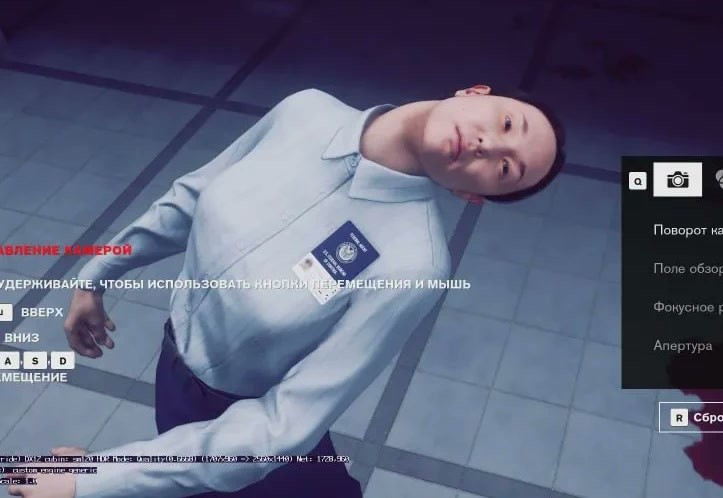
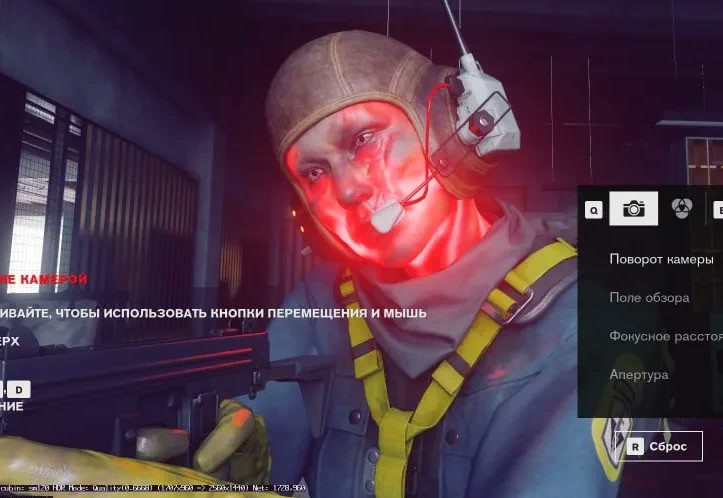
so one of the renodx guys has dlss 5 neural rendering (ai filter) running on control. This was using the dlss nr dll found in nba 2k27. They have it working on character models only so far.
Theres 7 different styles, the video clip… pic.twitter.com/YlEFVCIPJC
Final Thoughts
The unofficial DLSS 5 implementation inside Control offers one of the most interesting early demonstrations yet of NVIDIA's Neural Rendering technology.
Character models, particularly Jesse's face, gain noticeably more detail, with finer skin texture, contours and surface characteristics making the older title look more modern.
The implementation is still rough.
HDR does not work correctly, and performance can drop dramatically because of an inefficient pipeline stage.
Those problems make it unsuitable as a finished gaming solution today.
Still, the experiment shows that DLSS 5 has progressed beyond the early demonstrations that left some viewers unconvinced.
If NVIDIA can deliver similar visual improvements while fixing the performance overhead and maintaining artistic consistency, Neural Rendering could become one of the biggest changes to DLSS since Frame Generation first appeared.
The question is no longer whether AI will be involved in rendering future games.
It is increasingly becoming how much of the image we see will eventually be rendered by traditional graphics techniques — and how much will be reconstructed by neural networks.











Comments 0