

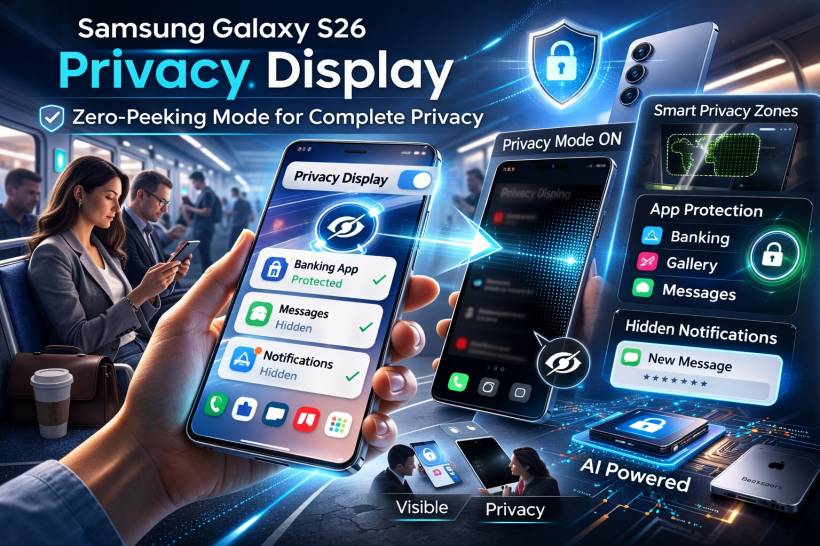
Samsung has dropped a new ad ahead of the Galaxy S26 launch, and it strongly points to a built-in "privacy display" mode that's designed to stop people nearby from reading your screen. The ad shows a simple "Zero-peeking privacy" toggle being switched on, and the content becomes unreadable to anyone viewing from the side
If you've ever used your phone on public transport or in a crowded waiting area, you already know the problem this is trying to solve: shoulder-surfing is real, and it doesn't only happen with banking screens.
What the ad is really communicating
The concept shown is straightforward: you keep seeing your screen normally, but people sitting beside you see something darkened or blanked out. In the Verge's reporting, the ad frames it as a quick toggle you can enable when someone starts peeking.
That part is interesting because Samsung isn't presenting it as a separate accessory or a niche setting buried deep in menus. They're marketing it as a practical, everyday privacy feature.
How this differs from the usual privacy screen protectors
Traditional privacy filters (the ones you stick on the glass) work by reducing viewing angles across the entire display. They're effective, but they often come with trade-offs: dimmer visuals, colour shifts, and that "permanent filter" feeling even when you don't need it.
What's being teased for the S26 is described as something more flexible: privacy that can be applied dynamically, and potentially only to parts of the screen instead of the whole thing.
The tech behind it: Flex Magic Pixel
Multiple reports tie the feature to Samsung Display's Flex Magic Pixel, a technology Samsung Display publicly showcased around MWC 2024. The core idea is that the display can adjust viewing angles in a more controlled way, so side viewers lose visibility while the person in front keeps clarity.
Samsung Display has also explicitly positioned this as a privacy and security enhancement, especially when paired with on-device AI that can recognize when additional protection might be useful.
Where AI could make it genuinely useful
The more exciting rumor isn't just "make the screen private." It's the idea that the phone could protect specific areas automatically.
For example, instead of dimming your entire display, it could do things like:
• Mask message previews or notifications while you're in public
• Apply privacy only where it detects private content (instead of you manually micromanaging it)
That "selective privacy" angle is exactly what makes it feel like a real upgrade rather than a built-in version of an old screen protector idea.
When we'll know for sure
Samsung has confirmed an Unpacked event on February 25 (including time and streaming details via Samsung's official newsroom). That's when we should get the full explanation of how this privacy display works, which models get it, and whether it's purely hardware, software, or a mix of both.
Final thoughts
If Samsung pulls this off the way the leaks and marketing imply, it's one of those features that sounds small until you actually use it. The real win isn't just stopping nosy people on trains. It's having privacy that turns on when you need it, stays out of your way when you don't, and doesn't force you to "live with a filter" 24/7.











Comments 0