

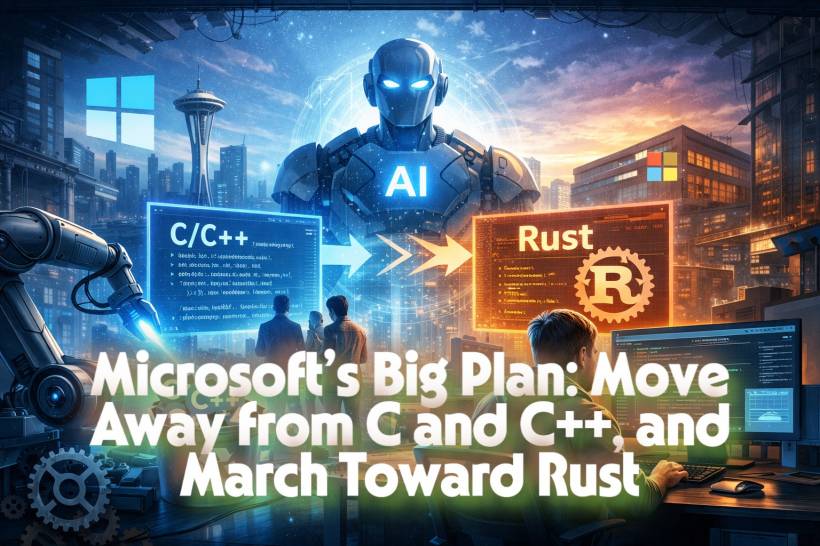
Microsoft is quietly working on one of its most ambitious software engineering shifts yet: reducing, and eventually eliminating, its reliance on C and C++ across its massive codebase by 2030. That includes parts of Windows – even Windows 11 – which still heavily depend on these older, performance-oriented languages. And the surprising part? Artificial Intelligence is going to play a big role in making this happen.
Why Microsoft Wants to Leave C and C++ Behind
For decades, C and C++ have powered the backbone of Windows. Everything from core system components to APIs like Win32 relies on them. These languages are incredibly powerful and fast, which is why they've lasted so long. But they also come with security headaches – especially around memory safety.
That's where Rust comes in.
Rust isn't a fad or a framework. It's a full programming language built with safety in mind, especially memory security. Unlike C and C++, Rust is designed to stop entire classes of bugs before they even happen. Microsoft has been praising Rust publicly for years, and now it appears the company is ready to go all-in.
A New Team, a Massive Mission
A recent Microsoft job posting gave us a clearer look at how serious the company is. The posting wasn't just about filling a role; it outlined a vision. The engineering leadership behind the effort openly stated a goal to remove "every line of C and C++ from Microsoft by 2030."
That's not a minor tweak. That's attempting to refactor mountains of legacy code across Windows, cloud services, and internal tools. To make that realistic, Microsoft plans to combine human engineers, sophisticated algorithms, and AI systems designed specifically to handle massive code transformations.
Their rallying ambition sums it up boldly:
This isn't poetic marketing. It's a signal that Microsoft wants AI to materially amplify developer capability.
How AI Fits Into the Picture
Microsoft has already built what it calls a "code processing infrastructure," essentially AI-powered tools capable of understanding existing C and C++ codebases and modifying them at large scale. The idea is to automate translation and restructuring work that would normally take teams of humans years to complete.
The strategy isn't just theoretical either. This work sits inside Microsoft's CoreAI division under a group literally tasked with imagining the "Future of Scalable Software Engineering." In short: Microsoft is betting on AI becoming a full partner in the coding process.
But of course, that leads to a big question.
Can We Really Trust AI to Rewrite Windows?
Translating code line-by-line is easy. Preserving the intent behind complex systems is not.
Windows has already seen its fair share of problematic updates. We've all seen patches that accidentally break basic features like Task Manager or trigger unexpected BitLocker screens. Now imagine AI trying to reinterpret decades of engineering assumptions.
Rust brings better safety guarantees, but software stability isn't only about safety – it's also about deeply understanding how things work together. Microsoft will still need strong human oversight, testing, and careful rollout. Rust may reduce vulnerabilities, but AI-generated mistakes could introduce new types of chaos if handled recklessly.
Rust Is Already Making Its Way Into Windows
This isn't a brand-new initiative suddenly dreamed up overnight. Microsoft has been slowly building Rust's presence inside its ecosystem for years.
Windows APIs now support Rust developers. The windows-rs project lets Rust programs talk to Win32, COM, and WinRT like traditional C++ code does. There's even work underway on Rust-based Windows drivers. That means Microsoft isn't just flirting with Rust anymore – it's preparing to run serious system-level workloads on it.
M
eanwhile, Windows UI Continues Its Web Shift
While Microsoft talks about improving core security with Rust, the company is also pushing UI experiences deeper into web technologies. WebView2 and Edge-backed components now appear everywhere from Start Menu to Notifications. Some users love the modernization; others argue it turns Windows apps into bloated browser shells.
So, while Rust aims to secure the engine under the hood, more of the dashboard is becoming web-powered. It's a strange but very "modern Microsoft" balance.
What This Means in the Long Run
If Microsoft pulls this off, Windows could eventually become safer, more modern, and less vulnerable to memory-related flaws. AI-assisted development could redefine how large legacy systems evolve.
But success isn't guaranteed. This move requires precision, discipline, and a lot of testing. AI may write millions of lines of Rust, but humans will still carry the responsibility when things break.
For now, Microsoft seems determined. And the next few years will tell whether this becomes one of the company's greatest engineering achievements – or just another ambitious vision that didn't quite land.











Comments 0