

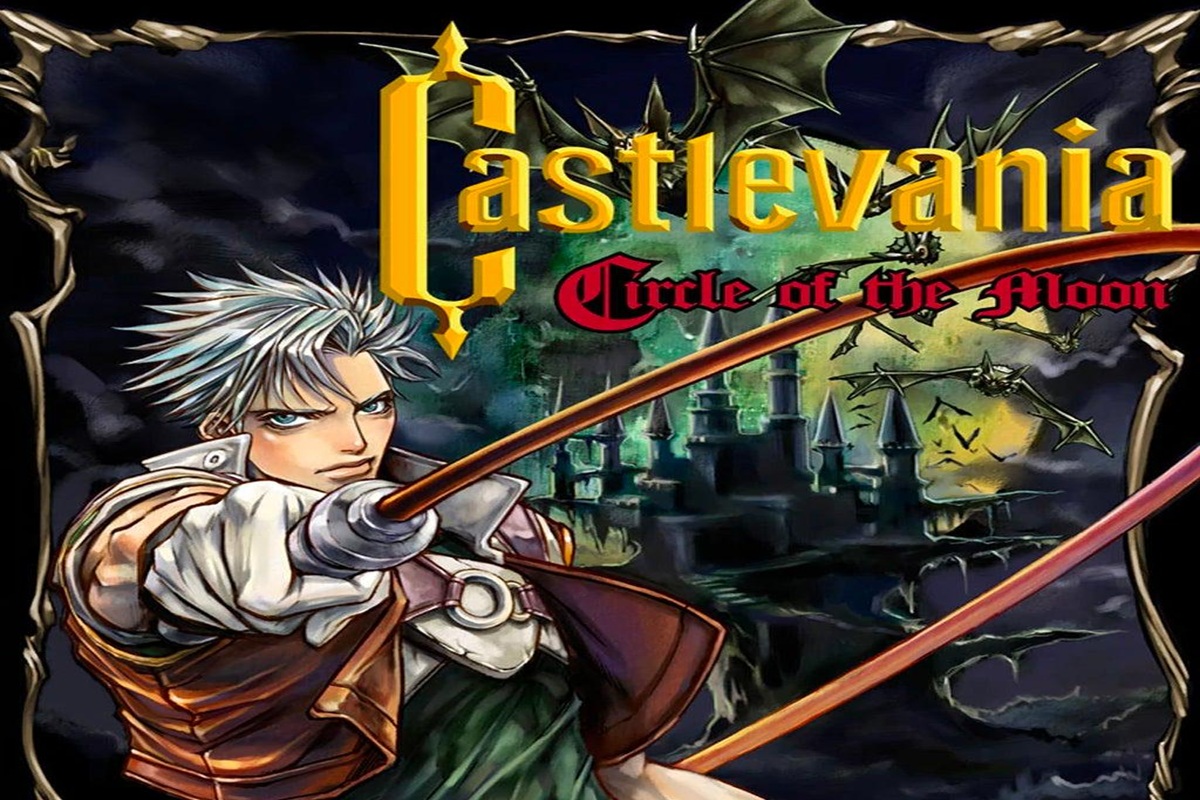
Castlevania has long been one of gaming's most recognizable franchises, combining gothic horror, supernatural enemies, and challenging action-platforming into adventures that continue to attract players decades after their original releases. When Castlevania: Circle of the Moon arrived in 2001 as one of the launch titles for the Game Boy Advance, it introduced a new generation of handheld players to Dracula's mysterious castle and the dangers lurking within its walls. Rather than following the traditional stage-by-stage progression of earlier Castlevania games, it embraced a more expansive action RPG approach inspired by Castlevania: Symphony of the Night. The result was an interconnected adventure filled with exploration, character progression, magical abilities, and challenging encounters.
What makes Castlevania: Circle of the Moon particularly interesting is how it combines familiar Castlevania mechanics with several systems that give the adventure its own identity. Players control Nathan Graves, a young vampire hunter armed with a powerful whip, as he travels through Dracula's castle in search of his captured mentor. Along the way, Nathan must defeat supernatural creatures, collect equipment, develop his abilities, and uncover magical cards that can dramatically change his fighting style. With its atmospheric pixel artwork, memorable music, and demanding gameplay, Circle of the Moon remains one of the more ambitious action-adventure experiences released during the early years of the Game Boy Advance.
Now playable online through Lemon Web Games, Castlevania: Circle of the Moon brings this classic gothic adventure directly into modern web browsers without requiring the original handheld console. Players can explore the castle's interconnected chambers, discover powerful magical combinations, and experience the same progression-based gameplay that helped establish its reputation among retro gaming enthusiasts. Whether you played the original release in 2001 or are discovering Nathan Graves' adventure for the first time, the browser-based version provides a convenient opportunity to revisit one of Castlevania's most interesting handheld entries. It is also an excellent introduction to the exploration-focused style of gameplay that would become increasingly associated with the series.
The Story of Nathan Graves and Dracula's Resurrection
The events of Castlevania: Circle of the Moon take place in 1830, when a dark ritual threatens to bring Dracula back into the world of the living. Inside an ancient castle near the Austrian Empire, the vampire's loyal servant Camilla performs a ceremony to resurrect her master and restore his terrifying influence. Vampire hunter Morris Baldwin arrives with his two apprentices, Nathan Graves and Hugh Baldwin, hoping to prevent the resurrection before it is too late. Unfortunately, the three arrive just as Dracula returns, setting the stage for a dangerous confrontation.
Dracula quickly overpowers the hunters, capturing Morris while sending Nathan and Hugh falling into the depths beneath the castle. Although both apprentices survive, Hugh decides to search for his father independently, leaving Nathan to begin his own journey through the enormous fortress. Nathan must find a way through the castle, rescue Morris, and defeat Dracula before the vampire can fully regain his power. As the adventure unfolds, the relationship between Nathan and Hugh becomes increasingly complicated, adding a personal dimension to the battle against Dracula.
Unlike many Castlevania protagonists, Nathan Graves is not a member of the famous Belmont family. Instead, he is a trained vampire hunter who inherited the Hunter Whip from his father and developed his abilities under Morris Baldwin's guidance. This difference allows Circle of the Moon to tell a largely self-contained story while retaining the familiar themes of courage, supernatural evil, and the responsibility of those who oppose Dracula. Although the narrative is relatively simple, it provides enough motivation to connect the exploration and boss encounters throughout the adventure.
A Castle Designed for Exploration and Discovery
One of the defining features of Castlevania: Circle of the Moon is its enormous interconnected castle, which replaces the more linear level structure found in earlier entries of the series. Rather than progressing through separate stages in a fixed order, players explore a sprawling environment containing numerous rooms, branching corridors, hidden passages, and inaccessible areas. Some locations can be reached immediately, while others require movement abilities or upgrades obtained later in the adventure. This structure encourages players to remember unexplored routes and return to previous locations as Nathan becomes more capable.
The castle is divided into several distinctive regions, including underground catacombs, mechanical towers, underground waterways, storage chambers, and other dangerous locations. Each area introduces different enemies, environmental obstacles, and architectural designs that help establish its identity. Some corridors contain relatively straightforward combat encounters, while others feature complicated vertical layouts, narrow platforms, or hazardous terrain. The gradual introduction of new environments gives players a genuine sense of progression as the castle slowly reveals its secrets.
Exploration also rewards curiosity, particularly when players investigate suspicious walls, unusual passages, or sections of the map that appear incomplete. Hidden rooms may contain useful items, equipment, or permanent upgrades that improve Nathan's chances of survival. The in-game map becomes an important navigation tool, helping players identify unexplored locations and determine where newly acquired abilities might be useful. For players who enjoy uncovering secrets and gradually mastering large environments, this approach remains one of Circle of the Moon's strongest qualities.
Traditional Whip Combat with Action RPG Elements
Although exploration plays a major role, combat remains at the heart of Castlevania: Circle of the Moon. Nathan primarily fights using his Hunter Whip, delivering powerful strikes against skeletons, demons, armored enemies, and other supernatural creatures. The whip has a familiar rhythm that encourages players to judge their distance carefully and attack when an enemy is within range. Unlike faster modern action games, combat often rewards patience and positioning rather than constant aggressive movement.
Nathan can also perform a spinning whip attack that provides protection against nearby enemies and certain projectiles. This is particularly useful when facing opponents approaching from multiple directions or when dealing with dangerous objects moving toward the player. However, the spinning attack is not always the most efficient offensive option, meaning players still need to understand the strengths and limitations of their regular whip strikes. Learning how to combine these abilities with movement and jumping becomes increasingly important during later sections of the game.
Circle of the Moon also incorporates RPG mechanics that allow Nathan to become stronger through experience and equipment. Defeating enemies awards experience points, which gradually increase his level and improve his statistics. As Nathan develops, he gains additional health, magical energy, and improved combat capabilities that make previously challenging encounters easier to manage. This progression system adds another layer to the gameplay, making exploration and repeated battles useful beyond simply clearing a path forward.
The Dual Set-up System – A Unique Magical Card Mechanic
Perhaps the most recognizable feature of Castlevania: Circle of the Moon is its Dual Set-up System, commonly known as DSS. This magical system allows Nathan to combine special cards discovered throughout the castle to produce different attacks, enhancements, and supernatural abilities. Rather than learning spells through a conventional skill tree, players obtain cards from defeated enemies and experiment with different combinations. The system introduces a significant amount of customization to an otherwise traditional whip-based combat experience.
The DSS uses two categories of cards: Action Cards and Attribute Cards. Action Cards determine how a magical effect behaves, while Attribute Cards influence its elemental properties or other characteristics. With ten cards in each category, the game provides 100 possible combinations, although the usefulness of individual effects varies depending on the situation. Some combinations transform Nathan's whip into an elemental weapon, while others provide defensive enhancements, magical projectiles, or powerful summoned attacks.
For example, combining the Mercury Action Card with the Salamander Attribute Card creates a whip surrounded by fire, allowing Nathan to attack enemies with additional elemental damage. Other combinations may increase defensive capabilities, improve movement-related abilities, or generate magical attacks that behave differently from ordinary whip strikes. These effects consume magical energy, meaning players cannot rely on the strongest abilities continuously without considering their available MP. Choosing the right combination becomes particularly important when facing enemies with different resistances or attack patterns.
One interesting aspect of the DSS is that cards are generally acquired as random drops from specific enemies rather than being awarded automatically during progression. This encourages players to revisit areas and defeat certain monsters repeatedly when searching for particular cards. Some combinations are relatively easy to discover, while others require experimentation or additional exploration. Although collecting every card can become time-consuming, the system provides considerable strategic depth and remains one of Circle of the Moon's most distinctive mechanics.
Classic Castlevania Sub-Weapons and Equipment
Alongside Nathan's whip and magical abilities, Circle of the Moon includes several traditional Castlevania sub-weapons that provide additional combat options. Familiar weapons such as daggers, throwing axes, holy water, crosses, and the stopwatch return, each offering a different tactical advantage. These items consume hearts collected throughout the castle, making resource management an important consideration during difficult encounters. Players must decide when to use a sub-weapon and whether a particular enemy is worth spending their limited supplies on.
Different sub-weapons work better against different enemies, particularly when attacks must reach opponents positioned above or below Nathan. Throwing axes follow an upward arc, making them useful against airborne or elevated enemies, while daggers travel horizontally and offer a straightforward ranged attack. Holy water can damage enemies along the ground, whereas the cross provides another versatile option for dealing with opponents. Understanding these differences can make difficult areas more manageable without relying entirely on magical abilities.
Equipment plays an equally important role in Nathan's development. Various enemies can drop armor, accessories, and other useful items that improve his statistics or provide additional advantages. Some pieces focus on defensive strength, while others increase offensive effectiveness or influence magical capabilities. Finding stronger equipment becomes increasingly valuable as enemies grow more dangerous, giving players another reason to explore thoroughly and pay attention to unusual enemy drops.
Unlocking New Abilities and Reaching Hidden Areas
As Nathan travels deeper into Dracula's castle, he gradually acquires movement abilities that expand the areas he can explore. These upgrades form an essential part of the game's progression, transforming locations that initially seem impossible to cross into accessible routes. Rather than simply providing stronger attacks, several upgrades improve Nathan's mobility and allow him to interact with the environment in new ways. This creates a rewarding cycle where defeating bosses and exploring unfamiliar regions opens additional parts of the castle.
Abilities such as dashing, double jumping, and wall jumping become particularly valuable when navigating increasingly complicated environments. Nathan can eventually perform powerful jumps that allow him to reach elevated platforms and previously inaccessible passages. Other upgrades help him overcome environmental obstacles or move through areas that cannot be navigated using ordinary movement alone. Learning how these abilities work is essential for understanding the castle's layout and finding the next route forward.
The interconnected design also means that players occasionally encounter obstacles long before they possess the ability needed to overcome them. This encourages careful observation and makes revisiting earlier locations a natural part of the adventure. A platform that appears unreachable during the opening hours may later become accessible after Nathan acquires an important movement upgrade. These moments of discovery help maintain a sense of progression even when the player returns to familiar surroundings.
Monsters, Supernatural Enemies, and Challenging Boss Battles
Dracula's castle is inhabited by an enormous collection of supernatural creatures, many of which have become familiar throughout the Castlevania series. Skeletons, bats, ghosts, armored warriors, demons, and numerous other monsters appear across the different environments. Some enemies rely on direct physical attacks, while others use projectiles, magical abilities, or unpredictable movement patterns to threaten Nathan. As players progress into more dangerous areas, the variety and strength of these creatures steadily increase.
Certain enemies also present unusual challenges because of their positioning or resistance to particular attacks. Flying creatures can be difficult to strike with an ordinary whip, while heavily armored opponents may require several attacks before being defeated. Some monsters are especially dangerous when encountered in narrow corridors or near environmental hazards, where Nathan has limited room to maneuver. These situations encourage players to adapt their combat approach instead of relying on the same attack throughout the adventure.
Boss battles provide some of the most demanding encounters in Circle of the Moon. Players face powerful enemies such as Cerberus, the Necromancer, the Iron Golem, Adramelech, Death, and other formidable guardians before the final confrontation with Dracula. Each boss introduces different attack patterns and movement requirements, often forcing players to observe carefully before committing to an attack. Some encounters are particularly unforgiving because of the damage enemies can inflict, making preparation and equipment selection important.
The challenge becomes more interesting when players begin experimenting with the DSS system against these powerful enemies. A magical combination that works well during ordinary exploration may be less effective against a particular boss, encouraging a different strategy. Players may need to change elemental attacks, equip stronger defensive items, or rely more heavily on traditional sub-weapons. Overcoming these battles through improved timing and better preparation remains one of the game's most rewarding experiences.
Gothic Pixel Artwork and Atmospheric Music
Castlevania: Circle of the Moon retains the dark visual identity that has defined the series since its earliest releases. The castle features stone corridors, towering structures, elaborate backgrounds, and unsettling environments populated by supernatural creatures. Nathan and the enemies are represented through detailed pixel sprites, while animation effects help communicate attacks, magical abilities, and character movement. Despite the limitations of the original Game Boy Advance hardware, the game creates a convincing gothic atmosphere through its combination of architecture, color, and enemy designs.
One aspect frequently associated with the original release is its relatively dark visual presentation. The first-generation Game Boy Advance did not include a backlit screen, and Circle of the Moon's darker environments could be difficult to see clearly under certain lighting conditions. This was particularly noticeable in areas that relied heavily on dark backgrounds and subdued colors. When experienced on modern displays, however, the artwork is generally easier to appreciate, allowing more of the environmental detail to become visible.
The soundtrack is another important part of the experience, combining energetic action music with compositions that reinforce the castle's mysterious atmosphere. Familiar musical themes associated with the Castlevania series appear alongside compositions suited to the game's different environments. Some tracks create tension during exploration, while others provide a faster rhythm for combat-heavy sections and boss encounters. The combination of atmospheric music, supernatural enemies, and gothic environments helps maintain the recognizable Castlevania identity throughout the adventure.
Difficulty, Save Rooms, and Resource Management
Castlevania: Circle of the Moon is generally more demanding than many modern exploration-focused action games. Enemies can inflict substantial damage, healing items are not always readily available, and certain boss battles require careful preparation. Nathan also begins the adventure with relatively limited movement capabilities, making the opening sections feel slower and more restrictive until additional abilities are unlocked. Players who rush into unfamiliar areas without observing enemy behavior may find themselves repeatedly losing health.
The game uses dedicated save rooms located throughout the castle, allowing players to record their progress and restore their health and magical energy. Reaching these rooms becomes especially important after long periods of exploration or challenging encounters. Since players cannot simply save anywhere in the original game, deciding when to return to a save point can affect how much progress is lost after a defeat. This encourages a more deliberate style of exploration where survival and resource management matter.
Another demanding aspect is the reliance on enemy drops for obtaining certain equipment and DSS cards. Players who want to build a stronger collection of magical abilities may need to defeat specific creatures repeatedly before receiving the desired item. While this can occasionally slow the pace of progression, it also contributes to the game's RPG identity. Those who enjoy collecting equipment, developing character statistics, and experimenting with combat strategies may find this system particularly engaging.
The Battle Arena – An Optional Test of Survival
For players looking for an additional challenge, Castlevania: Circle of the Moon includes the Battle Arena, an optional area designed to test Nathan's combat abilities and endurance. Unlike ordinary castle exploration, this section consists of a sequence of combat rooms filled with increasingly dangerous enemies. Players must survive one encounter after another while managing their remaining health and available resources. The arena is especially demanding because it restricts the use of the DSS system by draining Nathan's magical energy.
Without the ability to rely freely on powerful magical combinations, players must depend more heavily on their whip, sub-weapons, equipment, and understanding of enemy movements. This creates a different combat experience from the main adventure, where players can often use magic to compensate for difficult encounters. The Battle Arena therefore rewards strong character development and careful preparation before entering. Attempting it too early can make the experience considerably more difficult than expected.
Completing the arena provides access to valuable rewards, including powerful equipment that can benefit Nathan during the remaining adventure. However, the primary appeal lies in overcoming one of the game's toughest optional challenges. Players who enjoy testing their abilities beyond the main storyline will find the arena a meaningful addition to the overall experience. It also gives those who have spent time collecting equipment and improving their character a reason to put that preparation to use.
Replayability and Unlockable Character Modes
Although Castlevania: Circle of the Moon can be completed through a single adventure, the game includes additional modes that significantly change how Nathan performs. After completing the standard Vampire Killer Mode, players can unlock alternative play styles that modify character statistics and place greater emphasis on particular combat mechanics. These modes retain the castle layout and overall storyline while changing the strengths and weaknesses available to the player. As a result, familiar encounters can feel considerably different during subsequent playthroughs.
Magician Mode provides access to all DSS cards from the beginning, allowing players to experiment with magical combinations without collecting them individually. Fighter Mode takes the opposite approach, emphasizing physical strength while removing access to DSS magic. Shooter Mode focuses on sub-weapons and heart-based attacks, while Thief Mode increases Nathan's luck to improve the likelihood of obtaining item drops. Each mode changes the balance of combat and encourages players to approach familiar enemies with a different strategy.
These additional modes are unlocked through successive completions, giving dedicated players a reason to return after defeating Dracula. Beyond the alternative modes, there is also the appeal of completing more of the castle map, collecting rare equipment, and discovering magical combinations missed during an earlier adventure. Players who enjoy completion-focused exploration may spend considerably more time searching for hidden areas and optimizing their equipment. This gives Circle of the Moon a longer-lasting appeal than its relatively straightforward storyline might initially suggest.
Playing Castlevania: Circle of the Moon Online Today
Through Lemon Web Games, Castlevania: Circle of the Moon can now be played directly in your web browser with no downloads or setup required. Features of the web-based version include:
• No installation or original Game Boy Advance console required
• Interconnected castle exploration with hidden rooms and secrets
• Traditional whip combat and classic Castlevania sub-weapons
• Dual Set-up System with 100 possible magical card combinations
• RPG progression, equipment collection, and unlockable abilities
• Challenging boss battles and additional gameplay modes
• Accessible play through Lemon Web Games
Playing Circle of the Moon through a browser provides a convenient way to experience one of the most recognizable handheld entries in the Castlevania series. The original game was designed around an extended adventure rather than individual short stages, making its progression system especially suitable for players who enjoy gradually exploring a large environment. From the opening catacombs to the more dangerous sections of Dracula's castle, the experience combines combat, exploration, and character development into a connected journey. Modern displays also make it easier to appreciate the detailed pixel artwork and dark environments that were sometimes difficult to see on the original handheld hardware.
For returning players, the browser-based version provides an opportunity to revisit familiar locations, rediscover hidden passages, and experiment with DSS card combinations that may have been overlooked during earlier playthroughs. Newcomers can experience the adventure without needing to collect older gaming hardware, making it easier to discover why Circle of the Moon continues to attract attention among retro gaming fans. The game's traditional controls and gradual progression system remain approachable, although its difficulty can still surprise players unfamiliar with older action RPGs. Those willing to spend time understanding its mechanics will discover a surprisingly extensive handheld adventure.
Who Should Play Castlevania: Circle of the Moon
• Players who enjoy Metroidvania-style exploration and hidden secrets
• Retro gaming enthusiasts interested in Game Boy Advance classics
• Players who appreciate challenging combat and demanding boss battles
•Fans of action RPGs with experience points and equipment progression
• Players who enjoy experimenting with magical abilities and character builds
• Completionists interested in collecting rare items and exploring entire maps
• Anyone looking for a substantial classic adventure playable in a browser
Castlevania: Circle of the Moon is particularly suitable for players who enjoy exploration-focused games where progress depends on acquiring new abilities and understanding the environment. The interconnected castle provides numerous opportunities to discover hidden passages, revisit earlier locations, and gradually reveal new routes. At the same time, the combat system offers enough depth to reward players who experiment with magical combinations and different equipment configurations. Those who appreciate classic action RPG progression will likely find the balance between fighting, exploration, and character development especially appealing.
The game may also interest players who want to understand how the Castlevania series evolved beyond its traditional linear platforming roots. Although Symphony of the Night established many of the ideas associated with this style, Circle of the Moon demonstrated how an expansive exploration-based adventure could work on a handheld console. Its unique DSS system and unlockable character modes distinguish it from other entries in the series, while its challenging difficulty reflects the expectations of older action games. For players discovering the franchise through modern releases, it offers a useful perspective on the design of early handheld Metroidvania adventures.
Play Castlevania: Circle of the Moon Online Now
Castlevania: Circle of the Moon offers an extensive gothic adventure that combines traditional vampire-hunting action with exploration, RPG progression, and magical experimentation. Players begin with relatively limited abilities but gradually develop Nathan Graves into a powerful hunter capable of navigating Dracula's enormous castle and confronting increasingly dangerous enemies. The Dual Set-up System introduces an additional layer of strategy, allowing different magical card combinations to transform familiar encounters into opportunities for experimentation. Combined with challenging bosses, hidden equipment, and numerous secret areas, the game provides plenty of reasons to continue exploring beyond the most direct route through the storyline.
Through Lemon Web Games, players can experience this classic Game Boy Advance adventure directly in their browsers without requiring the original cartridge or console. Whether your interest lies in revisiting a game from the early 2000s or discovering an influential handheld action RPG for the first time, Circle of the Moon offers a rewarding combination of familiar Castlevania mechanics and unique gameplay systems. Its castle design encourages exploration, while its combat and progression mechanics provide an ongoing sense of development throughout the adventure. The inclusion of optional challenges and unlockable modes also gives dedicated players opportunities to continue experimenting after completing the main story.
Final Thoughts
Castlevania: Circle of the Moon remains one of the more interesting entries in the series because of its successful combination of traditional action-platforming and exploration-focused RPG mechanics. Its interconnected castle creates a sense of discovery, while Nathan Graves' gradual development encourages players to return to previously inaccessible locations and uncover additional secrets. The Dual Set-up System adds meaningful variety by allowing magical cards to produce different offensive, defensive, and special abilities. Although its difficulty, occasional item farming, and relatively dark visual presentation may not appeal to everyone, these characteristics also reflect the design philosophy of early 2000s handheld gaming.
What makes the adventure especially enjoyable is the way its different mechanics support one another. Exploration leads to new abilities, stronger equipment, and additional magical cards, while those discoveries make challenging enemies and previously unreachable areas easier to overcome. Boss encounters test the player's understanding of combat and movement, while optional challenges such as the Battle Arena provide additional goals for those seeking a tougher experience. The unlockable gameplay modes further extend its replayability by encouraging players to experiment with different approaches rather than simply repeating the same strategy.
More than two decades after its original release, Castlevania: Circle of the Moon continues to demonstrate why the combination of gothic atmosphere, interconnected level design, and character progression became such an influential formula for action-adventure games. It may not have the same reputation as some of the franchise's most celebrated releases, but its challenging gameplay, extensive castle, and creative magical card system give it a character of its own. Through Lemon Web Games, a new generation of players can experience Nathan Graves' journey and discover the appeal of this classic handheld adventure directly in their browsers. For fans of Castlevania, retro action RPGs, and exploration-driven games, Circle of the Moon remains a rewarding journey into Dracula's dark and dangerous world.











Comments 0