

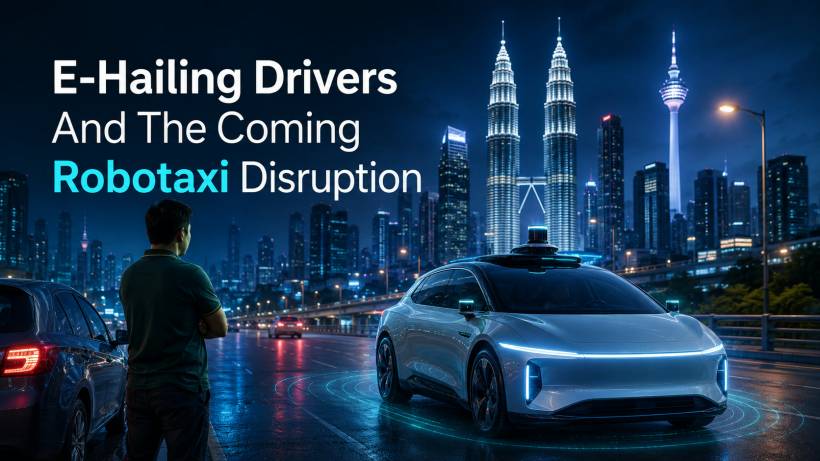
For years, e-hailing has been one of the most practical income options for many Malaysians. Some joined it as a side hustle, while others made it their full-time job after leaving traditional taxi driving, corporate work, or other forms of employment. It gave people flexibility, fast entry, and a way to earn when formal job opportunities were not always enough.
But the next major disruption may already be forming in the background. This time, it is not another app, another commission structure, or another competitor entering the market. It is the possibility that the driver may eventually be removed from the ride altogether.
That idea may still sound futuristic to many people in Malaysia, but it is no longer just a technology demo. Driverless ride-hailing is already being tested and deployed in several parts of the world, and the launch of Grab and WeRide's autonomous shuttle service in Singapore's Punggol neighbourhood shows that the concept is moving closer to Southeast Asia. The service is still limited, operating on fixed routes and offered for free, but the message is quite clear: autonomous mobility is no longer a distant fantasy. It is slowly becoming a real business model.
A Future Where The Car Arrives Without A Driver
Imagine opening your ride-hailing app one morning and seeing a car assigned to you as usual. The difference is that there is no driver profile, no driver photo, no one calling to ask where you are, and no one cancelling after making you wait.
The car arrives, unlocks, takes you to your destination, and completes the trip automatically. For passengers, this sounds convenient. For platform operators, it sounds efficient. For drivers, however, it sounds like the beginning of a very uncomfortable question: what happens when the platform no longer needs as many human drivers?
This is the core issue that e-hailing drivers need to start thinking about now. The arrival of robotaxis may not happen overnight, and Malaysia is not likely to see a full nationwide autonomous ride-hailing rollout tomorrow. But disruption rarely feels urgent at the beginning. It usually starts small, in controlled zones, with pilot projects and limited services. Then, once the technology, regulation and business case are ready, the change can happen much faster than many people expect.
Why Platforms Are Interested In Driverless Rides
From a business perspective, the attraction of robotaxis is easy to understand. Human drivers are a major operating factor in the ride-hailing model. Drivers need to be paid. They need incentives. They can reject rides, cancel trips, take breaks, fall sick, change platforms, or leave the industry altogether.
Autonomous vehicles change that equation. A driverless fleet can theoretically operate for longer hours, follow fixed service standards, and reduce the dependency on human labour. For passengers, this could eventually mean cheaper fares, more predictable service and better availability during peak periods.
The original article gives a simple comparison that many Malaysians can relate to. A Grab ride from KLCC to Bangsar today may cost around RM10 to RM14 depending on demand and timing. If robotaxi operating costs eventually fall as low as some companies are projecting, a similar ride could potentially be offered at a much lower price. Whether those exact numbers become reality is still uncertain, but the direction is obvious: if platforms can reduce the cost of each kilometre, they will have a strong reason to push the model forward.
That is where the pressure on human drivers begins.
The Global Race Is Already Moving
The robotaxi race is not being driven by one company alone. In the United States, Waymo has been expanding its driverless taxi operations. In China, Baidu's Apollo Go has already completed millions of autonomous rides. Tesla is also pushing its own robotaxi vision, with a strong focus on reducing vehicle costs through vertical integration, software, batteries, chips and simplified vehicle manufacturing.
The important point is not whether every company's timeline will happen exactly as promised. In technology, promises are often optimistic. The more important point is that major players are investing heavily in the same direction. They are not treating autonomous ride-hailing as a small experiment. They see it as the next major stage of urban transport.
Once the economics make sense, expansion can be aggressive. This is especially true in dense cities where ride demand is high, routes are predictable, and fleet operations can be centrally managed.
Why Malaysia's E-Hailing Drivers Should Pay Attention
Malaysia may still have several barriers before robotaxis become common. Our roads can be unpredictable. Traffic behaviour is not always orderly. Motorcycles weave through lanes, pedestrians cross unexpectedly, double parking is common, and road conditions vary widely. These are not easy environments for autonomous systems.
Regulation is another major issue. Before driverless taxis can operate commercially, Malaysia would need clear rules around licensing, insurance, safety responsibility, accident liability, cybersecurity, data handling and public road testing. These things take time.
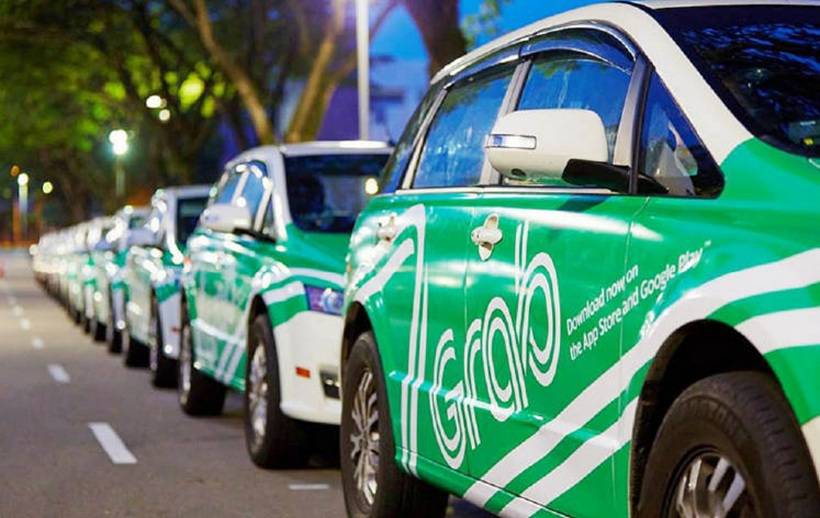
But these challenges should not make drivers too comfortable. Ride-hailing itself also seemed uncertain in its early days. Many traditional taxi drivers underestimated how quickly apps like Grab would change passenger behaviour. Within several years, the taxi industry was heavily affected, and many drivers had to adapt or leave the market.
The same lesson applies here. A technology does not need to replace everyone immediately in order to cause disruption. It only needs to take enough market share from the most profitable routes, busiest zones or highest-demand locations. Once that happens, human drivers may find themselves competing for fewer trips, lower fares and less predictable earnings.
The Human Side Of The Disruption
It is easy to discuss robotaxis as a technology story, but this is also a people story. Behind every e-hailing car is someone trying to earn a living. Some drivers are supporting families. Some are paying vehicle loans. Some moved into e-hailing after the traditional taxi industry weakened. Others use it because age, education level, health, or job market conditions make formal employment more difficult.
For many drivers, e-hailing is not a casual weekend activity. It is their main source of income.
That is why the arrival of autonomous ride-hailing cannot be viewed only as innovation. It also raises serious questions about work, income security and long-term planning. If even part of the market shifts toward driverless fleets, the impact could be significant for those who depend on daily fares.
The difficult part is that the new jobs created by autonomous fleets may not be easy for existing drivers to enter. Robotaxi operations may need remote operators, fleet supervisors, vehicle technicians, sensor calibration specialists, AI monitoring teams and maintenance crews. These are real jobs, but they require different skills from ordinary driving.
A driver cannot automatically move into those roles without training.
The Timeline May Feel Long, But It Is Not
A realistic transition in Malaysia may still take years. It may begin with limited autonomous shuttle routes in planned areas, campuses, airports, business districts, or government zones. Kuala Lumpur, Putrajaya or selected smart city corridors could become early test areas if regulations and infrastructure are ready.
Wider adoption may take a decade or more. But a decade is not as long as it sounds, especially for workers who need time to retrain, save money, pay off loans or build another income stream.
That is the uncomfortable truth. The right time to prepare for disruption is not when the disruption is already here. By then, the market has usually moved faster than the worker can react.
Government Support Helps, But It May Not Be Enough
Malaysia has started taking gig worker welfare more seriously. Measures such as social security contributions, formalised contracts and retirement-related schemes are important because gig workers have historically lacked many protections enjoyed by formal employees.
However, these measures mostly address the gig economy as it exists today. They do not fully solve the problem of technological displacement. If a large number of drivers eventually lose access to ride-hailing income because autonomous vehicles take over parts of the market, social security contributions alone will not create new careers for them.
This is where policy needs to look ahead. Malaysia should start thinking about reskilling programmes specifically designed for drivers and gig workers. These should not be overly academic or complicated. They need to be practical, affordable and suitable for adults who are already working long hours.
Possible transition areas could include logistics operations, vehicle maintenance, EV servicing, basic IT support, fleet coordination, customer service, safety monitoring, technical support and small business skills. The key is to create realistic pathways before the market forces people into panic mode.
What Drivers Can Start Doing Now
For e-hailing drivers, the message is not to quit immediately or assume that their income will vanish tomorrow. That would be unrealistic. Human drivers will likely remain part of the transport ecosystem for many years, especially in areas where autonomous vehicles struggle or where passengers still prefer human assistance.
But drivers should begin treating the next few years as a preparation period. That means reducing dependency on one platform where possible, learning new skills, building savings, and paying attention to how transport technology is changing.
Even small steps matter. Learning basic digital tools, improving customer service skills, understanding EV maintenance, exploring delivery or logistics management, or taking short technical courses can make a difference over time. The goal is not to become an engineer overnight. The goal is to avoid being trapped when the industry shifts.
Final Thoughts
The rise of robotaxis is not just about cars without drivers. It is about what happens when technology changes the value of human labour in an industry that millions of people rely on.
For passengers, autonomous ride-hailing may eventually bring cheaper, cleaner and more convenient transport. For companies, it may unlock a more scalable business model. But for e-hailing drivers, it is a warning sign that the job they depend on today may not remain the same forever.
Malaysia may still have time before robotaxis become common on our roads. The question is whether that time will be used wisely. Drivers who prepare early will have a better chance of moving into new opportunities. Those who ignore the signs may find themselves facing the same painful shock that traditional taxi drivers experienced when ride-hailing first arrived.
The app may not stop ringing tomorrow. But one day, it may ring less often. And when that day comes, preparation will matter more than hope.











Comments 0