

Artificial intelligence is steadily becoming part of everyday academic life, and in Malaysia, that shift is now happening on a much larger scale. Google has announced that Gemini for Education is now available across all 20 public universities in the country, bringing AI-powered tools directly into the existing Google Workspace for Education ecosystem already used by these institutions.
That means this is not some isolated pilot project or a limited trial for a few departments. It is being introduced at a national public university level, potentially affecting close to 600,000 students as well as around 75,000 faculty and staff members. For Malaysia's higher education landscape, that is a major step forward.
A Bigger Push for AI in Higher Education
The rollout shows how quickly AI is moving from being a trendy topic into something more practical and embedded in the way universities operate. In this case, Gemini for Education is not just being positioned as a novelty tool for experimentation. It is being brought into both academic and administrative use, which suggests a broader goal of helping universities improve the way students learn, how lecturers teach, and how institutions manage knowledge.
For students, this could mean better support for research, coursework, revision, and idea generation. For lecturers and university staff, it opens the door to more efficient content preparation, academic planning, and possibly even streamlining routine tasks that would normally consume a lot of time.
Google describes the platform as offering secure AI-powered assistance, which is an important point in an education setting. Universities deal with sensitive academic materials, institutional data, and student work, so trust and control matter just as much as capability.
More Than Basic Access
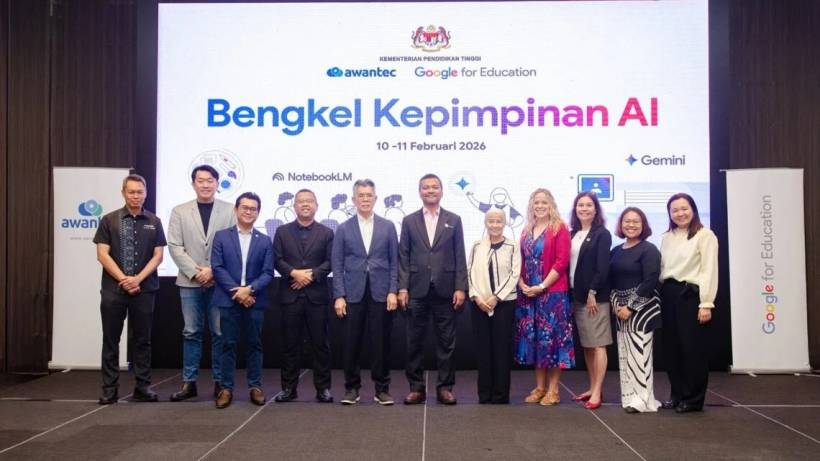
What makes this initiative more interesting is that it does not stop at basic Gemini access. Malaysia's Ministry of Higher Education has also expanded the programme further by equipping 40,000 faculty members with Google AI Pro for Education. That gives lecturers and academic staff access to more advanced features and premium AI models, which could make a real difference in how these tools are used in teaching and curriculum development.
At the same time, 128,000 students are also getting access to NotebookLM Enterprise. That is significant because NotebookLM has been gaining attention as a tool that can help users make sense of complex materials by working directly with their own uploaded notes and sources. In a university environment, that could be especially useful for breaking down dense lecture materials, summarising readings, and organising revision resources in a more manageable way.
Rather than offering a one-size-fits-all AI assistant, this wider setup suggests a more layered ecosystem where staff and students can tap into tools that serve different academic needs.
What Students and Lecturers Can Actually Do With It
One of the more practical aspects of this rollout is the inclusion of Gemini 3.1 Pro combined with LearnLM. LearnLM refers to AI models that have been tuned specifically for learning-related use cases, which makes the offering more relevant for classrooms and higher education rather than general consumer AI use.
This appears in features such as Guided Learning and Deep Research. In simple terms, that means the tools are not just there to generate quick answers. They are also being shaped to support understanding, exploration, and structured academic inquiry.
That distinction matters. In education, the value of AI should not be limited to giving students shortcuts. Ideally, it should help them think more clearly, explore ideas more deeply, and engage with difficult subjects in a way that feels less intimidating. When used well, these tools can become learning companions rather than just answer machines.
Early Examples From Malaysian Universities
Google also shared several examples of how universities in Malaysia are already putting these tools to use, and these cases help paint a clearer picture of what the rollout actually looks like in practice.
At UniMAP, a lecturer reportedly created customised Gemini GEMs to help students in specialised subjects such as Integrated Circuits Design and MEMS Design and Fabrication. That is a strong example of how AI can be adapted beyond generic use and tailored to very specific academic content. In fields that are technical and demanding, a more customised assistant could help students navigate the curriculum with better structure and clarity.
At USIM, students have been using NotebookLM to turn lecture notes into study guides. That sounds simple on the surface, but it addresses a real student problem. Many students struggle not because information is unavailable, but because it is scattered, overwhelming, or difficult to organise. A tool that helps convert raw lecture content into something more digestible could make revision much more effective.
UPM offers another interesting case. There, undergraduate students have been using NotebookLM to transform study materials into podcast-style formats. This is a good example of how AI can support different learning styles. Not every student absorbs information best by staring at pages of notes for hours. For some, listening to content can make difficult material feel more approachable and less mentally exhausting. That does not replace traditional study methods, but it does provide another pathway into learning.
Then there is UNIMAS, where the focus appears to be not only on using the tools but also on building formal competency around them. More than 500 lecturers have been trained, while 120 have already been certified as Gemini Certified Educators. Even students are part of that push, with close to 500 receiving certification as well. This suggests that the goal is not merely adoption, but meaningful readiness and skill-building around AI use in education.
Why This Matters for Malaysia
This rollout matters because it reflects a broader shift in how higher education is preparing for the future. Universities are no longer just discussing whether AI belongs in learning environments. They are now actively working out how to integrate it responsibly and productively.
For Malaysia, this could help public universities stay aligned with the global direction of education technology. Around the world, institutions are exploring how AI can support personalised learning, academic research, administrative efficiency, and digital literacy. By introducing Gemini for Education at scale, Malaysia is placing its public university system in that wider conversation.
It also raises expectations. Once tools like these are widely available, students and educators will naturally start to expect more digital support in how lessons are designed, how materials are delivered, and how knowledge is explored. Universities may need to think more seriously about AI policies, ethics, training, and assessment methods so that adoption remains helpful rather than disruptive.
The Opportunity and the Responsibility
Of course, access alone does not guarantee good outcomes. The success of this initiative will depend on how thoughtfully the tools are used. AI can support learning, but it can also encourage over-reliance if students use it passively. Likewise, lecturers may find it useful for content development, but institutions will still need clear guidance on academic integrity, critical thinking, and responsible usage.
That is why training and certification efforts, like those seen at UNIMAS, may end up being just as important as the technology itself. The real value of AI in education will come not from simply making it available, but from helping people use it well.
Final Thoughts
Google's expansion of Gemini for Education across all Malaysian public universities is a big development for the country's higher education sector. It brings AI into the daily academic environment of hundreds of thousands of students and educators, while also showing that Malaysia is taking educational technology seriously at a national level.
What stands out most is that this is not just about giving universities access to another digital tool. It is about reshaping how learning support, research assistance, and educational workflows may look in the years ahead. With the right balance of access, training, and responsible implementation, this could become one of the more meaningful AI adoption moves in Malaysian education so far.











Comments 0