

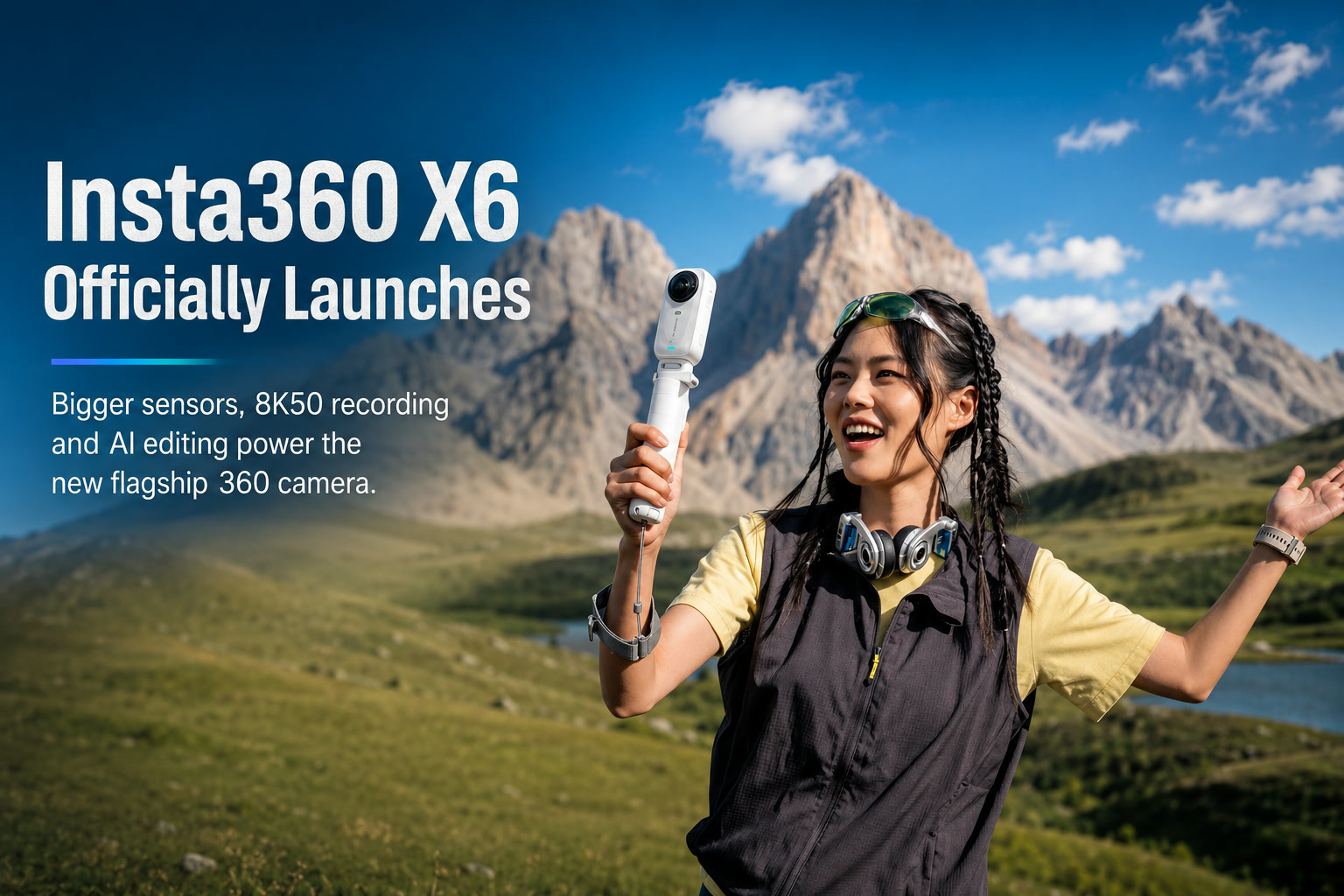
Insta360 has officially introduced the Insta360 X6, its latest flagship 360-degree camera and the successor to last year's X5. While the basic formula remains familiar, the X6 brings meaningful upgrades where they matter most: larger image sensors, faster processing, higher frame-rate 8K recording, expanded AI-assisted editing and a more flexible overall shooting experience.
Rather than reinventing the product line, Insta360 appears to have focused on making the X6 a more capable all-in-one camera for creators who want to shoot first and decide on the final framing later.
For travellers, motorcyclists, cyclists, action-sports enthusiasts and vloggers, that flexibility remains one of the biggest attractions of 360-degree cameras.
Bigger Sensors Should Make the Biggest Difference
One of the most important hardware upgrades is the move to dual 1/1.1-inch Sony square sensors, replacing the smaller 1/1.28-inch sensors used in the X5.
Insta360 says the change provides around 33% more sensor area, while also claiming significantly greater light-gathering capability per frame.
That matters because low-light performance has traditionally been one of the more challenging areas for compact 360 cameras.
A 360 camera has to capture a very wide scene using two lenses, stitch those views together and maintain enough detail across the entire frame. Once lighting conditions deteriorate, noise, softness and lost detail can become much more noticeable.
The larger sensors in the X6 should therefore help improve image quality in environments such as evening streets, indoor events, shaded trails and night-time rides.
Insta360 is also introducing a dedicated low-light shooting mode together with AdaptiveTone 2.0, which is designed to improve exposure balance and dynamic range across difficult scenes.
8K Recording Now Reaches 50fps
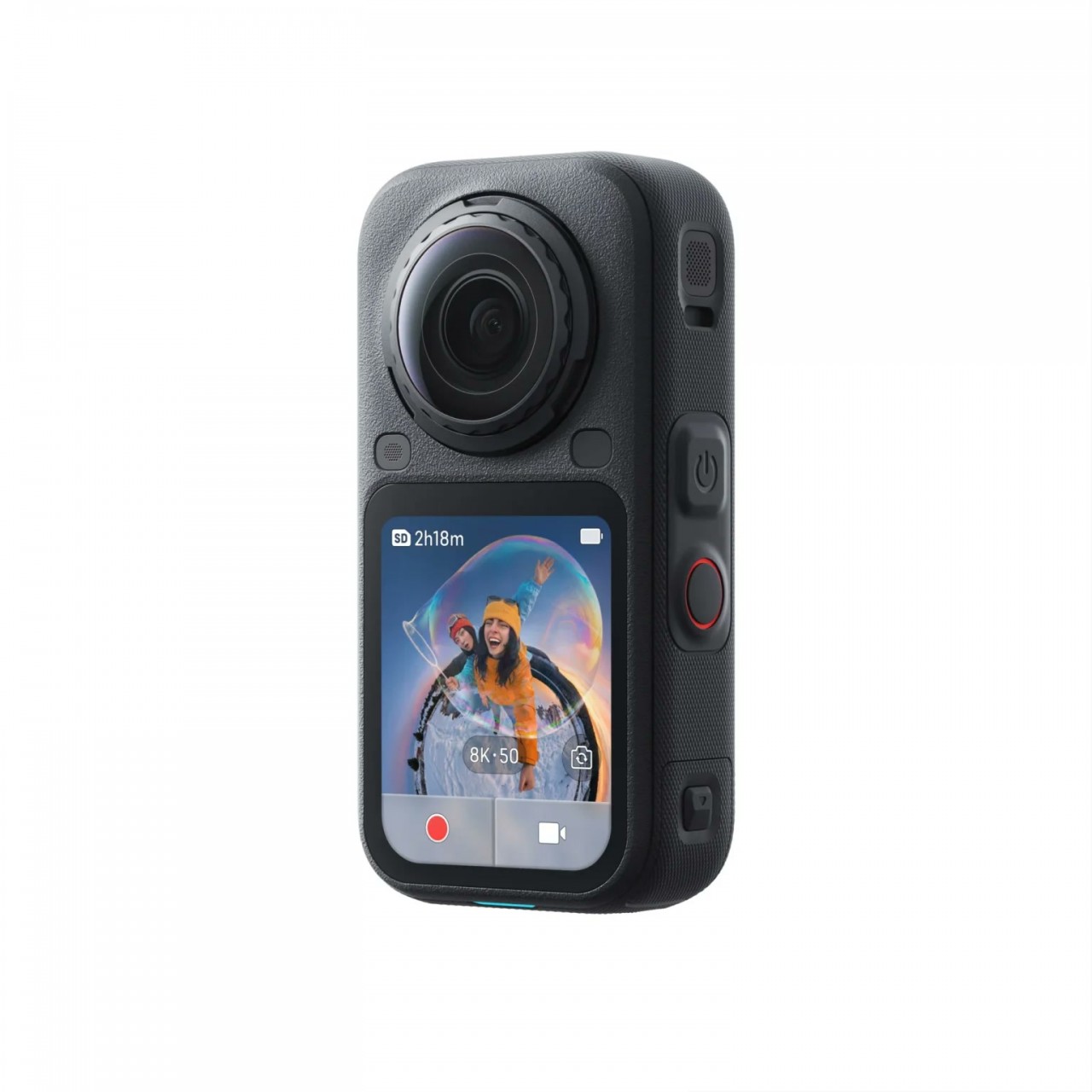
The X6 retains 8K 360-degree recording, but it can now capture that resolution at up to 50 frames per second.
That gives creators more flexibility when recording fast movement.
Higher frame rates are particularly useful for cycling, motorcycling, skiing, action sports and other scenarios where 30fps may look less fluid.
Because 360 footage often gets reframed later, having additional temporal detail can also help the final flat video feel smoother.
For users who don't need the full 360-degree view, the X6 can operate in single-lens mode as well.
In this configuration, it supports up to 5K at 60fps and 4K at 120fps, making the camera useful for conventional action-camera shooting and slow-motion footage.
More Serious Colour Options for Creators
The X6 also takes a step toward more professional video workflows.
It supports 10-bit video, along with Dolby Vision and I-Log.
That gives users more room when adjusting colour, contrast and exposure during post-production.
For casual creators, these options may not matter much because footage can still be used straight out of the camera.
But for anyone combining Insta360 footage with material from mirrorless cameras, drones or other professional equipment, having greater control over colour matching becomes much more valuable.
It also reflects how 360 cameras are increasingly being used as serious production tools rather than novelty devices.
Insta360 Wants the X6 to Replace Several Cameras
One of the more interesting parts of Insta360's pitch is that the X6 isn't being marketed purely as a 360 camera.
The company describes it as effectively three cameras in one.
You can use it as a traditional 360 camera, capture conventional flat video automatically or switch to a single-lens action-camera mode.
That flexibility is arguably one of the strongest reasons to carry an X6 instead of several different cameras.
InstaFrame 2.0 Can Create Normal 4K Videos Automatically
The updated InstaFrame 2.0 mode is designed for users who want the flexibility of 360 capture without spending much time reframing footage manually afterward.
The system can track people, pets and other subjects, automatically generating conventional flat 4K video.
That means you can record a scene without carefully pointing the camera at your subject every second.
For solo creators in particular, this can be extremely useful.
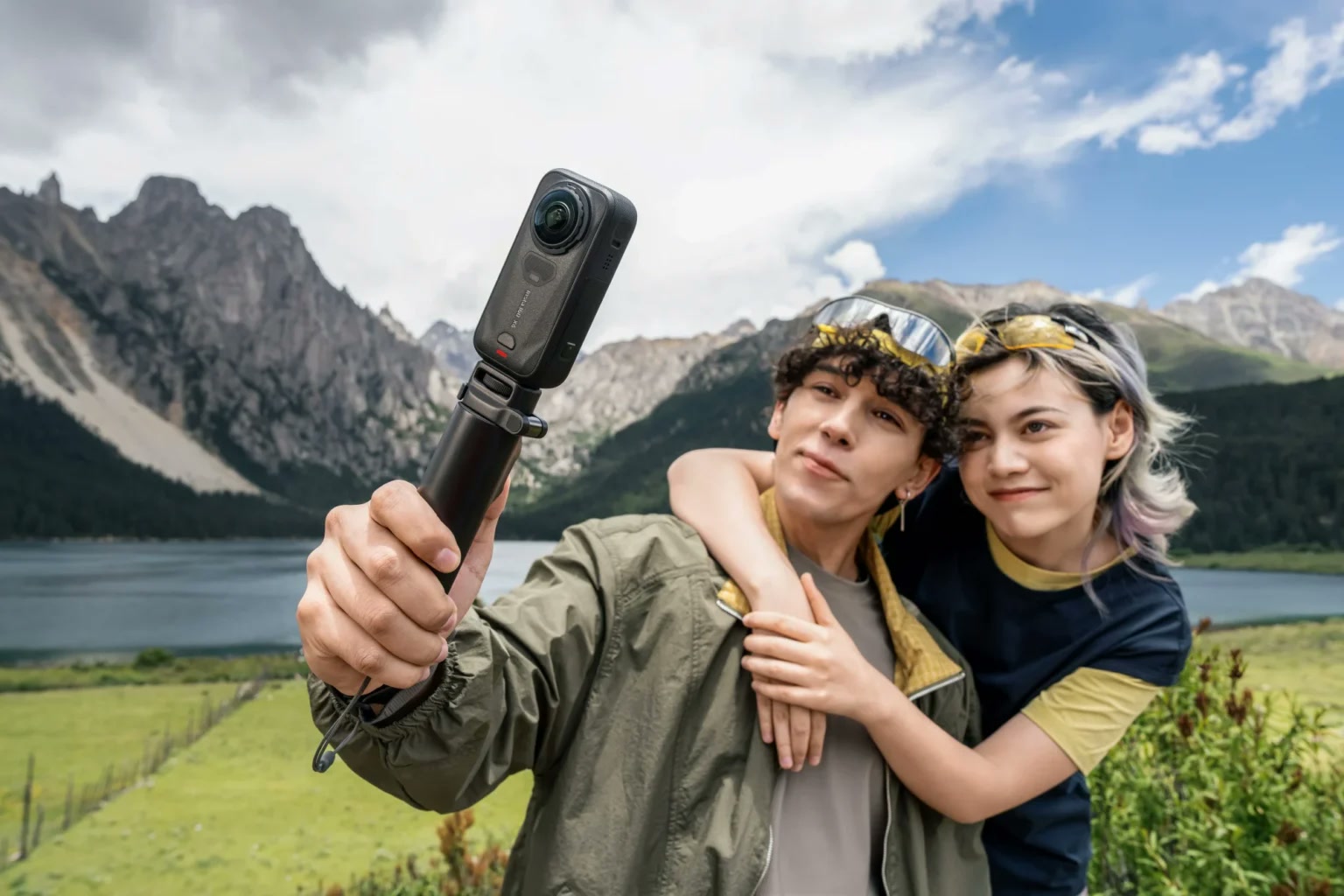
You could mount the X6 on a selfie stick, start recording and let the software maintain the framing while you concentrate on whatever you're doing.
The same hardware can then still be used as a conventional single-lens action camera when a full 360 capture isn't necessary.
Shoot Everything First, Choose the Angle Later
The traditional advantage of 360 cameras remains unchanged.
Instead of deciding where to point the camera while recording, you capture the entire environment around you.
The final angle can then be selected afterward.
This is particularly useful for unpredictable situations.
During a motorcycle ride, for example, something interesting could happen behind or beside the rider. With a conventional action camera, that moment might never have entered the frame.
With 360 footage, the camera has already captured it.
You simply reframe the video during editing.
That freedom can dramatically reduce the pressure of getting the perfect composition while recording.
FlowState and Horizon Lock Keep Things Stable
Insta360 continues to rely on its FlowState stabilisation technology to smooth movement.
The X6 also includes 360 Horizon Lock, which keeps the horizon level even when the camera rotates dramatically.
This has become particularly important for action-camera footage.
Whether the camera is mounted on a motorcycle, helmet, bike or selfie stick, maintaining a stable horizon can make footage much easier to watch.
Without effective stabilisation, highly dynamic 360 video can quickly become disorientating.
Accessories Add Gimbal-Like Control
Insta360 is also expanding what users can do with accessories.
An optional Foldable Selfie Stick Remote Kit adds joystick controls that can be used for gimbal-style camera movements without requiring a dedicated gimbal.
This could make the X6 more attractive for travel videos and cinematic walk-through shots where controlled movement is desirable.
There is also a POV Head Tracker, which allows the framing to follow the direction of the user's eyeline.
That could be especially useful for first-person content because the resulting video can more naturally follow where the wearer is actually looking.
PanoMind Brings AI Directly Into 360 Editing
AI is another major focus of the X6.
Insta360 is introducing a system called PanoMind, which has been developed specifically to understand 360-degree footage.
The company says the system was trained using more than 10,000 hours of video, covering scenarios such as travel, cycling, motorcycling and diving.
That's important because editing 360 footage isn't quite the same as editing ordinary video.
The software needs to determine not only which moment is interesting, but also which direction within the spherical recording should become the final shot.
That's a considerably more complicated problem than simply trimming a normal video.
AI Director Can Edit While the Camera Charges
One particularly convenient feature is AI Director.
The X6 can analyse footage stored on the camera and automatically create a highlight video while the device is charging.
That means a user could return from a ride or day trip, plug the camera in and allow it to begin processing footage without immediately opening an editing application.
Even more interestingly, Insta360 says this processing happens on the camera itself rather than in the cloud.
That has two obvious benefits.
First, users don't need to upload enormous 8K 360 files just to generate an edit.
Second, those who are concerned about privacy can keep their footage local.
The feature can also be disabled entirely for users who prefer full manual control.
Auto Edit 2.0 Can Handle Most of the Editing Work
For creators who want more automation, Auto Edit 2.0 can take care of several parts of the production process.
It can automatically determine framing, camera movement, cuts, music and transitions.
That could substantially shorten the time between recording something and having a video ready to share.
Editing is often the most time-consuming part of shooting 360 footage.
Capturing everything is easy.
Going through several hours of footage, selecting angles and animating reframes can take much longer.
If Insta360's AI can reliably handle those repetitive decisions, the X6 could become much more approachable for casual users.
Moments Pro Takes AI Editing Into the Cloud
For those who want more creative control without manually editing everything, Insta360 also offers Moments Pro through its cloud service.
Users can describe the type of video they want based on factors such as the subject, mood, visual style and timeframe.
The service can then generate a video based on those instructions.
This is increasingly becoming the direction of consumer video editing.
Instead of arranging every clip and transition manually, users can describe their intention and allow AI to handle much of the initial assembly.
More advanced creators can still refine the result afterward.
A Bigger Battery for Long 8K Recording Sessions
Powering all of this is a 2,600mAh Xtreme Battery.
Insta360 claims the X6 can record for up to 140 minutes at 8K30 in 360 mode.
That's a substantial amount of continuous recording considering the processing demands involved in capturing and stitching high-resolution footage from two sensors.
The camera also supports fast charging.
According to Insta360, it can go from empty to 80% in approximately 24 minutes.
That should be particularly useful for travellers who may only have a short break between shooting sessions.
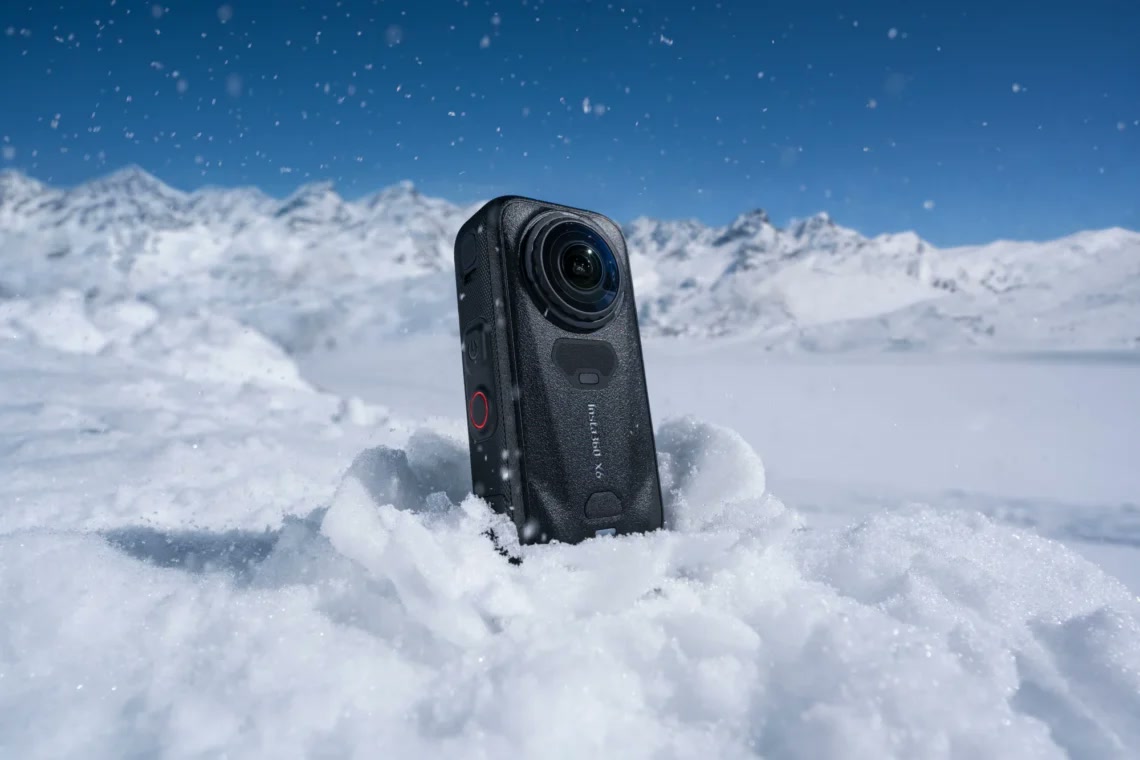
The battery is also designed to operate in temperatures as low as -20°C, making the X6 suitable for cold-weather environments and winter sports.
Built-In Storage Means You Don't Immediately Need a Memory Card
The X6 includes 64GB of internal storage, although around 47GB is available to the user.
That means you can start recording without installing a microSD card.
Built-in storage can also be useful as an emergency backup.
For example, if you forget your memory card or your card becomes corrupted during a trip, the camera isn't suddenly unusable.
Of course, 8K 360 video consumes storage extremely quickly, so anyone planning long recording sessions will still want high-capacity removable storage.
But having internal space available is a welcome safety net.
Replaceable Lenses Remain One of the X6's Best Practical Features
One of the biggest weaknesses of practically every 360 camera is its lenses.
Because they protrude significantly from the camera body, they are highly exposed to scratches and impact.
A damaged lens can ruin an otherwise perfectly functional camera.
Insta360 therefore continues its replaceable lens design with the X6.
The company says its updated Replaceable Lens 2.0 system is around five times more scratch-resistant than the previous generation.
More importantly, Insta360 claims replacement costs have been reduced by approximately 60%.
For anyone who actually uses the X6 for action sports, motorcycles, hiking or travel, this could ultimately be more important than several of the headline specifications.
A camera designed to go everywhere needs to survive being used everywhere.
Waterproof to 20 Metres Without a Case
The X6 is also designed for underwater use.
On its own, the camera is waterproof to depths of 20 metres.
Pairing it with the optional Invisible Dive Case Pro increases that rating to as much as 60 metres.
That gives the camera plenty of flexibility for swimming, snorkelling and more serious diving.
Because underwater 360 footage can produce some particularly unusual perspectives, this remains one of the more interesting applications for the format.
Malaysia Pricing Starts at RM2,899
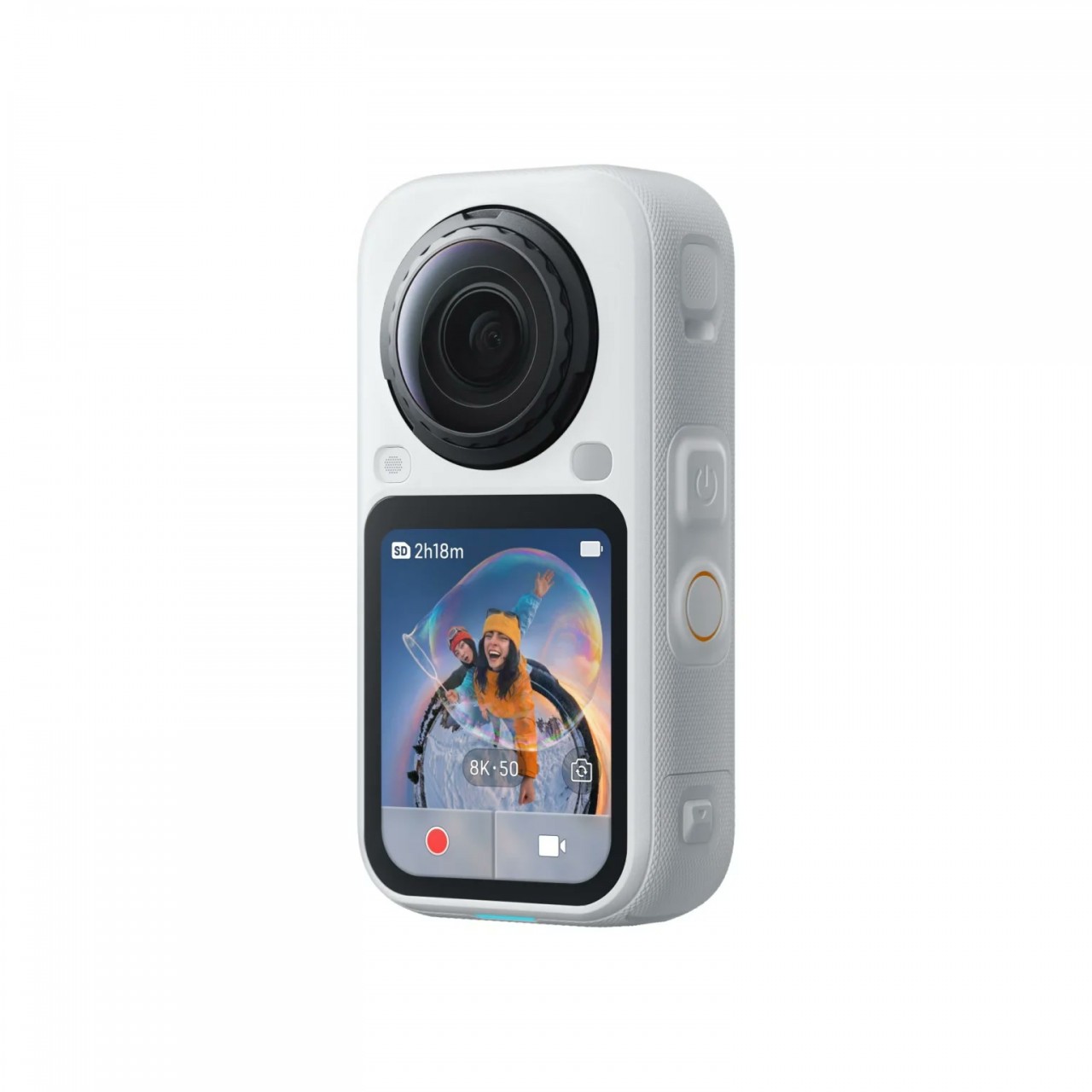
In Malaysia, the Insta360 X6 is available in black and white.
The standalone camera is priced at RM2,899, while the Essentials Bundle costs RM3,199.
It will be sold through Insta360's official website and Shopee store.
The RM300 difference could make the bundle worth considering for buyers who were already planning to purchase additional accessories.
Early Buyers Get Insta360+ and Moments Pro
Insta360 is also offering several promotional extras for early adopters.
Customers who purchase and activate the X6 before 30 September 2026 will receive one year of Insta360+ Premium, including 500GB of cloud storage.
Buyers will also receive three months of Moments Pro, providing two generated clips each month at no additional cost.
These extras also reinforce how much Insta360 is trying to build an ecosystem around the camera rather than simply selling hardware.
Cloud storage, AI editing and automated video generation are becoming an increasingly important part of the overall product.
The X6 Is Really About Making 360 Video Easier
The biggest story surrounding the X6 isn't simply that it records 8K video.
Previous generations could already capture extremely high-resolution 360 footage.
The more important shift is how Insta360 is attempting to reduce the amount of work required after recording.
Bigger sensors improve the footage going into the system.
AI Director can identify interesting moments.
Auto Edit 2.0 can handle framing and transitions.
Moments Pro can generate finished clips based on descriptions.
And because you capture everything around the camera, you don't necessarily need to worry about perfect framing when you press record.
The entire workflow is moving toward one simple idea: capture first, decide later.
Final Thoughts
The Insta360 X6 feels less like a dramatic reinvention of the 360 camera and more like a refinement of everything that already made the format appealing.
The larger 1/1.1-inch sensors should help where 360 cameras have traditionally struggled most, particularly in difficult lighting. Meanwhile, 8K50 recording, 10-bit video, I-Log and improved single-lens modes give more serious creators additional flexibility.
But perhaps the most interesting changes are happening on the software side.
PanoMind, AI Director and Auto Edit 2.0 could make the process of turning huge spherical recordings into usable videos considerably easier.
Combine that with a larger battery, internal storage, tougher replaceable lenses and strong waterproofing, and the X6 starts to look less like a specialised 360 camera and more like a genuinely versatile creator tool.
At RM2,899, it certainly isn't an impulse purchase. But for someone who regularly records travel, action sports, motorcycles or any situation where capturing everything around the camera matters, the X6 offers a compelling combination of improved hardware and increasingly intelligent software.











Comments 0