

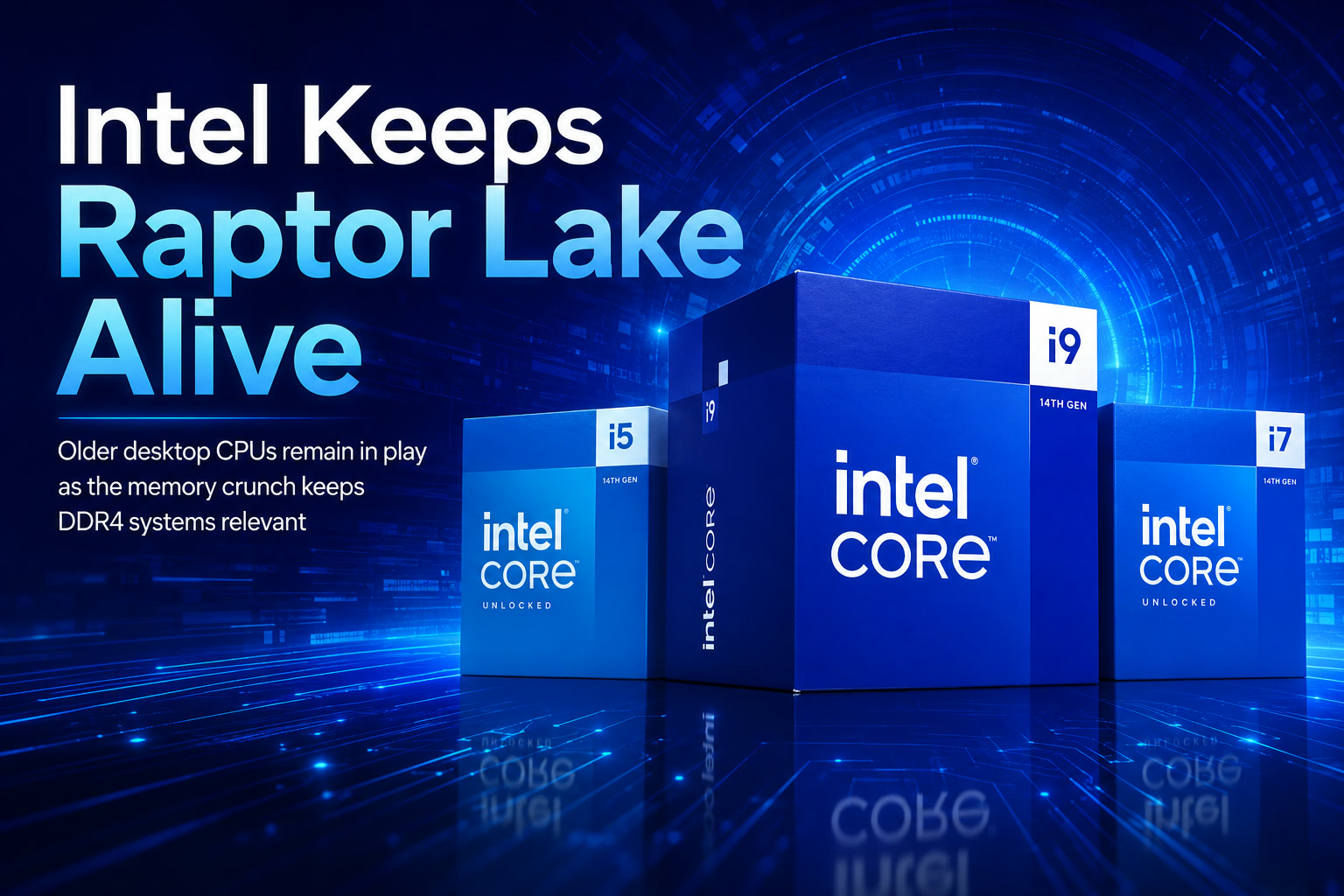
Intel may already be preparing newer desktop architectures such as Nova Lake, but that does not mean its older Raptor Lake processors are disappearing anytime soon. The company says it intends to continue supplying 13th- and 14th-generation Raptor Lake desktop CPUs for "years to come," largely because the ongoing memory and storage shortage has created renewed demand for systems that can still use cheaper and more widely available DDR4 memory.
That gives Intel's ageing LGA 1700 platform an unexpected second life at a time when building or upgrading a PC with newer DDR5-based platforms can be considerably more expensive.
Raptor Lake Still Has a Place in Intel's Lineup
Raptor Lake first arrived in 2022 with Intel's 13th-generation Core processors before being refreshed for the 14th-generation lineup.
The architecture is manufactured using Intel's Intel 7 process, previously associated with the company's 10nm technology.
From a technology perspective, Raptor Lake is no longer particularly new. Intel has since introduced newer architectures with greater emphasis on efficiency, packaging improvements and newer platform technologies.
However, Intel's Robert Hallock, Vice President of the Enthusiast Channel Business, says that does not mean Raptor Lake is ready for retirement.
Hallock described the architecture as a core part of Intel's product portfolio and indicated that the company wants to continue offering it for years.
One of the biggest reasons is simple: DDR4 still matters.
DDR4 Support Has Suddenly Become Much More Valuable
Unlike Intel's newer desktop platforms, Raptor Lake can operate with either DDR4 or DDR5 depending on the motherboard.
That flexibility may not have seemed especially exciting when DDR5 prices were falling and newer memory was becoming increasingly mainstream.
The current memory shortage changes the equation.
With RAM prices under pressure and higher-capacity DDR5 kits becoming increasingly expensive, the ability to build a capable desktop around existing DDR4 memory can save a substantial amount of money.
Someone upgrading from an older system may already own 32GB or 64GB of DDR4.
Instead of replacing perfectly usable memory along with the CPU and motherboard, they can potentially move into an LGA 1700 system and continue using what they already have.
For budget-conscious PC builders, that suddenly makes Raptor Lake much more relevant than its age might suggest.
LGA 1700 Isn't Dead Yet
Hallock also described LGA 1700 as still being a good socket, noting that plenty of customers remain interested in DDR4 systems.
That continuing demand is reflected in the motherboard market.
LGA 1700 boards with DDR4 support remain available, and manufacturers such as GIGABYTE are reportedly still introducing models for the platform.
Normally, once a processor socket has been replaced by newer generations, motherboard availability gradually declines and manufacturers focus almost entirely on the latest platform.
The memory shortage appears to be disrupting that normal cycle.
Instead of becoming obsolete, LGA 1700 is gaining another practical reason to remain on shelves.
For Intel, maintaining Raptor Lake production allows the company to serve buyers who may want a powerful desktop processor without being forced into the higher cost of a completely new memory ecosystem.
Demand Has Already Pushed Some Raptor Lake Prices Higher
There is a downside to renewed interest.
Processors such as the Core i5-14600K and Core i7-14700K have reportedly experienced increased demand, leading to tighter availability and higher prices in some markets.
That demonstrates the strange situation currently facing PC builders.
Older hardware would normally become cheaper as newer generations replace it.
But if older CPUs offer access to cheaper DDR4 platforms during a memory shortage, demand can move in the opposite direction.
Suddenly, a processor from a previous generation becomes attractive again—not necessarily because it is technically superior, but because the total platform cost is easier to manage.
Intel appears aware of this.
Hallock said Raptor Lake inventory should improve over the coming months, although the company has not provided specific shipment volumes or confirmed exactly which models will receive the largest increases.
Intel Expects Pricing to Eventually Normalise
Another interesting part of Hallock's comments is Intel's expectation that PC component pricing will eventually return to more normal levels.
The timing remains uncertain.
Some industry forecasts have suggested that memory supply pressures could persist for several years, potentially stretching toward the end of the decade.
That makes Intel's decision to keep Raptor Lake around for "years to come" sound particularly deliberate.
If DDR5 remains expensive for an extended period, Intel can continue offering a platform capable of supporting cheaper DDR4 while its newer products occupy the higher end of the market.
It effectively gives the company two different desktop strategies at once.
Newer architectures can push performance and platform technology forward, while Raptor Lake continues serving buyers who prioritise affordability and existing hardware compatibility.
Raptor Lake Could Become the Budget-Friendly Intel Platform
This could reshape how people look at Intel's 13th- and 14th-generation processors.
Instead of simply being older CPUs waiting to disappear from shelves, Raptor Lake could effectively become Intel's value-oriented desktop platform.
A builder could combine a Core i5 or Core i7 with a reasonably priced DDR4 motherboard and reuse existing memory.
That may be particularly appealing for gaming systems.
A modern graphics card generally has a much larger impact on gaming performance than moving from a strong Raptor Lake CPU to the newest processor generation.
If money saved on RAM and the motherboard can instead go toward a better GPU, the older Intel platform may deliver better overall gaming value.
That does not make Raptor Lake the best choice for everyone.
Buyers wanting maximum efficiency, the newest connectivity standards or a longer upgrade path may still prefer newer platforms.
But having another option is valuable during a period when component costs are unusually unpredictable.
There Are Even Rumours of "Raptor Lake Next"
Intel may potentially extend the platform even further.
Previous rumours have suggested that the company is preparing a Raptor Lake Next desktop lineup for early 2027.
Details remain unconfirmed, but such a release would breathe even more life into the LGA 1700 ecosystem.
If Intel refreshes the architecture while continuing DDR4 compatibility, it could give users another upgrade option without forcing them to replace their memory and motherboard.
That would be an unusual amount of longevity for a modern desktop platform.
It would also show just how much the global memory situation is influencing product strategies throughout the PC industry.
The Memory Crisis Is Changing Normal Upgrade Cycles
Normally, newer technology gradually replaces older standards.
DDR5 replaces DDR4.
A new socket replaces the previous socket.
Consumers move forward because newer hardware eventually becomes affordable enough to justify the transition.
The current memory shortage complicates that process.
When newer RAM becomes significantly more expensive, older platforms suddenly regain value.
A PC builder may care less about having the latest memory standard if an existing DDR4 kit still provides plenty of capacity and performance.
This is particularly relevant for users who already own 32GB or 64GB of DDR4, where replacing the entire memory kit could become one of the most expensive parts of an otherwise straightforward upgrade.
In that environment, keeping Raptor Lake available actually makes a lot of sense.
Older Doesn't Automatically Mean Obsolete
It is also worth remembering that Raptor Lake processors remain powerful.
A Core i5-14600K or Core i7-14700K does not suddenly become slow simply because Intel has launched newer architectures.
For gaming, productivity and general desktop workloads, these processors can still deliver strong performance.
The bigger concerns are platform longevity, efficiency and how prices compare with newer alternatives.
If Intel succeeds in improving supply and bringing Raptor Lake pricing back down, the platform could become one of the more attractive choices for buyers trying to navigate today's unusually expensive memory market.
If prices remain inflated because demand continues outstripping supply, however, much of that value proposition disappears.
Final Thoughts
Intel's decision to keep Raptor Lake alive for several more years shows how dramatically the memory shortage is influencing the PC hardware market.
Under normal circumstances, LGA 1700 and DDR4 would gradually be pushed aside as Intel moved customers toward newer architectures.
Instead, DDR4 compatibility has become one of Raptor Lake's strongest advantages.
For anyone already owning substantial amounts of DDR4 memory, keeping that RAM and building around an affordable LGA 1700 motherboard could make much more financial sense than moving immediately to an entirely new platform.
The broader lesson is that the newest platform is not always automatically the smartest purchase, especially during a period of unusually high memory prices.
Raptor Lake may be showing its age technologically, but as long as DDR4 remains significantly attractive on price, Intel clearly believes there will still be plenty of people willing to buy it.
And with the current global memory shortage showing no immediate signs of disappearing, LGA 1700 may remain relevant far longer than anyone originally expected.











Comments 0