

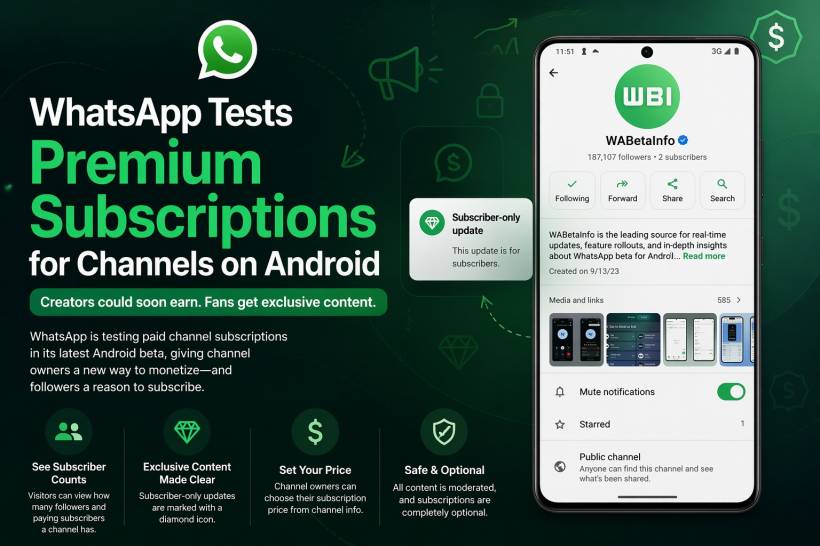
WhatsApp has been steadily evolving beyond just messaging, and its Channels feature is one of the clearest signs of that shift. What started as a broadcast-style tool for updates is now inching toward something more creator-focused — and potentially more commercial.
The latest development suggests WhatsApp is getting serious about monetisation, with paid channel subscriptions now being tested on Android.
From Free Updates to Paid Content
When WhatsApp first introduced Channels, the idea was simple: let creators, brands, and organisations share updates with followers in a one-way format. But back in mid-2025, the company hinted at a bigger plan — giving channel owners a way to earn directly from their audience.
Now, that plan is starting to take shape.
Recent beta versions of WhatsApp on Android show early signs of a subscription system where followers can pay a monthly fee to access exclusive content. Think of it like a lightweight Patreon or Telegram-style premium channel, but built directly into WhatsApp.
What the Beta Version Reveals
According to early testing insights, the feature is already quite structured, even if it's not fully released yet.
Here's what's currently visible in the beta:
• Visitors can immediately see how popular a channel is — including how many people are paying
• Channel owners can set subscription pricing directly within the app
• Premium content is separated from free content for easier navigation
This last point is especially important. Instead of mixing everything together, WhatsApp appears to be designing a clear distinction between what's free and what requires payment — making the experience less confusing for users.
Transparency Seems to Be a Big Deal
One interesting design decision is that subscriber numbers appear to be public — and not optional.
That means if a channel offers paid subscriptions, anyone visiting can see how many people are actually paying. While this might feel a bit exposed for smaller creators, it also introduces a level of transparency that could build trust with audiences.
It's a subtle but important move. In a space where follower counts can sometimes be misleading, showing real paying subscribers gives a clearer picture of engagement and value.
How Premium Content Will Be Marked
WhatsApp isn't leaving users guessing when it comes to paid content.
Subscriber-only posts will be clearly marked with a diamond-shaped icon, making it obvious which updates are exclusive. This avoids frustration and sets clear expectations — especially for users deciding whether a subscription is worth it.
At the same time, WhatsApp is expected to keep moderation in place for these premium posts, ensuring that even paid content follows platform guidelines and doesn't become a loophole for harmful material.
Not Mandatory — And That's Important
Another key detail: this feature is entirely optional.
Channel owners won't be forced into monetisation. If someone wants to keep their content completely free, they can continue doing so without any limitations. This flexibility is important, especially for public service channels, communities, or creators who prioritise reach over revenue.
Still in Testing — No Release Date Yet
While the feature looks promising, it's still under development.
Some parts — like how subscriber counts are displayed — are reportedly still being refined. And as with most beta features, there's no confirmed timeline for when (or even if) it will roll out globally.
That said, the direction is clear. WhatsApp is gradually positioning itself as more than just a messaging platform. It's becoming a space where creators can build audiences — and now, potentially earn from them too.
Final Thoughts
WhatsApp introducing paid channel subscriptions feels like a natural next step in its evolution. With platforms everywhere competing for creator attention, giving users a built-in way to monetise content makes a lot of sense.
The real question is whether people will actually pay for content inside a messaging app they've always associated with being free. If WhatsApp gets the balance right — clear value, simple pricing, and a clean user experience — this could quietly become one of its most impactful features yet.











Comments 0