

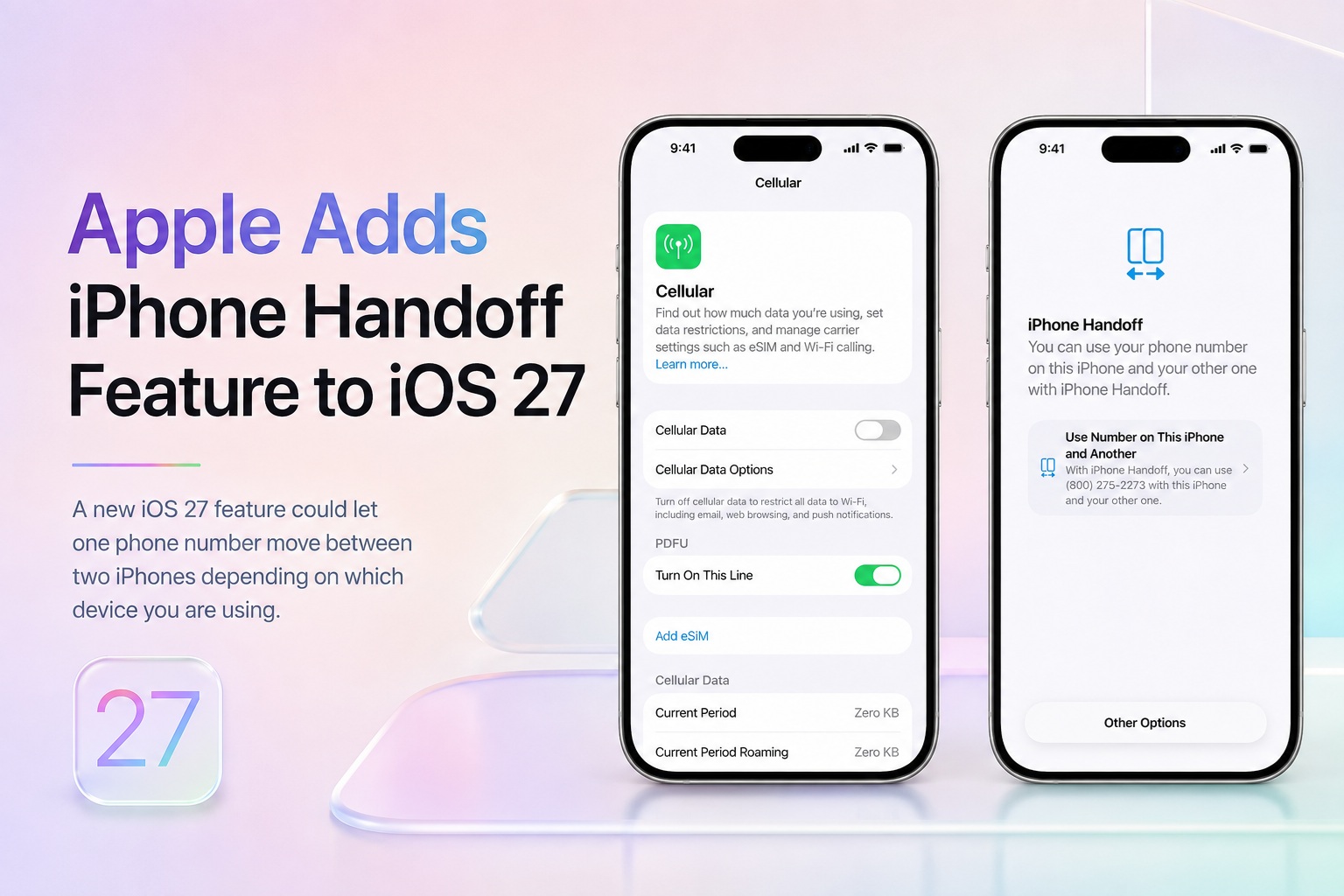
Apple appears to be experimenting with an unusual new feature in iOS 27 called iPhone Handoff, and despite the name, it has nothing to do with transferring data from an old iPhone to a new one. Instead, the feature is designed to let a single mobile phone number move between two iPhones depending on which device the user is actively using. In practice, that could make it much easier for people who regularly carry more than one iPhone, such as those who separate work and personal devices or keep a secondary phone for travel.
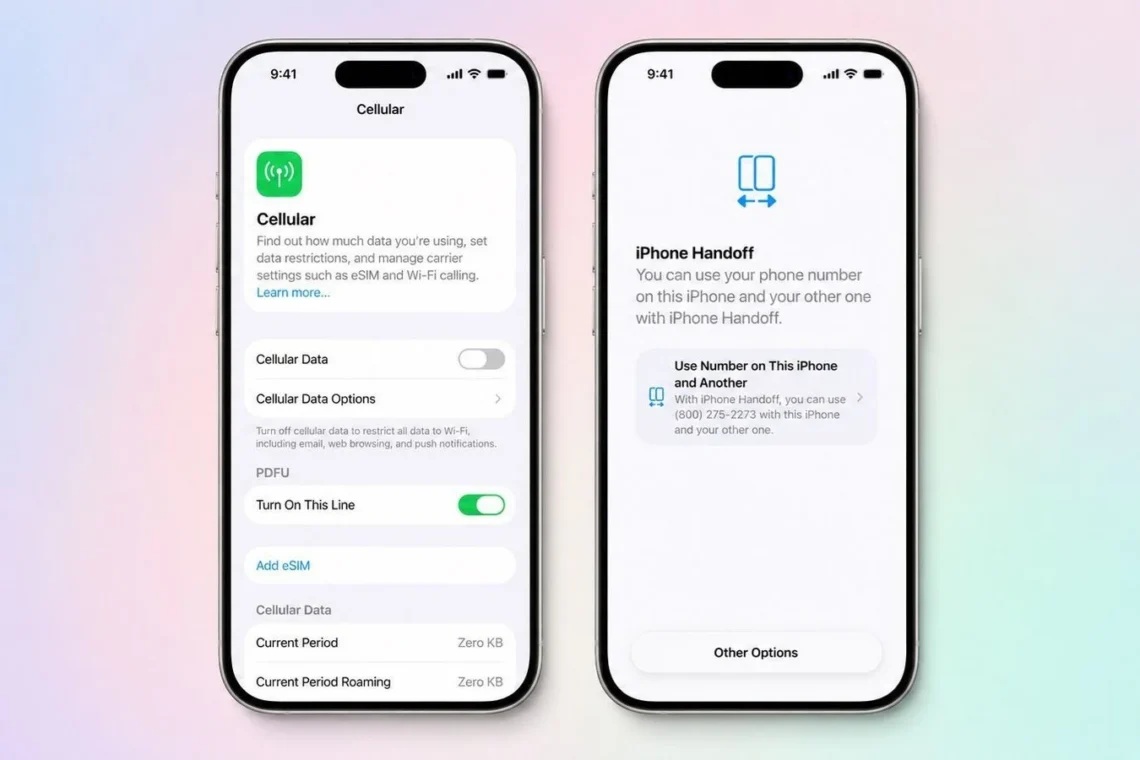
The feature has surfaced in existing iOS 27 beta builds and was recently demonstrated through simulated iPhones running inside Xcode 27's Device Hub. According to reports, the setup process begins inside the Cellular section of the iPhone's Settings app, where users can configure the secondary device to participate in the handoff process. The feature appears to rely on eSIM technology rather than a traditional physical SIM card, and carrier support will also be required before it can function properly.
How iPhone Handoff Appears to Work
The process reportedly starts on the secondary iPhone. During setup, that device receives what is effectively a companion eSIM that allows it to temporarily take over the same phone number used by the primary device. Once everything has been configured, the number can move between the two phones based on which one is currently unlocked and in active use.
When the handoff occurs, the newly active iPhone becomes the device associated with the phone number. Apple also appears to tie location sharing to the currently active phone, meaning that when the number moves, the device used for location-related services may move with it. Users are expected to receive a notification whenever the handoff takes place, making the transition visible rather than completely silent in the background.
Although the secondary iPhone can temporarily become the active device, reports suggest that cellular settings remain primarily managed from the main iPhone. That approach would allow Apple to keep one device as the central point of control while still giving the second device temporary access to the same mobile identity.
Carrier Support Will Be Essential
One of the biggest limitations is that iPhone Handoff will not work purely as an Apple software feature. Mobile network operators need to support the underlying technology, which means availability could vary considerably between countries and carriers when iOS 27 launches.
Early testing reportedly mentions T-Mobile in the United States and Telekom Deutschland in Germany as carriers supporting the feature during development. More operators could potentially be added later, but that will depend on whether carriers choose to implement the necessary infrastructure and provisioning systems.
The reliance on eSIM is also significant. Apple has been gradually moving more of its mobile connectivity toward eSIM-based systems because eSIM makes it easier to provision, transfer and manage cellular identities digitally. A feature that allows one number to move dynamically between devices would be considerably more difficult to implement using a removable physical SIM card.
Why This Could Be Useful for People With Two iPhones
The most obvious audience for iPhone Handoff is anyone who regularly uses two iPhones. Some users keep a smaller device for daily use and a larger model for photography, gaming or travel, while others may have separate work and personal devices. At the moment, maintaining the same phone number across both usually involves carrier-specific multi-device services, call forwarding or separate numbers.
With iPhone Handoff, Apple appears to be trying to make that experience feel more automatic. Instead of manually deciding which phone should receive calls and messages, the number could simply follow the device the user is actively holding. If implemented smoothly, it could make owning multiple iPhones feel much more like using several devices within one continuous Apple ecosystem.
There are still practical questions, however. Users will want to know how quickly the number switches, what happens during an active call, whether the handoff works when both phones are being used, and how the system handles situations where one device has poor network coverage. Battery state, roaming and carrier-specific restrictions could also influence how useful the feature becomes in everyday use.
It Feels a Little Like Linked Devices for Your Phone Number
One of the easiest comparisons is WhatsApp's linked-device system. WhatsApp allows one primary account to be used across several devices while maintaining a central account relationship with the main phone. iPhone Handoff sounds conceptually similar, except the shared identity is not merely an app account—it is the actual cellular phone number.
That creates some interesting questions about how the feature will interact with services that still assume a phone number belongs to one primary handset. Messaging apps, authentication services and banking applications often use phone numbers as part of their account-verification processes, so a number that dynamically changes devices could potentially introduce edge cases.
WhatsApp is a good example because it already distinguishes between a primary device and linked devices. If the phone number itself moves to the secondary iPhone, the app may need to determine whether that changes which device it considers primary or whether the existing linked-device relationship remains untouched. Similar questions may arise with other apps that rely heavily on SIM identity or SMS verification.
Security and Privacy Will Matter Just as Much as Convenience
A feature that moves a phone number between devices also needs strong security controls. Phone numbers are still used for account recovery, two-factor authentication and identity verification, so Apple and mobile carriers will need to ensure that the handoff process cannot be triggered by an unauthorised device.
The requirement to set up the secondary iPhone through the primary device and carrier provisioning should provide some protection, but users will likely want clear visibility into which devices are authorised. There will also need to be straightforward ways to revoke access if one of the phones is lost, stolen or sold.
Location sharing adds another privacy consideration. Because the active device may determine which location is shared, users need to understand when that switch happens and which phone is representing their location at any particular moment. The notification shown during a handoff should help, but Apple may need to provide additional controls once the feature reaches wider public use.
Another Step Toward Making Apple Devices Feel Interchangeable
The broader idea behind iPhone Handoff fits well with Apple's existing ecosystem strategy. Features such as Handoff, AirDrop, Universal Clipboard, iCloud syncing and Continuity already try to make individual Apple devices feel less isolated from one another. Users can start something on one device and continue it elsewhere without thinking too much about where the data physically resides.
Extending that concept to the cellular phone number is a much bigger step. A mobile number has traditionally been tied closely to a SIM card and therefore to a specific handset. If Apple and mobile carriers can make that identity portable between trusted devices in real time, the iPhone itself becomes less important than the user's overall Apple account and connected-device ecosystem.
That could eventually open the door to other forms of shared cellular identity. Apple Watches and iPads already support carrier-based number sharing in some markets, but iPhone Handoff suggests Apple may be looking at a more flexible model where cellular identity can move intelligently between devices rather than simply being mirrored.
The Feature May Be Most Valuable to a Small but Growing Group of Users
For the average person who owns only one iPhone, iPhone Handoff may not initially seem particularly important. Most users are unlikely to buy a second handset purely to take advantage of it. But for professionals, developers, content creators, travellers and businesses that routinely manage multiple iPhones, the feature could remove a surprisingly annoying limitation.
It could also become more relevant if secondary-device ownership grows. Foldable devices, compact models, specialised camera phones or enterprise-issued iPhones could all make multi-device usage more common over time. Apple may therefore be building the foundation now for a use case that becomes more important later.
As with many ecosystem features, the real value may not come from a dramatic new capability but from eliminating small pieces of friction. If users no longer have to think about which iPhone currently owns their phone number, the technology effectively disappears into the background.
Final Thoughts
iPhone Handoff is one of the more unusual additions appearing in iOS 27, but it could become a genuinely useful feature for people who regularly move between two iPhones. Instead of treating the phone number as something permanently attached to one device, Apple appears to be turning it into a portable identity that can follow the handset currently being used.
Its success will depend heavily on carrier support, eSIM availability and how reliably Apple handles security, messaging, authentication and location services during the transition. It will also need to work smoothly enough that users can trust the number to move automatically without missed calls, delayed messages or confusing account behaviour.
If those pieces come together, iPhone Handoff could represent another step toward Apple's larger goal of making its devices feel like different access points to the same personal digital environment. The idea is simple: rather than deciding which iPhone owns your phone number, the number follows you to whichever iPhone you are actually using.











Comments 0