

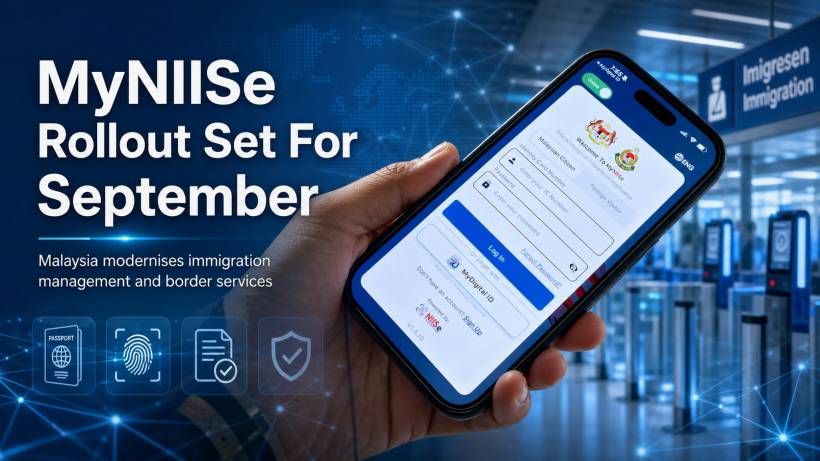
Malaysia's long-awaited National Integrated Immigration System, better known as MyNIISe, is now scheduled for full implementation in September 2026. The rollout is part of the Home Ministry's broader effort to modernise the country's immigration and identity management framework, while also improving the way people move through Malaysia's entry and exit points.
The announcement comes alongside another major update: enhanced MyKad and passport security features are expected to be introduced in June. Together, these initiatives point toward a wider reform of how Malaysia manages identity documents, immigration records, citizenship information, and border security.
A Major Step For Immigration Modernisation
MyNIISe is not just another system upgrade. It is intended to become the main digital backbone for Malaysia's immigration operations. For a country that handles large numbers of citizens, tourists, foreign workers, students, business travellers, and cross-border commuters, having a reliable and integrated immigration system is extremely important.
Home Minister Datuk Seri Saifuddin Nasution Ismail said the rollout marks an important milestone for the ministry. The goal is to streamline identity management and ensure smoother, more orderly movement of people. In practical terms, this should mean better processing, improved data management, stronger security controls, and a more efficient experience at immigration counters and related services.
This matters because immigration is one of those public services where delays are immediately felt. A slow or unstable system can lead to long queues, frustrated travellers, and pressure on frontline officers. A stronger system should help reduce those pain points.
New MyKad And Passport Security Features Coming First
Before MyNIISe is fully implemented in September, Malaysia is expected to roll out enhanced security features for MyKad and passports in June. These improvements were first mentioned earlier this year as part of the government's plan to strengthen national identity documents.
The MyKad and passport are two of the most important identity documents Malaysians use. The MyKad supports identity verification across many official and private-sector services, while the passport is essential for international travel and border movement. As identity fraud and document forgery become more sophisticated, it makes sense for these documents to be upgraded with stronger security elements.
While the full technical details have not been publicly explained, the direction is clear. Malaysia wants identity documents that are more secure, more resilient against misuse, and better suited to current operational challenges.
Agencies Preparing For A Smooth Transition
Speaking at the Home Ministry's monthly assembly on 4 May 2026, Saifuddin said both the National Registration Department and the Immigration Department are prepared for the upcoming transition. He expressed confidence that the implementation will proceed smoothly, noting that the ministry has been working toward the issuance of more secure documents for some time.
This preparation is important because changes involving identity and immigration systems can affect millions of people. Any weakness in planning could lead to delays, confusion, system congestion, or public complaints. A successful rollout depends not only on the technology itself, but also on staff training, data readiness, migration planning, public communication, and fallback procedures if unexpected issues occur.
Citizenship Application Data Also Part Of The Upgrade
Another key part of the ministry's preparation involves the submission of citizenship application data. This follows amendments to the Federal Constitution and is expected to support a more organised way of handling citizenship-related applications and information.
Citizenship matters are often sensitive and complex. They involve legal requirements, documentation, eligibility checks, and long-term implications for individuals and families. A better system should help improve how information is submitted, tracked, and managed.
For the government, this means better control and clearer records. For applicants, the hope is a more transparent and less confusing process.
Replacing The Long-Running MyIMMs System
One of the biggest reasons MyNIISe matters is that it will replace the existing Malaysian Immigration Integrated Management System, commonly known as MyIMMs. That older system has reportedly been in use for more than two decades.
After so many years, legacy systems often become harder to maintain. They may struggle with modern cybersecurity needs, higher traveller volumes, new border control requirements, and integration with newer digital services. In immigration, where accuracy and uptime are critical, relying too long on outdated systems can create operational risks.
MyNIISe is expected to offer a more integrated and modern platform that can better support current and future immigration needs.
MyBorderPass As An Interim Step
As Malaysia moves toward MyNIISe, interim systems such as MyBorderPass have already been introduced at selected entry points. These are being used alongside existing infrastructure while the full migration takes place.
This phased approach is sensible because immigration systems cannot simply be switched off and replaced overnight. Border operations must continue every day. Travellers still need to pass through immigration, officers still need access to records, and the government must maintain security while upgrades are happening in the background.
Using interim solutions allows the ministry to test newer processes, reduce pressure on older systems, and prepare the ground for a larger transition.
Improving Data Security And System Efficiency
The Home Ministry has also been working on backend improvements to strengthen data security and improve system efficiency. This is a crucial part of the project because immigration systems handle sensitive personal information, travel records, identity data, and security-related details.
A modern immigration platform must be secure by design. It needs proper access controls, audit trails, reliable databases, strong network protection, and the ability to support large volumes of transactions without becoming unstable.
Efficiency is equally important. If the system is faster and more stable, both the public and immigration officers benefit. Travellers may experience smoother processing, while officers can perform their duties with better tools and more reliable data.
Border Security Remains The Bigger Priority
While service improvement is a major goal, the bigger priority remains national security. Saifuddin stressed that the government will not compromise on immigration control, especially as cross-border movement increases and global security risks become more complex.
This is where MyNIISe becomes more than just an IT project. It is part of Malaysia's border security infrastructure. A stronger immigration system can help detect irregularities, support enforcement decisions, improve movement tracking, and reduce opportunities for syndicates to exploit weaknesses.
The minister also described safeguarding national borders as a key performance indicator for the Home Ministry this year. That shows how closely the success of these digital reforms is tied to the ministry's wider security objectives.
Final Thoughts
The planned September rollout of MyNIISe marks an important stage in Malaysia's immigration modernisation journey. Replacing the older MyIMMs system with a newer integrated platform should help improve service delivery, strengthen data security, and support smoother immigration processing.
Together with the June rollout of enhanced MyKad and passport security features, the initiative reflects a broader push to make Malaysia's identity and immigration systems more secure, efficient, and ready for current challenges.
For the public, the most important thing will be how smoothly these changes are implemented. If the rollout is handled well, Malaysians and visitors could eventually benefit from faster processes, stronger identity protection, and a more reliable immigration experience. For the government, the real measure of success will be whether these systems can support both public convenience and national security without compromise.











Comments 0