

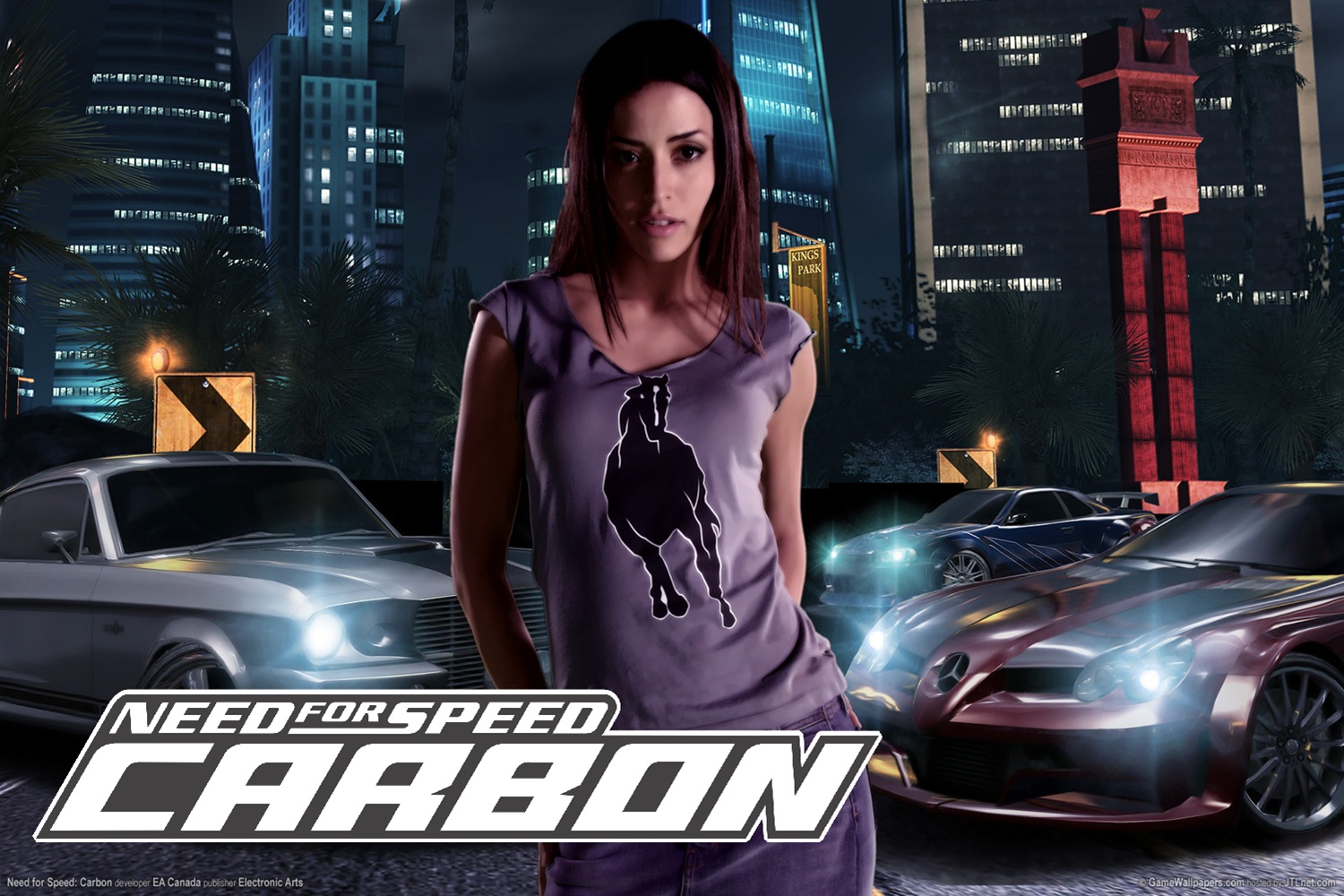
Need for Speed: Carbon takes the high-speed arcade racing of Most Wanted and moves the action into a darker, more personal battle for control of Palmont City. After escaping Rockport, the player returns to the city they once fled, only to discover that its underground racing scene has been divided among rival crews controlling different neighborhoods. Instead of climbing a ranked Blacklist, progression revolves around taking territory, defeating crew leaders, strengthening your own racing team, and uncovering what really happened during the mysterious race that forced you to leave Palmont in the first place. The result is a street-racing campaign built around rivalry, territory, and dangerous mountain roads.
Released in 2006, Carbon expands the familiar Need for Speed formula with crew members who can actively help during races, three distinct vehicle classes, the extensive AutoSculpt customization system, and the unforgettable Canyon Duel format. Tuner cars emphasize handling, Muscle cars deliver explosive acceleration, and Exotic cars combine high speed with refined performance, allowing players to build a garage around their preferred driving style. Palmont City's nighttime streets provide the urban racing foundation, while steep canyon roads introduce a much more dangerous style of competition where there are no barriers protecting careless drivers from the cliff edge. Every conquered district brings the player closer to Darius, the racer who holds both the city's most valuable territory and the answers to the past.
Now playable online through Lemon Web Games, Need for Speed: Carbon brings Palmont City's territory wars, crew-based racing, Canyon Duels, drift events, AutoSculpt customization, and extensive garage progression directly into the web browser. Players can choose between Tuner, Muscle, and Exotic cars, recruit specialized wingmen, defeat rival crews, take over neighborhoods, and eventually confront Darius for control of the city. The browser-based experience provides a convenient way to revisit one of the most distinctive entries from Need for Speed's mid-2000s era. For players who enjoyed Most Wanted but wanted darker nighttime racing, deeper customization, and high-risk mountain battles, Carbon remains a fascinating continuation.
The Story Continues After Most Wanted
Carbon directly follows the events of Need for Speed: Most Wanted. After reclaiming the BMW M3 GTR from Razor and escaping the massive Rockport police pursuit, the player eventually returns to Palmont City, a place connected to an unresolved chapter of their past. The return does not go smoothly, and the famous BMW is quickly removed from the picture after the opening canyon sequence. Once again, the player needs to rebuild.
Palmont is not simply another city waiting to be explored. The underground racing scene is already divided between powerful crews that control different sections of the map. Returning means entering an existing conflict where reputation, territory, and old grudges matter. The protagonist may have conquered Rockport, but Palmont does not automatically recognize that achievement.
The story gradually reveals why the player left Palmont years earlier and what really happened during a major race involving a large amount of money. Characters such as Nikki and Darius are tied directly to those events. What initially appears to be a straightforward territorial takeover eventually becomes a much more personal confrontation.
Palmont City Replaces Rockport With a Nighttime Racing World
Where Most Wanted presented Rockport largely under daylight and a distinctive yellow-green atmosphere, Carbon returns the series to nighttime racing. Palmont glows with streetlights, neon signs, industrial districts, urban highways, residential areas, and winding roads connecting different territories. The visual identity feels much closer to Underground while retaining the open-world structure developed in Most Wanted.
The city is divided into separate regions, each controlled by a rival crew. Winning races gradually weakens that control and allows the player to claim more territory. This gives the map a strategic quality beyond simply providing roads between events. Every district represents something to conquer.
Driving through Palmont also creates a clear contrast between urban racing and the nearby canyon sections. The city provides wider streets and structured race routes, while canyon roads are narrower, darker, and considerably more dangerous. Carbon constantly shifts between these two environments.
Territory Control Replaces the Blacklist
The Blacklist was the central progression system in Most Wanted, but Carbon takes a very different approach. Instead of defeating 15 ranked racers one by one, the player competes against rival crews for control of Palmont's neighborhoods. Winning events inside enemy territory gradually captures sections of the map. Once enough territory has been taken, the crew boss becomes available.
This system makes progression feel geographical. The player can actually see their influence spreading across Palmont as additional districts change ownership. Races therefore contribute toward something visible beyond money or reputation. The city slowly becomes yours.
Territory control also allows more flexibility than a strict numbered ranking. Several events may be available at once, allowing the player to choose which parts of a rival's area to attack first. The campaign still has a clear structure, but the route through individual races can feel less linear.
Four Major Crews Dominate Palmont
Palmont's racing scene revolves around several major crews, each associated with a particular district, visual identity, and preferred car style. Bushido represents the Tuner scene and is led by Kenji, while 21st Street focuses heavily on Muscle cars under Angie. TFK specializes in Exotic cars and is led by Wolf. Above them all sits Darius and Stacked Deck.
These crews are more than names on a map. Their vehicle choices and racing styles reinforce the differences between Carbon's three main car classes. Facing each group gradually exposes the player to different kinds of performance. A car that feels comfortable against one crew may behave very differently against another.
Defeating the first three major leaders eventually opens the path toward Silverton and Stacked Deck. At that stage, the campaign becomes more difficult because the player is no longer dealing with relatively specialized crews. Darius controls the strongest territory and commands some of Palmont's fastest racers.
Kenji and Bushido Represent the Tuner Scene
Kenji leads Bushido, a crew closely associated with Tuner cars. These vehicles emphasize responsive handling, controlled cornering, and strong performance on technical routes. Players who prefer precision often feel immediately comfortable with this class. Tuner cars are especially enjoyable on courses filled with repeated direction changes.
Kenji's Mazda RX-7 becomes one of the more recognizable boss vehicles in Carbon. His crew provides an early demonstration of how important handling can become when races leave the wide highways and move onto more complicated streets. Raw acceleration alone does not guarantee victory.
Defeating Kenji also reinforces the territorial structure of the campaign. Once Bushido loses control, the player gains another significant section of Palmont. Every crew boss represents both a personal victory and a geographical expansion.
Angie and 21st Street Bring Muscle-Car Power
Angie leads 21st Street and represents the Muscle-car side of Carbon's vehicle system. Muscle cars are built around tremendous acceleration and strong straight-line performance, making them extremely effective when races contain long sections where horsepower can dominate. The sensation of launching from low speed is one of the defining pleasures of the class.
That power comes with a trade-off. Muscle cars generally demand more attention in corners, especially when the rear begins stepping outward under acceleration. Players who enjoy balancing throttle and steering can turn this behaviour into an advantage. Others may find the cars more difficult than the predictable handling of Tuners.
Angie's Dodge Charger R/T perfectly suits her crew's personality. It looks aggressive, sounds powerful, and feels dramatically different from the machines used by Bushido. Carbon makes the differences between racing cultures visible through the vehicles themselves.
Wolf and TFK Represent the Exotic Class
Wolf leads TFK, the crew associated with Exotic vehicles. Exotics combine high speed, refined handling, and strong performance at the upper end of the car roster. These vehicles often feel more balanced than the extremes represented by Tuners and Muscle cars. They become especially effective once races begin demanding both speed and stability.
Wolf's Aston Martin DB9 reflects the polished personality of TFK. Compared with the raw aggression of 21st Street or the technical focus of Bushido, the crew presents a more expensive and elite image. Their cars look like high-end performance machines rather than heavily modified street racers.
Racing against TFK also demonstrates how Carbon gradually increases vehicle performance. The campaign begins with relatively modest machinery but steadily progresses toward serious sports cars and exotics. The speed of the entire game rises alongside the player's reputation.
Darius Controls the Final Territory
Darius is the central antagonist and the most important figure connected to the protagonist's past in Palmont. He presents himself as someone who understands exactly what happened years earlier, yet his explanations are carefully controlled. As the story develops, the player gradually realizes that Darius has been manipulating events for his own benefit. The conflict becomes far more personal than a simple territorial rivalry.
His crew, Stacked Deck, controls Silverton and represents the strongest opposition in the city. By the time the player reaches this area, opponents are faster, race routes are more demanding, and the margin for mistakes is significantly smaller. Everything learned from earlier crews becomes relevant.
Darius ultimately becomes the final obstacle between the player and complete control of Palmont. Defeating him is not merely about winning another territory. It resolves the mystery that forced the protagonist out of the city and closes the larger story connecting Carbon's campaign.
Nikki Becomes One of the Most Important Allies
Nikki is introduced as someone closely connected to both the player and Darius. Her history with the protagonist reaches back to the night that originally caused everything to fall apart. At first, she does not fully trust the returning racer because she believes a version of events that places responsibility elsewhere. That tension gives the story an emotional layer beyond simple competition.
As more information becomes available, Nikki begins questioning what she was told. Her relationship with Darius changes as his manipulation becomes clearer. She eventually becomes one of the player's strongest allies. This shift gives the campaign a sense of personal progression alongside the territorial takeover.
Nikki also represents the crew system directly. She is not simply present during cutscenes; she becomes part of the player's racing operation. Carbon repeatedly connects its characters to gameplay systems rather than keeping them completely separate.
Cross Returns With a New Reason to Chase You
Sergeant Cross from Most Wanted also returns in Carbon. The player may have escaped Rockport, but Cross has not forgotten the driver who caused enormous destruction and humiliation during the previous game. His appearance immediately connects Carbon to the larger story. The past is still following the protagonist.
Cross operates differently in Palmont than he did while representing the Rockport Police Department. His role shifts, but his obsession with capturing the player remains recognizable. His presence reinforces the sense that the protagonist did not simply disappear after Most Wanted.
For returning players, seeing Cross again provides one of the strongest links between the two games. Carbon may change the setting and progression structure, but the consequences of Rockport are still present. The sequel feels connected rather than completely independent.
Crew Members Change How Certain Races Work
One of Carbon's biggest new ideas is the ability to race with crew members who provide specialized assistance. Instead of handling every event completely alone, the player can recruit wingmen and choose which one should accompany them when the event supports crew racing. Each specialist belongs to one of three main roles: Blocker, Scout, or Drafter.
These abilities can dramatically influence a race. A good Blocker can remove an opponent who would otherwise remain close to the player, while a Scout may reveal routes the player had not noticed before. Drafters provide a completely different advantage by helping build speed.
Crew abilities are not automatic victories. The player still needs to activate them appropriately and drive well. Their real value comes from creating opportunities that would otherwise be unavailable.
Blockers Turn Rivals Into Targets
A Blocker can be instructed to interfere directly with an opposing racer. Once activated, the crew member moves toward the selected rival and attempts to knock them out of a strong racing position. When successful, this can create a valuable gap between the player and one of the strongest opponents. It is one of the most aggressive crew abilities.
The timing of the command matters. Activating a Blocker when the crew member is badly positioned may accomplish very little. Waiting until an opponent is close enough can produce a much more effective attack. Crew management therefore becomes part of race awareness.
Blockers fit especially well with Muscle-car culture because the ability feels physical and confrontational. The player is not simply receiving a passive bonus. Another car is actively entering the fight on their behalf.
Scouts Reveal Useful Routes
Scouts help identify shortcuts around the course, making them particularly useful on unfamiliar events. When activated, the crew member can show alternative paths that may reduce distance or avoid difficult sections. This turns local track knowledge into an ability. The player learns the course while racing.
The value of a Scout often continues after the event ends. Once a shortcut has been discovered, the player may remember and use it during future races even without the crew member. The ability therefore teaches as much as it assists. Knowledge becomes permanent even when the bonus is temporary.
Scouts are especially useful during the early stages of exploring Palmont. The city contains many alternative routes that are not always immediately obvious. Discovering them can completely change how a race is approached.
Drafters Provide Extra Speed
Drafters create a slipstream that the player can follow to build additional speed. Staying behind the crew member allows acceleration beyond what might normally be possible, making the ability useful on long straights or when trying to catch distant opponents. At the right moment, the player can move out and use the accumulated speed to overtake. The mechanic encourages coordinated racing.
This ability requires more precise positioning than simply pressing a button. The player needs to remain behind the Drafter long enough to benefit. Traffic, corners, or competing racers can disrupt the formation. Good timing determines whether the advantage becomes meaningful.
Drafters are especially effective when combined with cars already capable of high top speeds. On long routes, the additional momentum can create a substantial lead. They provide the most cooperative-feeling crew mechanic.
Crew Members Have Their Own Personalities
Wingmen are not interchangeable icons. Characters such as Neville, Sal, Colin, and Nikki have individual personalities and roles within the player's crew. They appear in dialogue and contribute to the campaign's social atmosphere. This helps make the crew system feel connected to the story rather than added purely as a gameplay mechanic.
Neville, for example, brings an enthusiastic and somewhat inexperienced personality to the team. Other members feel more confident or specialized. The crew gradually becomes a small group supporting the player's takeover of Palmont. This is very different from the largely solitary climb through Most Wanted's Blacklist.
The system also reinforces Carbon's central theme. The game is not only about becoming the fastest individual racer. It is about building a crew capable of challenging the organizations already controlling the city.
Three Car Classes Create Distinct Driving Styles
Carbon divides much of its vehicle roster into three main categories: Tuner, Muscle, and Exotic. This classification is more than cosmetic because the cars behave noticeably differently. Choosing a class can change how the entire career feels. Players are encouraged to experiment rather than assuming every fast vehicle handles the same way.
Tuners generally favor responsive handling and technical control. Muscle cars deliver tremendous acceleration but can become more difficult during aggressive cornering. Exotics offer high speed and polished performance, often making them powerful all-round options later in the campaign.
The three-class structure also gives rival crews stronger identities. Kenji, Angie, and Wolf do not simply drive different brands. They represent different philosophies of speed. Carbon turns car culture into part of its progression system.
Tuner Cars Reward Precision
Tuner vehicles often feel at home on technical street courses where repeated corners demand quick steering changes. They tend to provide more predictable handling and can maintain speed through complex routes when driven cleanly. Players familiar with Underground's tuner-focused racing may naturally prefer this class. The cars feel responsive.
This makes Tuners particularly useful for players who value cornering confidence over brute acceleration. A well-driven Tuner can maintain momentum through sections where heavier cars need to slow down. The advantage becomes more noticeable on narrow routes. Precision can compensate for lower straight-line power.
Visual customization also fits the Tuner class particularly well. Body kits, spoilers, wheels, vinyls, and AutoSculpt parts can transform ordinary-looking vehicles into aggressive street machines. The class retains much of the customization culture associated with earlier Need for Speed games.
Muscle Cars Deliver Brutal Acceleration
Muscle cars feel dramatically different from Tuners. Their strongest characteristic is often immediate acceleration, allowing them to launch forward with tremendous force. On races containing long straights or repeated low-speed exits, that power can be extremely useful. Few things in Carbon feel quite like accelerating hard out of a corner in a properly upgraded Muscle car.
The trade-off comes during handling. These vehicles can become more difficult to control when too much power reaches the rear wheels during a turn. Players need to be comfortable correcting slides and managing throttle. Aggressive inputs can quickly send the car wider than intended.
For drivers who enjoy controlling that instability, Muscle cars are extremely entertaining. Their personality is built around power rather than perfect refinement. Carbon makes that difference obvious.
Exotics Combine Speed With Stability
Exotic cars occupy the high-performance end of the roster and often provide strong top speed alongside relatively stable handling. Vehicles from manufacturers associated with supercars and premium sports machines become increasingly common as the campaign advances. These cars feel appropriate once the player begins challenging Palmont's wealthiest crews. The entire game starts moving faster.
Exotics can be particularly effective on routes that mix long straights with moderate cornering. They may not feel as nimble as the best Tuners or as explosive as some Muscle cars, but their overall capability makes them formidable. Many players naturally gravitate toward them during the later career.
Their visual design also fits the polished identity of crews such as TFK and Stacked Deck. Carbon uses the vehicle roster to communicate status. More expensive territory tends to contain more expensive machinery.
AutoSculpt Changes Vehicle Customization
AutoSculpt is one of Carbon's signature features. Instead of selecting only fixed aftermarket parts, players can adjust the shape and proportions of compatible components through sliders. Body kits, spoilers, wheels, hoods, and other parts can be reshaped to create a more personalized vehicle. The system gives visual customization a more hands-on feeling.
This was especially impressive in 2006 because it allowed players to create variations that were not simply identical preset parts. Two players could begin with the same basic component and produce noticeably different results. Width, depth, shape, and other proportions could be modified within the available range. The car became more individual.
AutoSculpt also fits Carbon's emphasis on crew identity. Building a recognizable personal style feels appropriate in a game about controlling territory. Winning matters, but appearance still carries significance within Palmont's underground scene.
Vinyls and Paint Expand the Personalization
Beyond AutoSculpt, Carbon retains familiar visual customization options. Paint colors, vinyls, wheel designs, window tint, and other details allow players to create highly distinctive cars. Layering visual elements can transform an ordinary vehicle into something that clearly belongs within a particular racing culture. Customization remains part of the fun rather than a secondary menu.
Players can choose between restrained builds and far more dramatic designs. A clean Exotic might use relatively subtle modifications, while a Tuner can become covered in aggressive graphics and bodywork. There is no requirement that every car follow one aesthetic. The garage can contain several completely different styles.
This creative freedom gives the career another layer of progression. New parts do not only make the car faster. They allow the garage to evolve visually as the player's territory expands.
Performance Upgrades Remain Essential
Visual customization may attract attention, but performance upgrades determine whether a car can keep competing as the campaign becomes more difficult. Engine, transmission, suspension, nitrous, tires, brakes, and forced-induction improvements can significantly change how a vehicle performs. Acceleration, top speed, braking, and handling all improve as stronger parts become available. Upgrading is essential once rivals become faster.
Carbon also allows tuning within certain performance categories. Players can adjust settings toward different priorities rather than simply accepting one fixed configuration. This allows vehicles to be shaped around specific preferences. Someone who struggles with oversteer can approach tuning differently from someone chasing maximum speed.
The system encourages experimentation. A car that initially feels uncomfortable can become much more suitable after the right combination of upgrades and tuning. Garage management remains a significant part of the career.
Canyon Duels Are Carbon's Defining Challenge
The Canyon Duel is arguably the mechanic most closely associated with Need for Speed: Carbon. Two racers compete on a narrow mountain road beside steep cliffs, but the event is not a conventional point-to-point race. Instead, it uses a two-stage scoring system based on following and escaping. The structure creates enormous tension.
During the first run, the player follows the opponent and attempts to remain as close as possible without falling behind or leaving the road. The closer the player stays, the more points can be accumulated. During the second run, positions reverse and the player needs to preserve that advantage while trying to pull away. The opponent's proximity drains the score.
The duel can also end dramatically if one racer overtakes and maintains the advantage under the right conditions. Falling from the canyon, however, ends everything immediately. There are few racing events where one small steering mistake feels so dangerous.
Canyon Roads Punish Careless Driving
The canyon routes are much narrower than ordinary Palmont streets and often contain sharp turns with little protection from the cliff edge. Players cannot rely entirely on wall riding or reckless collisions. A badly judged corner can send the car directly into open space. Precision becomes essential.
This changes how powerful cars need to be driven. A vehicle that dominates wide urban roads may become difficult to control in the canyon. Braking points matter more, and excessive nitrous can create danger rather than advantage. Speed needs to be managed.
The darkness of the canyon sections adds additional atmosphere. Headlights illuminate the road while the surrounding landscape disappears into blackness. The environment constantly reminds players that leaving the road is not an option.
Following Closely Requires Nerve
During the pursuit phase of a Canyon Duel, the player wants to remain close to the lead car to build or preserve points. Staying too far behind produces a weak score, but following too aggressively increases the risk of collision or missing a corner. The ideal distance is uncomfortable by design. Players are encouraged to push closer than feels completely safe.
Knowing the route helps enormously. A player familiar with the next corner can remain closer without panicking. Someone entering the canyon for the first time may need to sacrifice some points for safety. Knowledge translates directly into confidence.
This creates a form of racing pressure very different from ordinary position-based events. Second place can actually be the correct position during part of the duel. What matters is how effectively the player manages the gap.
Leading the Second Run Creates a Different Kind of Pressure
When the player takes the lead during the second stage, the objective reverses. Instead of following closely, the goal is to create as much distance as possible while protecting the points earned earlier. Every strong corner exit can increase the gap. Every mistake allows the opponent to begin draining the score.
This phase can become extremely stressful when the earlier advantage is small. The player may hear the opponent approaching but cannot afford to watch them directly. Attention needs to remain on the canyon road ahead. One bad corner can destroy the entire duel.
The two-stage format makes Canyon Duels feel more strategic than normal races. Players need both pursuit skill and defensive leading ability. Victory requires consistency across two very different situations.
Canyon Drifts Turn Mountain Roads Into Score Challenges
Carbon also brings drifting into the canyon environment. Canyon Drift events remove much of the direct opponent pressure and instead challenge the player to maintain long controlled slides while travelling through narrow mountain roads. The closer the car drifts toward barriers and edges without crashing, the greater the potential score. Risk and style become closely connected.
The canyon environment makes these events considerably more intense than ordinary closed-course drifting. There is less room for mistakes and the road constantly changes direction. Players need to transition smoothly between corners. One broken combo can cost a large amount of points.
Different vehicle classes behave very differently during drift events. Some cars are naturally easier to slide, while others require more deliberate setup. Choosing and tuning the right vehicle can dramatically change the experience.
Traditional Drift Events Return
Urban drift competitions also return, continuing one of the most popular event types from the Underground games. Players accumulate points by maintaining slides, linking corners, and building multipliers. Speed, angle, and duration influence the score. The objective is style and control rather than simply reaching the finish line first.
Carbon's drift physics are deliberately exaggerated compared with normal racing. Cars can enter long slides and maintain them through extended sequences. This makes the mode approachable while still rewarding skilled control. The best runs connect several corners without breaking the drift.
The return of dedicated drifting helps Carbon preserve its underground-racing identity. Territory battles and Canyon Duels may be new, but the game still understands the appeal of stylish car control. Drift events remain an important part of the overall package.
Circuit Races Reward Consistency
Circuit races follow multiple laps around a defined route, giving players several opportunities to learn the corners and shortcuts. A poor opening lap can sometimes be recovered if later laps are cleaner. This makes consistency more important than one perfect moment. Familiarity gradually becomes an advantage.
Crew abilities can also have a strong effect during certain Circuit races. A Blocker can disrupt a leading rival, while a Drafter may help create additional speed on a long straight. The player's race strategy changes according to which wingman is present. Carbon's new mechanics integrate naturally with familiar event types.
Traffic and opponents still make each lap slightly unpredictable. Knowing the route does not guarantee a completely clean race. The player needs to adapt continuously.
Sprint Races Showcase Palmont's Roads
Sprint events send racers from one location to another without repeating laps. These races can travel through several parts of a district and often combine fast straights with technical urban sections. Because the route does not repeat, players have fewer opportunities to correct early mistakes through familiarity. Awareness becomes more important.
Shortcuts can provide major advantages during Sprint races. A Scout may reveal an alternative path, but experienced players can eventually memorize these routes independently. Track knowledge gradually transforms the event from exploration into optimization. Clean execution produces increasingly faster runs.
Sprint events also make Palmont feel larger. Instead of circling one area repeatedly, the race becomes a journey through the city. The environment changes continuously.
Speedtrap Events Reward High-Speed Consistency
Speedtrap races measure how quickly each competitor passes through specific checkpoints. Finishing position still matters, but cumulative speed at the traps becomes central to the result. Players need to carry momentum through measured areas rather than simply recover after them. One slow trap can undermine an otherwise strong race.
Nitrous becomes particularly valuable when approaching important measurement points. Saving a burst for the correct moment can significantly increase recorded speed. However, using too much may create difficulty at the next corner. Preparation is essential.
Different car classes approach these events differently. Muscle cars can accelerate strongly toward traps, while Exotics can maintain extremely high speed. Tuners may compensate through cleaner corner exits. Carbon allows several approaches to the same challenge.
Checkpoint Events Turn the Clock Into the Rival
Checkpoint races ask the player to reach successive points before time expires. Each successful checkpoint extends the available time, creating a continuous battle against the clock. Traffic, crashes, and poor cornering all consume valuable seconds. There may be no rival driver to blame.
These events reward clean and efficient driving. A single major collision can create problems several checkpoints later because the lost time never fully disappears. Maintaining momentum becomes more important than risky overtaking. The road itself becomes the challenge.
Checkpoint races also work well for testing new cars. Without several opponents creating chaos, players can focus more directly on handling and acceleration. A vehicle's strengths and weaknesses become easier to feel.
Race Wars Create Large-Scale Competition
Race Wars events bring larger groups of cars together, creating a different atmosphere from the more focused crew races and Canyon Duels. The road becomes significantly busier as several high-performance vehicles fight for position. Traffic and rival contact can create unpredictable moments. The challenge feels more chaotic.
These events become especially exciting later in the campaign when the player has access to faster cars. Several powerful machines accelerating together through Palmont can produce some of Carbon's most energetic racing. Positioning becomes important because getting trapped behind several opponents can cost valuable time.
Race Wars help provide variety between more serious story challenges. They emphasize spectacle and competition rather than territorial drama. The larger field shows how active Palmont's racing culture has become.
Police Pursuits Remain Part of the World
Carbon retains police pursuits from Most Wanted, although they are no longer the central progression mechanic. Patrol cars can still interfere with free-roam driving and create high-speed chases through Palmont. Pursuit mechanics provide additional danger outside the organized crew battles. Cross's return makes the law-enforcement connection especially appropriate.
The reduced emphasis changes how police feel. In Most Wanted, bounty and pursuit milestones were mandatory parts of climbing the Blacklist. Carbon focuses more heavily on territory and crew competition. Police become another pressure surrounding the underground scene rather than the primary structure.
For players who enjoyed Most Wanted's chases, their continued presence helps preserve continuity. Palmont's street racers may be fighting one another, but law enforcement has not disappeared. Illegal racing still has consequences.
Nighttime Racing Changes the Mood Completely
Carbon's decision to return to nighttime racing gives it a very different atmosphere from Most Wanted. Streetlights, glowing buildings, reflective roads, illuminated signs, and deep shadows create a darker visual identity. The city feels more secretive and underground. Races appear to belong to a hidden community rather than a public daytime spectacle.
The canyon becomes especially atmospheric at night. Most of the surrounding world disappears into darkness, leaving the road and headlights as the main visual focus. This increases tension because the player becomes intensely aware of the next corner. The environment feels isolated.
The nighttime setting also complements customization. Bright paint, vinyl graphics, and modified bodywork stand out strongly beneath artificial lighting. Palmont becomes a showcase for the cars as much as the races.
The Soundtrack Supports Different Racing Cultures
Carbon's soundtrack reflects the division between Tuner, Muscle, and Exotic culture. Hip-hop, rock, electronic music, and other styles help establish different moods throughout the game. The music feels connected to the racing scene rather than functioning as generic background noise. Vehicle identity and music contribute to the same underground atmosphere.
Canyon sequences also use more dramatic audio to increase tension. These events feel less like ordinary street races and more like personal showdowns. The shift in music helps communicate that difference immediately. The game knows when to change tone.
For returning fans, the soundtrack is another strong piece of mid-2000s Need for Speed nostalgia. Carbon has a distinct sound just as Most Wanted does. Music helps separate the two sequels despite their shared gameplay foundation.
Vehicle Sound Gives Each Class Personality
Muscle cars need to sound powerful, Exotics need to communicate high-performance engineering, and Tuners need to feel responsive and aggressive. Carbon's vehicle audio contributes significantly to these differences. Engine notes change as cars accelerate through the gears, while nitrous and tire sounds reinforce speed. The garage feels varied even before considering handling.
Muscle vehicles are especially satisfying because their deep engine notes match the brutal acceleration. High-end Exotics sound sharper and more refined. Tuners bring their own mechanical character. Audio helps players feel the differences between classes.
This also makes upgrading more satisfying. A stronger car does not simply move faster numerically. It feels more serious while being driven. Performance progression becomes sensory.
Traffic Makes Every Race Less Predictable
Civilian vehicles remain active on many Palmont roads, ensuring that familiar routes never become completely controlled. A lane that was open during one attempt may be blocked during another. At high speed, even a small traffic car can completely disrupt the player's racing line. Awareness remains essential.
Traffic can sometimes be used strategically. A rival may collide with a civilian vehicle, providing an easy opportunity to pass. More often, however, traffic is simply another hazard both sides need to avoid. The best players read several cars ahead rather than staring only at the immediate rival.
This unpredictability works particularly well at night because headlights reveal upcoming vehicles before their exact movement is obvious. Palmont's streets always feel active. Racing never becomes completely sterile.
Shortcuts Reward Familiarity With the City
Palmont contains numerous alternate routes that can reduce distance or avoid difficult sections. Scouts help reveal some of these, but experienced players gradually memorize them. The city becomes easier to navigate with every race. Knowledge turns into speed.
Not every shortcut is automatically safer. Some routes are narrower or contain obstacles that punish poor entry angles. Choosing whether to use one depends on confidence. A familiar main road may occasionally be better than a risky shortcut.
This creates another form of progression independent of vehicles. Even with the same car, a player who knows Palmont thoroughly can be substantially faster than someone seeing the route for the first time. Experience matters.
Boss Races Feel Like Territory Finals
Defeating enough events inside a crew's territory eventually leads to a confrontation with its leader. These races feel different from ordinary events because they represent control of an entire district. The boss's car, personality, and crew identity have been visible throughout the surrounding campaign. The confrontation carries weight.
A boss challenge can involve both a conventional race and a Canyon Duel, forcing the player to prove mastery in very different environments. Winning on the streets is not enough if the canyon section is lost. The complete challenge tests versatility.
Defeating a boss changes the city map, reinforces the player's growing influence, and brings the campaign closer to Darius. The progression remains easy to understand. Take territory, defeat the leader, move forward.
Canyon Boss Battles Are the Most Memorable
The Canyon Duel format becomes especially effective during boss encounters because there is already a personal rivalry established. Following Kenji, Angie, Wolf, or Darius down a dangerous mountain road feels significantly more intense than a normal street race. Every corner carries the possibility of ending the challenge instantly. The opponent remains constantly visible.
The two-stage structure also creates dramatic reversals. A player can perform brilliantly while following but lose the advantage during the leading run. Conversely, a mediocre first stage can sometimes be recovered through an exceptional escape. Nothing feels secure until the duel is finished.
These battles are the moments many players remember most strongly from Carbon. The cliffs, darkness, scoring system, and rival cars combine into something uniquely associated with this game. Need for Speed has rarely returned to anything quite the same.
Darius Provides the Ultimate Canyon Test
The final confrontation with Darius represents the culmination of everything the player has learned. By this point, the campaign has introduced all three major car styles, crew mechanics, territorial racing, and increasingly difficult canyon roads. Darius is not supposed to feel like another ordinary rival. He represents Palmont's strongest driver and the person at the center of the protagonist's unresolved history.
His vehicle and driving ability make the final challenge demanding. Clean cornering becomes essential because the player cannot rely on random aggression. The canyon demands controlled speed. Every mistake becomes expensive.
Winning finally resolves both the racing conflict and the story behind the player's original departure from Palmont. The city has been conquered, the truth has been exposed, and Darius no longer controls the narrative. The conclusion feels personal as well as competitive.
Carbon's Story Is More Personal Than It First Appears
Territory control may appear to be the main story, but the deeper narrative revolves around trust and manipulation. Nikki believes one version of the past, Darius promotes another, and the player gradually uncovers what actually happened. The earlier race that caused the protagonist to flee becomes more important as the campaign progresses. Palmont's present conflict is tied directly to that history.
This gives the game a different tone from Most Wanted. Razor's sabotage created a simple revenge story, while Carbon uses a mystery from the past to connect its characters. The racing remains the main attraction, but the campaign provides additional motivation. Players are not simply taking territory because the map says so.
Darius ultimately becomes dangerous because he controls both the city and the story surrounding what happened. Defeating him therefore means reclaiming more than territory. It means reclaiming the truth.
Carbon Evolves Ideas From Underground and Most Wanted
Need for Speed: Carbon feels like a mixture of several earlier games in the series. The nighttime urban racing and deep customization recall Underground, while the open-world structure and police connections clearly build upon Most Wanted. Crew mechanics and Canyon Duels then provide new systems unique to Carbon. The result feels familiar without simply repeating its predecessor.
AutoSculpt pushes customization further in a new direction, while territory control replaces the Blacklist. Crew abilities add tactical cooperation without turning the game into a team-management simulation. The design continually modifies familiar systems.
This combination explains why Carbon occupies such an interesting position in the series. It belongs to the same era as Underground and Most Wanted but has a strong identity of its own. The canyon alone is enough to make it immediately recognizable.
The Game Is Shorter but More Focused Than Some Earlier Entries
Carbon's career can feel more compact than the enormous progression of some previous Need for Speed games. However, the shorter structure also keeps the campaign moving quickly. Territory changes regularly, new cars arrive frequently, and boss encounters are never too far away. There is little time for the progression to become stagnant.
The campaign also encourages replaying with different vehicle classes. Choosing a Tuner at the beginning creates a different driving experience from starting with a Muscle car. A later playthrough can emphasize different crew members and customization choices. The underlying territory structure remains familiar while the driving changes.
For players who prefer a focused campaign rather than an extremely long grind, this pacing can be appealing. Carbon gets to its signature ideas quickly. Canyon racing begins mattering almost immediately.
The Garage Encourages Experimentation
Because the three vehicle classes behave so differently, there is good reason to keep more than one car available. A Muscle car may dominate certain fast routes but feel uncomfortable during technical canyon sections. A Tuner may provide much greater confidence through corners. An Exotic can offer another balance entirely.
Building several cars also allows players to explore AutoSculpt and visual customization more creatively. One vehicle can be designed aggressively while another remains relatively clean. The garage becomes a collection rather than a single permanent choice.
Performance tuning adds another layer. A car that initially feels wrong may become excellent once adjusted properly. Experimentation is part of the experience.
Carbon's Handling Encourages Controlled Aggression
The driving model remains arcade-oriented, making cars responsive enough for high-speed street racing without requiring simulation-level precision. However, the three classes introduce meaningful differences in behaviour. Players cannot always use exactly the same steering style across every car. Carbon asks for adaptation.
Muscle cars reward confidence but punish excessive throttle through corners. Tuners favor controlled lines and direction changes. Exotics encourage maintaining high speed. Learning these personalities keeps the driving interesting.
The canyon magnifies every difference. A handling weakness that barely matters on a wide city road can become critical when the next corner sits beside a cliff. Choosing a car that matches the player's comfort becomes important.
Why Need for Speed: Carbon Still Stands Out
Carbon remains memorable because no other Need for Speed game combines exactly the same systems in the same way. Territory control, crew abilities, AutoSculpt, three vehicle classes, nighttime Palmont racing, and Canyon Duels create an identity that immediately separates it from Most Wanted. The game feels like a continuation without becoming a duplicate. It takes recognizable mechanics somewhere new.
The canyon format remains the strongest example. Racing beside a cliff while trying to maintain distance from a rival creates tension that ordinary position-based events cannot reproduce. The two-stage scoring system turns following and leading into completely different challenges. Victory feels more personal.
The customization system has also aged interestingly because AutoSculpt remains unusual even by modern standards. Many newer racing games offer large catalogs of parts, but relatively few allow players to reshape those components directly. Carbon's garage still has a distinctive creative appeal.
Playing Need for Speed: Carbon Online Today
Through Lemon Web Games, Need for Speed: Carbon can now be played directly in your web browser with no downloads or setup required. Features of the web-based version include:
Playing Carbon through a browser provides a convenient way to revisit one of Need for Speed's most distinctive career structures. New players should spend time experimenting with the three car classes rather than assuming the highest performance rating automatically produces the best experience. A vehicle that feels comfortable in the canyon may be far more valuable than one that is only faster on paper. Handling confidence becomes especially important during boss duels.
Crew selection can also make certain events considerably easier. Blockers are useful when a strong opponent needs to be disrupted, Scouts can reveal shortcuts on unfamiliar routes, and Drafters provide additional speed when the course allows enough room to stay in formation. Learn what each specialist contributes and use the ability deliberately rather than activating it immediately. Carbon rewards players who treat crew members as tactical tools.
Who Should Play Need for Speed: Carbon
Need for Speed: Carbon is particularly suitable for players who enjoyed the customization and nighttime atmosphere of Underground but also appreciate the open-world structure introduced in Most Wanted. It combines elements of both while adding its own territory and crew mechanics. The result feels familiar enough to enter immediately but different enough to justify its own identity. Palmont offers a noticeably different atmosphere from Rockport.
It is also an excellent choice for players who enjoy racing games where vehicle personality matters. Switching from a Tuner to a Muscle car can dramatically change how the same road feels, while Exotics provide another interpretation of performance. The canyon makes those differences especially important. Choosing the car becomes part of the challenge.
Play Need for Speed: Carbon Online Now
Need for Speed: Carbon transforms the underground racing scene into a battle for control of Palmont City. Players capture territory, defeat rival crews, recruit specialized wingmen, customize cars through AutoSculpt, and work their way toward Darius while uncovering the truth about the race that originally forced them to leave the city. Tuner, Muscle, and Exotic vehicles provide distinct driving styles, while Circuit, Sprint, Speedtrap, Checkpoint, Drift, Race Wars, and canyon events keep the career varied. Every captured neighborhood brings the player closer to complete control.
Through Lemon Web Games, players can experience Carbon directly in a modern browser and rediscover its unique blend of street racing and mountain-road tension. Crew abilities provide tactical assistance during selected races, while AutoSculpt allows vehicles to become visually distinctive. The real test arrives in the canyon, where narrow roads, steep cliffs, and two-stage boss duels reward controlled driving rather than simple aggression. Few racing games make following another car feel as dangerous as Carbon does.
Final Thoughts
Need for Speed: Carbon remains one of the most distinctive entries from the franchise's classic street-racing era because it refuses to simply recreate Most Wanted. Instead of another Blacklist, it introduces territory warfare. Instead of racing completely alone, it gives players specialized crew members. Instead of relying only on preset body parts, it introduces AutoSculpt. Most importantly, it takes racing away from wide city roads and places some of the game's most important battles on narrow canyon routes where one mistake can end everything.
The division between Tuner, Muscle, and Exotic cars also gives the garage meaningful personality. Each class approaches speed differently, encouraging players to find the style that suits them rather than always choosing the same kind of vehicle. Performance tuning and visual customization allow those choices to become even more personal. Palmont becomes a city where both how you drive and what you drive matter.
Through Lemon Web Games, Need for Speed: Carbon can once again be experienced directly in the browser as a dark, fast, customization-heavy sequel to Most Wanted. Its crew mechanics, territory system, nighttime atmosphere, rival leaders, AutoSculpt customization, and unforgettable Canyon Duels still give it a personality unlike any other Need for Speed title. For players who want to take over an entire city one neighborhood at a time before facing the ultimate battle high above the cliffs, Carbon remains an essential chapter in the series.











Comments 0