


If you've ever tried to coordinate a "same car, different pick-up points" situation with friends, you'll know it usually turns into a group chat negotiation that never ends. Grab is trying to clean that up with its Group Ride feature, which has now rolled out in Malaysia after launching in selected regions back in 2024.
The idea is simple: multiple passengers can share one ride, manage their own stops, and keep track of the trip together, all inside the Grab app.
What Group Ride Actually Does
Group Ride lets one person act as the organiser (the host), while the rest join as members. Instead of everyone booking separate rides or trying to squeeze into one pickup point, each member can set their own pick-up and drop-off within the same booking. The route becomes a multi-stop trip that's coordinated properly, not improvised.
It's available under the Transport section in the Grab app. The host starts by entering the main pick-up and drop-off points and choosing how payment will work.
How To Start A Group Ride
The flow is designed around one person taking the lead.
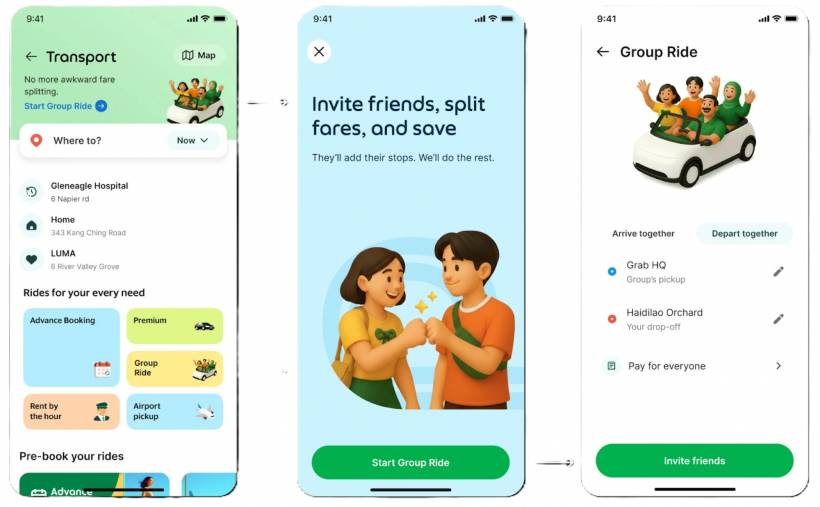
• The host enters the trip details (pick-up, drop-off) and selects the ride type
• The host chooses a payment option
• The host shares an invite link with others to join
• Members join, set their own pick-up and drop-off points, then the host finalises the route and books the ride
The maximum number of passengers depends on the ride type you select, so it won't be unlimited.
Payment Options And What To Expect
Right now, Grab offers two payment approaches:
• Split the fare equally between all passengers
Grab also points out something many people will immediately ask: "Can we split by distance instead?" Not yet, but the company says it's working on adding distance-based splitting in the future.
One important detail for equal splitting: everyone needs a valid cashless payment method linked to their Grab account. That's because the deductions happen automatically, and the system can't do the equal split if someone is trying to pay in a way that isn't supported for auto-charging.
Who Controls The Ride And Who Takes The Risk
Here's where Group Ride becomes very "host responsibility heavy."
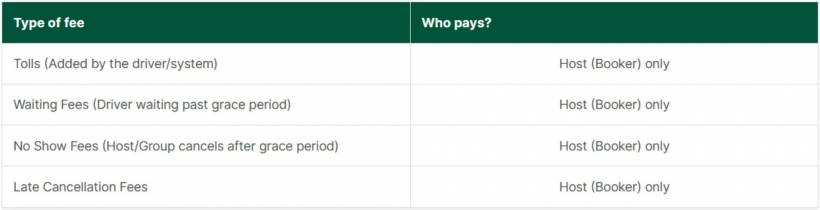
Only the host can cancel the ride. And during the trip, if there are extra charges like tolls or waiting fees, the host is considered responsible for them.
There's also a built-in safety net for Grab, but it affects the host directly: if a member's payment fails at the end of the ride, the host gets charged for that person's portion. Grab says the app will highlight this clearly using a yellow alert in the Group Ride Summary, so it's not hidden. Everyone can see their fares upfront, but the host is still the backstop if someone's payment doesn't go through.
Transparency And Live Updates For Everyone
One of the better parts of this feature is that it keeps everyone on the same page.
Members can see the ride details, the planned route, and their fares in advance. During the trip, everyone gets live updates too, so passengers aren't left guessing whether the driver is arriving, stuck in traffic, or already on the way to another stop.
This matters because group travel gets messy fast when people are relying on screenshots and "where are you now?" messages.
Safety Features Still Apply
Grab says Group Ride doesn't weaken the usual safety setup. Standard features like the Safety Centre and trip tracking remain available, just as they would for a normal booking.
Final Thoughts
Group Ride feels like Grab taking a very real everyday problem and turning it into something that's actually structured. For friends heading to the same event, co-workers commuting together, or families trying to coordinate multiple pick-ups, the feature can reduce the chaos.
That said, the host role comes with real responsibility. If someone's payment fails, the host pays. If the trip picks up extra charges, the host is on the hook. So it's best used with people you trust, at least until distance-based splitting and more flexible billing options arrive.











Comments 0