

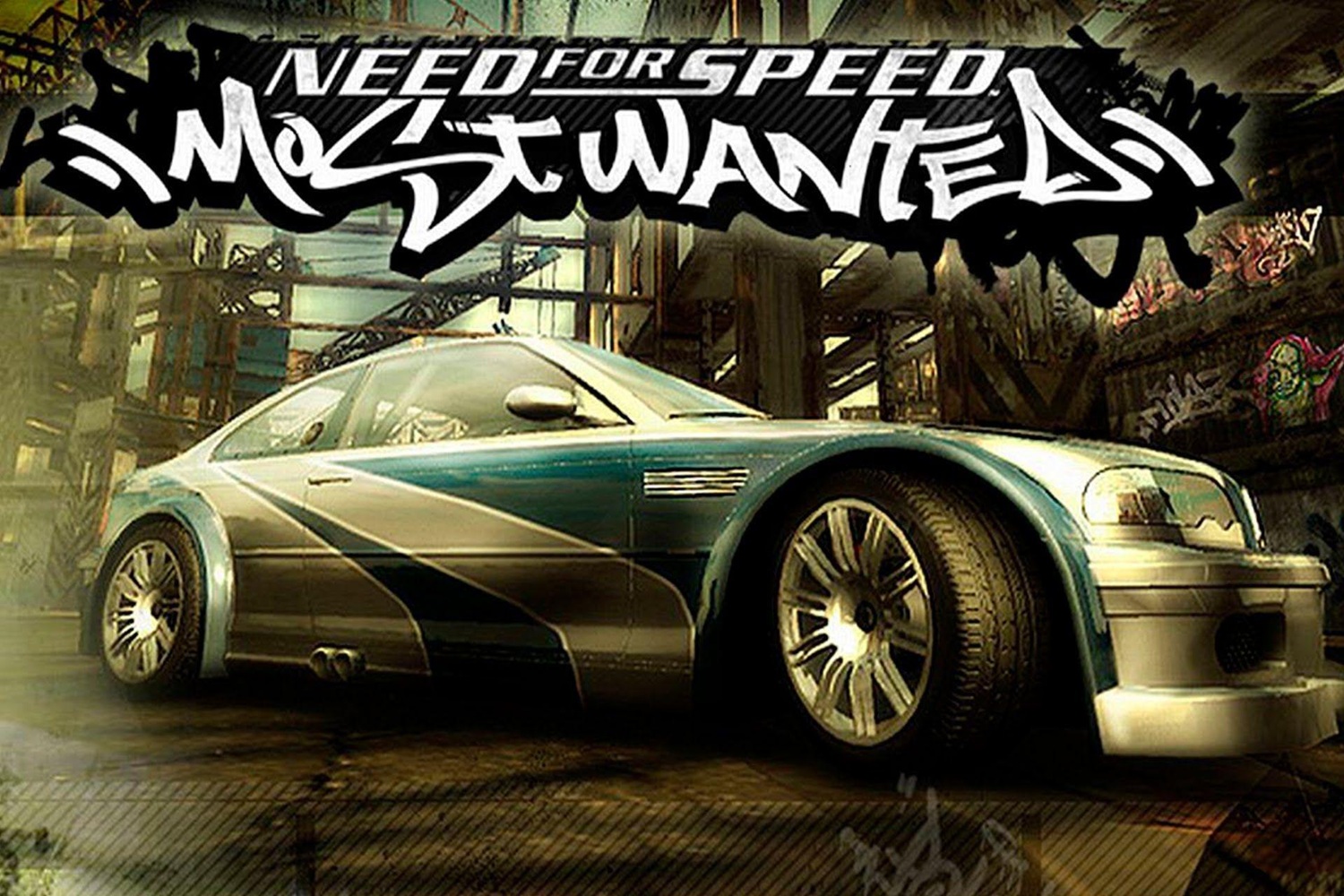
Need for Speed: Most Wanted combines illegal street racing, open-world exploration, vehicle customization, rival progression, and aggressive police pursuits into one of the most memorable arcade racing experiences of the mid-2000s. Released in 2005, the game drops players into Rockport City with a clear objective: rise through a ranked group of elite street racers known as the Blacklist and eventually reclaim the legendary BMW M3 GTR taken by Razor. Every victory brings the player closer to the top, but simply winning races is not enough. Police pursuit milestones and bounty requirements also need to be completed before each Blacklist rival will accept a challenge.
Developed by EA Black Box, Most Wanted blends the customization culture of Need for Speed: Underground with a much stronger focus on police chases and open-road racing. Rockport is divided into interconnected districts filled with highways, industrial areas, city streets, construction zones, tunnels, shortcuts, and Pursuit Breakers that can be used against pursuing police vehicles. Players gradually unlock faster cars, performance upgrades, visual customization, and more difficult Blacklist opponents while police tactics become increasingly aggressive. The combination of progression and pursuit creates a constant feeling that the player is becoming both more successful and more wanted.
Now playable online through Lemon Web Games, Need for Speed: Most Wanted brings Rockport's street races, Blacklist challenges, vehicle upgrades, police pursuits, Speedbreaker moments, Pursuit Breakers, and unforgettable BMW M3 GTR storyline directly into the web browser. Players can work their way from the lower Blacklist ranks toward Razor, build massive bounty totals, escape increasingly dangerous police chases, and customize a garage of performance cars along the way. The browser-based experience offers a convenient way to revisit one of the most celebrated arcade racing games of its generation. Few racing games create the same mixture of speed, rivalry, progression, and escalating pursuit pressure.
The BMW M3 GTR Sets the Entire Story in Motion
The BMW M3 GTR is more than simply the cover car of Need for Speed: Most Wanted. It is the central object around which the entire career is built. At the beginning of the story, the player arrives in Rockport already driving the distinctive blue-and-silver BMW and quickly attracts the attention of the local street-racing community. Razor sees the newcomer as a threat and begins looking for a way to remove that competition.
During the decisive race, the BMW suffers mechanical problems after being sabotaged. Razor wins and takes the car, using it to climb rapidly through the Blacklist until he eventually reaches the number-one position. The player is left without the machine that originally established their reputation. Recovering it becomes the long-term objective connecting the entire campaign.
This setup gives career progression a strong personal motivation. The player is not simply racing for trophies or money. Every Blacklist victory represents another step toward Razor and the stolen BMW. By the time the final confrontation arrives, reclaiming the M3 GTR feels like the conclusion of a long campaign rather than just another unlocked vehicle.
Rockport City Becomes a Giant Racing Playground
Rockport is designed around high-speed driving rather than realistic urban simulation. Wide roads, sweeping highways, industrial routes, tight downtown corners, bridges, tunnels, construction areas, and open intersections provide a variety of environments for both races and police pursuits. Shortcuts appear throughout the road network, rewarding players who explore and remember alternative routes. Knowledge of the city gradually becomes a competitive advantage.
Different districts have their own visual character. Industrial areas provide warehouses, freight yards, and heavy infrastructure, while commercial and residential regions introduce tighter road networks and more traffic. Highway sections allow cars to reach extremely high speeds but can become dangerous when police establish roadblocks ahead. Moving between these environments keeps the world visually and mechanically varied.
Rockport also functions differently depending on whether the player is racing or escaping the police. A narrow alley might be a useful shortcut during a Sprint event, while the same route could become an excellent way to break line of sight during a pursuit. Familiar roads gain new tactical value as the player becomes more experienced. The city itself becomes something to master.
The Blacklist Gives Career Mode a Clear Structure
The Blacklist contains 15 ranked racers, beginning with lower-level competitors and eventually leading to Razor at number one. Each rival has their own vehicle, personality, visual identity, and set of requirements that must be completed before the player can challenge them. Progress therefore has a clear ladder. Every successful challenge moves the player one position closer to the top.
Before racing a Blacklist member, players need to complete a required number of race victories, police milestones, and bounty targets. This prevents the career from becoming a straightforward sequence of race events. Street racing ability needs to be combined with pursuit survival. The player must prove themselves both against rival drivers and against Rockport's police force.
The structure also makes individual rivals memorable. Players know exactly who stands between them and the next rank. Defeating someone feels more meaningful because they have been visible as a target throughout the surrounding progression. The Blacklist creates a strong sense of competitive hierarchy.
Razor Is More Than Just the Final Opponent
Razor establishes himself as the player's main rival almost immediately. His actions are directly responsible for losing the BMW M3 GTR, and his eventual position at the top of the Blacklist turns the entire career into a pursuit of revenge. Unlike a final boss who appears only during the final chapter, Razor influences the player's motivation from the beginning. His presence hangs over every rank climbed.
The fact that Razor is using the player's own BMW makes the rivalry even more personal. Each time the player advances through another Blacklist position, the final objective becomes increasingly visible. The stolen car effectively becomes proof of what Razor took. Reclaiming it requires defeating everyone standing between the player and number one.
By the time the final race arrives, the confrontation has significant narrative weight. The player has spent the entire career rebuilding from nothing. Winning means restoring both reputation and ownership of one of the most iconic cars in racing-game history.
Mia Townsend Guides the Player Through Rockport
Mia Townsend becomes one of the player's most important contacts throughout the career. She introduces the newcomer to Rockport's street-racing scene, provides information about rivals, and helps explain how the Blacklist operates. Her Mazda RX-8 and distinctive presence make her immediately recognizable. She also becomes increasingly important as the story develops.
Mia provides a contrast to the openly hostile Blacklist racers. While characters such as Razor treat the player as competition, she often serves as a source of guidance. The player gradually learns that there is more to her role in Rockport than initially appears. That additional layer gives the career story more personality than a simple sequence of races.
Her involvement also helps connect the street-racing and police elements of the campaign. Most Wanted constantly moves between underground competition and law-enforcement pressure. Mia sits directly within that intersection.
Sergeant Cross Becomes the Face of the Police Pursuit
Sergeant Cross is the police officer most closely associated with the player's growing reputation. From the beginning, he is determined to remove illegal street racers from Rockport and quickly takes a personal interest in the newcomer. His black-and-white Chevrolet Corvette becomes one of the most recognizable police vehicles in the game. Whenever Cross appears, the pursuit suddenly feels more personal.
Cross represents the other side of the player's rise through Rockport. Increasing bounty makes the player more respected among racers but also more valuable to law enforcement. Every successful escape therefore increases the attention directed toward the player's vehicles. Becoming number one means becoming the most wanted driver in the city.
His repeated appearances help connect individual pursuit events into a larger conflict. The police are not simply anonymous obstacles generated by the game engine. Cross gives them a personality. The rivalry with law enforcement develops alongside the rivalry with Razor.
Police Pursuits Are the Heart of Most Wanted
Most Wanted would still be an enjoyable arcade racer without police, but its pursuit system is what gives the game its unique identity. Chases begin relatively simply, with ordinary patrol cars attempting to stop the player. As the pursuit continues and heat rises, stronger units join the chase. Roadblocks, heavier police vehicles, spike strips, and additional tactics gradually make escape more difficult.
The player can fight back indirectly through driving skill and environmental destruction. Sharp turns can cause police cars to overshoot, traffic can create obstacles, and Pursuit Breakers can destroy or disable groups of pursuing units. High-speed highway sections provide room to build distance but may also expose the player to roadblocks ahead. Every part of Rockport becomes part of the chase.
The best pursuits create long sequences where the player shifts constantly between aggression and survival. One moment involves deliberately crashing through police cars, while the next requires finding a quiet hiding location before reinforcements arrive. Few racing games make escaping feel as important as winning.
Heat Levels Make the Police Increasingly Dangerous
A car's heat level determines how aggressively law enforcement responds to it. Lower levels introduce relatively manageable police vehicles, while higher levels bring faster and more coordinated units. Maintaining a heavily wanted car therefore creates increasing danger every time a pursuit begins. Heat becomes part of vehicle management.
Higher heat can be useful because advanced pursuit milestones often require stronger police opposition. However, using the same heavily wanted car constantly can make ordinary travel unexpectedly dangerous. Players may need to switch vehicles or reduce heat when they want a less stressful experience. Customization can also help lower attention on a particular car.
This system connects the garage directly to police gameplay. Cars are not simply collections of performance statistics. Each one develops its own law-enforcement profile. A favorite vehicle may eventually become almost impossible to drive peacefully.
Roadblocks Force Quick Decisions
Roadblocks are one of the most memorable police tactics because they can suddenly transform an open road into a dangerous obstacle. Several police vehicles may be positioned across the route, sometimes leaving only a narrow opening. At higher pursuit levels, spike strips can make the situation even more dangerous. Players have only moments to decide whether to ram through or search for another route.
Speed can be both helpful and dangerous. A powerful car may break through ordinary police vehicles relatively easily, but hitting the wrong part of a roadblock at extreme speed can completely destabilize the car. Losing momentum while surrounded by police creates immediate danger. Correct positioning becomes essential.
Experienced players learn to identify weak sections before reaching the blockade. Sometimes a visible gap is safest, while other times the best solution is striking the rear section of a lighter vehicle. Roadblocks turn ordinary driving into split-second tactical decisions.
Spike Strips Can End a Great Pursuit Quickly
Spike strips are especially dangerous because running over them can destroy the tires and make continued escape extremely difficult. Unlike an ordinary collision, the consequences are not easily recovered from. One poor decision can turn a long successful pursuit into an arrest. Players need to recognise them early.
The strips are usually positioned within roadblocks, encouraging players to examine the arrangement rather than simply hitting the center at full speed. Police radio messages can also provide useful warnings about what is being prepared ahead. Paying attention to audio becomes part of survival.
Avoiding spikes creates some of the most tense moments in the game. The player may need to move through a tiny gap at enormous speed while several police cars close in from behind. Successfully clearing that obstacle feels like a major victory even before the pursuit actually ends.
Police SUVs Bring Raw Force to the Chase
At higher heat levels, heavy police SUVs can be used as aggressive pursuit vehicles. These units often attack directly rather than simply following the player's route. Their size and weight make collisions significantly more dangerous. A car that can casually push ordinary police vehicles aside may struggle against these heavier units.
SUV attacks can also disrupt the player's line at exactly the wrong moment. Being hit while approaching a roadblock or tight turn can send the car directly into another obstacle. Strong vehicles therefore still need to avoid unnecessary contact. Momentum can disappear quickly.
Their introduction helps pursuits escalate naturally. The police begin with relatively conventional tactics before gradually deploying more specialized equipment. The player feels the city responding to their growing reputation.
Helicopters Make High-Level Pursuits Feel Serious
A police helicopter can join advanced pursuits, making the player feel as though the entire city is involved in the chase. While the helicopter does not behave like an ordinary road vehicle, its presence adds pressure and contributes to the sense of escalation. The pursuit stops feeling like a simple traffic violation and begins resembling a major law-enforcement operation.
The helicopter also reinforces how visible the player has become. At lower heat, avoiding a few patrol cars may be enough. Later, the response becomes much more organized. Rockport is actively trying to stop its most notorious street racer.
This escalation creates one of the strongest progression arcs in the game. The player becomes faster and more capable, but the police also become more dangerous. Success never completely removes the challenge.
Pursuit Breakers Turn the Environment Into a Weapon
Pursuit Breakers are environmental structures that can be triggered to collapse or create obstacles behind the player's car. Fuel stations, large signs, construction structures, and other objects can cause spectacular destruction when hit correctly. Police vehicles following closely may be crushed or blocked. The mechanic allows players to fight back without installing weapons on the car.
Using a Pursuit Breaker effectively requires timing. Triggering it too early may miss the police completely, while waiting too long could place the player's own vehicle in danger. The best moments happen when several units are clustered closely behind. One well-timed environmental collapse can completely change the pursuit.
These locations also become part of the player's mental map of Rockport. During long chases, experienced players deliberately route themselves toward useful Pursuit Breakers. The city becomes a collection of defensive resources.
Cooldown Changes the Pursuit From Action to Stealth
Escaping immediate visual contact does not automatically end a police pursuit. Once the player breaks line of sight, the game enters a cooldown period where police continue searching nearby. The driver needs to remain hidden long enough for the pursuit to end completely. This creates a completely different kind of challenge from the high-speed chase that came before.
Cooldown spots provide useful hiding places where the timer can decrease more quickly. Reaching one while police are still searching can dramatically improve the chance of escape. However, a patrol car entering the area can immediately restart direct pursuit. Players need to remain aware of nearby police movement.
This transition from extreme speed to complete stillness is one of Most Wanted's best design ideas. A pursuit may involve minutes of aggressive driving followed by a tense period of hiding under a bridge or inside a construction area. Escaping requires both speed and patience.
Bounty Measures Your Reputation With the Police
Bounty represents the player's growing notoriety with law enforcement. Longer and more destructive pursuits generate larger totals, making the driver increasingly infamous throughout Rockport. Blacklist progression often requires reaching specific bounty targets before a rival can be challenged. This means players cannot avoid police interaction entirely.
The system encourages increasingly ambitious pursuits. Simply escaping immediately may not provide enough bounty, so players often deliberately remain in a chase longer to increase the reward. This creates an interesting risk-and-reward decision. The safest option may not produce enough progress.
A pursuit that begins as a simple milestone attempt can easily become something much larger. Once the bounty starts climbing, there is always temptation to keep going a little longer. That greed frequently creates some of the game's most memorable moments.
Milestones Turn Police Chases Into Specific Challenges
Blacklist progression requires completing pursuit milestones in addition to building bounty. These can involve surviving for a certain amount of time, damaging police vehicles, breaking through roadblocks, generating Cost to State, or achieving other chase-related objectives. Police encounters therefore become structured challenges rather than purely random events. Players know what they need to accomplish.
Milestones also encourage different styles of pursuit. One challenge may reward staying alive for a long time, while another encourages aggressive collisions. The player needs to adapt their strategy according to the current objective. Repeating the same escape route is not always enough.
Completing difficult milestones can feel as satisfying as winning races. They demonstrate mastery of a different side of the game. Most Wanted treats pursuit skill as equally important to street-racing ability.
Cost to State Rewards Destruction
Cost to State measures the financial damage created during police pursuits. Destroyed police vehicles, damaged property, environmental destruction, and other consequences contribute toward the total. The system effectively encourages the player to make the chase as expensive as possible. This fits perfectly with the game's rebellious personality.
Pursuit Breakers become particularly useful when trying to increase Cost to State because one collapse can damage multiple police vehicles. Long pursuits through heavily destructible areas can generate enormous totals. The player is rewarded for turning the city into a disaster zone.
This mechanic adds another layer to pursuit strategy. Sometimes simply escaping is not enough. The goal becomes creating chaos first and disappearing afterward.
Speedbreaker Gives Players a Moment to React
Speedbreaker temporarily slows the action, allowing players to make difficult maneuvers with greater control. It can be especially useful when approaching roadblocks, navigating tight corners, or reacting to unexpected obstacles. The mechanic gives players a brief moment to analyze situations that would otherwise pass almost instantly at high speed. Used correctly, it can save a pursuit.
Speedbreaker also shifts vehicle handling, allowing more deliberate positioning during dangerous moments. A tiny steering adjustment can mean the difference between avoiding a spike strip and losing the tires. The ability is therefore most valuable when precision matters more than raw speed.
Because it is limited, players need to choose the right moments. Using it unnecessarily leaves less available when a truly dangerous roadblock appears. Like many systems in Most Wanted, it rewards anticipation.
Nitrous Provides Instant Acceleration
Nitrous gives cars a powerful burst of acceleration, making it useful for both races and pursuits. During competition, it can help recover speed after a corner or provide the extra push needed to overtake an opponent. During police chases, it can create valuable distance after breaking through a roadblock. Timing determines how useful it becomes.
Using nitrous on a straight highway section can push cars toward their maximum performance, but spending it immediately is not always ideal. Saving some for a difficult escape or important final sprint can be much more valuable. Players gradually learn where each race provides the best opportunities.
Nitrous also strengthens the game's arcade identity. Acceleration feels dramatic, and high-speed sections become more intense. Most Wanted prioritizes excitement over strict simulation.
Circuit Races Reward Consistency
Circuit events take place across multiple laps, requiring players to repeat the same route several times. This creates opportunities to learn corners and shortcuts during the race itself. A mistake on the first lap does not necessarily end the event because later laps provide chances to recover. Consistency becomes important.
Traffic can make each lap slightly different. A shortcut that was completely clear earlier may contain civilian vehicles when the player returns. Rivals can also change position, forcing different overtaking decisions. Familiarity helps, but the race never becomes perfectly predictable.
Circuit races are especially useful for learning sections of Rockport. Repeated exposure makes those roads easier to navigate later during police pursuits. Racing knowledge becomes city knowledge.
Sprint Events Create Point-to-Point Speed
Sprint races replace repeated laps with a single route between two distant locations. These events emphasise maintaining speed across a continuously changing road network. Players need to react to new corners and shortcuts rather than memorising a repeated circuit. The journey feels more like a high-speed dash through Rockport.
A single mistake can be more difficult to recover from because there may be no second lap. Falling far behind near the end leaves limited time to catch the leaders. Nitrous management and clean cornering become especially important. Traffic can also create sudden problems at high speed.
Sprint races showcase the size of the city particularly well. Players travel through multiple districts during one event. The changing scenery reinforces the open-world design.
Speedtrap Races Add a Different Kind of Competition
Speedtrap events include checkpoints that measure how fast each racer passes through them. Winning therefore depends on more than simply crossing the final finish line first. Players need to maintain high speed through specific sections throughout the route. One slow checkpoint can create a significant disadvantage.
This changes how corners are approached. Braking heavily just before a speed camera may preserve control but sacrifice valuable speed. Players need to prepare earlier and carry momentum through the measured area. The best route is not always the same as in a normal Sprint event.
Speedtrap races work particularly well with powerful late-game cars. Vehicles that can rapidly accelerate after corners gain an advantage. The mode encourages players to think about speed consistency rather than only position.
Drag Races Demand Perfect Timing
Drag events shift the focus toward gear changes, lane movement, and avoiding traffic rather than conventional cornering. Cars accelerate at extreme speed while players need to shift gears at the correct time. Poor timing can dramatically reduce acceleration. The event becomes a test of rhythm and awareness.
Traffic creates additional danger because moving into the wrong lane at high speed can cause an immediate crash. Players need to watch far ahead rather than focus only on the rival car. A perfectly tuned vehicle can still lose because of one poor lane change.
These races provide useful variety within the career. They feel fundamentally different from Circuit or Sprint events while still emphasizing speed. The short duration makes every decision important.
Lap Knockout Punishes the Slowest Racer
Lap Knockout events eliminate the last-place racer after each lap. The remaining competitors continue until only one is left. This creates increasing pressure as the field becomes smaller. Staying near the back is always dangerous.
The mode encourages consistency because one poor lap can end the event even if the player performed well earlier. There is no opportunity to recover after elimination. Maintaining a competitive position matters constantly.
The final lap becomes especially intense because only the remaining drivers are fighting for victory. What began as a group race gradually becomes a direct duel. The format gives the familiar circuit structure a stronger sense of urgency.
Tollbooth Challenges Turn Racing Into a Battle Against Time
Tollbooth events ask the player to reach a sequence of checkpoints before the timer expires. Passing through one adds additional time for reaching the next. There are no rival cars required for the challenge to remain intense. The clock becomes the opponent.
Traffic, corners, and navigation determine whether enough time remains. A major crash can consume valuable seconds and make the next checkpoint difficult to reach. Maintaining clean momentum is essential. Shortcuts can provide a significant advantage.
These events are useful for testing raw driving efficiency. There is nobody else to blame for losing. The player either completed the route quickly enough or did not.
Car Progression Keeps the Career Moving
The player begins the main career without the BMW M3 GTR, making the early garage much more modest than what eventually becomes available. Victories provide money that can be used to purchase additional cars and upgrades. As Blacklist ranks fall, increasingly powerful vehicles become accessible. The garage gradually reflects the player's growing reputation.
This progression creates a strong sense of improvement. Early vehicles may struggle to maintain extreme highway speeds, while later cars can cover the same roads dramatically faster. Police pursuits also feel different once acceleration and top speed improve. The player's ability to control these faster machines needs to develop alongside the garage.
Choosing when to replace a car becomes part of the career. A heavily upgraded favorite may remain competitive for a long time, while another player may constantly move into newly unlocked vehicles. Both approaches can work.
Blacklist Marker Rewards Can Change Your Garage
Defeating a Blacklist rival provides opportunities to select reward markers. These can include money, customization rewards, performance parts, or potentially the rival's own car. The possibility of winning a Pink Slip makes every Blacklist victory especially exciting. A single reward can completely transform the player's garage.
Obtaining a rival car can also save significant money because the vehicle may already include useful upgrades. Some Blacklist machines are highly desirable and can remain competitive for several ranks. This gives players another reason to care about individual rivals beyond progression.
The reward selection introduces uncertainty after victory. Winning the race guarantees advancement, but not necessarily the exact bonus the player wants. That small gamble makes Blacklist challenges even more memorable.
Performance Upgrades Transform Each Vehicle
Cars can be improved through multiple performance categories, including engine, transmission, suspension, nitrous, tires, brakes, and forced induction where applicable. These upgrades affect acceleration, top speed, handling, braking, and overall competitiveness. A vehicle that initially feels modest can become significantly more capable after investment. Performance progression is easy to feel.
Upgrading also allows players to continue using favorite cars instead of replacing them immediately. A familiar vehicle with strong handling may be more useful than a newly unlocked car that has not yet been improved. Personal preference can matter as much as raw statistics.
The upgrade system supports experimentation. Some players prioritize acceleration and nitrous, while others prefer handling and braking. Rockport rewards both speed and control.
Visual Customization Preserves the Underground Identity
Most Wanted retains many customization ideas from the Underground games, allowing players to personalize their vehicles visually. Body kits, spoilers, rims, paint, vinyls, window tint, and other options provide ways to make a car look distinctive. Customization remains an important part of street-racing identity even though the game places greater emphasis on police pursuits.
Changing visual parts can also influence heat reduction, giving customization a practical purpose beyond appearance. Rebuilding the look of a heavily wanted car can help reduce police attention. This connects styling with pursuit management in an interesting way. A visual change can have mechanical value.
The range of customization is not identical to Underground 2, but it remains extensive enough for players to create recognizable personal vehicles. The garage becomes another expression of progression.
The Car Roster Covers Several Performance Styles
Most Wanted features a diverse selection of vehicles ranging from accessible tuner cars to high-performance sports cars and exotics. Different cars emphasize different combinations of acceleration, handling, weight, and top speed. This gives players freedom to choose machines that suit their preferred driving style. Not everyone needs to progress through the same garage.
Lighter tuner vehicles can feel responsive through technical city sections, while powerful exotics dominate long straights. Heavier cars may also behave differently when colliding with police units. The best vehicle depends partly on what the player values most.
This variety helps keep the career fresh. Unlocking another Blacklist rank can reveal completely new possibilities. The player constantly has something faster or different to work toward.
The BMW M3 GTR Remains the Ultimate Symbol
Few racing-game cars are as immediately recognizable as the blue-and-silver BMW M3 GTR from Most Wanted. Its distinctive livery, aggressive bodywork, powerful performance, and central story role transformed it from a racing machine into an icon of the franchise. Even players who have not revisited the game in years often remember the car instantly. It became inseparable from Most Wanted itself.
The BMW's importance comes partly from scarcity. Players begin with it briefly before losing access for most of the career. That absence makes the car more desirable as the campaign progresses. The entire Blacklist effectively becomes the obstacle standing between the player and reclaiming it.
When the M3 GTR finally returns to the player's hands, it feels earned. The car represents completion of the story rather than just another garage purchase. That emotional connection helps explain its lasting popularity.
Rockport Traffic Makes Races Unpredictable
Civilian traffic remains active throughout many events and pursuits, introducing uncertainty into otherwise familiar roads. An intersection that was clear during one attempt may contain a car during the next. High-speed racing therefore requires constant attention beyond simply following the ideal racing line. Traffic can ruin a perfect run instantly.
The same vehicles can occasionally help during police pursuits by obstructing pursuing units or creating additional chaos. However, hitting traffic usually costs the player more than the police. Avoidance remains the safest strategy. Strong awareness becomes increasingly important as speed increases.
Traffic helps Rockport feel active while also supporting the arcade challenge. The road is never completely controlled. Players need to react to whatever appears ahead.
Shortcuts Reward Exploration
Shortcuts appear throughout Rockport and can provide significant advantages during races. Some bypass difficult corners, while others cut through parking areas, construction sites, or narrow side routes. Learning these passages can turn a difficult race into something much more manageable. Exploration therefore has practical value.
Shortcuts also become useful during pursuits. Moving through an unexpected route can break line of sight or force police vehicles into difficult terrain. A path used offensively during racing may become defensive while escaping. The same city design supports both systems.
Experienced players eventually stop following the main road instinctively. They begin seeing Rockport as a network of alternative routes. This knowledge separates newcomers from veterans.
Rubber-Band Competition Keeps Races Intense
Most Wanted frequently keeps rival cars relatively competitive, preventing many races from becoming completely decided after the opening minute. A strong lead can disappear after one major crash, while a player behind can still recover. This maintains tension until the final sections. The game prioritizes excitement over strict simulation.
This system can occasionally feel unforgiving because rivals may remain surprisingly close even after strong driving. However, it also creates dramatic finishes. A single mistake near the end can suddenly matter enormously.
The design fits the arcade personality of Most Wanted. Winning should feel exciting rather than routine. The game continually tries to keep pressure on the player.
Handling Is Accessible but Still Rewards Skill
Most Wanted uses arcade-oriented handling rather than realistic simulation physics. Cars respond quickly to steering inputs, drifting can happen naturally during aggressive cornering, and recovering from small mistakes is often possible. This makes the game approachable for players who do not use racing wheels or simulation setups. Speed is the priority.
That accessibility does not mean every car handles identically. Weight, upgrades, drivetrain behaviour, and performance level all influence how the vehicle feels. Players still need to learn braking points and corner entry. The faster the car becomes, the more important smooth control is.
The handling model works especially well during police pursuits because it allows dramatic high-speed maneuvers without requiring perfect realism. Most Wanted wants the player to feel like an action-movie getaway driver. The controls support that fantasy.
The Soundtrack Defines the Mid-2000s Atmosphere
The soundtrack is one of the strongest elements of Most Wanted's identity. Rock, metal, hip-hop, electronic music, and aggressive driving tracks create an atmosphere perfectly suited to illegal street racing and police chases. Music gives races energy while reinforcing the rebellious tone of the Blacklist. The game sounds unmistakably like the mid-2000s.
Police pursuits use a more cinematic adaptive score, shifting the atmosphere away from ordinary racing music. As the chase becomes more dangerous, the audio intensifies. Radio communication from police units provides additional information about roadblocks, pursuit strategies, and the player's movements. Sound becomes part of the gameplay.
This contrast helps races and pursuits feel distinct even when they occur on the same roads. The city changes personality depending on who is chasing whom. Audio plays a major role in creating that difference.
Police Radio Makes Pursuits Feel Dynamic
During chases, police units communicate constantly over the radio. Officers report the player's direction, vehicle description, pursuit condition, roadblock requests, and other information. These messages make the pursuit feel coordinated rather than generated randomly. The player can hear law enforcement responding to their actions.
The radio can also provide useful warnings. Hearing that a roadblock or spike strip is being prepared gives the driver time to become more cautious. Listening becomes strategically valuable. The game rewards players who pay attention to more than the road.
This system adds tremendous atmosphere. Even when the player cannot see police vehicles ahead, the radio makes the entire city feel involved in the search. Pursuits become larger than what is immediately visible.
The Visual Style Gives Rockport a Distinctive Look
Most Wanted uses a warm, high-contrast visual style that gives Rockport a gritty and slightly desaturated atmosphere. The city feels very different from the neon nighttime environments associated with Underground. Daylight, industrial areas, autumn-like colors, and strong lighting create a harsher street-racing identity. The game immediately looks distinctive.
Motion blur and speed effects reinforce the sensation of acceleration. At high speeds, the environment begins streaking past the car, making even familiar roads feel more intense. Pursuit effects and environmental destruction add further visual drama. The presentation prioritizes movement.
The style has become strongly associated with the game over time. Even screenshots without interface elements are often instantly recognizable. Rockport has a visual personality as memorable as its road network.
The Story Uses Stylized Live-Action Presentation
Most Wanted mixes gameplay with stylized live-action sequences featuring characters such as Razor, Mia, Cross, and the Blacklist racers. These scenes are heavily processed to blend with the game's visual style. The presentation is unmistakably rooted in the era. It gives the career a personality that purely text-based progression would not have achieved.
Characters behave with exaggerated confidence and rivalry, fitting the underground-racing atmosphere. The story is straightforward, but it provides enough motivation to make the Blacklist progression feel meaningful. Players remember who they are racing and why. The campaign becomes more than a menu of events.
The live-action approach has also become part of the game's nostalgic appeal. It captures a particular style of mid-2000s racing culture. Few modern games present street-racing stories quite the same way.
The Final Escape Is an Unforgettable Conclusion
After the final Blacklist confrontation, the story does not simply end with a victory screen. The player still needs to survive one of the most dangerous pursuits in the entire game. With the BMW M3 GTR finally reclaimed, Rockport's police response reaches another level. The entire career culminates in a desperate escape.
This final sequence combines everything the player has learned about pursuit survival, road knowledge, Speedbreaker, and high-speed control. The BMW is extremely capable, but the police response is equally aggressive. Simply driving fast is not enough. The player needs to keep moving until the opportunity to escape finally appears.
The conclusion is memorable because it makes reclaiming the BMW only part of the victory. The player still has to get out of Rockport with it. That final chase turns the story's reward into one last challenge.
Most Wanted Balances Racing and Pursuit Better Than Almost Any Rival
Many racing games include police as an occasional secondary feature. Most Wanted builds the entire career around them. Blacklist progression requires both race victories and pursuit achievements, ensuring that neither side of the game can be ignored. Street racing and escaping law enforcement become equally important skills.
The systems also reinforce one another. Better cars help win races and survive pursuits, while bounty progression unlocks Blacklist opportunities that lead toward more powerful vehicles. Rockport supports both competition and escape. The career feels unified rather than divided into unrelated modes.
This balance is one reason the game remains so highly regarded. Players who enjoy traditional racing have plenty of events, while those who love police chases receive a deep pursuit system. Most Wanted combines both without either feeling secondary.
Progression Remains Consistently Rewarding
Every Blacklist victory creates another sense of advancement. New races appear, additional parts become available, faster cars enter the dealership, and another rival moves within reach. The player rarely goes long without receiving something meaningful. Progress feels constant.
The stolen BMW creates a long-term objective while upgrades and reward markers provide short-term goals. This combination keeps motivation strong. Even if Razor remains many ranks away, earning enough money for another performance improvement can provide an immediate reason to continue.
Most Wanted understands that progression works best when both large and small goals exist simultaneously. The Blacklist provides the large structure. The garage provides the daily reward.
Why Need for Speed: Most Wanted Still Feels Special
Many racing games have larger maps, more cars, or more advanced graphics today, but Most Wanted's individual systems fit together unusually well. The Blacklist creates clear progression, Rockport provides memorable roads, police pursuits generate unpredictability, customization gives players ownership of their cars, and the BMW M3 GTR provides a powerful story objective. Nothing feels completely isolated. Each system supports another.
The arcade handling also remains extremely accessible. Players can jump into a race quickly without spending hours learning complex simulation physics. At the same time, mastery still matters because difficult Blacklist races and advanced pursuits punish careless driving. The game finds a strong balance between immediate fun and long-term improvement.
Most importantly, Most Wanted constantly creates stories through gameplay. One player remembers narrowly avoiding a spike strip, another remembers surviving a fifteen-minute pursuit, and another remembers finally defeating Razor after repeated attempts. The game provides the systems, but the player's chases become the memories.
Playing Need for Speed: Most Wanted Online Today
Through Lemon Web Games, Need for Speed: Most Wanted can now be played directly in your web browser with no downloads or setup required. Features of the web-based version include:
Playing Most Wanted through a browser provides a convenient way to return to Rockport and immediately rediscover how well the game's systems complement one another. New players should avoid treating police pursuits only as unwanted interruptions because bounty and milestones are essential parts of career progression. Learning reliable Pursuit Breaker locations and cooldown spots early can make later Blacklist requirements considerably easier. Rockport rewards memory just as much as driving ability.
Vehicle management also becomes increasingly important as the campaign progresses. Keeping one car at extremely high heat can make every encounter difficult, while maintaining several useful vehicles provides more flexibility. Upgrade cars carefully, experiment with handling, and do not underestimate the value of a machine you already know well. Raw performance matters, but familiarity often prevents more mistakes than simply buying the newest unlocked car.
Who Should Play Need for Speed: Most Wanted
Most Wanted is particularly suitable for players who enjoy racing games with a strong sense of purpose. The Blacklist provides a clear objective from the opening hours until the confrontation with Razor, while police milestones ensure progression is not limited to winning ordinary races. Every part of the career contributes toward reclaiming the BMW M3 GTR. That structure gives the game momentum.
It is equally appealing to players who enjoy unpredictable action. A perfectly controlled race follows a known route, but a police pursuit can change direction instantly because of traffic, roadblocks, spike strips, or collisions. No two major chases unfold exactly alike. That unpredictability keeps Rockport exciting even after many hours.
Play Need for Speed: Most Wanted Online Now
Need for Speed: Most Wanted combines street racing, open-world exploration, vehicle customization, ranked rival progression, and aggressive police pursuits into one of the most complete arcade racing packages of its era. Players begin without the BMW M3 GTR that originally brought them to Rockport and must rebuild their reputation through race victories, Blacklist challenges, bounty accumulation, and pursuit milestones. Every defeated rival brings the player closer to Razor and the car that started the entire conflict. The progression remains simple to understand but constantly rewarding.
Through Lemon Web Games, players can experience Rockport's highways, industrial districts, city streets, Pursuit Breakers, Blacklist racers, police roadblocks, and high-speed escapes directly through a modern browser. The combination of nitrous, Speedbreaker, environmental destruction, escalating heat levels, and extensive vehicle upgrades keeps both racing and pursuit gameplay exciting. Whether the objective is winning another Sprint event or surviving a massive police chase long enough to earn the required bounty, every session creates opportunities for memorable driving moments.
Final Thoughts
Need for Speed: Most Wanted remains one of the defining arcade racing games of its generation because it understands that speed alone is not enough. Racing provides the foundation, but the Blacklist, Rockport, police pursuits, bounty system, rival cars, customization, and BMW M3 GTR storyline give that speed a purpose. The player is always working toward something, whether it is another performance upgrade, another defeated rival, or another step toward reclaiming the stolen car.
Its police system remains especially impressive because pursuits are more than scripted chase sequences. Heat levels escalate naturally, roadblocks appear dynamically, spike strips punish careless driving, Pursuit Breakers reward knowledge of the environment, and cooldown creates tension even after direct visual contact has been broken. The player is constantly shifting between racing skill, route planning, aggression, and survival. Few arcade racers make law-enforcement pressure feel so integrated into progression.
Through Lemon Web Games, Need for Speed: Most Wanted can once again be experienced directly in the browser, giving returning fans and new players an opportunity to enter Rockport, challenge the Blacklist, build enormous bounty totals, and eventually reclaim one of the most iconic racing-game cars ever created. More than two decades after its original release, the combination of Razor, Cross, the Blacklist, police chases, customization, and the BMW M3 GTR still creates a racing experience that feels immediately recognizable. For anyone who enjoys high-speed arcade racing where every victory makes the city want you even more, Most Wanted remains an essential ride.











Comments 0