

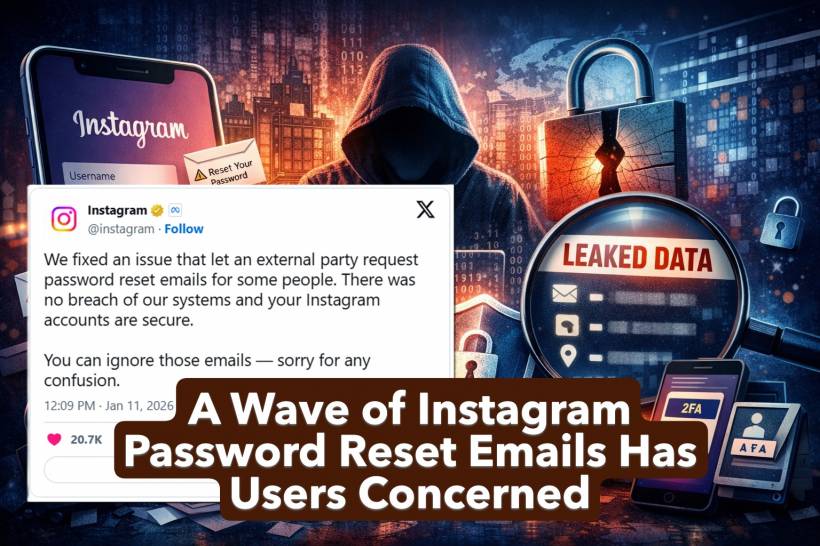
Over the past few days, many Instagram users have been caught off guard by unexpected emails urging them to reset their passwords. For some, the messages arrived repeatedly, even though they never initiated any account recovery. Naturally, this raised alarm bells, with speculation quickly turning toward the possibility of a large-scale data breach.
If you were among those confused or worried by these emails, you were far from alone.
Instagram Says There Was No Breach
In response to the growing concern, Instagram publicly addressed the situation, stating that its systems had not been compromised. According to the company, user accounts remain secure and there was no evidence of an internal data breach.
The explanation provided points to a technical issue rather than a malicious attack. Instagram clarified that a bug allowed an external party to trigger password reset emails for certain users. While the company did not go into deep technical detail, it did confirm that the issue has since been fixed.
To reinforce its position, Instagram shared this clarification via X, aiming to calm users and stop misinformation from spreading.
Why the Breach Rumours Gained Momentum
Despite Instagram's assurances, the timing of the incident added fuel to the fire. Over the same weekend, cybersecurity firm Malwarebytes alerted its customers about a dataset allegedly containing information from around 17.5 million Instagram accounts.
According to those reports, the exposed data included usernames, email addresses, phone numbers, and even physical addresses. The leak was said to be potentially linked to an API scraping incident dating back to 2024, which understandably made users nervous about the authenticity of Instagram's denial.
Conflicting Claims and an Unclear Timeline
Instagram, however, pushed back on those claims as well. The company stated that it was not aware of any API compromises in either 2022 or 2024, and insisted that there had been no new breach affecting its platform.
This has led to a key unanswered question: how old is the leaked data, really?
Some security researchers speculate that the dataset could be recycled information from a much earlier incident, possibly as far back as 2017. Without clear evidence that the data was freshly obtained, it remains difficult to confirm whether the recent password reset emails and the reported leak are actually connected.
What Users Should Do Right Now
Regardless of the root cause, this incident is a useful reminder about online safety. If you receive a password reset email that you did not request, it is generally best not to click on any links inside it. Instead, log in directly through the official app or website if you want to check your account status.
It is also a good time to review your security settings. Enabling two-factor authentication, using a strong and unique password, and staying alert for unusual account activity can significantly reduce your risk, even if leaked data resurfaces from older breaches.
The Bigger Picture
While Instagram maintains that there was no recent breach, the episode highlights how quickly confusion can spread when security-related issues arise. A simple bug can look like a major hack from the outside, especially when it coincides with reports of leaked data elsewhere online.
For now, users can take some reassurance from Instagram's statement, but a healthy level of caution is still wise. In today's digital landscape, staying informed and proactive is often the best defence.











Comments 0