

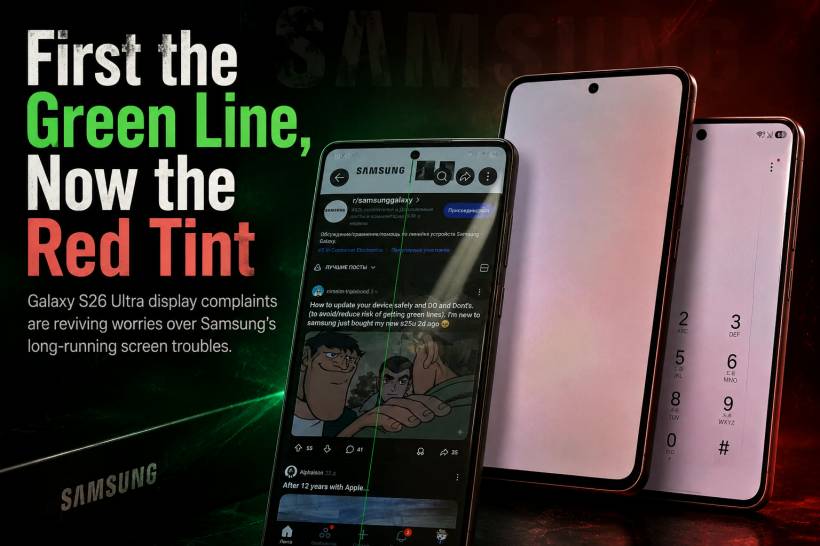
Samsung's latest flagship appears to be developing another unwelcome display problem. After years of complaints about mysterious green lines appearing on Galaxy screens, some Galaxy S26 Ultra owners are now reporting a reddish patch forming near the centre of the display.
The issue has reportedly appeared not only on privately owned phones but also on demonstration units displayed in retail stores. Samsung has since acknowledged the reports and begun investigating what may be causing the discolouration.
For a phone positioned at the very top of Samsung's premium range, another display-related controversy is unlikely to inspire confidence—especially when the Galaxy S26 Ultra's screen technology was supposed to be one of its biggest attractions.
A Red Tint Appearing in the Middle of the Screen
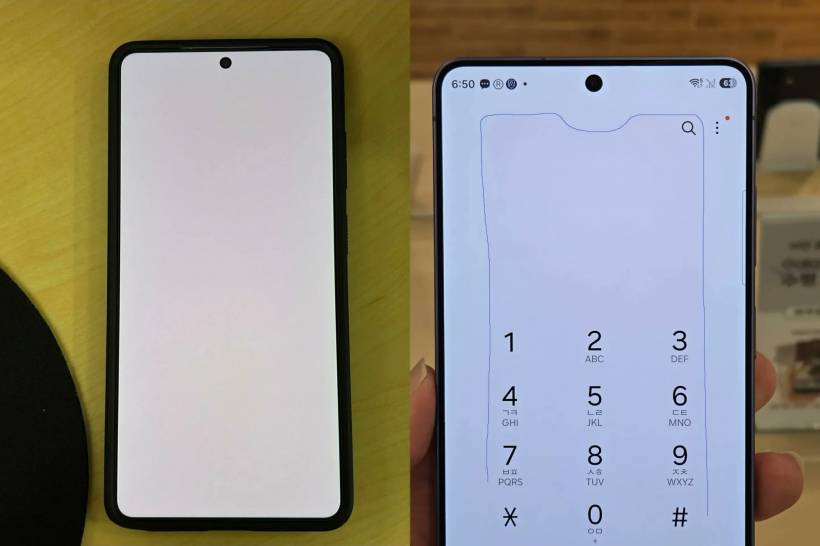
Affected Galaxy S26 Ultra units are said to develop a noticeable reddish tint around the central area of the panel.
This does not appear to be a simple colour-calibration difference affecting the entire display. Instead, the discolouration seems concentrated in one area, making it more visible against white, grey or other neutral backgrounds.
The number of affected devices remains unclear. However, the problem appears to have been reported often enough for Samsung to begin an internal investigation.
The company is reportedly trying to reproduce the issue and determine whether it is caused by manufacturing inconsistencies, display hardware, software behaviour or a combination of factors.
Until that investigation is completed, it is difficult to know whether the red tint affects only a small batch of devices or represents a broader weakness in the display design.
Samsung's New Privacy Display May Be Involved
One possible suspect is the Galaxy S26 Ultra's new Privacy Display feature.
Samsung introduced the technology as a built-in alternative to a physical privacy screen protector. When activated, it reduces the display's visibility from side angles, making it harder for nearby people to read private information.
Unlike a conventional software filter, the system reportedly relies on changes within the display structure itself.
An embedded liquid crystal layer adjusts the panel's refractive behaviour, restricting how light leaves the screen. This combination of hardware and software allows the phone to maintain normal visibility from the front while reducing visibility from the sides.
The feature is unique to the Galaxy S26 Ultra within the current S26 family, and so far, the red-tint reports also appear to be limited to that model. That does not prove that Privacy Display is responsible, but the overlap has naturally raised questions.
Could Uneven Pixel Stress Be the Cause?
One possibility is that the Privacy Display system places uneven stress on certain areas of the OLED panel.
OLED screens produce light through individual pixels, and differences in how those pixels are driven can affect colour consistency over time. If the privacy layer changes the way light is transmitted through part of the display, certain pixels may be operating under different conditions from others.
This could potentially lead to localised colour changes, although Samsung has not confirmed such a link.
Other explanations remain possible. The reddish patch may be related to image retention, OLED degradation, burn-in, adhesive behaviour, heat concentration or inconsistencies introduced during manufacturing.
Without technical findings from Samsung, any explanation remains speculative.
The S26 Ultra's Display Was Supposed to Be Its Highlight
The controversy is particularly awkward because the Galaxy S26 Ultra arrived with relatively limited changes compared with its predecessor.
Its Privacy Display technology was therefore promoted as one of the model's more distinctive improvements.
A built-in privacy layer could be genuinely useful for people who regularly view banking information, confidential emails or work documents in public places. It offers privacy without requiring a separate screen protector that may reduce clarity or affect touch sensitivity.
However, introducing additional layers and behaviour into an already complex OLED panel also creates more opportunities for unexpected problems.
A feature designed to improve privacy will be difficult to defend if users begin experiencing visible discolouration, discomfort or reduced display quality.
Some Users Have Also Reported Physical Discomfort
The red tint is not the first complaint surrounding the Galaxy S26 Ultra's display.
Some users have reported experiencing headaches, eye strain, dizziness or nausea while using the device. In certain cases, the discomfort was reportedly severe enough for owners to return their phones.
It is not yet clear whether these symptoms are directly linked to Privacy Display, pulse-width modulation, display flicker, brightness behaviour or individual sensitivity.
Modern OLED panels frequently control brightness by rapidly switching pixels on and off. Most users do not consciously notice this flickering, but some people can be more sensitive to it—particularly at lower brightness levels.
The new privacy layer could also alter how light reaches the viewer, although there is not yet enough evidence to identify it as the cause of these reported symptoms.
Users experiencing persistent headaches, dizziness or eye discomfort should reduce their screen exposure and avoid forcing themselves to continue using a display that causes noticeable symptoms.
Samsung's Green-Line History Is Hard to Ignore
For longtime Galaxy owners, the new complaints immediately bring back memories of Samsung's well-known green-line problem.
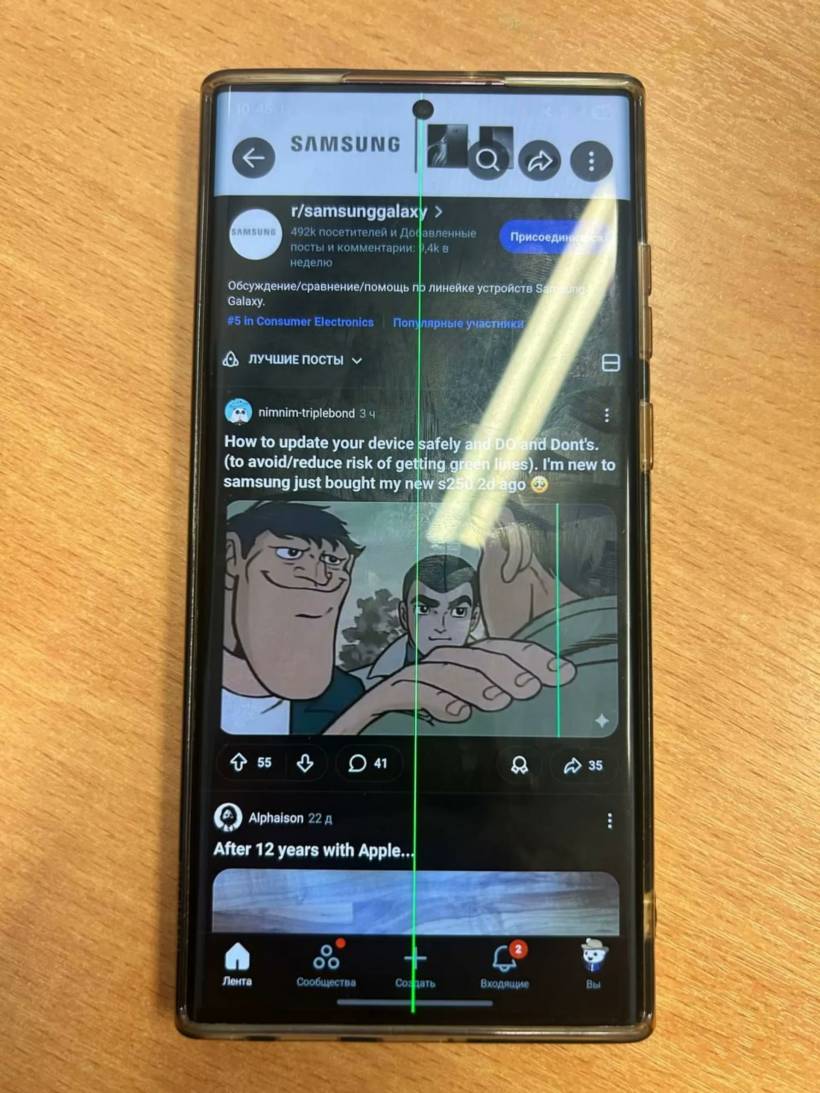
Across several Galaxy generations, some devices have developed a permanent vertical green line across the screen despite having no obvious physical damage.
In a number of cases, users reported that the line appeared shortly after installing a software update. The update itself may not have physically damaged the panel, but changes in heat, display calibration or power behaviour may have exposed an existing weakness.
Once the line appears, the normal solution is usually a full display replacement. Software resets and colour adjustments generally cannot repair a damaged OLED row or display connection.
The persistence of that issue across different models has made Galaxy owners more cautious whenever a new screen defect begins circulating.
From Green Lines to Red Patches
The visual difference between the two problems is obvious, but both undermine confidence in the durability of Samsung's premium displays.
The green-line issue normally appears as a narrow vertical line extending across the screen. The new Galaxy S26 Ultra complaint involves a wider reddish area near the centre.
Even so, users are likely to see both as variations of the same broader concern: expensive flagship screens developing visible defects without being dropped or physically damaged.
That perception may matter almost as much as the technical cause.
Customers paying flagship prices expect the display to remain consistent throughout the device's usable life. A premium panel with advanced privacy technology is of little benefit if users must worry about unexplained colour changes.
Software Fix or Hardware Replacement?
The best possible outcome would be for Samsung to identify a software or calibration issue that can be corrected through an update.
If the red tint is caused by incorrect voltage management, privacy-layer behaviour or display compensation settings, Samsung may be able to address it without replacing the screen.
A hardware defect would be more complicated.
Problems involving the OLED material, liquid crystal privacy layer, adhesives or internal display construction would likely require physical replacement. Samsung would then need to determine which production batches are affected and whether customers qualify for repair under warranty.
Owners who notice the issue should document it clearly using photographs taken with another device. Screenshots will not normally capture a physical panel defect because they record the software-generated image rather than the way the display reproduces it.
Affected users should also contact Samsung support while the phone remains within its warranty period.
The Galaxy S27 Could Inherit the Same Technology
Samsung is reportedly considering bringing Privacy Display to more models in the Galaxy S27 series.
That makes resolving the current issue especially important.
If Privacy Display is connected to the red-tint problem, Samsung will need to revise the hardware or implementation before expanding it across the lineup. Rolling the same technology into more devices without understanding the defect could transform a limited Ultra-model problem into a much wider one.
On the other hand, if Samsung confirms that the issue is restricted to a small manufacturing batch, the technology may continue with only minor production adjustments.
Either way, the company will need to communicate clearly. Silence or vague statements would leave users uncertain about whether their phones may develop the same problem later.
Final Thoughts
Samsung's Galaxy S26 Ultra was meant to stand out through its advanced Privacy Display, but that same technology is now facing uncomfortable scrutiny.
The newly reported red tint may ultimately prove to be limited to a small number of faulty units. It could also turn out to be a software-related issue that Samsung can correct through an update.
However, Samsung's long-running history with green-line complaints makes users less willing to dismiss another screen defect as a minor inconvenience.
The company now needs to determine whether the red patch is linked to the Privacy Display system, OLED degradation or manufacturing quality. More importantly, affected customers need a clear repair or replacement path.
Samsung users have already spent years worrying about the green line. The last thing the company needs is for the red tint to become the next permanent Galaxy "screen illness."











Comments 0