

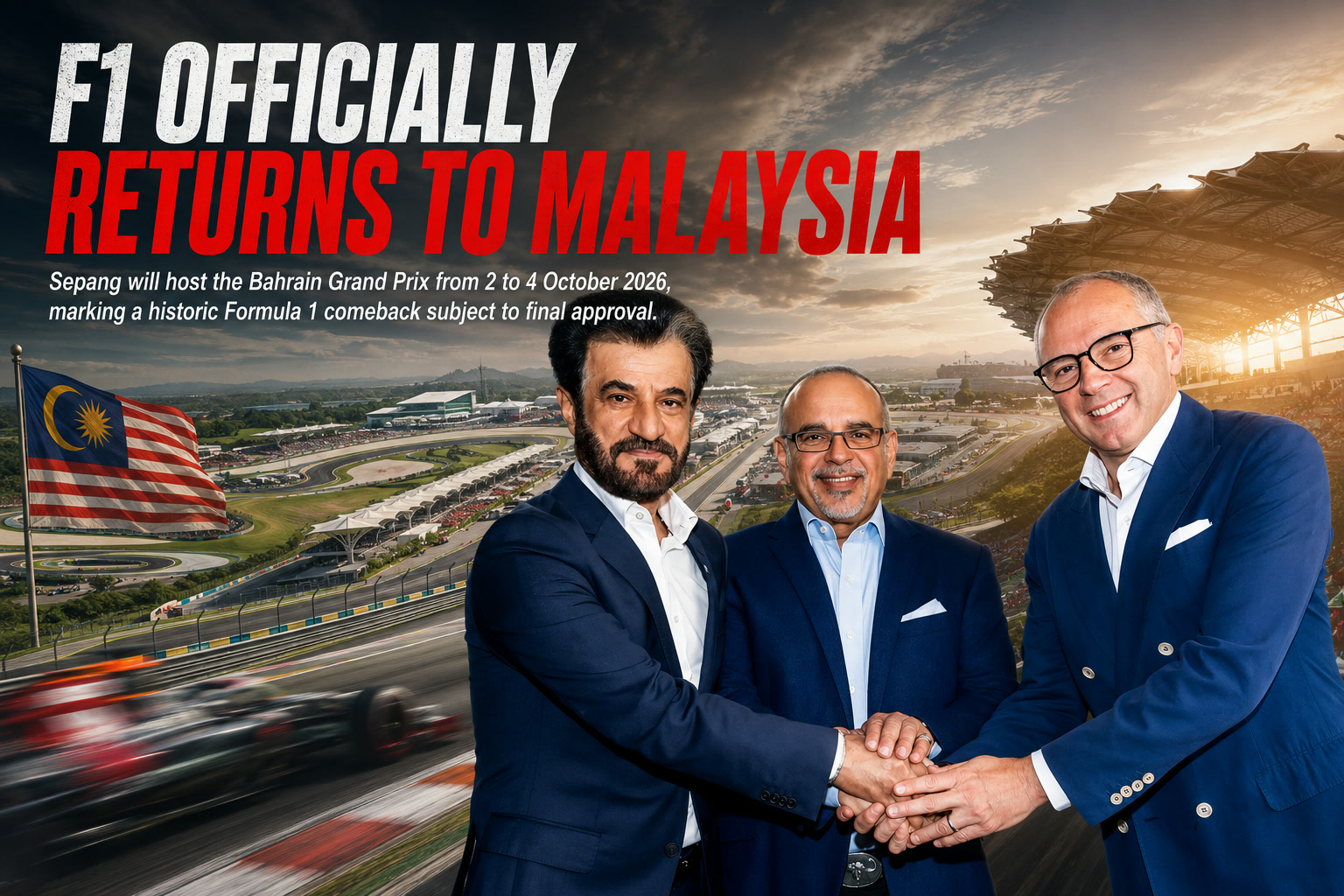
After almost nine years away, Formula 1 cars are set to race at Sepang International Circuit once again. Formula 1 and the FIA have announced that Malaysia will host the Formula 1 Gulf Air Bahrain Grand Prix from 2 to 4 October 2026. The arrangement follows the cancellation of Bahrain's original April race amid the ongoing situation in the Middle East.
For Malaysian motorsport fans, the announcement delivers the return many had hoped for since Sepang disappeared from the calendar after 2017. However, this will not technically be the revival of the Malaysian Grand Prix. Malaysia will instead step in as the host country for Bahrain's relocated championship round.
Formula 1 Returns to Sepang After Nine Years
Sepang last staged Formula 1 on 1 October 2017, bringing an end to a run that began with Malaysia's inaugural Grand Prix in 1999. The circuit hosted the championship for almost two decades and became one of Formula 1's most recognisable venues in Asia.
The Malaysian event was known for intense heat, high humidity and sudden tropical rain. Those conditions frequently made car setup, tyre management and race strategy difficult to predict.
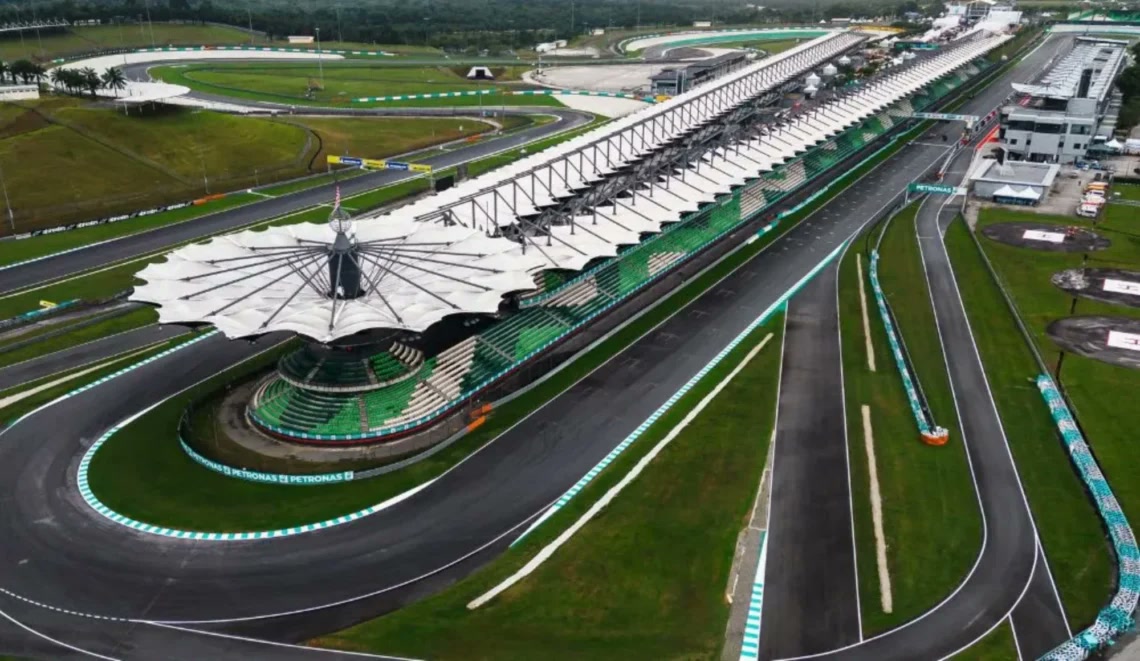
Sepang's wide layout also encouraged overtaking. Its long straights, heavy braking zones and mixture of fast and technical corners produced a very different challenge from the narrow street circuits that now make up a growing portion of the Formula 1 calendar.
Formula 1's official announcement described Sepang as one of the championship's most iconic and demanding circuits, highlighting its racing history, passionate supporters and unpredictable weather.
Why Malaysia Is Hosting the Bahrain Grand Prix
Bahrain and Saudi Arabia were originally scheduled to hold races in April 2026. Formula 1 later confirmed that both events would not proceed at their scheduled times because of the continuing situation in the Middle East, with the decision made in consultation with the FIA and the respective race promoters.
At the time, Formula 1 decided not to insert immediate replacement races into the April calendar.
The later agreement involving Sepang allows the championship to recover the cancelled Bahrain round without adding an entirely new event under a separate identity.
The arrangement was reached between:
Under the plan, Bahrain remains associated with the event while Malaysia provides the circuit, infrastructure and operational environment needed to stage it. Formula 1 said the agreement preserves a Grand Prix that would otherwise not have taken place.
It Will Not Be Called the Malaysian Grand Prix
One of the most unusual aspects of the return is the official name.
The event will be known as the Formula 1 Gulf Air Bahrain Grand Prix in Malaysia rather than the Malaysian Grand Prix.
This means spectators will watch Formula 1 racing at Sepang, but the round will continue to carry Bahrain's Grand Prix identity and title sponsorship.
For casual fans, that may initially sound confusing. Grand Prix names are normally closely connected to the country or city hosting the race.
In this case, the naming arrangement reflects the partnership that made the relocated event possible. Bahrain retains its place within the championship, while Malaysia provides an alternative venue during exceptional circumstances.
It is a highly unusual solution, but one that demonstrates how Formula 1 can reorganise part of its global schedule when a planned event becomes impossible to deliver safely.
The Event Still Requires Final Approval
Although Formula 1 and the FIA have publicly announced the return, several formal steps remain.
The event is still subject to final agreements, official sign-off and approval from the FIA's World Motor Sport Council.
This means the race has been confirmed in principle, but its regulatory and contractual process has not been completely finalised.
That distinction is important for fans planning travel, accommodation or other arrangements. The announcement represents a major commitment from all involved parties, but the final official status will depend on those remaining approvals.
At the time of the announcement, ticket sales had not opened. Formula 1 said ticket-release information would be provided later.
Where It Fits Into the 2026 Calendar
The Sepang weekend will take place between the Azerbaijan and Singapore Grands Prix.
The Azerbaijan Grand Prix is scheduled for 24 to 26 September, while Singapore will follow from 9 to 11 October. The Bahrain Grand Prix in Malaysia will fill the weekend of 2 to 4 October, creating an intense sequence of races across the region.
Formula 1 has stated that the rest of the 2026 schedule will remain unchanged.
For the teams, this creates a relatively logical travel route from Baku to Kuala Lumpur and then Singapore, although the three consecutive race weekends will still place significant pressure on drivers, mechanics, engineers and logistics personnel.
The change also gives Southeast Asian fans two Formula 1 events on consecutive weekends: Sepang followed immediately by Marina Bay.
Why Sepang Was the Natural Alternative
Hosting a Formula 1 race at short notice is far more complicated than simply finding an available circuit.
The venue must support modern Formula 1 safety standards, international broadcasting, freight operations, team facilities, medical services, race control, security and tens of thousands of spectators.
Sepang already has decades of experience staging major international motorsport events. It continues to host high-profile competitions, including the Malaysian round of MotoGP, and therefore maintains much of the operational knowledge required for a global event.
The circuit is also located close to Kuala Lumpur International Airport, making it more practical for the movement of teams, equipment and international visitors.
Malaysia's established motorsport infrastructure and Sepang's Formula 1 history made the circuit a realistic option when the championship needed a replacement venue quickly.
Prime Minister Anwar Ibrahim said the collaboration demonstrated Malaysia's ability to stage major international events and welcomed Formula 1 teams and supporters back to Sepang.
A Different Sepang Challenge for the 2026 Cars
The Formula 1 machines arriving in Malaysia will be very different from those that last raced there in 2017.
The 2026 season introduced a new technical era, meaning teams will return to Sepang without recent Formula 1 race data for the current generation of cars.
They will have to adapt contemporary vehicle characteristics, power units, tyres and energy-management strategies to a circuit that has not appeared on the calendar for almost a decade.
Sepang's long straights will place importance on aerodynamic efficiency, while its slower corners will demand traction and mechanical grip.
Heat management could also become a major factor. High ambient temperatures can affect tyres, brakes, cooling systems and driver endurance.
Then there is the possibility of rain.
A dry race could reward efficient cars with strong straight-line speed. A tropical downpour could completely transform the event, turning tyre choice, visibility and timing into the decisive factors.
A Major Moment for Malaysian Motorsport Fans
For younger Malaysian fans, the October race may be their first opportunity to experience Formula 1 at home.
The sport has grown substantially since Malaysia last appeared on the calendar. Social media, streaming platforms and Formula 1's expanding digital presence have introduced a new generation of viewers to the championship.
The return could therefore attract both long-time supporters who remember Sepang's original era and newer fans who have never attended a Malaysian Formula 1 weekend.
It may also create opportunities for tourism, hospitality, transport, retail and local event businesses.
However, the wider value will depend on how the event is delivered, promoted and priced. Accessible tickets and reliable transport arrangements will be important if organisers want the weekend to feel like a genuine national motorsport occasion rather than an event aimed only at corporate guests and international visitors.
Bahrain Remains Central to the Event
Although the cars will race in Malaysia, Formula 1 has emphasised that Bahrain remains an important partner.
Bahrain became the first Middle Eastern country to host a Formula 1 Grand Prix in 2004 and has maintained a long relationship with the championship.
The relocated event allows that relationship to continue during a season disrupted by regional circumstances.
Bahrain's Crown Prince and Prime Minister, Prince Salman bin Hamad Al Khalifa, described the Sepang race as an extension of Bahrain's commitment to Formula 1 and thanked the Malaysian and motorsport authorities involved in arranging the weekend.
The event is therefore being presented not as Malaysia taking Bahrain's place, but as the two countries working together to preserve the championship round.
This Is Not Yet a Permanent Malaysian Comeback
The announcement concerns the 2026 Bahrain Grand Prix rather than a long-term agreement restoring the Malaysian Grand Prix to future calendars.
At this stage, it should be viewed as a special one-off hosting arrangement created by exceptional circumstances. Formula 1 has not announced that Sepang will remain on the schedule beyond 2026.
Nevertheless, the weekend could become an important test.
A strong crowd, smooth organisation and positive response from teams and commercial partners could renew discussions about Sepang's longer-term place in Formula 1.
That does not guarantee a permanent return. Modern Formula 1 hosting agreements involve substantial financial, commercial and logistical commitments.
However, the October event gives Malaysia an opportunity to demonstrate that demand for Formula 1 remains strong and that Sepang can still deliver a world-class race weekend.
Final Thoughts
Formula 1's return to Malaysia is both exciting and unconventional.
Sepang International Circuit will once again welcome the championship from 2 to 4 October 2026, but the event will carry the identity of the Gulf Air Bahrain Grand Prix rather than reviving the traditional Malaysian Grand Prix name.
The arrangement reflects extraordinary circumstances, international cooperation and Formula 1's determination to preserve its schedule after the original Bahrain event was called off.
There are still final agreements and regulatory approvals to complete, while ticket information has yet to be released. Even so, the prospect of Formula 1 cars racing through Sepang's sweeping corners again is a major moment for Malaysian motorsport.
For one weekend in October, the noise, speed and unpredictability of Formula 1 will return to a circuit many fans never stopped missing.











Comments 0