

Generative AI has spent the last couple of years as something you mostly "go try" on a special website or in a separate tool. That's changing fast. Now the big shift is happening where people actually live day-to-day: the default apps on their phones.
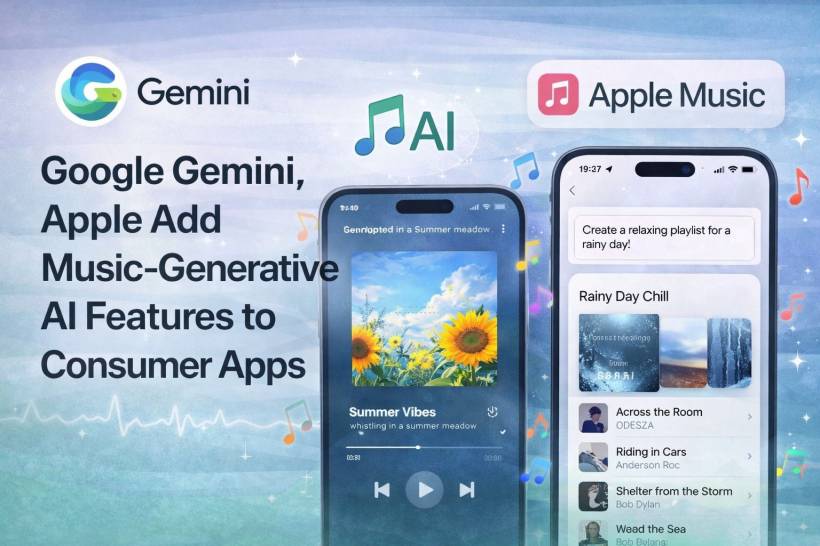
This week, both Google and Apple signaled the same direction at the same time. Google is pushing music generation directly into Gemini, and Apple is turning playlist creation into an AI-powered feature inside Apple Music. Together, it's a pretty clear sign that AI audio is moving from niche demos into mainstream consumer workflows.
Google Gemini: Make a 30-Second Track From Text, Photos, or Video
Google says Gemini can now generate short music clips (around 30 seconds) from prompts, and it isn't limited to just typing. You can feed it text, or upload a photo or video to set the "vibe," and Gemini will produce a track based on that input. Under the hood, it's powered by Google DeepMind's Lyria 3 model.
Google is positioning this as a lightweight creative feature: quick custom jingles, mood music, short snippets you might share with friends, that sort of thing. It can generate instrumental tracks, and it can also produce lyrics depending on what you ask for.
Cover Art Is Part of the Package
One detail that makes this feel "consumer app ready" instead of "research toy" is the presentation. Google says Gemini will generate cover art for your track too (using its Nano Banana image model), so when you share a link to the music it looks like a complete little release rather than a raw audio file.
That's a subtle but important product move: people share things more when they look polished.
Why Google Is Doing This Now
There's an obvious competitive angle here. Google wants Gemini to feel like the assistant that can do more than chat: generate images, help with work, and now create audio. Adding "music creation" also expands what users might open Gemini for in the first place, especially on mobile where attention is limited and app habits are hard to change.
The AI race pressure is real too. Reporting around Google's Gemini momentum has included claims that OpenAI leadership pushed urgency internally after Google's Gemini 3 buzz.
Not Completely Free: Daily Limits and Subscription Tiers
Google isn't framing this as unlimited, free music generation for everyone. Like many AI features, it comes with caps. Free users reportedly get a limited number of track generations per day, while paid tiers get higher limits depending on the plan.
This matters because it hints at where the business model is heading: AI features as part of subscription bundles, not just novelty add-ons.
The Hard Part: Copyright, Style, and "Don't Sound Like That Artist"
AI music is a sensitive area, and the music industry has not been shy about pushing back. Major labels sued AI music startups in 2024 over allegations that copyrighted music was used for training without permission, and those disputes have continued evolving through settlements and licensing deals.
Google says it has safeguards designed to reduce copying and direct imitation. For example, if someone names a real musician, Gemini is supposed to treat it as broad inspiration (mood/style) rather than trying to replicate a specific artist's work.
Whether these safeguards satisfy the industry long-term is a bigger story, but it's clear Google knows this is not an area where it can afford to be careless.
Apple's Move: "Playlist Playground" Brings AI to Apple Music
On Apple's side, the approach is different but the goal is similar: make content creation feel effortless.
Apple is testing a feature called Playlist Playground that uses Apple Intelligence to turn a text prompt into a playlist. Early reporting says it generates a playlist with around 25 songs, plus a title/description and cover art. It's tied to iOS 26.4, which has been rolling through beta channels and is expected to expand more broadly in the coming months.
This puts Apple closer to what Spotify and others have already been experimenting with: AI as a "music curator" that can interpret the mood you type and build something instantly.
What This Means for Spotify (And the Rest)
Whenever Google and Apple add something directly into their default ecosystems, everyone else has to pay attention. Reports noted that Spotify's stock reaction briefly wobbled after the Google announcement, and analysts generally framed it as not a fatal threat, but a nudge that could push Spotify to ship more AI features faster.
The key point is distribution: Apple Music and Google Gemini are already on billions of devices. Even "small" AI features can get huge usage just because they're one tap away.
Final Thoughts
These updates aren't just about fun gimmicks. They show where generative AI is heading next: embedded into everyday apps, presented in a shareable way, and packaged with guardrails and usage limits that make it commercially sustainable.
Google is going after creation (make a short track, add cover art, share it). Apple is going after curation (turn a prompt into a playlist that feels personalized). Different angles, same destination: AI is becoming a normal button inside the apps people already use.











Comments 0