

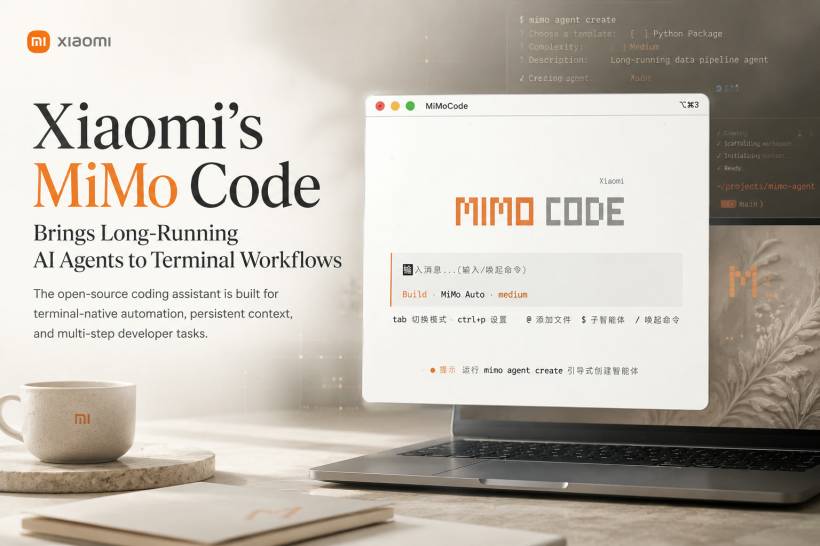
AI coding tools are quickly moving beyond autocomplete. For years, most developer assistants stayed inside an IDE or chat window. They suggested code, explained an error, or generated a function that developers still had to copy, paste, test, and adjust themselves.
Xiaomi's newly open-sourced MiMo Code takes a more hands-on approach. Instead of acting mainly as a code suggestion tool, it is designed to work directly in the terminal, where it can inspect project files, run commands, manage Git activity, and follow multi-step software tasks over a longer period.
The company is positioning MiMo Code as a coding-agent framework for work that is too large to finish in one prompt. That could include updating dependencies, investigating build failures, refactoring several files, running tests, reviewing logs, and continuing until the task is complete or reaches a defined stopping point.
A Terminal-First Approach to AI Coding
MiMo Code is built around the command line rather than a traditional chat interface.
That means the agent can work closer to the tools developers already use every day. It can read files from a local project, inspect directories, execute approved commands, modify code, run compilers, and interact with version control workflows.
The practical difference is significant.
A normal AI assistant may suggest a fix for a failed build, but the developer still needs to apply it and see whether it works. A terminal-based coding agent can potentially inspect the error, identify the related file, make a targeted change, rerun the command, and continue from the new result.
That does not make the agent automatically correct. But it does make it more capable of completing connected tasks without needing every step to be manually handed back to a human.
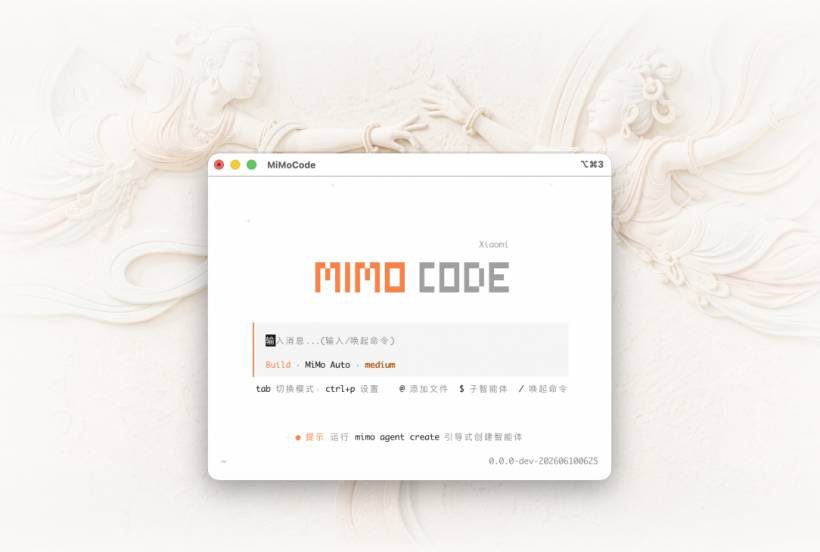
Built for Workflows That Take More Than a Few Prompts
The main idea behind MiMo Code is persistence.
Long software tasks often break down because AI systems lose context. A model may understand the first few steps of a debugging process, only to lose track of earlier decisions after more files, logs, tool outputs, and test results are added to the conversation.
MiMo Code attempts to address this through persistent project memory, structured checkpoints, task tracking, and context reconstruction.
In simple terms, the system is designed to save useful project knowledge as it works. When the context becomes too large, it can rebuild a focused working state from checkpoints, notes, task progress, and retained project information instead of relying only on a single uninterrupted chat history.
That is particularly useful for software engineering tasks that may involve a long chain of actions, such as:
Rather than treating each request as a separate conversation, MiMo Code is trying to make the agent behave more like a persistent project assistant.
Xiaomi Says It Can Handle 200-Step Tasks
Xiaomi has promoted MiMo Code around its ability to manage long-running workflows, including tasks involving more than 200 operational steps.
According to the company's reported internal evaluation, the tool was tested by hundreds of developers in day-to-day engineering scenarios. Xiaomi says its results became more favourable in longer tasks, where maintaining context and recovering from errors matter more than simply generating a correct answer at the start.
That claim is important, but it should still be treated carefully.
A 200-step coding task is not one single type of benchmark. Performance can depend on the model being used, the repository, the available tools, the quality of the task definition, the operating environment, and the permissions given to the agent.
A system that performs well on a controlled internal workflow may not behave the same way in every production codebase.
Still, the broader direction is clear. AI coding tools are increasingly being judged not just on whether they can write a function, but on whether they can stay useful through an entire engineering process.
Checkpoints Are Designed to Prevent Total Workflow Collapse
One of the more practical ideas in MiMo Code is its checkpointing system.
Long-running agents can fail in a frustrating way: they may perform well for most of a task, then make a wrong assumption late in the process and lose the thread of what they were trying to achieve.
When that happens, a developer may have to spend time working backwards through dozens of commands and file changes to understand where things went wrong.
MiMo Code's checkpoint approach is meant to reduce that problem.
The framework records project memory, task progress, notes, and structured session states. This makes it easier for the agent to resume work with a more organised view of what has already been done.
For development teams, the audit trail may be as important as the automation itself. When an agent changes code, runs a command, installs a dependency, or modifies a configuration file, developers need to know what happened and why.
AI agents should not become black boxes with shell access.
More Than One Agent Can Work on a Task
MiMo Code also includes a multi-agent structure.
The main agent can delegate work to subagents when needed. One agent might investigate a bug, another might inspect relevant files, and another could focus on checking test results or reviewing a proposed change.
The idea is similar to splitting a larger engineering task into smaller pieces without forcing one long conversation to handle everything at once.
This can be useful when a project has several moving parts, but it also introduces new risks. More automation means more activity to monitor. A poorly configured group of agents could create unnecessary changes, duplicate work, or make a bad situation worse very quickly.
That is why orchestration features need clear boundaries, logging, and human oversight.
Open Source Gives Teams More Control
MiMo Code is released under the MIT licence, giving developers and companies broad freedom to inspect, modify, and build around the framework.
For some teams, that may be one of its biggest advantages.
An organisation can choose its own model provider, connect the tool to an internal API, run it within a controlled environment, and decide what level of access the agent receives. That may be especially useful for companies that work with proprietary repositories, internal systems, or sensitive source code.
The framework is also not limited to Xiaomi's own model ecosystem. It supports compatible external providers, which gives developers more flexibility in choosing the AI model behind the coding agent.
However, open source does not automatically make a system easier to operate. Teams still need to manage permissions, infrastructure, security policies, access tokens, model costs, and the reliability of the agent itself.
Why Shell Access Changes the Risk Level
A coding assistant that only generates text is one thing.
A coding agent that can read local files, write changes, run commands, manage Git operations, and interact with a development environment is something else entirely.
That kind of access can be extremely useful when carefully controlled. It can also be risky when poorly configured.
For example, an agent with unrestricted shell access could accidentally delete files, expose secrets, install an unwanted dependency, change infrastructure settings, or make edits outside the intended project scope.
The safest approach is to treat AI agents like any other powerful automation tool.
They should work in isolated environments where possible, use limited permissions, avoid direct production access, keep full logs, require review for important changes, and operate with clear stop conditions.
The goal should be faster development without handing over unrestricted control.
Could This Change Everyday Development?
The appeal of terminal-native agents is easy to understand.
Developers often move between an IDE, a browser, documentation, a terminal, a test runner, a Git client, and a chat assistant. A capable terminal-based agent could reduce some of that back-and-forth by bringing more of the workflow into one place.
Instead of asking an AI tool to explain an error, then manually applying its suggestion, developers may increasingly ask an agent to investigate the issue, make a proposed fix, run the tests, and show the exact changes for review.
That could speed up repetitive work such as dependency updates, project setup, test repair, codebase exploration, and routine refactoring.
But it will not remove the need for human developers.
The more important the system, the more important it becomes to understand the code, verify the result, and make sure the agent has not introduced a subtle failure that only appears later.
Final Thoughts
MiMo Code represents the next stage of AI-assisted development: tools that do not just suggest code, but actively work through longer engineering processes inside the terminal.
Its persistent memory, checkpoints, multi-agent design, and terminal-native workflow make it an interesting open-source option for developers exploring long-running coding agents.
The biggest question is not whether AI agents can complete more steps on their own. It is whether teams can give them enough freedom to be useful while keeping enough control to prevent expensive mistakes.
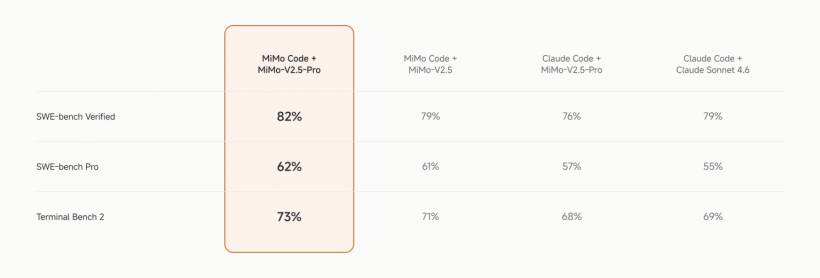
For developers, that balance will matter far more than any single benchmark result.











Comments 0