

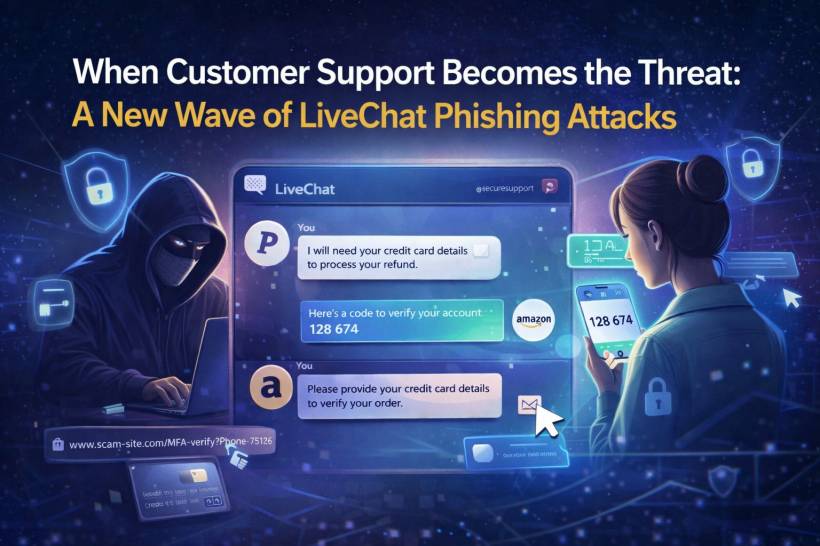
Cybersecurity threats are constantly evolving, but every once in a while, attackers come up with something that feels especially convincing — and dangerous. A recent security advisory highlights a growing trend where attackers are no longer relying solely on fake websites or emails. Instead, they're leveraging real-time chat platforms to trick users into handing over sensitive information.
This shift marks a worrying evolution in phishing tactics, blending traditional scams with interactive, human-like engagement.
The New Trick: Turning LiveChat Into a Weapon
Traditionally, phishing scams rely on emails or fake login pages. But in this case, attackers are taking things a step further by abusing platforms like LiveChat — tools that many legitimate businesses use for customer support.
What makes this approach particularly effective is the illusion of trust. Victims believe they are chatting with a real support agent from trusted brands like PayPal or Amazon. In reality, they're interacting with attackers posing as customer service representatives.
The conversation feels natural, responsive, and personalized — which lowers suspicion and increases the likelihood that users will comply with requests.
How the Attack Actually Works
This campaign isn't just a simple scam — it's a well-orchestrated sequence designed to guide victims step by step.
Scenario 1: The "Refund" Trap
It often begins with an email claiming that you're entitled to a refund — for example, a $200 PayPal reimbursement. Sounds tempting, right?
Once you click the provided link, you're taken to what appears to be a legitimate support page. From there:
• A "support agent" engages you in conversation
• You're guided to a fake website to "complete the refund"
• You're asked to enter login credentials and MFA codes
• Finally, additional details like credit card information and personal data are requested
By the time the interaction ends, attackers may have collected everything they need to compromise your account and finances.
Scenario 2: The "Order Confirmation" Trick
Another variation is even more subtle.
Instead of a branded email, victims receive a generic message stating that an order needs confirmation. Clicking the link leads to a chat interface where:
• A "support agent" (posing as Amazon) joins the chat
• The agent claims there's an issue with a refund
• You're asked to provide card details for "verification"
Because the interaction feels like real customer service, many users let their guard down — and that's exactly what the attackers are counting on.
Why This Method Is So Effective
What makes these attacks particularly dangerous isn't just the technology — it's psychology.
Instead of static phishing pages, this method uses real-time human interaction, which:
• Creates urgency ("act now to receive your refund")
• Feels legitimate and conversational
• Reduces suspicion compared to traditional phishing
Interestingly, researchers noted that these chats often contain poor grammar or awkward phrasing — a sign that real humans (likely following scripts) are behind the scenes rather than automated bots.
What Organisations and Users Can Do
Defending against this type of attack requires more than just technical tools — it also involves awareness and process control.
Here are some key measures highlighted by researchers:
For organisations:
• Enforce strong authentication (especially MFA) for support staff
• Prohibit requesting sensitive data like passwords or card details via chat
• Combine automated detection with human threat analysis
For users:
• Be cautious of unsolicited support interactions
• Verify support requests through official apps or websites
• Treat "urgent" requests with skepticism
These steps may sound basic, but in cases like this, awareness is your strongest defense.
A Reminder: Even "Live Support" Can Be Fake
The biggest takeaway here is simple — just because something feels real doesn't mean it is.
Attackers are getting smarter, and they're adapting quickly to how people interact online. By mimicking real customer service experiences, they're blurring the line between legitimate support and malicious intent.
So the next time you find yourself in a chat claiming to help you resolve an issue, pause for a moment. Verify first. Because in today's threat landscape, even a friendly support agent might not be who they claim to be.
Final Thoughts
This new wave of LiveChat-based phishing is a clear sign that cybersecurity is no longer just about spotting fake links — it's about understanding human behavior and manipulation.
As attackers continue to refine their tactics, staying informed and cautious becomes more important than ever. The tools may change, but the goal remains the same — and so should your vigilance.











Comments 0