

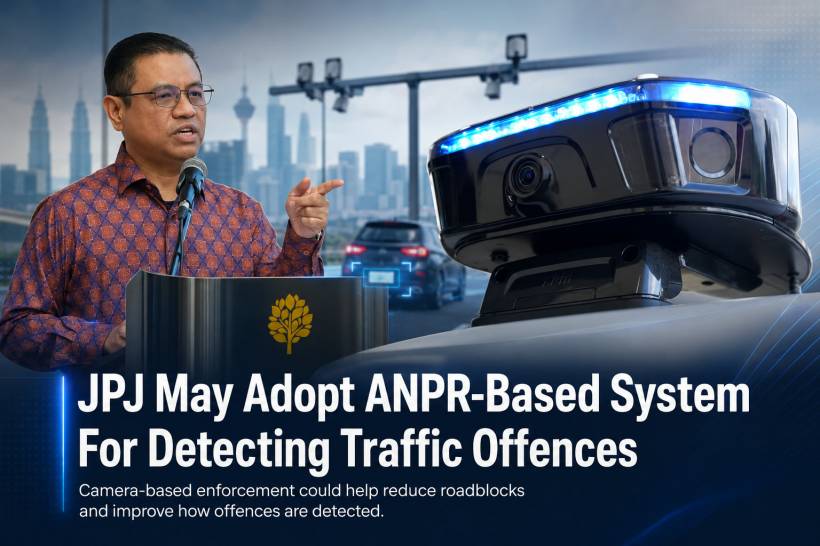
Malaysia's Road Transport Department, better known as JPJ, may be moving toward a more technology-driven approach when it comes to detecting traffic offences. Instead of depending heavily on physical roadblocks, the department could soon rely more on Automated Number Plate Recognition, or ANPR, as part of its enforcement strategy.
This shift is interesting because it reflects a wider change in how road enforcement may be handled in Malaysia. Rather than stopping vehicles manually and creating traffic bottlenecks, ANPR allows offences to be detected automatically through camera-based monitoring. In theory, this could make enforcement faster, more consistent, and less disruptive to ordinary road users.
A New ANPR-Based Enforcement Project
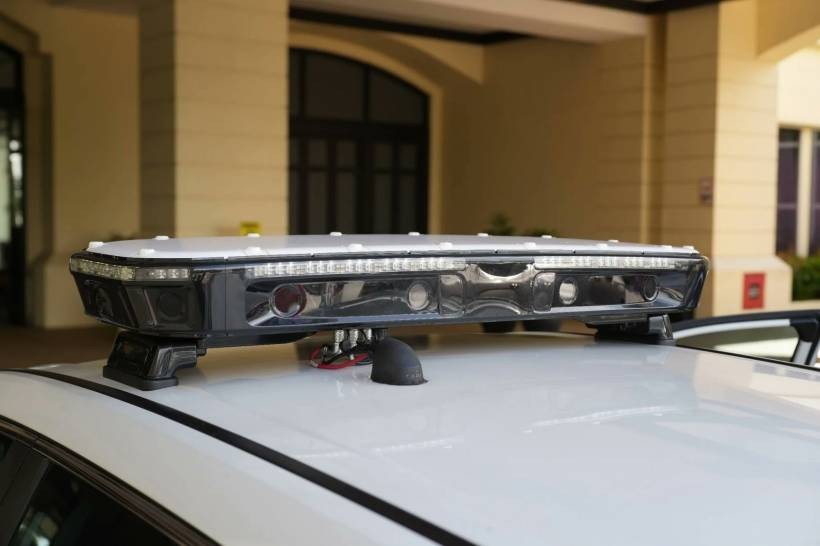
According to a report by paultan.org, JPJ has launched a new initiative known as the Automated Number Plate Recognition Integrated Enforcement Project, or ANPR P-B. The project is expected to run for 36 months and will involve the use of 375 ANPR cameras across selected locations.
Alongside the camera network, the project will also include 1,000 smart management enforcement devices, known as SmED. These devices are expected to support enforcement officers and improve the overall management of road enforcement activities.
Another key part of the project is the development of a central control centre in Cyberjaya. This suggests that JPJ is not only looking at camera deployment, but also building a broader enforcement ecosystem where data can be collected, processed, and acted upon from a centralised location.
What The System Can Detect
JPJ director-general Datuk Aedy Fadly Ramli reportedly said that the system will be able to automatically detect several types of offences. These include matters related to road tax, insurance, Vehicle Entry Permit, and Road Charge.
These are areas where number plate recognition can be especially useful. Once a vehicle's registration number is captured, the system can potentially cross-check the information against existing databases to determine whether the vehicle has valid documentation or outstanding issues.
Beyond administrative offences, the system may also be used to detect more direct traffic violations. These include drivers using mobile phones, misusing emergency lanes, and running red lights. If implemented properly, this could expand ANPR beyond simple plate checks and into a broader road safety enforcement tool.


ANPR Is Not A New Technology, But Its Use Is Expanding
Automated Number Plate Recognition is not exactly new. Many Malaysians may have already encountered similar technology in parking systems, where vehicle plates are scanned for entry, exit, and payment purposes.
Earlier this year, PLUS also introduced an ANPR open payment system along the North-South Expressway. That example shows how the same basic technology can be used outside traditional enforcement, especially for tolling, parking, and payment-related services.
What makes JPJ's direction more significant is the enforcement angle. If ANPR becomes more widely adopted by the department, it could change how traffic offences are monitored and how vehicle-related compliance is checked on Malaysian roads.
Why JPJ May Be Moving Away From Traditional Roadblocks
One of the biggest reasons this approach may appeal to the authorities is that it can reduce the need for physical roadblocks. Traditional roadblocks can be effective in some situations, but they also have a very obvious downside: they often slow traffic and create frustration among drivers.
Transport Minister Anthony Loke previously commented that setting up roadblocks after toll plazas and reducing several lanes into one is an outdated approach. His point was simple but practical. When enforcement methods cause major congestion, the public tends to see them as disruptive rather than helpful.
By using ANPR, JPJ could monitor vehicles without forcing every driver through a manual inspection point. This does not mean physical enforcement will disappear completely, but it could reduce the need for roadblocks in situations where digital detection is more efficient.
Possible Integration With MySikap
Another interesting possibility is integration with MySikap, JPJ's online system for vehicle and driver-related services. Anthony Loke previously suggested that ANPR could be connected with MySikap, which would make sense if the system is meant to verify vehicle records, insurance status, road tax validity, and other official information.
If this integration happens, ANPR could become more than just a camera system. It could become part of a larger digital enforcement framework where vehicle data, offence records, and administrative checks are connected in one ecosystem.
However, the exact details of JPJ's current project are still not fully clear. Important questions remain, such as where the cameras will be installed, how offences will be processed, how alerts will be handled, and how privacy or data protection concerns will be managed.

A Step Toward Smarter Road Enforcement
The move toward ANPR-based enforcement could be a practical step for JPJ if it is implemented carefully. Malaysia's roads are busy, and enforcement agencies need methods that can cover more locations without causing unnecessary congestion.
Camera-based detection can help identify offences faster, especially for issues that are already tied to vehicle registration records. At the same time, systems like this must be accurate, transparent, and properly managed. Incorrect readings, unclear summons processes, or poor public communication could easily create frustration if not handled well.
This is where the success of the project will depend not only on the technology itself, but also on how JPJ designs the process around it.
Final Thoughts
JPJ's possible adoption of ANPR-based enforcement shows that Malaysia's road enforcement methods may be moving into a more digital and automated phase. With 375 ANPR cameras, 1,000 smart enforcement devices, and a planned control centre in Cyberjaya, the project appears to be more than a small trial.
If done properly, ANPR could help JPJ reduce reliance on disruptive roadblocks, improve offence detection, and make enforcement more efficient. At the same time, the public will likely want clearer details on how the system works, where it will be used, and how data will be handled.
For now, the project signals an important direction: road enforcement in Malaysia may increasingly depend on smarter systems, connected data, and automated detection rather than traditional roadside checks alone.











Comments 0