

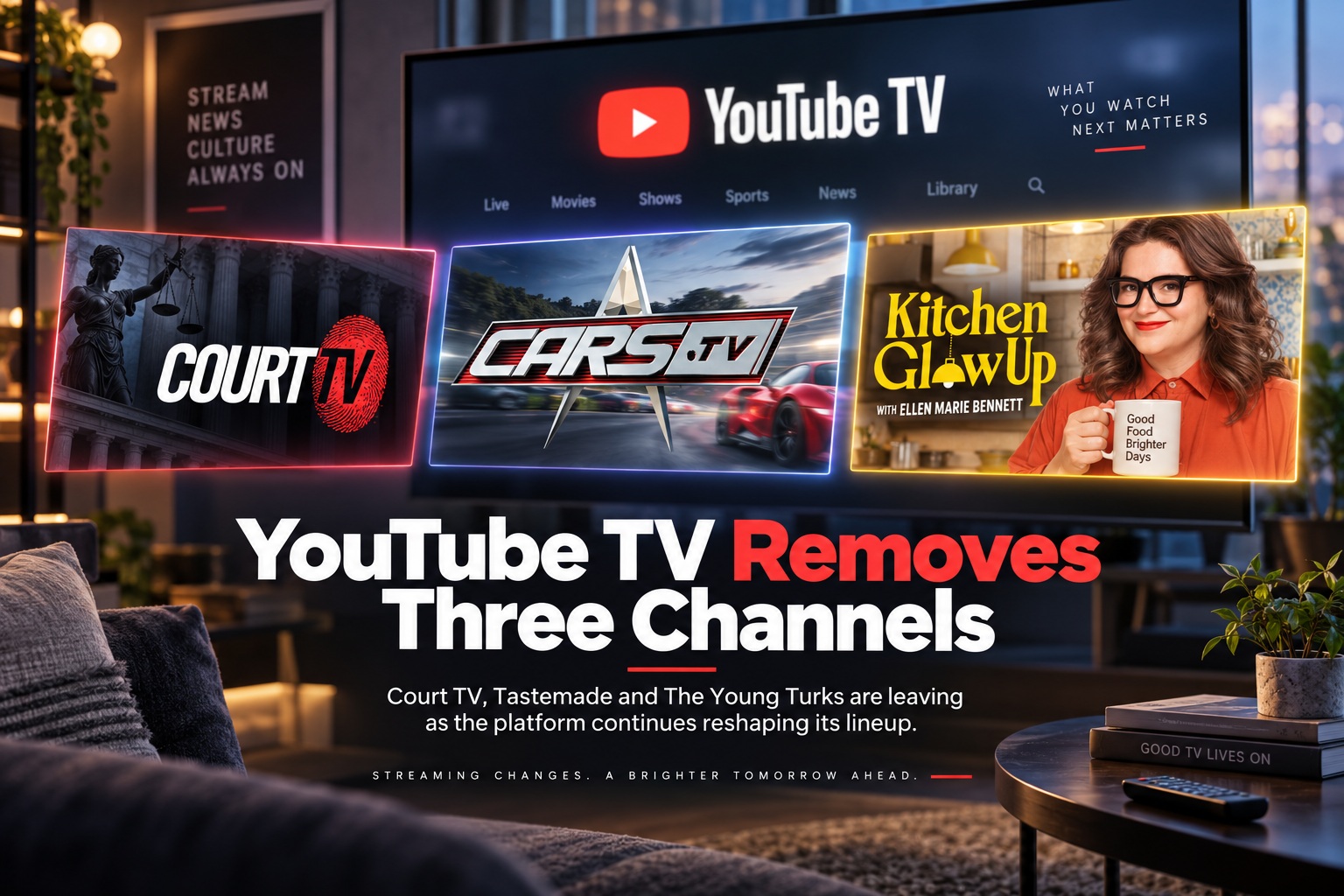
YouTube TV is making another change to its channel lineup, with three networks set to disappear from the service at the end of September. Court TV, Tastemade and The Young Turks will no longer be available from September 30, 2026, affecting both live viewing and previously recorded content stored in subscribers' libraries.
That detail could be particularly frustrating for viewers who rely heavily on YouTube TV's cloud DVR feature. Even if a programme was recorded before the removal date, it may no longer remain accessible once the network itself disappears from the service.
The three departing channels cover very different types of content. Court TV focuses heavily on courtroom coverage, legal proceedings and true-crime programming, while Tastemade caters to food lovers, home cooks and lifestyle audiences. The Young Turks, meanwhile, is centred around news, commentary and current affairs.
Why the Channels Are Being Removed Remains Unclear
YouTube TV did not provide a specific reason for the removals. That leaves open several possibilities, including contract expirations, changes in licensing terms, shifting content priorities or unsuccessful negotiations with the networks involved.
Channel removals are not unusual in the streaming television market. Services such as YouTube TV, Hulu + Live TV, Sling TV and others regularly negotiate with broadcasters and media groups over distribution rights, and disagreements over pricing or contract terms can occasionally result in channels being dropped.
For subscribers, however, the lack of explanation can make these changes feel sudden. Users often choose a service partly because of the specific channels it includes, so even the removal of a few networks can affect whether the subscription still feels worthwhile.
Streaming TV Is Not Completely Different From Cable
One of the biggest promises of live TV streaming services was that they would provide a simpler and more flexible alternative to traditional cable. In many ways, they do. Users can watch across multiple devices, cancel without long contracts and access cloud DVR features without installing additional hardware.
However, streaming platforms still depend on many of the same underlying business relationships as cable providers. Networks want to be paid for distribution, platforms want to control costs, and both sides negotiate over how content should be packaged and priced.
That means channel disputes, removals and lineup changes have followed consumers into the streaming era. The technology may be more modern, but many of the commercial negotiations behind the scenes remain very similar.
YouTube TV Has Also Been Adding Channels
The removal of Court TV, Tastemade and The Young Turks comes after YouTube TV expanded its lineup earlier this year. In July, the service added several networks connected to Allen Media Group, including HBCU Go, Cars.TV, Pets.TV and TheGrio.
Each of those channels serves a different audience. HBCU Go focuses on historically Black colleges and universities, offering sports, documentaries, events and cultural programming centred around HBCU communities. Cars.TV targets automotive enthusiasts, while Pets.TV is built around animal-related programming and pet-focused entertainment.
TheGrio, meanwhile, offers a mix of news, culture, entertainment and lifestyle programming aimed primarily at Black audiences. Together, the additions gave YouTube TV more specialised content while strengthening its relationship with Allen Media Group.
YouTube TV and Allen Media Group Continue Their Partnership
The newer channels followed a carriage agreement renewal between YouTube TV and Allen Media Group earlier this year. That agreement ensured that The Weather Channel would remain available to subscribers while also retaining networks such as Comedy.TV, Justice Central and Recipe.TV.
For YouTube TV, deals like these are important because they help maintain a broad mix of channels without relying exclusively on the largest broadcast groups. For media companies, being carried on a major streaming television service provides access to millions of potential viewers.
The relationship also shows how fluid the modern television business has become. A service can remove some channels while adding several others at the same time, constantly adjusting its lineup based on contracts, audience demand and strategic partnerships.
YouTube TV Now Carries More Than 100 Channels
YouTube TV has grown considerably since its original launch and now offers more than 100 channels in its main package. Major broadcast networks such as ABC, CBS, FOX and NBC remain central to the service, alongside sports, entertainment, news and lifestyle programming.
For many households, this has made YouTube TV one of the more complete cable-replacement options available. Instead of switching between separate streaming apps for live television, sports and news, users can access much of that content through a single service.
The challenge is that larger channel lineups also make subscription costs more difficult to control. Every additional carriage agreement introduces another commercial relationship, and those costs can eventually influence the monthly price paid by subscribers.
The Base Plan Still Costs $82.99 Per Month
YouTube TV's main package currently costs $82.99 per month, placing it much closer to traditional cable pricing than streaming services once were. The base plan provides access to more than 100 channels, but the cost has gradually risen over the years as the service has expanded its content offering.
This has changed how consumers evaluate live TV streaming. What once looked like a significantly cheaper replacement for cable can now become a fairly substantial monthly expense, especially when combined with other subscriptions such as Netflix, Disney+, Max, Apple TV+ or sports packages.
For some users, channel removals can make those price increases feel more noticeable. Subscribers may be willing to accept a higher monthly bill when the lineup continues to grow, but losing channels without receiving a corresponding price reduction can raise questions about overall value.
YouTube TV Is Experimenting With More Flexible Packages
YouTube TV has also started moving toward more specialised subscription options. Rather than forcing every customer into the same large channel bundle, the service has introduced lower-cost genre-focused plans such as Sports and Entertainment packages.
That could become increasingly important as consumers show signs of subscription fatigue. Many viewers no longer want to pay for dozens of channels they rarely watch, especially when most of their entertainment already comes from on-demand streaming services.
Genre-based packages give YouTube TV another way to compete. A customer who mainly wants sports may prefer a smaller sports-focused package, while another user may care more about entertainment or news.
If this approach expands, YouTube TV could gradually move away from the traditional cable-style bundle and toward a more modular system where subscribers pay primarily for the categories they actually use.
Channel Removals Can Affect Recorded Content Too
One of the more important aspects of this particular update is the impact on saved recordings. YouTube TV's cloud DVR is one of its strongest features, allowing users to record programmes without worrying about local storage limitations.
However, those recordings are still connected to licensing agreements. If a network leaves the platform, access to recorded programmes from that channel may disappear as well.
This is an important distinction between cloud DVR and traditional local recording. With an old physical DVR, a recorded programme generally remained available unless the device was erased or failed. With cloud-based services, access can depend on whether the provider still retains the rights to offer the content.
That means subscribers should not assume that every programme saved in their library will remain available indefinitely.
Why Streaming Lineups Change So Frequently
The constantly changing nature of live TV streaming can be confusing, but there are several reasons behind it. Distribution rights are negotiated individually with media companies, and contracts often cover pricing, placement, advertising and other commercial terms.
A network may request higher fees during renewal negotiations, while the streaming provider may decide that the channel does not attract enough viewers to justify the additional cost. In other cases, a media company may prefer to prioritise its own streaming platform or restructure how its channels are distributed.
Audience behaviour also plays a role. As viewing habits change, streaming providers may choose to invest more heavily in sports, local programming or niche content while reducing emphasis on channels with lower engagement.
For customers, these business decisions can result in a lineup that looks slightly different from year to year.
Subscribers Have More Alternatives Than Before
The good news for viewers is that losing a channel from one platform does not necessarily mean losing access to that content entirely. Many networks now operate their own apps, websites or free ad-supported streaming channels, while others are available through competing live TV services.
Court TV, for example, has historically distributed content across multiple digital platforms. Food and lifestyle programming similar to Tastemade can also be found across numerous streaming services, while news and commentary programmes increasingly distribute content through YouTube itself and other online platforms.
The television ecosystem has become much more fragmented, but also more flexible. Users are no longer entirely dependent on one cable provider or one streaming bundle to access specific types of content.
The Bigger Challenge Is Subscription Value
Ultimately, changes like this are about more than three channels. They highlight the broader challenge faced by live TV streaming services: maintaining enough content to justify increasingly expensive monthly subscriptions.
Consumers now have an enormous amount of choice, and that means platforms need to continually demonstrate value. A service that becomes too expensive or loses too many important channels can quickly encourage users to explore competing options.
At the same time, carrying every possible network is not realistic. Higher carriage costs would eventually push subscription prices even further, creating another problem for customers.
YouTube TV therefore has to constantly balance variety, pricing and profitability while trying to maintain a lineup that satisfies as many subscribers as possible.
Final Thoughts
The departure of Court TV, Tastemade and The Young Turks may not dramatically transform YouTube TV's overall lineup, but it once again highlights how quickly streaming television packages can change. Beginning September 30, subscribers will lose access to all three networks, including recordings associated with them.
At the same time, YouTube TV continues to add other channels and strengthen partnerships with media companies such as Allen Media Group. The service is also experimenting with more focused subscription packages, suggesting that its long-term strategy may involve giving customers more choice over the types of content they pay for.
For viewers, the most important lesson is that live TV streaming is becoming increasingly dynamic. Channel lineups, pricing and packages can change regularly, so subscribers may need to periodically reassess whether the service still offers the channels and value they actually want.











Comments 0