

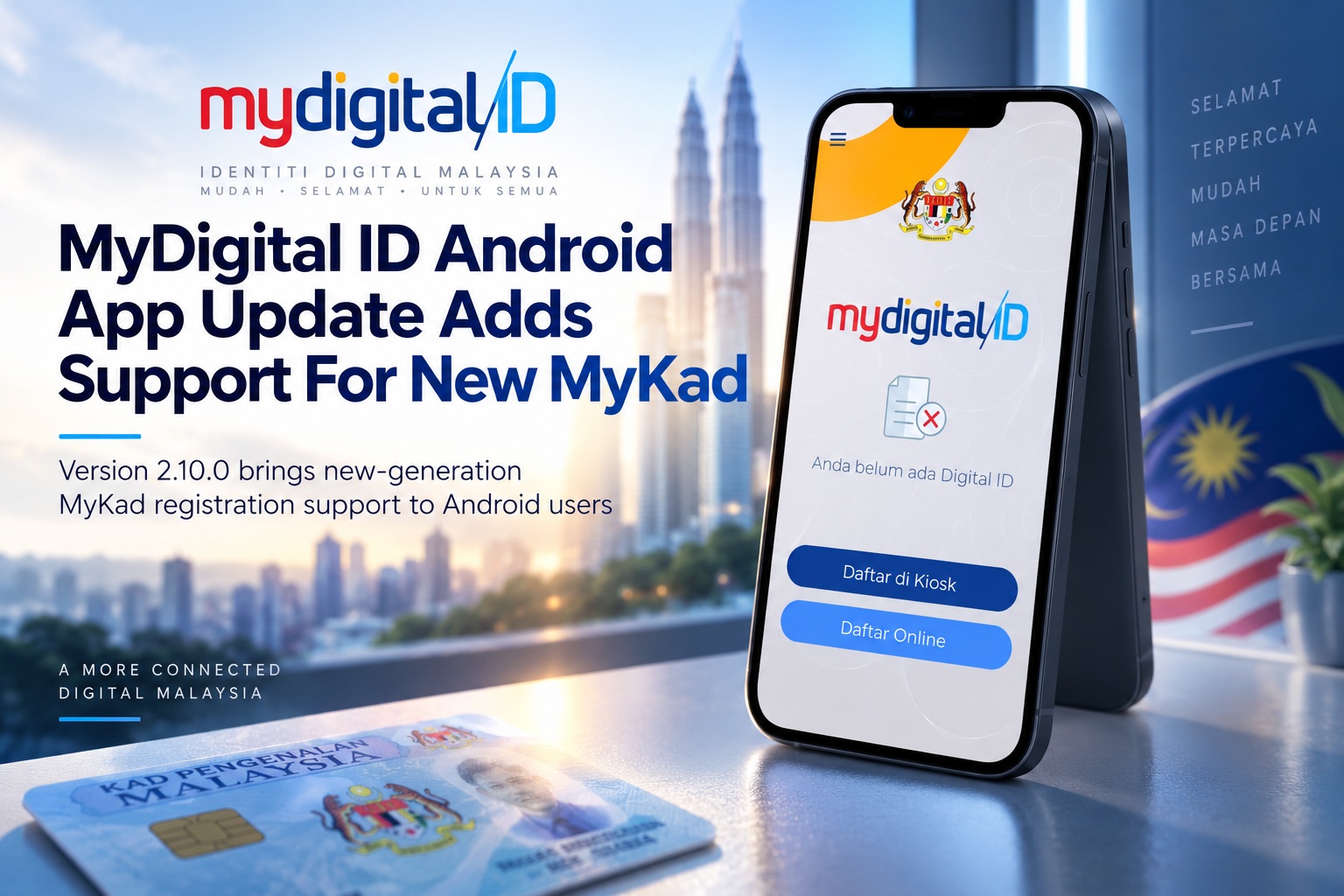
Malaysia's transition to the new-generation MyKad has introduced a few compatibility issues with online identity verification systems, particularly those relying on Electronic Know Your Customer, or eKYC, technology. Some holders of the redesigned card have reportedly faced difficulties registering for digital services because existing verification systems were not yet fully prepared for the updated card layout. The National Registration Department, or JPN, previously confirmed that service providers were working on updates to address the issue. MyDigital ID has now taken an important step forward by adding support for the new MyKad within its Android application.
Android Users Can Now Register Using The New MyKad
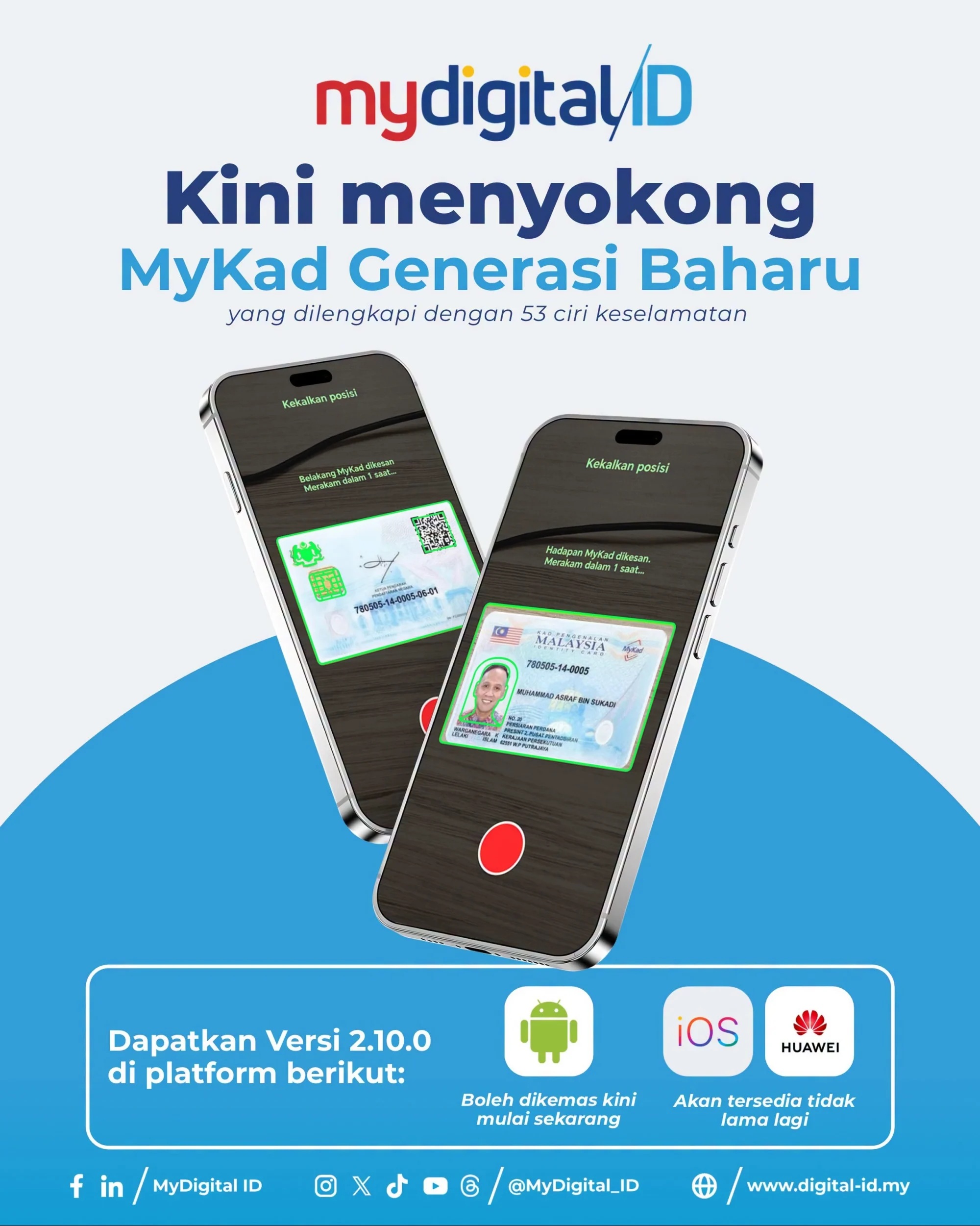
MyDigital ID announced through its official Facebook page that Android users can now register using the newly redesigned MyKad. Users will first need to make sure they are running the latest version of the application, which is version 2.10.0. Once updated, the app should be able to recognise and process the new identity card during the registration process. This should make the onboarding process much smoother for Android users who recently received the updated MyKad.
For the moment, however, the new MyKad support is limited to Android devices. Users on iOS and Huawei platforms will still need to wait for compatible updates, although MyDigital ID has indicated that support for those platforms will be introduced soon. Those who cannot complete registration through the mobile app still have the option of registering through MyDigital ID kiosks. This provides an alternative route while support across different mobile platforms continues to be rolled out.
Why The New MyKad Caused eKYC Problems
The compatibility issue is not limited to MyDigital ID, as many digital services in Malaysia rely on eKYC systems to verify a user's identity. These systems are often designed to recognise specific visual layouts, card positions and security features, meaning a major redesign can temporarily disrupt automated verification. Since the new MyKad introduced several physical and technical changes, some existing systems were simply not configured to recognise the updated card correctly. Service providers therefore need to adjust their scanning, image recognition and verification processes.
The updated MyKad introduces significantly more security elements compared with the previous design. It reportedly includes a total of 53 security features, ranging from a dynamic security hologram and ultraviolet elements to Guilloche patterns and a transparent window. These enhancements are intended to strengthen the card against tampering and counterfeiting. However, they also mean that identity verification platforms need to properly understand and process the updated security and visual characteristics.
A Noticeably Different Card Layout
One of the biggest changes is the physical arrangement of information on the card. The holder's photograph has been moved to the left side instead of the right, making the new MyKad immediately recognisable compared with the previous version. The embedded chip has also been relocated to the back of the card, while a QR code now sits alongside it. These changes may appear straightforward to users, but they can have a major impact on automated systems trained around the previous card format.
Because many eKYC platforms use image recognition and predefined card templates, even a change in photo positioning or chip location can cause a verification attempt to fail. This explains why service providers need to release software updates before the redesigned MyKad can be fully supported. As more systems are updated, the registration and verification experience should gradually return to normal. Until then, users may encounter different levels of compatibility depending on the platform they are trying to access.
New Card Orientation Also Matters
The redesigned card also changes how it needs to be inserted into certain card-reading terminals. Because the chip is now located on the back, users must insert the MyKad with the chip facing upward, meaning the back side of the card should face up when using compatible terminals. This applies to systems such as BUDI95 fuel subsidy verification and SARA cash aid terminals, where the physical chip needs to be read directly. The same card orientation also applies when using MyDigital ID kiosks.
While this may seem like a small change, it could initially confuse users who are familiar with inserting the older MyKad in a different orientation. Clear instructions at terminals and kiosks will therefore be important during the transition period. Over time, the new orientation should become familiar as more Malaysians receive the redesigned card. System operators will also need to ensure that their terminals and user guidance reflect the updated placement of the chip.
Existing MyKad Cards Remain Valid
There is currently no need for existing MyKad holders to rush out and replace their identity cards simply because a newer design has been introduced. Older MyKad cards remain valid and can continue to be used as usual. In fact, waiting may be the more practical option while service providers continue updating their systems to fully support the redesigned card. This could help users avoid some of the early compatibility issues currently affecting selected eKYC platforms.
As the new MyKad becomes more widely distributed, support across banking, government and other digital services is expected to improve. The MyDigital ID Android update is an encouraging sign that service providers are already adapting to the revised identity document. However, the transition will likely take some time before every platform can consistently recognise both the old and new MyKad designs without any problems.
Final Thoughts
The MyDigital ID Android update to version 2.10.0 is a welcome development for Malaysians who have already received the new-generation MyKad. With direct support now available on Android, registration should become much easier without requiring users to rely on kiosks. iOS and Huawei users will still need to wait for their respective updates, but MyDigital ID has confirmed that broader support is on the way.
The wider issue also highlights how even a physical identity card redesign can have an impact on modern digital verification services. With major changes to the MyKad's photo placement, chip location and security features, eKYC platforms need time to adapt their recognition systems. For now, existing MyKad holders can continue using their current cards, while new card holders should make sure their apps and services are updated to the latest available versions.











Comments 0