

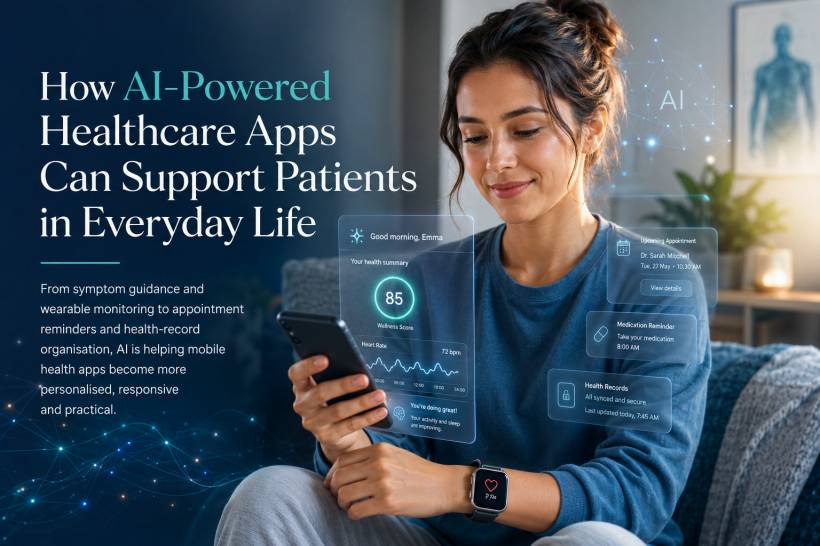
From symptom guidance and wearable monitoring to appointment reminders and health-record organisation, AI is helping mobile health apps become more personalised, responsive and practical. Healthcare has traditionally involved a lot of waiting.
What AI in Healthcare Mobile Apps Can Actually Do
AI in healthcare apps is usually powered by machine-learning models that look for patterns in data.
These patterns may come from information a user enters manually, such as symptoms, meals, medication schedules or blood-pressure readings. They may also come from connected devices such as smartwatches, fitness trackers, glucose monitors or other health-related wearables.
Over time, the app may identify changes that are worth paying attention to.
For example, it may notice a consistent reduction in sleep quality, unusual changes in heart-rate patterns, missed medication reminders or a gradual fall in daily activity. The app can then present the information in a way that is easier for the user to understand.
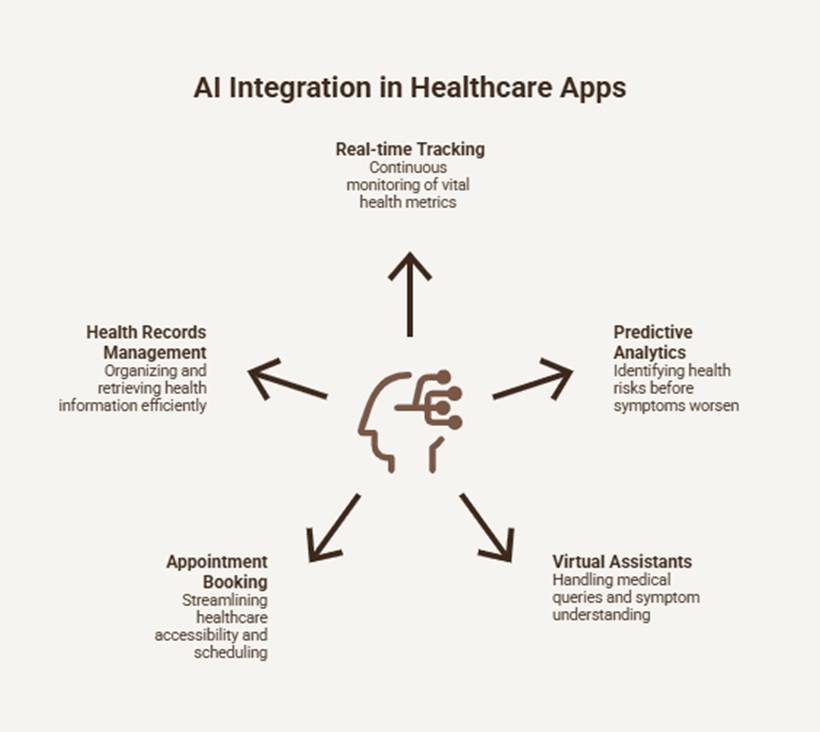
Common AI-supported functions in healthcare apps include:
Patients may need to call a clinic, fill in forms, explain the same medical history more than once or wait until a routine appointment to discuss a concern that started days earlier. While doctors, nurses and healthcare providers remain essential, mobile technology is creating new ways for people to stay more involved in their own care between appointments.
Artificial intelligence is playing an increasingly important role in that shift.
Instead of simply storing health information, newer healthcare apps can help users organise records, monitor trends, provide reminders, support symptom discussions and make it easier to access the right healthcare service at the right time.
The purpose is not to replace doctors or turn a mobile app into a diagnosis tool. The real opportunity is to give people better visibility over their health and help them act earlier when something does not look right.
• Monitoring health and lifestyle trends over time.
• Organising medication schedules and appointment reminders.
• Providing structured symptom guidance for non-emergency concerns.
• Identifying possible changes that may need medical follow-up.
• Summarising health records and recent updates.
• Supporting communication between patients and healthcare providers.
The value is not that an app knows everything about a person's health. It is that it can help users notice patterns that might otherwise be overlooked.
Predictive Insights Can Encourage Earlier Action
Many health conditions do not appear suddenly.
A person's blood pressure may rise slowly over time. Sleep may become more disrupted. Daily activity may decline. Blood glucose readings may become less stable. Small changes do not always mean something serious is happening, but they can provide useful context when viewed together.
AI-powered predictive tools can help identify patterns that may be worth discussing with a healthcare professional.
For instance, an app may encourage a user to book a check-up after repeated readings fall outside their usual range. It could also provide simple, personalised prompts around lifestyle habits, medication adherence or follow-up care.
The most important part is what happens after an alert.
AI should not make users panic or assume the worst. It should help them ask better questions, keep clearer records and arrive at appointments more prepared. A doctor can then assess the full picture, including medical history, physical examination findings, test results and other factors that an app cannot properly evaluate on its own.
Helping People Understand Symptoms More Clearly
Most people have searched online for symptoms at some point.
The problem is that ordinary web searches can be overwhelming. A minor symptom may lead to alarming results, while reliable information can be difficult to separate from poor-quality advice.
Healthcare apps can provide a more structured experience.
An AI-powered assistant may ask follow-up questions about symptoms, duration, severity and related changes. It can then offer general guidance, such as self-care suggestions, signs that need medical attention or advice on whether the person should contact a clinic.
For example, someone reporting a sore throat, tiredness and a mild fever may receive practical information about staying hydrated, resting and monitoring symptoms. The app may also highlight warning signs that should prompt medical advice.
This can make health guidance feel calmer and more organised.
However, these tools should always be designed with clear boundaries. They are best used to support awareness and triage, not to provide a final diagnosis or replace urgent medical care.
Real-Time Monitoring Through Wearables
Wearable technology has made health tracking much more common.
Smartwatches, fitness bands and connected medical devices can collect information such as heart rate, exercise levels, sleep patterns, blood-oxygen measurements and, in some cases, glucose readings.
When connected to an AI-enabled healthcare app, this data can become more useful than a simple daily dashboard.
Instead of showing isolated numbers, the app may look at longer-term trends. It may notice that resting heart rate has changed over several weeks, that sleep has become less consistent or that activity levels have dropped compared with a person's usual baseline.
This kind of monitoring can be especially helpful for people managing chronic conditions, recovering from treatment or trying to maintain healthier routines.
For example, a user may receive reminders to take medication, prompts to review glucose patterns after meals or suggestions to discuss persistent changes with a clinician.
The key is that alerts should be meaningful. Too many notifications can make users ignore them, while poorly designed alerts can cause unnecessary worry. Good healthcare apps need to focus on useful context rather than constant interruption.
Making Appointments Easier to Manage
Booking a medical appointment sounds simple, but it can still be frustrating.
People may need to call during office hours, wait on hold, compare available slots or remember when they last had a screening, follow-up or health review.
AI-supported scheduling can make this process more convenient.
A healthcare app may help users find suitable appointment times, send reminders before a visit and offer rescheduling options when plans change. It can also prompt users when they may be due for routine follow-up based on previous appointments or care plans.
For healthcare providers, better scheduling can reduce missed appointments and help clinics use available slots more efficiently.
For patients, it reduces the small administrative barriers that sometimes delay care.
This is especially useful for people managing ongoing treatment, regular monitoring or multiple appointments across different services.
Organising Health Records More Effectively
Health records can quickly become difficult to manage.
A person may have prescriptions, test results, discharge summaries, scans, vaccination records and specialist notes stored across emails, printed documents and different healthcare platforms.
AI can help make these records easier to search and understand.
For example, a healthcare app may categorise uploaded documents by date, type or health topic. It may identify medication names, allergies, diagnoses or upcoming follow-ups within an uploaded record.
It can also create a brief summary of key events, helping users understand what has changed over time.
This can be useful before an appointment. Instead of trying to remember every past result or medication change, a patient may be able to share a clear timeline with their healthcare provider.
Doctors still need access to accurate, verified medical information. But a well-organised personal record can help patients take a more active role in those conversations.
Better Access Does Not Mean Less Need for Doctors
One of the biggest misunderstandings around healthcare AI is the idea that it is meant to replace doctors.
It is not.
A mobile app cannot physically examine a patient, understand every part of their personal situation or make the same clinical judgments as a qualified healthcare professional. It also cannot reliably handle emergencies or complex cases without human oversight.
The best role for AI is supportive.
It can help people stay informed, organise information, follow care plans and notice trends that may deserve attention. It can also make routine healthcare tasks less time-consuming for both patients and providers.
This gives clinicians more time to focus on decisions that require medical expertise, empathy and professional judgment.
Privacy, Accuracy and Safety Must Come First
Healthcare information is deeply personal.
Any app that handles medical data needs strong privacy protections, clear consent processes and secure storage. Users should understand what information is collected, why it is needed and who can access it.
Apps must also be careful about accuracy.
AI models can produce poor recommendations when they are trained on incomplete, biased or unrepresentative data. This can be particularly serious in healthcare, where a misleading suggestion may delay appropriate care or create unnecessary anxiety.
That is why healthcare AI should be developed with proper clinical oversight, tested carefully and designed to encourage users to seek professional help when needed.
Important safeguards include:
• Clear explanations of what the app can and cannot do.
• Strong encryption and secure access controls.
• Consent before sharing personal health data.
• Clinical review for high-risk features.
• Fair and diverse data used during model development.
• Easy ways for users to contact a healthcare professional.
Trust is essential. A healthcare app can only be useful when users feel confident that their data is protected and that the advice is presented responsibly.
The Future of AI in Mobile Healthcare
Healthcare apps are likely to become more capable in the years ahead.
As wearables collect more useful data and AI models improve, users may receive more personalised support around wellness, chronic-disease management, recovery and preventive care.
Future apps may combine multiple types of data, including activity patterns, sleep, biometrics, medical records and lifestyle information. This could help create more individualised care plans rather than one-size-fits-all advice.
Remote monitoring may also expand, making it easier for people in rural areas, older adults or patients with mobility limitations to stay connected with healthcare services.
At the same time, the human side of healthcare will remain essential.
Technology can improve access and organisation, but it cannot replace trust, clinical experience or meaningful conversations between patients and healthcare professionals.
Final Thoughts
AI-powered healthcare apps have the potential to make everyday health management more personal, proactive and accessible.
They can help people monitor trends, organise records, understand symptoms more clearly, keep up with appointments and follow care plans with less friction. Used responsibly, they can make the time between clinic visits more useful and help patients arrive better prepared for medical discussions.
The goal is not to place healthcare entirely in a phone. It is to give people better tools to understand their health, make informed decisions and connect with the right professional support when it matters.











Comments 0