

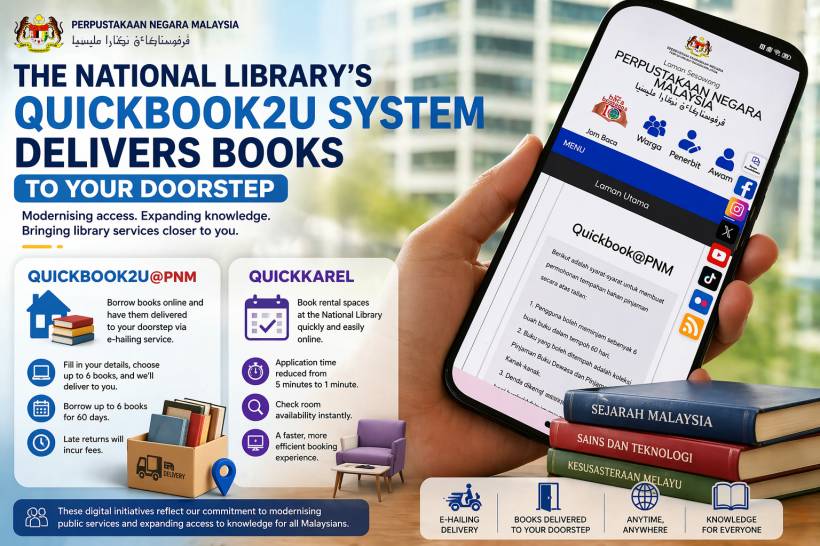
Malaysia's push toward digital public services is picking up pace again, and this time it's the National Library stepping into the spotlight. Two new initiatives have been introduced to make accessing books and facilities more convenient for the public — especially for those who prefer doing everything online.
Announced by Unity Minister Aaron Ago Dagang, the new systems — Quickbook2U@PNM and QuickKarel — are designed to modernise how Malaysians interact with the National Library, making it more accessible without the usual physical visit.
Quickbook2U: Borrow Books Without Leaving Home
The idea behind Quickbook2U is simple but quite practical — bringing library books straight to your doorstep.
Instead of making a trip to the National Library of Malaysia, users can browse and request books online. Once selected, the books are delivered using an e-hailing service, which means the entire borrowing process can be done from home.
Here's how it's supposed to work:
• Fill in your personal and contact details
• Select the book titles you want
• Submit your request for delivery
Users are allowed to borrow up to six books at a time, with a borrowing period of 60 days. Like any typical library system, late returns will incur penalties.
On paper, it sounds like a great step forward — especially for busy professionals, students, or even those who simply prefer the convenience of home delivery.
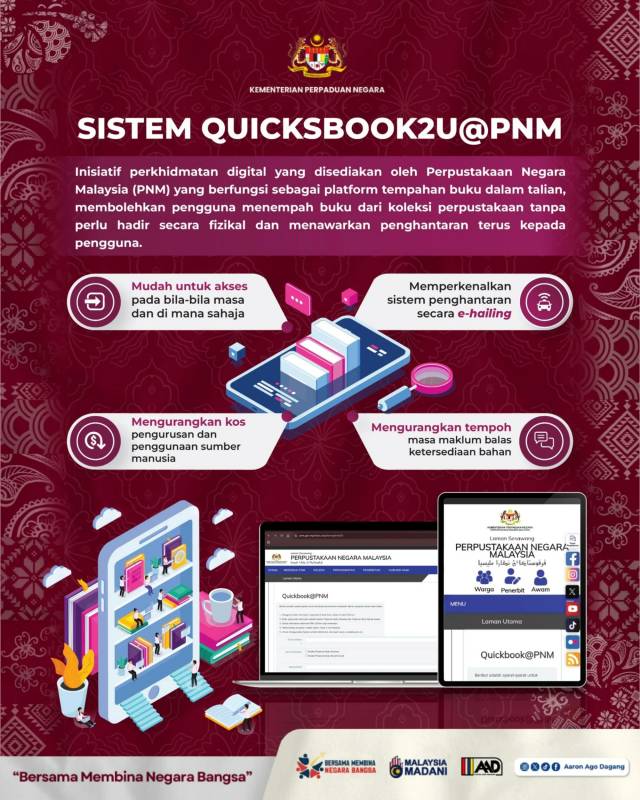
Still A Work In Progress?
While the concept is solid, the current implementation doesn't seem fully ready yet.
At the time of writing, the submission form isn't functioning properly. Clicking the submit button doesn't produce any response, and there's also no clear field to input a delivery address — which is obviously a key part of a doorstep delivery service.
This suggests that Quickbook2U is either still being tested or not fully rolled out to the public just yet. So if you're eager to try it, you might need to wait a little longer.
QuickKarel: Faster Booking For Library Spaces
Alongside book delivery, the National Library is also introducing QuickKarel — a system aimed at simplifying the process of booking spaces within the library.
Whether it's for studying, meetings, or quiet work sessions, users can now (in theory) reserve rooms through an online platform without the usual hassle.
The key improvement here is speed and convenience:
• Users can instantly check room availability
• Entire process handled online without manual steps
For regular visitors of the library, this could be a significant upgrade — especially during peak periods when rooms are in high demand.
Facing The Same Early Limitations
However, QuickKarel appears to be facing similar issues as Quickbook2U.
At the moment, the system doesn't provide a functional way to complete a booking. The webpage lacks an option to submit applications, making it unusable for now.
Again, this points to the service still being in its early stages, possibly undergoing final adjustments before a proper launch.
A Step Towards Smarter Public Services
Despite the current hiccups, the bigger picture here is quite clear. These initiatives reflect the government's ongoing effort to modernise public services and align them with how people interact with technology today.
In a country where digital adoption continues to grow rapidly, services like Quickbook2U and QuickKarel could eventually:
• Reduce the need for physical visits
• Make public facilities more efficient and user-friendly
Final Thoughts
It's easy to focus on what's not working yet, but the direction itself is promising.
If executed properly, services like Quickbook2U could change how people engage with libraries entirely — turning them into hybrid digital-physical platforms rather than purely location-based services. Meanwhile, QuickKarel has the potential to remove everyday friction from something as simple as booking a study space.
For now, both systems feel like they're still warming up. But once fully operational, they could become a meaningful step forward in making Malaysia's public services more modern, accessible, and in tune with everyday digital habits.











Comments 0