

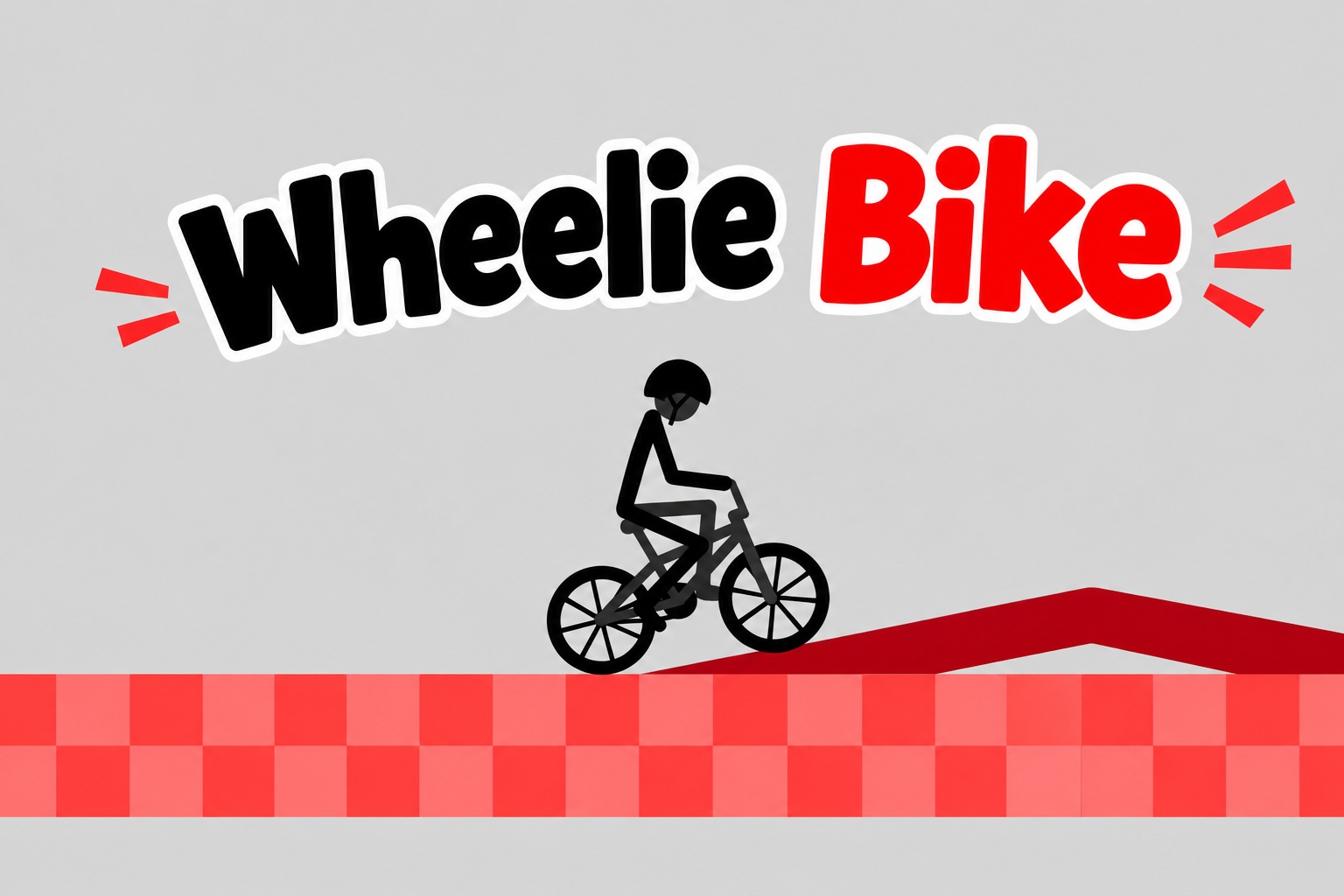
Wheelie Bike takes one of the simplest bicycle tricks imaginable and turns it into an addictive physics challenge where every tiny movement matters. Developed by FG Studio, the game asks players to keep a bicycle balanced on its rear wheel while travelling as far as possible without allowing the front wheel to touch the ground or tipping backward. There are no opponents to race, complicated stunt combinations to memorize, or large menus standing between the player and the action. The entire experience is built around maintaining one continuous wheelie for as long as possible.
The controls are intentionally minimal, but mastering them requires patience. Holding the input raises the front of the bicycle, while releasing allows it to fall, forcing players to constantly make small adjustments as momentum changes. Flat ground is manageable at first, but slopes, ramps, platforms, and sudden changes in elevation continually alter the bike's balance. A run that looks perfectly controlled can end almost instantly if the rider leans only slightly too far in either direction.
Now playable online through Lemon Web Games, Wheelie Bike brings its physics-based cycling, single-input controls, changing terrain, quick restarts, and distance-chasing challenge directly into the web browser. Players can begin a run almost immediately, learn how the bicycle responds to small adjustments, and gradually improve their personal distance through better timing and smoother balance. The rules never become complicated, but the physics ensure that maintaining control becomes increasingly demanding as the landscape changes. For anyone who enjoys simple skill games where improvement comes directly from practice, Wheelie Bike offers an excellent one-more-try challenge.
The Entire Game Revolves Around One Wheelie
Wheelie Bike does not distract players with unrelated objectives. The goal is simply to raise the front wheel and keep it off the ground while the bicycle continues moving forward.
That single rule immediately creates tension because the front wheel can never safely return to the road during the run. Lean too far forward and the attempt ends, but pull back too aggressively and the rider can lose balance in the opposite direction.
The challenge is therefore not performing the wheelie once. It is maintaining the correct angle continuously while the environment keeps changing underneath the bicycle.
One Input Creates a Surprising Amount of Control
The game can be controlled with a mouse click, touch input, or similarly simple button press. Holding the control increases the wheelie angle, while releasing it allows the front of the bicycle to drop.
This creates an easy-to-understand relationship between input and movement. Players do not need to remember separate acceleration, braking, or trick buttons.
The difficulty comes from precision. Holding for a fraction too long can create too much backward rotation, while releasing too early can send the front wheel toward the ground.
Small Adjustments Are Better Than Panic
New players often make large corrections whenever the bicycle begins leaning in the wrong direction. That usually creates an even bigger problem.
Successful runs depend on making small, controlled adjustments before the balance becomes extreme. A brief press can restore the correct angle without sending the rider too far backward.
Likewise, releasing the input slightly can lower the bicycle gradually rather than dropping the front wheel suddenly. The smoother the correction, the easier it becomes to prepare for the next terrain change.
Momentum Constantly Changes the Balance
The bicycle is always moving forward, so maintaining the same input does not guarantee the same result forever. Momentum changes as the rider climbs slopes, descends hills, or lands on different surfaces.
A balance point that works perfectly on flat ground may become unstable the moment the bicycle reaches an incline. Players need to respond to the terrain rather than relying on one fixed rhythm.
This is what gives Wheelie Bike its depth. The controls remain identical throughout, but the physics continually create new situations.
Slopes Can Destroy a Perfect Run
Uphill sections immediately affect the angle between the bicycle and the road. Players may need to adjust quickly to prevent the rider from tipping backward as the front rises relative to the terrain.
Downhill sections create the opposite problem. The front wheel can suddenly move dangerously close to the ground if the player fails to compensate.
These changes make approaching slopes more important than simply reacting after reaching them. Experienced players begin preparing for the angle before the bicycle fully enters the hill.
Ramps Demand Confidence
Ramps can create some of the most dramatic moments because they alter both the bicycle's angle and momentum at the same time.
Approaching with too much backward lean can make the rider unstable during the transition. Approaching too low can place the front wheel dangerously close to the ramp.
The safest technique is usually to enter with enough balance to absorb the change rather than attempting a major correction at the last second. Smooth preparation is more reliable than panic.
Raised Platforms Change the Rhythm
Different elevations force the bicycle to move through sudden transitions that can interrupt an otherwise comfortable wheelie.
Reaching a raised surface may push the bike upward quickly, while dropping from one can produce a sharp forward rotation. Both situations require the player to anticipate what will happen next.
These terrain changes prevent long runs from becoming repetitive. Even after mastering flat ground, the environment keeps asking for new timing.
The Rider's Position Gives Important Visual Feedback
Watching the relationship between the rider, bicycle frame, and rear wheel helps players understand whether the current wheelie is stable.
If the rider begins leaning too far backward, the bicycle is approaching one type of failure. If the front wheel drops rapidly, the player needs to restore lift.
Experienced players eventually stop thinking in terms of exact button presses and begin reacting to the visible angle naturally. The rider becomes a practical balance indicator.
The Front Wheel Is Always the Main Warning
The front wheel provides the clearest indication of whether the run is about to end.
When it begins approaching the road too quickly, the player knows another small lift is required. When it rises excessively, releasing the input becomes more important.
Keeping the wheel within a comfortable middle range creates the largest margin for correction. Riding extremely close to either failure point makes every terrain change much harder.
There Is No Need to Chase Maximum Height
A wheelie does not become better simply because the front wheel is pointing high into the air.
Extreme angles provide very little room for error and make backward tipping much more likely. A lower, controlled wheelie is usually far easier to maintain.
The challenge is stability rather than spectacle. Staying within a manageable angle for a long distance is far more valuable than creating one dramatic moment.
The Physics Create Natural Difficulty
Wheelie Bike does not need complicated enemy patterns or artificial hazards because the bicycle itself provides enough challenge.
Every slope and landing interacts with the same physics system, meaning the difficulty feels like a natural consequence of movement rather than something randomly imposed.
This makes failure easy to understand. Players can usually see exactly when the balance started going wrong and adjust their approach on the next attempt.
Distance Becomes the Real Score
The longer the bicycle remains balanced, the more successful the run becomes.
This creates an immediately understandable personal challenge. A previous record provides a clear target every time the game begins again.
Improvement can be small but still satisfying. Travelling only a little farther than before is enough to prove that the player is becoming more consistent.
Quick Restarts Create the One-More-Try Effect
Wheelie Bike works especially well because failure does not create a long interruption. A new attempt can begin almost immediately.
That fast restart cycle keeps the mistake fresh in the player's mind. If a particular slope caused the crash, the next run becomes an immediate opportunity to approach it differently.
One attempt easily becomes several because reaching the previous failure point always feels achievable. The game continually creates the feeling that the next run could be the best one yet.
Muscle Memory Gradually Replaces Conscious Thought
During the first few attempts, players may think carefully about every press and release.
After enough practice, corrections begin happening almost automatically. The player recognizes the bicycle's angle and responds before consciously analysing it.
This muscle memory is one of the strongest signs of improvement. Sections that once felt unpredictable gradually become comfortable enough that attention can shift farther ahead.
Looking Ahead Helps With Terrain Changes
Watching only the bicycle makes it harder to prepare for upcoming slopes or platforms.
Keeping some attention on the road ahead provides more time to anticipate how the next change will affect momentum. Players can begin correcting before the transition actually happens.
This becomes especially useful during longer runs where several terrain changes appear close together. Preparation is always easier than emergency recovery.
Patience Usually Beats Aggressive Corrections
Wheelie Bike rewards calm inputs. Rapidly alternating between holding and releasing often creates unnecessary instability.
Smooth corrections allow the bicycle to settle before another adjustment is made. This makes the physics much easier to read.
Players who remain patient generally travel farther than those constantly attempting to force the bike back into a perfect position. Balance is maintained through control rather than constant activity.
The Minimalist Design Keeps the Challenge Clear
The game does not overwhelm the screen with complicated interface elements or unnecessary effects.
The bicycle, rider, road, and distance are the important information, allowing players to focus entirely on balance.
This simplicity is ideal for a physics skill game. When a run fails, there is very little confusion about what happened.
Wheelie Bike Works Perfectly for Short Sessions
A single attempt can be extremely short, making the game easy to play whenever only a few minutes are available.
At the same time, repeated attempts can turn a short session into something much longer. Personal records create a natural reason to continue.
This flexibility makes Wheelie Bike particularly comfortable as a browser game. There is almost no barrier between deciding to play and beginning another run.
Playing Wheelie Bike Online Today
Through Lemon Web Games, Wheelie Bike can now be played directly in your web browser with no downloads or setup required. Features of the web-based version include:
New players should focus on keeping the bicycle at a moderate wheelie angle rather than trying to raise the front wheel as high as possible. Make brief corrections and allow the physics to settle before pressing again. Staying away from the extreme forward and backward positions gives far more time to recover.
It is also worth watching the road ahead. Begin preparing slightly before slopes and platform transitions rather than reacting only after the bicycle reaches them. Anticipation quickly becomes one of the biggest differences between short runs and personal records.
Who Should Play Wheelie Bike
Wheelie Bike is particularly suitable for players who enjoy games where improvement is entirely personal. The bicycle does not become stronger and no upgrade suddenly makes the course easier. Better results come from understanding the physics and developing more precise timing.
It should also appeal to anyone who enjoys minimalist arcade challenges. The objective can be explained in seconds, yet maintaining the wheelie consistently can remain difficult for a surprisingly long time.
Play Wheelie Bike Online Now
Wheelie Bike turns one bicycle stunt into an endless battle against momentum and gravity. Raise the front wheel, find a stable balance point, make careful adjustments, prepare for slopes and ramps, and keep travelling for as long as possible without letting the wheel touch down.
Through Lemon Web Games, players can experience Wheelie Bike directly in the browser and begin another attempt almost immediately after every mistake. There are no complicated systems to learn—only the bicycle, the road, and the challenge of travelling a little farther than last time.
Final Thoughts
Wheelie Bike works because it understands how addictive a simple physical challenge can become. Holding and releasing one input sounds almost effortless, but every change in slope, momentum, and bicycle angle forces another small decision. The entire game is built around maintaining control just long enough to reach the next stretch of road.
Its fast restart system makes improvement especially satisfying. A failed run rarely feels like lost progress because the player immediately understands what went wrong and can try again. Gradually, frantic corrections become smaller, smoother movements and difficult terrain begins feeling predictable.
Through Lemon Web Games, Wheelie Bike can now be enjoyed directly in the browser as a compact test of timing, patience, and balance. It does not need elaborate levels or complicated mechanics to remain engaging. Sometimes all a game needs is one bicycle, one rear wheel, and the determination to keep that front wheel in the air for just a little longer.











Comments 0