

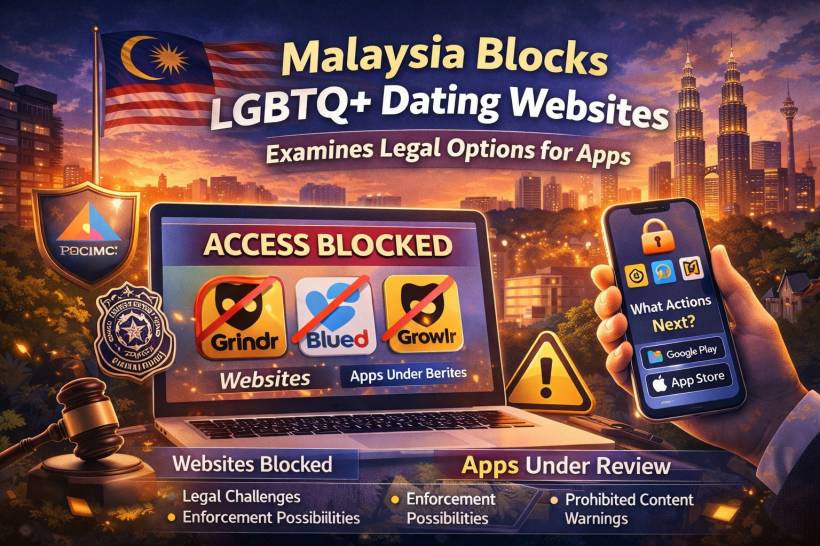
Malaysia's communications minister, Fahmi Fadzil, has confirmed that the Malaysian Communications and Multimedia Commission (MCMC) has blocked access to LGBTQ+ dating websites in Malaysia. The confirmation came through a written parliamentary reply in the Dewan Rakyat, following a question about whether the government is also moving to stop downloads of certain dating apps.
What Sparked the Parliamentary Reply
The issue was raised by Nurul Amin Hamid (PN–Padang Terap), who asked whether MCMC had worked with app store providers to block downloads of dating apps such as Grindr, Blued, and Growlr. The question framed these apps as tools used for same-sex relationships, and it pushed for clarity on whether enforcement was happening only on websites, or also at the app store level.
Websites First: Why Blocking a Site Is the "Simpler" Move
From a technical and regulatory standpoint, blocking a website is often the fastest lever regulators can pull locally. Internet service providers can be instructed to restrict access to specific domains, and that can be done without needing cooperation from a foreign company that runs a global app ecosystem. That's why, based on the ministry's reply, action so far has focused on blocking website access.
Apps Are a Different Problem: App Stores Don't Work Like Local Websites
On the app side, Fahmi's reply highlighted the big complication: control over what appears in Google Play and Apple's App Store depends on the rules and policies of those platform owners, which are foreign companies operating outside Malaysia. So even if authorities want an app removed or restricted, the process is not as direct as blocking a website, and it can involve longer legal and administrative steps.
That said, the ministry also indicated it is reviewing legal options to curb the presence of such apps, including the possibility of engagement or discussions with Google and Apple.
What MCMC Says It Enforces Online
In the same written reply, Fahmi described MCMC's broader enforcement posture as "proactive monitoring" to prevent Malaysia's online environment from violating local laws. He also described the types of content or app functions MCMC says it targets, including material linked to scams, exploitation, abuse, and threats to public safety, alongside other categories described as prohibited under local standards.
What Could Happen Next If Authorities Decide an App Crosses the Line
According to the reply (as reported), the ministry said that if an app is found to be distributing prohibited content or facilitating illegal activities, possible actions can include:
In other words, the pathway for apps appears to rely more on legal framing, platform requests, and enforcement referrals, rather than an instant "switch" like website blocking.
The Practical Takeaway
Right now, the confirmed move is web-level blocking of certain dating websites, while app-store action is still being studied and weighed from a legal angle. If further steps happen, they're likely to involve formal requests to platform owners and a longer regulatory process, rather than an immediate overnight change.











Comments 0