

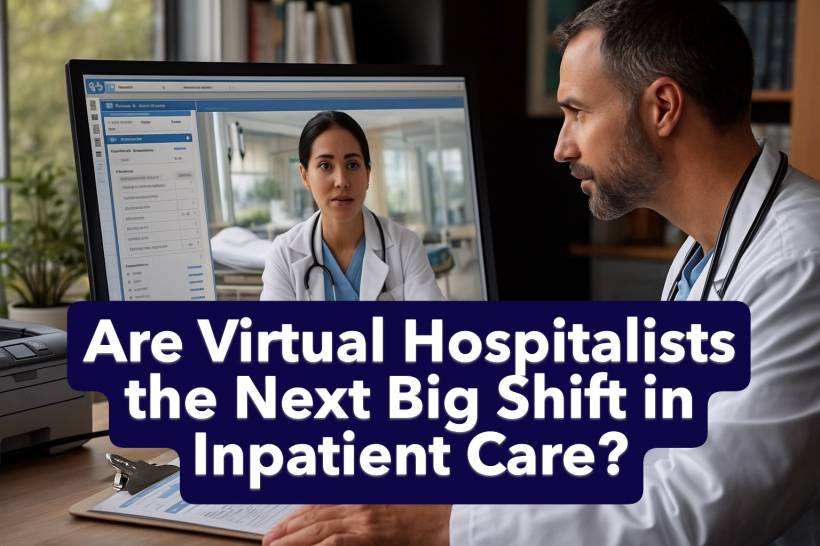
Hospitals across the United States are grappling with the same long-standing challenge: a shortage of physicians available to manage inpatient care. Rural hospitals feel this strain most acutely, but even larger facilities experience gaps when patient volumes fluctuate unpredictably. As these pressures grow, more hospitals are turning to an innovative model that was once considered experimental — virtual hospitalists.
In 2025, this approach has rapidly gained traction, prompting many healthcare systems to rethink how they deliver inpatient services and whether remote clinical support might soon become a standard part of hospital operations.
Why Hospitals Are Turning to Virtual Hospitalists
The traditional model depends heavily on having enough hospitalists physically present around the clock. Unfortunately, that's becoming increasingly difficult. Rural communities struggle to recruit full-time physicians, and even urban hospitals face staffing stress during peak admission periods, night shifts or sudden surges in patient acuity.
Virtual hospitalists offer a direct answer to these challenges. Instead of functioning as backup or supplementary support, they serve as core clinical coverage — providing the same medical oversight and decision-making as onsite hospitalists, but from remote locations. For many hospitals, this flexibility helps reduce delays in admissions, evaluations and treatment, especially during high-volume hours.
Organizations like SCP Health, which operates telemedicine and hospital-at-home services, have already seen this model scale rapidly. The company recently surpassed one million virtual hospital medicine visits, showing just how quickly hospitals are adopting remote inpatient care as part of their everyday workflow.
What Virtual Hospitalists Actually Do
Many people assume remote clinicians can only handle limited tasks, but today's virtual hospitalists manage nearly the full spectrum of inpatient responsibilities. Their duties typically include performing patient admissions, evaluating emergency department consults, rounding on the wards, preparing discharge plans and participating in urgent clinical responses.
With modern telehealth tools — including high-resolution video systems, advanced audio equipment and digital stethoscopes — remote physicians can conduct detailed assessments with support from onsite nursing teams. They can listen to heart and lung sounds, assess neurological function, evaluate mental status and monitor other critical indicators without being physically present.
This real-time collaboration allows them to function seamlessly alongside onsite clinicians. When patient census spikes or onsite staffing gets tight, the virtual hospitalist simply joins the care team remotely and helps sustain workflow continuity.
A Model Built for Scalability
One key reason this approach is expanding so quickly is the ability to centralize clinician coverage. Virtual hospitalists can be licensed across multiple states, enabling them to support various facilities from regional or national hubs. This structure is especially valuable during night shifts, surge events or holiday periods when onsite staffing is hardest to maintain.
Virtual clinicians follow the same clinical standards, credentialing frameworks and quality metrics as onsite staff. This consistency helps build trust across teams, ensuring that care remains aligned regardless of whether the physician is on the ward or on a screen.
What This Means for the Future of Inpatient Care
The rise of virtual hospitalists represents more than a solution to staffing shortages — it signals a broader evolution in how inpatient care is delivered. Care is becoming increasingly team-based, with fewer barriers tied to physical presence. Bedside teams remain essential, but remote clinicians now play a critical role in keeping patient flow steady and ensuring timely medical decisions.
This shift also redefines what "inpatient care" means. Instead of viewing hospital medicine as something confined to four walls, healthcare systems are embracing a more flexible approach that extends across emergency departments, post-acute settings and remote clinical hubs.
As hospitals continue to balance rising demand with limited workforce supply, virtual hospitalists are emerging as a practical, scalable and sustainable model — one that may soon become a standard part of modern inpatient care.











Comments 0