

Open-source software sits quietly beneath much of the modern internet. It powers browsers, servers, developer tools, cloud platforms, security systems and countless business applications. Yet many of the projects that millions of people depend on are maintained by relatively small teams with limited time to investigate bug reports, validate security claims and prepare safe patches.
That is the problem OpenAI's new Daybreak initiative is trying to address.
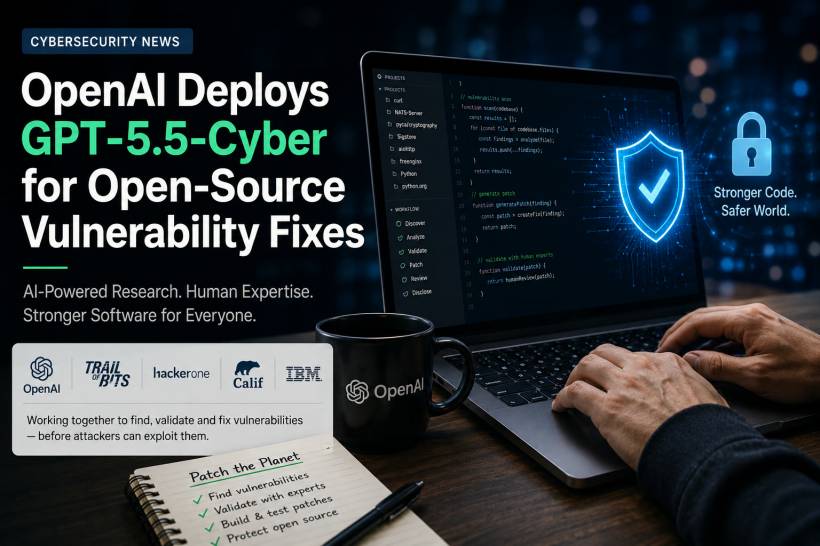
Through a programme called Patch the Planet, OpenAI is working alongside security research firm Trail of Bits to use GPT-5.5-Cyber and Codex Security in the vulnerability-remediation process. The goal is not simply to find more bugs. It is to help researchers validate important issues, reduce false positives, build patches and support maintainers through the full journey from discovery to a safe fix.
From Finding Bugs to Actually Fixing Them
Security research has always been a race against time.
Discovering a vulnerability is only the first step. Someone still needs to confirm that it is real, understand how serious it is, create a patch, test that patch, coordinate disclosure and make sure it reaches the people who maintain the affected project.
That process can take significant time, especially for open-source teams already balancing feature development, user support and long-term maintenance.
Patch the Planet is designed to make that process less overwhelming. Instead of sending maintainers a large volume of unverified AI-generated reports, the programme uses security experts to investigate findings before they are passed on.
This means researchers can filter out duplicates, remove weak or misleading findings, reassess severity and provide maintainers with clearer evidence and patch suggestions.
The focus is on reducing workload, not creating more of it.
Trail of Bits Takes on a Major Role
Trail of Bits has committed its security research organisation to the initiative's initial phase.
Its researchers are working directly with project maintainers to investigate potential flaws, validate real security issues, develop and test fixes, and coordinate responsible disclosures. HackerOne and Calif are also contributing through vulnerability triage, disclosure support and additional security research.
This human involvement is crucial.
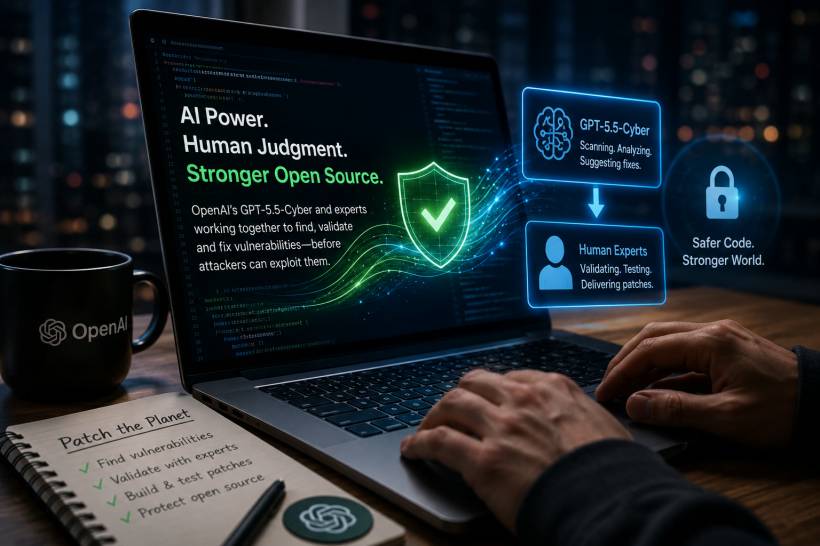
AI can search code quickly, compare patterns and generate possible explanations, but it can still produce false positives or misunderstand how a particular project is designed. A bug that looks dangerous in isolation may not be exploitable in the real application. On the other hand, a subtle issue may be far more serious than it first appears.
That is why human security researchers remain the final filter.
Supporting Some of Open Source's Most Important Projects
The first group of participating projects includes major names across networking, cryptography, software supply chains and programming-language infrastructure.
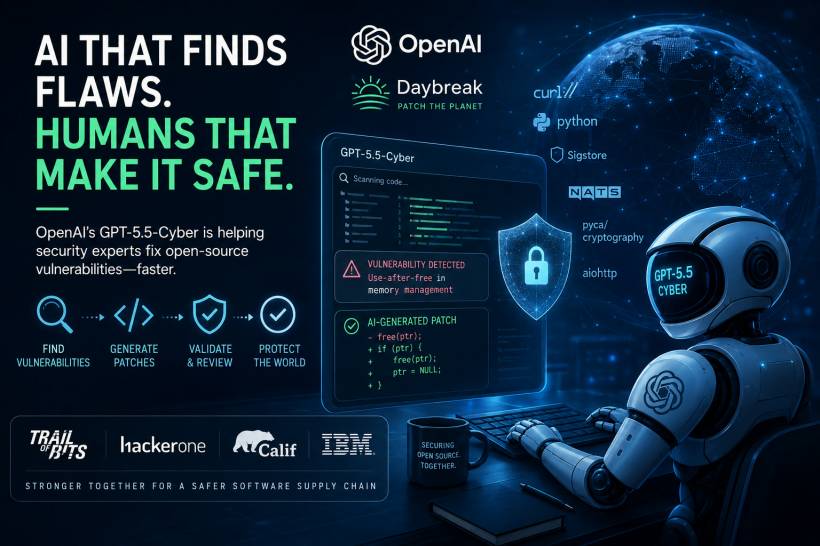
These include cURL, NATS Server, pyca/cryptography, Sigstore, aiohttp, the Go project, freenginx, Python and python.org.
These are not minor projects. They are widely used building blocks that appear directly or indirectly in countless applications and services. A vulnerability in one shared library can spread across thousands of downstream systems.
That is what makes open-source security such an important area to improve. Strengthening one widely used project can help protect a huge number of organisations and users beyond the original codebase.
How AI Is Being Used in the Research Process
The goal is not to let AI operate independently and push code into production.
Instead, GPT-5.5-Cyber and Codex Security are being used as tools that help security teams move faster through repetitive and time-consuming work. They can help researchers examine unfamiliar codebases, identify relevant components, expand testing coverage, compare similar implementations and generate patch candidates for review.
One area where this becomes especially useful is fuzzing.
Fuzzing involves feeding software large volumes of unexpected or unusual inputs to see whether it crashes, behaves incorrectly or exposes a weakness. Building a strong fuzzing environment can take weeks of manual engineering work.
According to OpenAI, Trail of Bits used GPT-5.5-Cyber and Codex to help create a broad fuzzing setup in less than a day, covering multiple entry points, builds and test cases. The researchers still guided the work, reviewed the output and decided which findings were worth pursuing.
The AI accelerated the setup. The experts remained responsible for the conclusions.
Using Old Vulnerabilities to Find New Variants
Another important use case involves analysing historical vulnerability records.
Many security flaws are not completely unique. A bug pattern found in one software project may appear in a different form elsewhere, especially when similar code structures or design decisions are reused.
The Daybreak workflow uses past CVEs and public vulnerability information to identify patterns that may be worth checking in other codebases. AI-assisted systems can then search for related behaviour, filter likely duplicates and prioritise stronger leads for expert review.
This is valuable because security teams often have far more potential findings than they can realistically investigate.
A reliable filtering process can help researchers spend time on the issues that are most likely to matter.
Differential Testing Can Reveal Unexpected Problems
The initiative is also using differential testing, where different implementations of the same protocol or standard are compared against one another.
In theory, two systems following the same specification should behave similarly when given the same input. When they produce different outcomes, that difference can point to a potential bug, security weakness or implementation gap.
Traditionally, setting up this kind of testing requires custom code to connect different systems to a shared test environment. Codex can help generate and refine this supporting code more quickly, allowing researchers to investigate differences sooner.
This does not automatically mean every difference is a vulnerability. However, it can surface useful leads that experts may not have found as quickly through manual testing alone.
Human Validation Is Still the Most Important Step
One of the biggest risks of AI-assisted security research is volume.
A powerful system can generate many possible findings, but more findings do not always mean more value. Security teams can easily become overwhelmed by false positives, duplicates and reports that lack enough evidence to be useful.
Patch the Planet addresses this by making expert review mandatory.
Trail of Bits researchers reproduce findings, compare them with project documentation and threat models, confirm whether they are meaningful and adjust severity where necessary. They also work with maintainers on patches that fit each project's technical preferences and release process.
Most importantly, maintainers retain control.
They decide which fixes are accepted, how disclosures are handled and when changes are released. The AI and security researchers are there to support the process, not take ownership away from the people responsible for the software.
A Broader Push for AI-Assisted Defence
Patch the Planet is part of OpenAI's larger Daybreak cybersecurity effort.
Daybreak brings together GPT-5.5, GPT-5.5-Cyber, Codex Security, Trusted Access for Cyber and security-industry partners. The goal is to help approved defenders identify vulnerabilities, prioritise risks, generate remediation guidance and validate patches inside existing security and development workflows.
GPT-5.5-Cyber is intended for specialised, authorised cybersecurity work and is being released through limited access for trusted defenders. For most defensive teams, OpenAI positions GPT-5.5 with Trusted Access for Cyber and Codex Security as the more suitable starting point.
That distinction matters because advanced cyber tools can be useful for defence but can also be misused. OpenAI says access to more permissive capabilities comes with stronger verification, monitoring and controls.
Why This Matters for the Software Supply Chain
The software supply chain is only becoming more complicated.
A modern application may rely on hundreds or thousands of open-source packages, libraries and services. A flaw in one widely used dependency can affect organisations far beyond the original project.
At the same time, AI is changing the pace of security research. Defenders may be able to identify weaknesses faster, but attackers may also gain access to more capable tools for analysing software and finding weak points.
That creates pressure for security teams to improve how quickly they can move from discovery to remediation.
Manual code review and traditional vulnerability processes are still essential, but they may no longer be enough on their own. AI-assisted triage, validation and patch development could become an important way for defenders to keep up with machine-speed vulnerability discovery.
Final Thoughts
OpenAI's Patch the Planet initiative is not about handing control of open-source security to AI.
It is about giving maintainers and security researchers more capacity to do work that has become increasingly difficult to manage manually. GPT-5.5-Cyber and Codex Security can help accelerate testing, uncover patterns, reduce repetitive work and prepare patch candidates. Human experts still validate the evidence, assess the risk and decide what should happen next.
The real value will not be measured by how many vulnerabilities an AI system can report.
It will be measured by how many meaningful fixes reach the software people depend on every day — safely, responsibly and before attackers have the chance to exploit the flaw.











Comments 0