

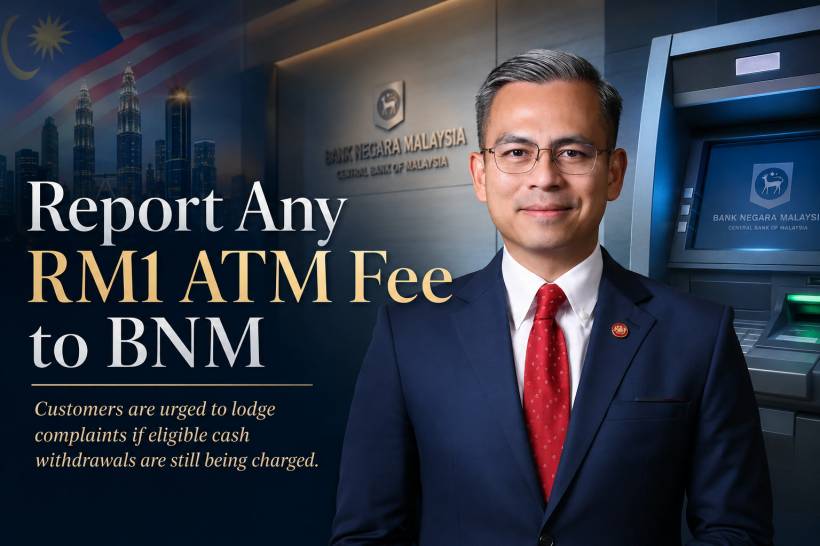
Malaysians who are still charged a RM1 fee for withdrawing cash from certain ATMs should report the matter directly to Bank Negara Malaysia (BNM), according to Communications Minister Datuk Fahmi Fadzil. The call comes after the introduction of a nationwide waiver for selected ATM withdrawals, aimed at reducing the cost of accessing cash through participating bank-owned machines.
Fahmi said customers should not simply accept the charge if they believe the ATM falls under the new fee-free arrangement. Instead, they are encouraged to submit an official complaint to BNM so the central bank can investigate and take the appropriate action against any financial institution that does not comply.
Which ATM Withdrawals Are Covered?
The RM1 fee waiver applies to ATMs owned and operated by banks that participate in the shared banking network.
This means customers can withdraw cash from eligible machines without paying the usual RM1 charge, even when using an ATM that belongs to a different participating bank.
The change covers a significant portion of the country's ATM network. Around 84% of bank-operated ATMs nationwide, representing close to 16,000 machines, are reportedly included under the waiver.
For many users, this should make it easier to access cash without having to search for an ATM operated by their own bank.
Not Every ATM Is Included
However, the fee waiver does not apply to all ATMs in Malaysia.
The remaining machines are operated by private, non-bank companies under separate commercial arrangements. These independent ATM operators are not covered by the bank-network waiver and may continue charging the standard RM1 withdrawal fee.
One example is Euronet, which operates as a major independent non-bank ATM provider following its acquisition of the MEPS network from PayNet.
Customers using these privately operated machines should therefore expect that normal transaction charges may still apply.
How to Avoid Unnecessary Charges
Fahmi advised the public to check the branding displayed on an ATM before completing a withdrawal. Machines carrying official bank logos are more likely to fall within the fee-waiver arrangement, while independent terminals may operate under different pricing structures.
It is still worth checking the transaction screen carefully before confirming a withdrawal, particularly when using an unfamiliar ATM at a petrol station, convenience store, shopping mall or tourist location.
A clear understanding of which machines are bank-operated and which are privately managed can help users avoid unexpected charges.
Why Reporting Matters
The new waiver is intended to make ATM access fairer and more convenient for the public. But its effectiveness depends on banks applying the arrangement correctly.
By reporting cases where an eligible bank ATM continues to impose the RM1 charge, customers can help BNM identify possible compliance issues and ensure the policy is being followed consistently.
Final Thoughts
The removal of the RM1 withdrawal fee at participating bank-owned ATMs is a practical change that could benefit millions of Malaysians. Still, users should remain aware that privately operated ATMs may not be included.
When in doubt, look for official bank branding, review the transaction details before confirming, and report any questionable fee charged by an eligible participating ATM directly to Bank Negara Malaysia.











Comments 0