

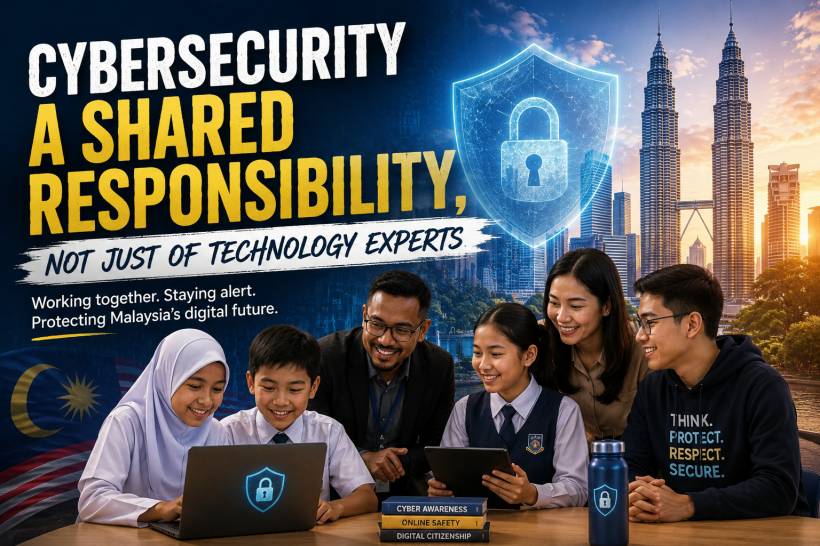
Cybersecurity is often seen as something handled only by IT teams, cybersecurity specialists or government agencies. But as Malaysia becomes more connected through digital services, online banking, cloud platforms, mobile apps and smart devices, keeping the country's digital environment safe cannot depend on technical experts alone.
According to National Security Council director-general Datuk Raja Nurshirwan Zainal Abidin, cybersecurity has become a shared responsibility involving individuals, schools, businesses, government agencies and the wider community.
Speaking at the closing ceremony of My Cyber Hero 2026, he highlighted that cybersecurity is no longer simply a technical matter. It is now closely linked to national security, economic resilience and the everyday safety of Malaysians using digital services.
Cybersecurity Has Become a National Priority
Malaysia's digital transformation continues to reshape the way people work, study, communicate and access services. From online transactions and digital healthcare platforms to government portals and cloud-based business systems, technology has become part of daily life.
This convenience also creates greater exposure to cyber threats.
Scams, phishing attempts, identity theft, data leaks, ransomware and social engineering attacks can affect anyone. A single compromised password, suspicious attachment or fraudulent message can lead to financial loss, business disruption or the exposure of sensitive information.
That is why cybersecurity is increasingly being treated as a national issue rather than something limited to technical departments.
Raja Nurshirwan said the government remains committed to ensuring that Malaysia's digital development is carried out in a secure, inclusive and sustainable way. This includes the implementation of the Cybersecurity Act 2024, the Malaysia Cyber Security Strategy 2025–2030 and efforts to develop more local digital and cybersecurity talent.
Technology Alone Cannot Protect Everyone
Cybersecurity tools are important, but they are not enough on their own.
Firewalls, endpoint protection, secure systems and monitoring platforms can reduce risk, but human behaviour still plays a major role in many cyber incidents. Attackers often target people rather than systems because it can be easier to trick someone into sharing a password, approving a fake request or clicking a dangerous link.
This is why awareness matters.
A digitally responsible society is one where people know how to recognise suspicious messages, protect personal information, use strong passwords and think carefully before sharing sensitive details online.
Cybersecurity is also about trust, integrity and accountability. It involves understanding that every online action can affect not only an individual, but also their family, workplace, school or wider community.
Building Cyber Awareness from a Young Age
Programmes such as My Cyber Hero are designed to introduce cybersecurity concepts to students at an earlier stage. Rather than treating cybersecurity as something only for adults or technical professionals, the programme helps young people understand how digital safety connects to their everyday online activities.
This year's competition saw 32 teams from across Malaysia advance to the finals. The finalists included 16 teams in the primary school Rookie Cyber Hero category and 16 teams in the secondary school Star Cyber Hero category.
The programme aims to equip students with practical knowledge and confidence to understand, shape and protect Malaysia's digital future.
For younger generations who are growing up with smartphones, social media, online gaming and digital classrooms, this knowledge is especially valuable. Cybersecurity awareness is no longer an optional skill. It is becoming part of basic digital literacy.
A Safer Digital Future Requires Collective Action
Cybersecurity cannot be left entirely to government agencies or technology providers. Everyone has a role to play.
Parents can guide children on safe online behaviour. Teachers can include digital safety in learning activities. Businesses can provide staff awareness training and strengthen internal controls. Individuals can stay alert to scams and avoid oversharing personal information.
The more people understand the risks, the harder it becomes for cybercriminals to take advantage of carelessness, confusion or lack of awareness.
Final Thoughts
Malaysia's digital future depends not only on stronger laws, advanced technology and skilled cybersecurity professionals. It also depends on building a public that is informed, responsible and prepared to protect itself online.
Cybersecurity is not just about protecting devices. It is about protecting people, trust, livelihoods and the country's digital progress.
Programmes such as My Cyber Hero show why cybersecurity education should begin early. The next generation will not only use Malaysia's digital systems. They will also be responsible for securing and improving them.











Comments 0