

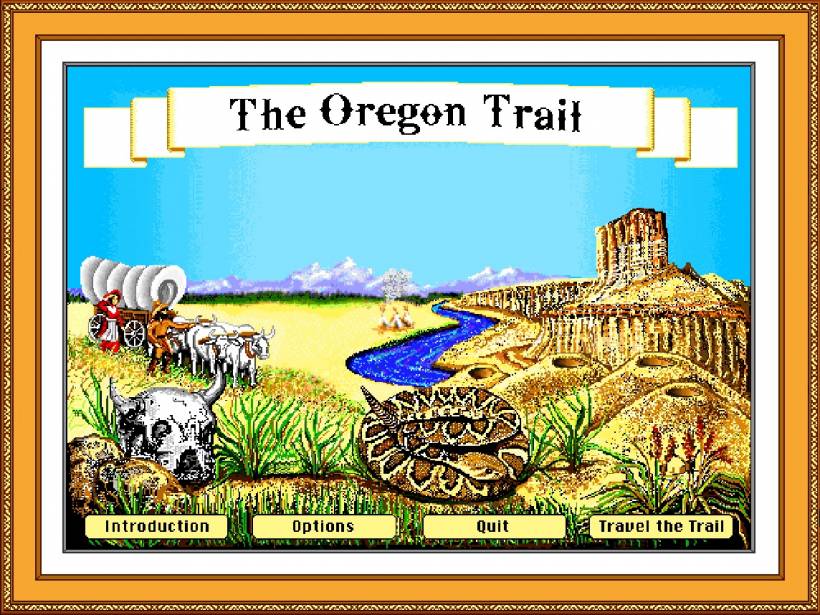
The Oregon Trail is one of those games that feels bigger than its screen. It looks simple, almost understated, but the moment you start playing you realise it's built around something powerful: a steady stream of choices that shape your journey in ways you can't fully predict. It's a game about planning, risk, and resilience, and it turns a historical route into a personal story that can be calm one moment and stressful the next.
What makes it enduring is that it doesn't rely on flashy action to stay engaging. Instead, it asks you to think like someone responsible for a group of people and a limited set of supplies, moving through an environment that doesn't care about your plans. That pressure creates memorable moments, and even when the game surprises you unfairly, it still feels like part of the larger experience of trying to survive a long journey with imperfect information.
Now playable online through Lemon Web Games, The Oregon Trail returns in a format that makes it easy to jump back into its classic rhythm of preparation, decision-making, and unpredictable events, all from your web browser.
A Game That Turns History Into Personal Storytelling
The Oregon Trail works because it takes a known historical idea and turns it into something that feels intimate. You're not reading about a journey, you're making one. You begin with decisions that seem practical and straightforward, and then the game slowly reveals how those decisions ripple forward. A choice that felt harmless early on can become a serious problem later when your resources are low and the trail gets harsher.
That sense of personal storytelling is what makes the game memorable. Even if two players start with similar plans, their journeys rarely feel the same. Random events, timing, and small decisions combine to create different outcomes. One run might feel smooth and lucky, while another becomes a chain of setbacks that tests your patience and problem-solving.
It matters because it gives the game emotional weight. You start caring about the group you're leading, even though they're represented through simple text and numbers. When things go wrong, it doesn't feel like a generic "game over," it feels like a journey that didn't make it, and that's a surprisingly powerful feeling for such a minimal presentation.
The Core Loop of Planning, Risk, and Resource Management
At the heart of the game is resource management, but it's not the cold, spreadsheet-like kind. It's resource management with consequences you can feel. Every decision about supplies, pacing, and trade-offs is tied to survival, and the trail constantly challenges your assumptions. You can't simply pick the "right" option once and coast to the end, because conditions change and the game keeps testing how adaptable you are.
The pacing is also crucial. The Oregon Trail teaches you that going too fast can be dangerous, but going too slow can also be risky. You're always balancing urgency against safety, and that balance creates tension even in the quieter moments. The best runs are the ones where you feel like you're making smart, steady choices while staying ready for surprises.
That loop is why the game still holds up. It's not about perfect execution, it's about managing uncertainty. You're constantly trying to make the best decision with incomplete knowledge, and the game rewards players who think ahead, stay flexible, and accept that sometimes survival depends on luck as much as planning.
Why the Unpredictability Is Part of the Magic
The Oregon Trail is famous for the way it surprises players, sometimes in ways that feel harsh. But that unpredictability is not a flaw, it's part of the design's identity. The game is trying to capture the reality that long journeys are shaped by events you can't control. That doesn't mean every outcome feels fair, but it does mean every run feels alive.
What makes the unpredictability work is how it forces you to build resilience into your strategy. You learn to carry extra supplies, to avoid overconfidence, and to recognise that a "good run" can still turn quickly if you're not prepared. The game becomes less about controlling every detail and more about creating a buffer against uncertainty.
It matters because it's the reason the game becomes a story generator. The moments you remember are often the moments you didn't plan for: the sudden setbacks, the near recoveries, the hard decisions made under pressure. Those moments give the game a lasting identity, and they're why people still talk about it long after their first play session.
Playing The Oregon Trail Online Today
Through Lemon Web Games, The Oregon Trail can now be played directly in your web browser with no downloads or setup required. Features of the web-based version include:
• Browser-based play that suits both short sessions and longer runs
• A classic decision-driven loop focused on planning and survival
• Fast restarts that encourage experimentation with different strategies
• Convenient online play with no installation or setup friction
• An easy way to revisit a legendary classic directly in your browser
Who Should Play The Oregon Trail
• Anyone who likes resource management with real tension and consequences
• Fans of classic games that still feel meaningful and replayable today
• People who enjoy unpredictable events and adapting strategies on the fly
• Casual players looking for a thoughtful browser game with a strong identity
• Anyone curious about a classic journey experience that's as much story as game
Play The Oregon Trail Online Now
The Oregon Trail feels especially at home in a browser setting because it's built around steady progress and thoughtful decisions. You can start a journey, make a few key choices, and quickly find yourself invested in the outcome. It's the kind of game that works whether you're playing casually or fully committing to the strategy, because the tension comes from the journey itself rather than complex controls.
Playing it online also makes it easy to return to the game's unique rhythm. You can experiment with different approaches, see how your decisions play out, and chase that satisfying feeling of a run where preparation and luck finally line up. It's a classic that remains easy to revisit because it always has another story to tell.
Final Thoughts
The Oregon Trail endures because it captures something timeless: the challenge of leading a group through uncertainty with limited resources and imperfect information. Its presentation is simple, but its emotional impact comes from the way it makes you feel responsible for outcomes you can't fully control. You plan, you hope, you adapt, and sometimes you fail, but even failure feels like part of the story rather than just an ending.
What makes it special is how it turns a historical concept into something personal. Every run becomes its own narrative shaped by your decisions and the game's surprises, and those narratives stick with you because they feel earned. It's reflective in a way many games aren't, reminding you that survival is often about patience, flexibility, and humility. And with The Oregon Trail now playable online through Lemon Web Games, it's easier than ever to return to that classic journey and see what kind of story the trail gives you this time.











Comments 0