

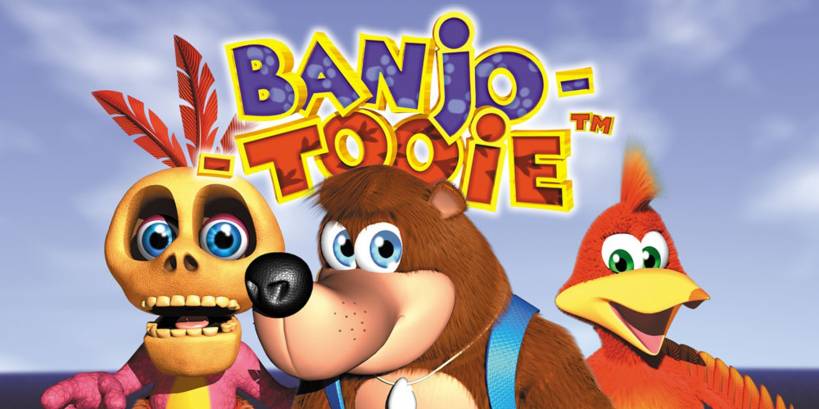
Sequels often face a simple choice: repeat what worked, or take a risk and expand the idea into something bolder. Banjo-Tooie clearly chooses the second path, turning the familiar charm of its predecessor into a larger, more interconnected adventure where exploration feels deeper and progression feels more layered. It's not a game that expects you to sprint from objective to objective. It wants you to wander, experiment, and slowly build understanding of how its worlds link together.
That ambition is exactly why Banjo-Tooie still sparks conversation. For some players, it's the perfect evolution of the collect-and-explore formula, packed with secrets and clever puzzles that reward attention. For others, its scale can feel overwhelming in the moment. Either way, it's hard to deny that it has a strong identity, built around the idea that discovery should feel like a journey, not a checklist.
Now playable online through Lemon Web Games, Banjo-Tooie becomes an easy way to revisit a classic adventure that rewards patience, curiosity, and the simple pleasure of getting lost in a world that always seems to have one more hidden route to uncover.
A Sequel That Expands the Playground Instead of Repainting It
Banjo-Tooie doesn't feel like a small step forward. It feels like the designers looked at what worked before and asked how far they could stretch it without losing its personality. The result is a game where areas are larger, objectives are more interconnected, and the world design encourages you to think in longer arcs. Instead of solving everything inside one self-contained space, you're often nudged toward problems that span multiple locations.
That interconnected approach changes the experience in a meaningful way. It makes exploration feel more purposeful because you're not only searching for collectibles, you're searching for relationships between places. A discovery in one area can become the key to progress in another, and that loop gives the world a sense of cohesion that many collectathon adventures don't quite achieve.
It also reinforces the feeling that the game trusts you to remember. When you return to an earlier location with a new ability, it feels like the world is acknowledging your growth. Instead of resetting, it opens up. That's a powerful design choice because it makes progress feel earned and reinforces the sense that you're moving through a connected adventure rather than a sequence of isolated stages.
Exploration as a Long-Term Commitment
Banjo-Tooie is at its best when you accept that it wants to be explored slowly. The worlds are designed to be revisited, and the game expects you to build familiarity over time. At first, you might feel like you're simply learning the layout, spotting points of interest, and collecting what you can. Later, those early observations become a map of future possibilities, and the game's structure starts to feel more satisfying.
This approach makes discovery feel more rewarding because it isn't always immediate. Sometimes you see something you can't reach yet, and that moment becomes a quiet promise. When you finally return with the right move or the right idea, the payoff feels personal, like you solved something that the game let you hold in your mind rather than spoon-feeding it to you.
That kind of design can feel demanding, but it also creates a rare sense of ownership. You're not only following directions, you're building your own internal understanding of the world. The game becomes a place you know, and that feeling is one of the strongest reasons exploration-focused games remain memorable long after the first playthrough.
Moves, Transformations, and the Pleasure of New Possibilities
A big part of what keeps Banjo-Tooie engaging is the constant addition of new abilities and mechanics. Each new move doesn't just give you a new way to jump or attack, it changes how you interpret spaces you've already seen. Suddenly a ledge that looked decorative becomes reachable, or a suspicious wall starts to feel like a clue instead of background detail.
This kind of progression is satisfying because it creates a steady rhythm of "learn, explore, return, unlock." The game's variety also helps it avoid feeling repetitive. Even when you're revisiting older areas, you're often doing so with a new toolset, which makes the return trip feel different rather than redundant.
There's also a sense of playful experimentation embedded in these mechanics. Banjo-Tooie invites you to try things just to see what happens. That playful curiosity fits the series' overall personality, where humor and creativity are woven into the experience. Even when you're working through complex puzzle chains, the game still feels like it's encouraging fun, not just efficiency.
Why the Bigger Scale Still Works Today
A larger game isn't automatically a better game, but Banjo-Tooie's scale works because it supports its core identity. The world is big because the design wants you to feel like you're on a real adventure, one where progress is layered and discovery is ongoing. That sense of scale also supports the game's tone, making the world feel like a playful ecosystem rather than a simple set of levels.
For modern players, that can be refreshing. Many modern experiences are designed around constant guidance, fast objectives, and minimal downtime. Banjo-Tooie is comfortable with letting you be lost for a while, not in a frustrating way, but in a way that makes discovery feel more meaningful. When you find something on your own, it feels like yours.
That doesn't mean the game is always effortless. Its puzzles can be sprawling, and its interconnected design can ask you to remember a lot. But that demand is also part of its charm, because it rewards attention and makes the world feel dense with possibility rather than shallowly populated with tasks.
Playing Banjo-Tooie Online Today
Through Lemon Web Games, Banjo-Tooie can now be played directly in your web browser with no downloads or setup required. Features of the web-based version include:
• A convenient browser-based experience for tackling puzzles and revisiting worlds at your own pace
• Easy replay sessions for collecting, move hunting, and tracking down missed secrets
• Smooth access that supports both short exploration sessions and longer adventure runs
• A simple way to enjoy a classic collect-and-explore journey without needing additional hardware
• Straightforward return visits whenever you feel like diving back into a connected world again
Who Should Play Banjo-Tooie
• Anyone who enjoys collectathon gameplay built around curiosity and long-term discovery
• Retro fans who want a classic that feels ambitious, dense, and full of personality
• Gamers who like learning new moves and using them to unlock earlier mysteries
• People who prefer puzzles that reward memory, attention, and a willingness to wander
• Anyone looking for a charming adventure that feels like a bigger, deeper journey over time
Play Banjo-Tooie Online Now
If you're in the mood for a classic adventure that rewards patience and makes exploration feel meaningful, Banjo-Tooie is an easy pick. It's packed with secrets, puzzle chains, and worlds that invite you to keep returning with new abilities and fresh ideas. The experience is at its best when you let it unfold naturally, enjoying the charm and variety while slowly untangling how everything connects.
Play Banjo-Tooie online now via Lemon Web Games and step back into a collect-and-explore adventure where the real reward is the feeling of discovery, and where every return trip to an earlier area can reveal something that was waiting for you all along.
Final Thoughts
Banjo-Tooie remains memorable because it treats exploration as a long-term relationship with its world rather than a quick tour. Its interconnected design, expanded scale, and steady stream of new abilities create a journey that rewards curiosity and attention, asking you to think across locations and over time. While the size and complexity can feel demanding, that same ambition is what gives the game its lasting charm, because it makes progress feel personal and discovery feel earned. Revisiting it today highlights how confident it is about letting you wander, remember, and solve problems at your own pace. If you enjoy games that feel like living playgrounds, where secrets connect and the world keeps opening up the more you learn, Banjo-Tooie still stands as one of the most distinctive and satisfying examples of a bigger, deeper adventure done with real personality.











Comments 0