

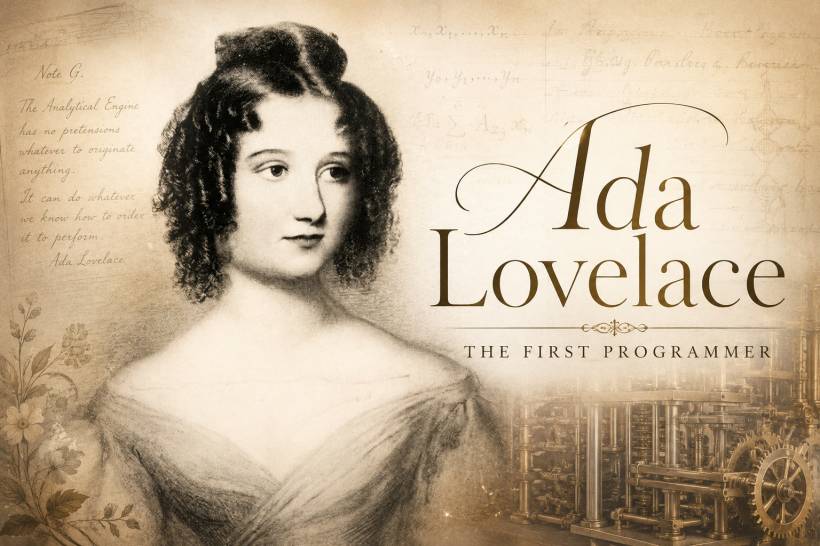
When people talk about the beginnings of computing, most imagine rooms filled with humming machines, blinking lights, punch cards, and eventually the personal computers that changed everyday life.
But the story of programming began much earlier, long before electricity powered a computer. It reaches back to the 1840s, when a mathematician named Ada Lovelace looked at a proposed mechanical machine and saw something that many others had not yet understood.
She saw that a machine could do more than calculate numbers.
It could follow instructions.
It could manipulate symbols.
It could potentially work with music, patterns, language, and ideas.
That vision is why Ada Lovelace is widely remembered as the world's first computer programmer. More importantly, she was one of the first people to understand what a programmable machine could become.
A Brilliant Mind in an Unusual Time
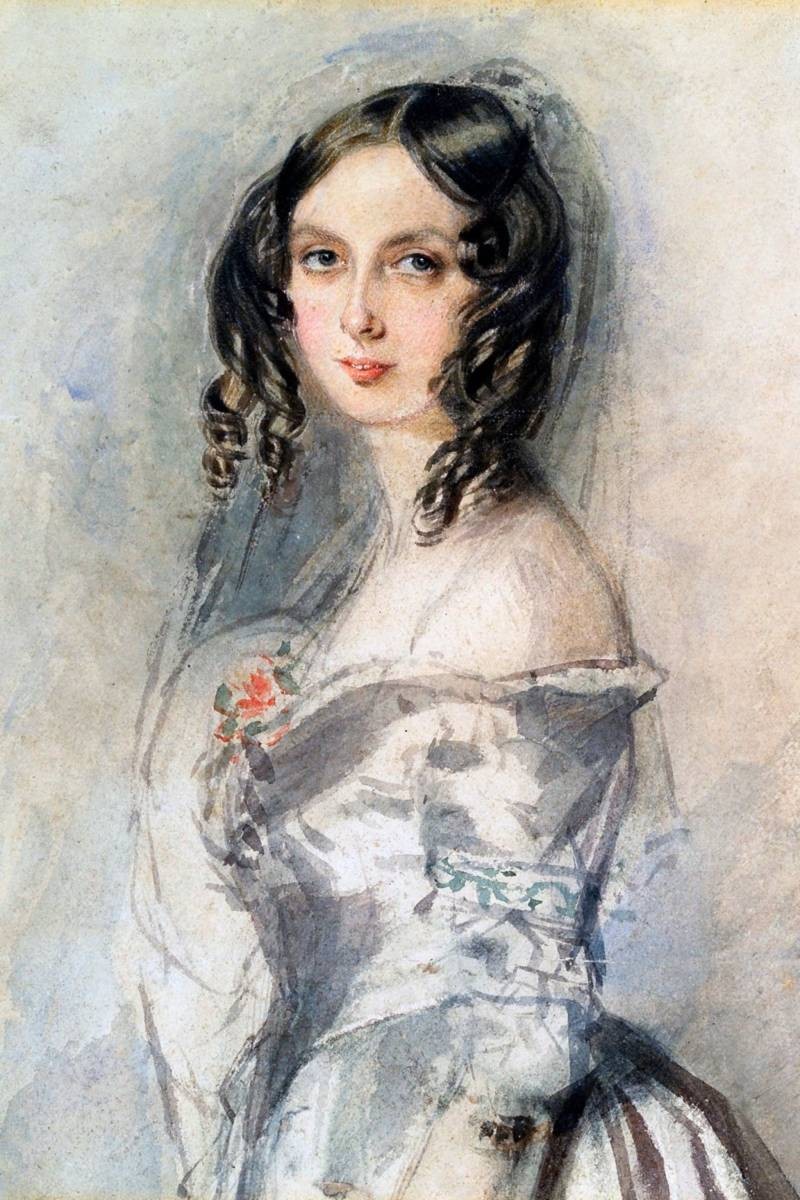
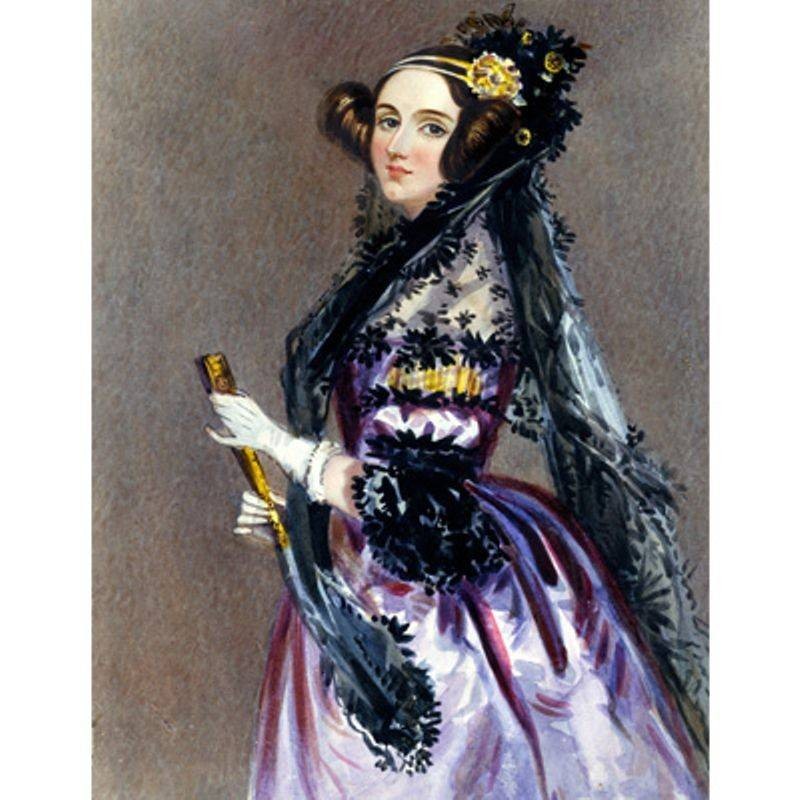
Ada Lovelace was born Augusta Ada Byron in London in 1815. She was the daughter of the famous poet Lord Byron and Anne Isabella Milbanke, who had a strong interest in mathematics and science.
Her upbringing was unusual for a young woman of her time. In the nineteenth century, advanced mathematics and scientific study were largely dominated by men. Women were rarely encouraged to study technical subjects seriously, much less contribute to scientific discussions.
Ada's mother, however, made sure she received a structured education in mathematics, logic, languages, and science. This gave Ada access to ideas that many women of her generation were never allowed to explore.
She was not only interested in numbers for their own sake. Ada had a strong imagination and liked connecting mathematics with larger questions about creativity, music, machines, and the natural world.
Later in life, she described her approach as a combination of imagination and analysis. This way of thinking would become central to her most famous work.
Meeting Charles Babbage and the Analytical Engine
Ada Lovelace's name is closely connected with Charles Babbage, a mathematician, inventor, and engineer who designed one of the earliest concepts for a general-purpose computer.
Babbage had already worked on an earlier machine called the Difference Engine, which was designed to calculate mathematical tables automatically. But his more ambitious idea was the Analytical Engine.
The Analytical Engine was never fully built during Babbage's lifetime. Still, its design was remarkably advanced for the 1830s and 1840s.
It included concepts that feel surprisingly familiar today:
• A processing section, which Babbage called the "Mill"
• A memory section, known as the "Store"
• Instructions that could be entered using punched cards
• The ability to repeat operations, similar to modern loops in programming
• A system that separated instructions from the data being processed
In simple terms, Babbage was not just designing a calculator. He was imagining a machine that could follow a sequence of operations to solve many different kinds of problems.
That distinction matters. A calculator is built for calculations. A programmable computer can be told what to do.
Ada Lovelace understood the importance of that difference.
The Translation That Became Something Much Bigger
In 1842, Italian engineer Luigi Menabrea wrote a paper describing Babbage's Analytical Engine after attending one of Babbage's lectures in Turin.
Ada was asked to translate Menabrea's paper from French into English.
At first, this may have sounded like a straightforward translation project. But Ada did much more than translate the original text.
Charles Babbage encouraged her to add her own notes, and those notes became far longer than the original paper itself. Her additions explored how the machine could work, what it could calculate, and what its larger purpose might be.
The final article was published in 1843 under her initials, A.A.L.
It was these notes that made Ada Lovelace historically important.
The Bernoulli Numbers Algorithm
The most famous part of Lovelace's notes is known as Note G.
In this section, she described a method for using the Analytical Engine to calculate Bernoulli numbers, a sequence of rational numbers used in advanced mathematics.
To modern readers, the Bernoulli numbers themselves may not be the exciting part. What matters is the structure of Lovelace's explanation.
She outlined a sequence of operations that the machine would need to perform, including how values would be stored, processed, reused, and moved through the calculation.
This is why Note G is often described as the first computer program.
There is some historical nuance here. Modern historians point out that the table in Note G is closer to what programmers today might call an execution trace: a detailed view of what happens as a program runs. The actual instructions would have been carried out using the machine's punched cards.
Still, Lovelace's work clearly showed that she understood how a machine could be instructed to perform a complex sequence of mathematical operations.
For that reason, she remains widely recognised as the first programmer in the history of computing.
Her Biggest Insight Was Not About Mathematics
Ada Lovelace's most important contribution was not simply the Bernoulli number calculation.
It was her belief that machines could work with more than numbers.
At the time, machines were generally associated with physical labour, industrial production, or repetitive calculation. Many people would have seen Babbage's Analytical Engine as an advanced number-crunching device.
Ada looked further ahead.
She recognised that numbers could represent other things. They could stand for musical notes, letters, symbols, images, patterns, or instructions.
That sounds obvious today because modern computers do this every second.
A computer stores music as data. It represents photographs as data. It processes text, videos, websites, games, financial records, maps, medical images, and artificial intelligence models as data.
Ada Lovelace was thinking about this possibility in 1843, almost a century before the first electronic general-purpose computers were built.
She understood that the real power of computing was not only speed. It was representation.
Once numbers could represent anything, a machine could potentially work with almost anything.
Poetical Science and Logical Thinking
Ada Lovelace is often described as someone who brought together logic and imagination.
Her father was Lord Byron, one of the most famous poets of the Romantic era. Her mother was deeply interested in mathematics and rational thought. Ada's life was shaped by both worlds.
Rather than seeing mathematics and creativity as opposites, she believed they could work together.
This is especially relevant today.
Programming is often viewed as technical, logical, and rule-based. But software development also requires imagination. Developers need to visualise systems before they exist. Designers need to think about how people will use a product. Engineers need to solve problems that do not yet have obvious answers.
Ada Lovelace understood that machines needed precise instructions, but she also understood that people needed imagination to decide what machines should do.
That combination remains at the heart of technology today.
Ada Lovelace and the Limits of Machines
Lovelace also had a thoughtful view about the limits of machines.
She argued that the Analytical Engine could follow instructions but could not truly originate ideas by itself. In her view, the machine could perform whatever people knew how to instruct it to perform, but it did not possess independent creativity or intention.
This question became important again in the twentieth century when Alan Turing wrote about machine intelligence. It remains relevant now in discussions about artificial intelligence.
Can a machine truly think?
Can it create something original?
Or is it always working within rules, patterns, and instructions created by people?
Ada Lovelace was asking versions of these questions long before computers, software, or AI existed in the modern sense.
Why Her Legacy Still Matters
Ada Lovelace died in 1852 at only 36 years old. She did not live to see the machines she imagined become reality.
The Analytical Engine was never completed in her lifetime. Electronic computers would not arrive until nearly a century later.
Yet her ideas survived.
Today, Ada Lovelace is remembered through Ada Lovelace Day, which celebrates women in science, technology, engineering, and mathematics. The programming language Ada was named in her honour. Her story is taught in computer science courses, history lessons, coding workshops, and technology events around the world.
But her legacy is bigger than a title or a programming language.
Ada Lovelace reminds us that technology often begins with imagination before it becomes hardware.
Someone has to look at a machine, a concept, or an unfinished invention and imagine what it could become.
She did exactly that.
Final Thoughts
Ada Lovelace is often remembered as the first programmer, but that description only captures part of her importance.
Her real achievement was seeing the future of computing before computers truly existed.
She understood that machines could follow instructions, process symbols, repeat operations, and work with ideas beyond mathematics. She saw that the value of a machine was not limited to what it was built to calculate, but what people could teach it to represent.
In an age where software now shapes communication, business, entertainment, medicine, education, gaming, finance, and artificial intelligence, Ada Lovelace's vision feels more relevant than ever.
She did not just write about a machine.
She imagined the digital world that would one day grow from it.











Comments 0